
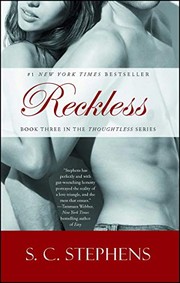
Reckless
2,231-word summary 10 min read 544 pages in the book
- First published
- 2013
- Publisher
- Gallery Books
- Pages
- 544
- ISBN
- 9781476718200
- Series
- Thoughtless (#3)
Reading options
What's inside (8 sections)
I picked up Reckless because I wanted to know what happened after the long, messy truce at the end of Effortless. That book left Kiera Allen and Kellan Kyle together but hardly settled, and this third installment of the Thoughtless series, published by Gallery Books in 2013, starts with the two of them trying to build a life while Kellan's band, the D-Bags, is about to become very famous. What surprised me is how little of the old love triangle is left. The fight here is with publicity, distance, and the ordinary problem of two people who choose each other and then have to keep choosing each other in front of an audience.
A promise ring and an old problem
The book opens in a hotel room the morning after Kiera and Kellan have exchanged promise rings and called themselves married in a spiritual sense. She wakes to his hand over hers, feels the metal band against her skin, and hears him call her Mrs. Kyle. It is a tender, close opening, and Stephens takes her time with it. Kiera thinks about how much pain it took to get here and about what her parents will say when they find out. Martin and Caroline are still in town for her graduation, and she knows they will not take the news well.
Then the story opens the door onto everything waiting outside that room. Kellan's biological father, Gavin Carter, is coming to brunch, a relationship Kellan spent most of his life avoiding and is only now willing to try. At the same time, an old flame named Joey turns up at the house in Seattle, wearing a long coat and an expression that promises trouble. She wants the furniture she left behind two years earlier, and she wants money for it. Then she produces a small memory card and tells Kellan she will double her price. The card holds an old recording of the two of them together, and Kiera has to stand in her own living room while her new husband quietly pays to get it back.
That scene sets the tone for the rest of the novel. Nothing is simple anymore, and the past does not stay in the past. Kiera runs upstairs and cries, Kellan follows, and for a moment the elopement and the new ring feel less like a fresh start and more like another problem to manage. The important difference from the earlier books is that they talk it through instead of letting it split them. They are still capable of hurting each other, but they have learned the habit of telling the truth, even when the truth is ugly.
There is a small moment right after this that I keep thinking about. Kellan asks Kiera to say plainly that she wants him, in words rather than hints, because he wants her to feel comfortable asking for what she needs. It is awkward and a little funny, and it says more about where these two have landed than any grand declaration. They are practicing being married, badly at first, and the book is at its best when it stays that close to the work of it.
Leaving Seattle behind
The practical decision arrives soon after. The band is taking off, and Kiera will leave Seattle and join Kellan in Los Angeles. That means goodbye to her parents, her sister Anna, and to Denny Harris, the boyfriend she once betrayed and who remains a steady presence in her life. At a farewell gathering she drinks too much, and Denny is the one who looks after her. Their history is still tender, but her choice is clear. She intends to build her life with Kellan, and she is not asking anyone to approve it.
On the drive and in the first weeks in Los Angeles, Kiera feels the gap between what she imagined and what touring actually is. There is recording, promotion, travel, and a constant stream of people who have opinions about who Kellan is and what he should be doing with his life. She is proud of him, genuinely, and at the same time she misses having a day that belongs to her. Her old habit of measuring her worth against whoever is nearest her does not disappear just because she changed zip codes.
She brings a project with her. Kiera is writing a book about what happened between Denny, Kellan, and her, an honest and often painful account of the affair and its aftermath. Writing it is a way of sorting out her own mistakes, and she lets Kellan read it even though she is ashamed of the person on the page. This thread turned out to be my favorite part of Reckless. It gives Kiera something that is hers, separate from the band, and it quietly reframes the whole trilogy as material she has survived and can now shape into art.
The move also puts real distance between her and Anna, whose pregnancy is advancing and whose relationship with Griffin Hancock is getting more complicated by the week. Kiera calls often, but call after call she hears the same problems and has no way to fix them from a tour bus. The sister story runs alongside the romance for the whole book, and it gives the novel a second emotional register that is less glossy and more familiar.
The label sells a single Kellan
The central conflict is not a love triangle this time. It is a marketing decision. Kellan's label decides that an available heartthrob sells more records than a married rock singer, so it presents him to the public as single. Cameras follow the band, interviews circle the same few questions, and fans treat every glance as evidence. Kiera watches a version of her husband get built in public, and she has to decide how much of that story she will tolerate and how much she will contest.
Sienna Sexton, a performer on the tour, becomes the focus of the speculation. She is ambitious and polished, and the publicity machine pairs her with Kellan because their chemistry reads well from a distance. A staged closeness gives the press exactly what it wants. Kiera knows, mostly, that the rumors are manufactured, and she still feels the sting of strangers insisting that her marriage is a rumor too. Stephens writes that particular humiliation well. Jealousy is not a single dramatic outburst here. It arrives in small doses, a photograph, a headline, a fan who assumes Kiera is someone he brought along for the weekend.
Kellan is not simply a victim of the machine. He plays along when he thinks it helps the band, and he is slow to understand why Kiera finds the whole arrangement insulting. That friction is the honest part of their story. He wants the music to succeed and assumes she understands the cost, while she wants to be acknowledged as his wife rather than hidden as an inconvenience. Both positions make sense, which is why their arguments go in circles for a while.
I have to admit the middle of the book wore on me. The same fight resolves softly and then returns after the next interview or the next photo. There are only so many times a reader can watch Kiera swallow a comment before the repetition starts to feel like padding. The 544 page trade paperback could have used a firmer edit, and a few chapters repeat an emotional beat the previous chapter already delivered. What keeps it readable is that the arguments are grounded in a real disagreement about dignity, not in arbitrary secrecy.
Joey, Sienna, and the cost of being watched
The gossip plot reaches a uglier point when Joey's recording resurfaces in a form that can hurt Kellan. She originally traded the memory card for cash, but the material does not stay contained, and the threat of a sex tape hanging over a rising career gives the book its most melodramatic stretch. It also forces Kiera to look directly at the fact that Kellan was not always the loyal man she knows now. She has to decide whether an old mistake, revived by someone else's malice, gets to define the marriage she is building.
The answer the book gives is that the couple survives by refusing to let the story be told for them. They stop hiding, and there is a scene at the cemetery where Kellan takes Kiera to visit the graves of his parents, John and Susan Kyle. A photographer intrudes on the moment, and Kiera realizes that staying invisible is no longer an option. Instead of retreating further, she decides to stand openly beside him. It is one of the cleaner turns in the novel, because it grows out of a specific humiliation rather than a speech.
Sienna stays in the background of that resolution, which is a little disappointing given how much space the earlier chapters give her. She works better as a symbol of the industry's appetite than as a fully realized rival. The same is true of the greedy executive who circles the band and the declining pop star looking for an edge. They are types, and the book leans on them to generate conflict without asking them to be interesting people.
Griffin, meanwhile, provides the occasional comic break, which the D-Bags have always done well. He is Kellan's bandmate and Anna's partner, and his behavior gives Kiera plenty to worry about. The humor lands, but it also keeps reminding us that the two couples are moving in different directions. Kellan and Kiera are learning to be public; Anna and Griffin are making choices in private that Kiera does not agree with and cannot stop.
Anna, Griffin, and a family that keeps growing
The sister plot comes to a head when Anna elopes with Griffin. Kiera disapproves of how he has treated her and worries about her pregnant sister, but Anna makes her own decision. Kiera has to accept that protecting someone cannot mean choosing for them. It is a quieter lesson than the headline drama, and it lands because the book has spent hundreds of pages showing how stubborn both sisters can be. Their arguments feel earned rather than inserted for theme.
Denny and Abby stay close through all of it. Denny remains the friend who shows up when Kiera is unsteady, and he and Abby eventually offer to help manage the band, which gives his character a useful role beyond being the nearly chosen one. The circle of people around Kellan and Kiera widens as the book goes on, and the novel is smarter when it treats those relationships as a network rather than a backdrop.
The pregnancy and the wedding both arrive in the later chapters, after a serious accident that leaves Kellan hospitalized. He is hurt protecting Kiera, and the scare strips away the gloss of the tour. The hospital scenes slow the pace in a good way. For a few chapters nobody is selling anything, and Kiera is simply sitting with the possibility of losing the person she fought so hard to keep. It is the most straightforwardly moving part of the book, and it reminded me why these characters have held readers for three novels.
Kellan recovers, and the couple marries with family and friends around them. Kiera finishes her novel and gets the encouragement she needs to publish it, which is the resolution I wanted for her. The book finally lets her work matter on its own terms rather than as a footnote to Kellan's career. It is a satisfying payoff, even if the road there includes one too many jealous standoffs.
The award and the life after
The last stretch ties the threads together quickly. Kellan returns to performing and wins a major music award. In his acceptance speech he announces that Kiera is pregnant, which turns a public triumph into a family milestone and, inevitably, another headline. The D-Bags keep climbing, Denny marries Abby, and the epilogue follows the couple into touring while expecting and then welcoming their son, Ryder.
I liked that the ending does not pretend fame goes away. The book closes on married life and parenthood and continuing music careers, with the ordinary compromises still in place. Kiera and Kellan have not escaped the spotlight; they have decided which parts of their lives they will share and which they will keep. After a trilogy built on a betrayal and a long reconciliation, that counts as a real ending.
The title makes more sense in this light. Reckless is not one specific act. It is the willingness to keep choosing a hard life with someone when an easier story is available to the public, and it is also the risk Kiera takes in writing down everything she went through and letting it be read. The book is at its strongest when it treats those as the same kind of courage, personal and unglamorous and a little frightening.
For readers coming fresh to the series, this is not the place to start. It assumes you know who Denny is, why Joey matters, and what Kiera and Kellan survived to get here. Read Thoughtless and Effortless first. For readers who already care about these people, Reckless offers a decent, sometimes overstuffed farewell that finally gives Kiera a story of her own inside the spotlight.
FAQ
Is Reckless the final book in the Thoughtless series?
Yes, it is book 3, following Thoughtless and Effortless. Gallery Books published it in 2013, and the trade paperback runs 544 pages.
Do Kiera and Kellan stay together in Reckless?
Yes. They marry, get through an injury that hospitalizes Kellan, and the epilogue shows them raising their son Ryder.
Do I need to read the first two Thoughtless books first?
It helps. Reckless assumes you know the earlier love triangle and history, since the focus here is fame rather than how the couple got together.
Similar books
More from Thoughtless first, then related titles.

Thoughtless
Kiera follows her boyfriend to Seattle and falls for her roommate, rock singer Kellan Kyle, in a messy love triangle about loyalty and desire.
2,997-word summary · 13 min read

Effortless
Kiera and Kellan try to build trust after choosing each other, tested by tour life, jealous fans, and Denny's lingering presence.
2,568-word summary · 11 min read

Breathe
A seventeen-year-old takes her pregnant mother's housekeeping job on an Alabama island and meets the owner, a teen rock star who wants nothing more than to be…
2,983-word summary · 13 min read

The Heart Principle
Violinist Anna Sun plans one night with Quan Diep, then faces autistic burnout and family duty after her father's stroke in Hoang's 352-page 2021 Berkley…
2,793-word summary · 12 min read

Maybe Someday
Sydney moves across the hall after betrayal and writes songs with deaf guitarist Ridge.
2,077-word summary · 9 min read

Wrecked
A reckless Formula 1 driver meets the PR specialist hired to shadow him, and both are forced to face the grief they have been outrunning.
2,329-word summary · 10 min read
Finding Perfect
A novella that closes the Hopeless series, following Daniel and Six as a long kept secret about their son forces them to finally talk, search, and find a…
2,315-word summary · 10 min read
Daydream
A bookish junior tutors a hockey captain in exchange for dating lessons, with one rule: do not fall in love. Daydream finally gives Henry Turner his own Maple…
2,611-word summary · 12 min read

American Fantasy
Newly divorced and feeling replaceable at work, Annie takes a Boy Talk reunion cruise alone and finds buried feelings stirring.
2,403-word summary · 11 min read

Forever Too Far
Engaged and pregnant, Blaire Wynn expects a quiet life in Rosemary Beach with Rush Finlay, but his loyalty to his troubled sister Nan puts their wedding at…
2,342-word summary · 10 min read

Lick
Evelyn wakes up married to the lead guitarist of Stage Dive after a Las Vegas birthday she cannot remember, and the annulment gets complicated.
1,989-word summary · 9 min read

One to Watch
A plus-size fashion blogger takes the lead role on a reality dating show to prove she belongs on television, and finds she might want what the cameras offer.
2,478-word summary · 11 min read

Collided
Sophie bets she can resist playboy Liam, then pit walls fall.
2,219-word summary · 10 min read
To Love Jason Thorn
Childhood friends Olive and Jason reunite when the Hollywood star returns home, fake a romance for the cameras, and face old family wounds before trust turns…
2,506-word summary · 11 min read

This Man
Ava O Shea meets Jesse Ward while designing The Manor House, and their obsessive affair tests her work and limits.
2,209-word summary · 10 min read

The Coincidence of Callie & Kayden
Callie saved Kayden in an alley and meets him again in college, where both must face assault and abuse to learn trust.
2,578-word summary · 11 min read

Playing for Keeps
Childhood neighbors Haley and Jason turn a long prank war into a fake relationship that turns real.
2,571-word summary · 11 min read

Gabriel's Rapture
A professor faces a hearing while Julia fights for her own name in Florence, testing love through distance and work.
2,480-word summary · 11 min read

The Takeover
An arrogant CEO and the sharp employee forced to staff his deal trade insults, trips and late nights across a long push-pull, until pride and jealousy force…
2,580-word summary · 11 min read

Tangled
Told by a cocky businessman, a bet to win the new associate who rejects him turns into real pursuit, strict rules, a painful reveal and a wedding-level happy…
2,868-word summary · 13 min read
Pushing the Limits
Scarred Echo and foster kid Noah take on tutoring, family secrets, and a custody fight in this 2012 debut about trust after harm.
2,831-word summary · 13 min read

Never Too Far
Blaire flees Rosemary Beach after Rush's lies, then must decide if his pursuit and Nan's exposed schemes earn trust again.
2,626-word summary · 12 min read
Captivated by You
Eva and Gideon hide a secret Caribbean marriage while planning a Monterey wedding as Gideon arrest, press threats, and Corinne strain test them in Crossfire…
3,016-word summary · 13 min read
Before We Were Strangers
Matt waits fifteen years to ask Grace why she left after one college night that shaped them both.
2,386-word summary · 11 min read

The Edge of Never
Grieving Camryn boards a bus and falls for secret-carrying Andrew.
2,482-word summary · 11 min read

Addicted to You
Lily hides sex addiction and Lo hides drinking while faking love to fool their rich families.
2,064-word summary · 9 min read
Wait for You
Avery flees Texas for college to bury her past, but patient Cam Hamilton refuses to stay a stranger.
2,866-word summary · 13 min read

Magnolia Parks
London socialite Magnolia Parks and BJ Ballentine keep hurting each other while trying to move on.
2,459-word summary · 11 min read

The Happy Ever After Playlist
Sloan takes in a lost dog while grieving her fiance, then falls for its owner, a touring musician, through texts and playlists.
3,199-word summary · 14 min read