

Reading options
What's inside (8 sections)
I started this book expecting a fairly ordinary Formula 1 romance, the kind where a reckless driver meets a composed woman and they spend four hundred pages annoying each other until they inevitably fall in love. That is partly what it is. I read the edition that runs to 440 pages, and a good portion of that is banter, racing weekends, and two people who clearly cannot keep their hands to themselves. What I did not expect was how much of the story is really about a genetic test result, and about a woman who learned to be afraid of the dark when she was twelve years old. By the end I had stopped thinking of the title as a reference to a bad boy driver and started thinking of it as a description of what happens to both of them.
This is the third book in Lauren Asher's Dirty Air series, and it follows Jax Kingston and Elena Gonzalez. The first two books introduced the world and the drivers around them, and this one can be read on its own, though it is much richer if you already know Liam and Sophie and the rest of the garage. The book was first published in 2020 under the author's own name, long before traditional editions arrived in 2024 with new covers and new formatting. That history is worth keeping in mind, because the pacing has the loose, generous feel of a story written for readers who were already invested in these people.
A driver in free fall
Jax Kingston opens the book in the worst stretch of his life. He is British, famous, tattooed, and genuinely good in a car, but the reputation that follows him is built on partying, drinking, and pills. He uses Xanax the way a lot of people use a safety blanket, reaching for it whenever the noise in his head gets too loud. The noise has a specific source. His mother has Huntington's disease, a degenerative condition that he has watched take her apart slowly, and he lives in constant fear that he inherited it. That fear is the engine of everything he does. He outruns it on the track, he drowns it at night, and he refuses to talk about it with anyone who might make him say the words out loud.
The inciting incident is exactly the kind of thing that ends a career in this world. After a night of drinking and pills, Jax passes out in a restroom at a club and the story lands in the tabloids. His team has had enough. A PR specialist is brought in to repair the damage, and that specialist is Elena Gonzalez, who had worked with Jax's friend Liam a year earlier and who knows how to handle drivers who think they are above scrutiny. The arrangement is deliberately harsh: Elena is assigned to Jax for the entire season, she is with him at all times, and that includes living in the same hotel room during race weekends. She is, in Jax's annoyed summary, an overpaid babysitter.
The world around him is one that Asher clearly enjoys describing. Race weekends are a blur of paddock passes, sponsor obligations, interviews, and the particular kind of exhaustion that comes from being watched every minute. Elena's job is not merely to keep Jax out of the tabloids. She has to turn him back into someone a team can put in front of a camera, which means managing his public image while also managing the private spiral that caused the damage in the first place. The book is at its best when those two jobs collide, because a sponsor meeting cannot fix a panic attack and a panic attack does not care about the schedule.
I liked that the book treats this as a genuine problem rather than a cute excuse for proximity. Jax resents every minute of it. He pushes back on her instructions, turns up late, says things designed to make her quit, and generally behaves like a man who has decided that he does not deserve help. Asher does not ask us to excuse that behavior. She asks us to understand where it comes from, and those are very different things.
Elena, and the job nobody wants
Elena is the reason this book works as well as it does. On the surface she is the straight-laced professional who keeps a chaotic driver in line, and she is very good at that. She has a comeback for everything, she does not flinch when Jax tries to intimidate her, and she treats the assignment like a job rather than a chance to get close to a celebrity. Underneath that composure is a history the book reveals in pieces. When she was twelve, her parents were killed, and she spent that night hiding in a closet. The fear of the dark and the nightmares that follow her into adulthood date from that night. Her grandmother, her abuela, has Alzheimer's and sometimes looks at Elena and sees her mother instead. Elena plays along, because correcting her would only make her confused and sad.
That detail is what won me over. Elena took the job for the money, plain and simple, because the paycheck pays for her grandmother's care. Every time she tells herself to keep things professional, there is a very practical reason underneath it. Asher gives her a reason to stay that has nothing to do with falling in love with Jax, and that makes her decision to stay feel earned rather than convenient. I have read too many romances where the heroine's career exists only to put her in the hero's orbit. Elena's work and her family obligations are real parts of her life before Jax walks into it.
The early chapters are a long argument conducted at high speed. Jax calls her uptight, she calls him something worse, and neither of them says anything honest about what is actually bothering them. There is a scene where he tries to shock her and she answers with a line so clean that he has nothing left to say, and the book is full of exchanges like that. The banter is genuinely funny. It is also a defense mechanism for both of them, which is the smarter choice the author makes. Their jokes are the wall they hide behind until the wall stops working.
Nightlights and little notes
The middle of the book is where the relationship changes shape. It happens through small, almost domestic gestures rather than grand declarations. Elena starts slipping little handwritten notes into Jax's pill bottle, so that when he reaches for a Xanax he has to take one of her notes out first. It is a tiny intervention, and it is the first time anyone has offered him a choice instead of an order. Jax, for his part, notices that Elena is afraid of the dark and buys her nightlights, including one shaped like a Formula 1 car. He learns that she loves watching makeup videos and talks his friends into doing a makeup challenge with him for charity, mostly so she will smile. He takes her to a hot air balloon festival because he remembered something she said once.
These are the scenes I would tell a friend about. They are specific, they are a little ridiculous in the way that people in love are ridiculous, and they show two people paying close attention to each other. Jax listens. That is the quality that is easiest to miss when he is being arrogant, and it turns out to be the thing Elena needs most. She has spent years being the person who notices everyone else's pain. Someone noticing hers changes something in her.
The physical attraction is present from very early on, and this is one of the places where the book divides readers. Jax spends the first stretch of the story objectifying Elena in ways that are uncomfortable to read, and the attraction is close to instant on both sides. I found that annoying. What softened it for me was that Asher lets the physical stuff stay secondary to the trust being built. The intimacy that matters arrives much later, after they have shared something real, and by then the banter has turned into honesty. A less patient writer would have rushed that. Asher takes her time, which is both a strength of the book and a reason it feels long.
The test, and the hard third act
The last quarter of the book is where the title earns itself. Jax finally takes the genetic test he has been avoiding for years. The result is positive. He carries the same mutation that his mother has, and the future he had been trying not to imagine is suddenly a fact. His response is to push Elena away with everything he has. He tells her that people like him do not get a happy ending, that she deserves a better future than the one he can offer, and that he will not let her stay and watch him decline. It is a brutal thing to do, and the book does not pretend it is noble.
This is the part of the story that made me argue with the page. On one hand, I understood the logic of his fear. On the other hand, he makes the decision about both of their lives without asking her what she wants, which is the same mistake he has been making all along. He decides he knows what is best for her and acts on it. Elena's response is to come back fighting. She refuses to accept a future chosen for her, and she makes the case that a messy, imperfect life together is better than a clean one apart. The reconciliation works because she has earned the right to make that argument. She has seen him at his worst and stayed anyway.
There is a moment near the end where the two of them finally say the honest thing, and it lands harder because the book has spent so long avoiding it. I closed that chapter feeling that the emotional payoff had been worth the length of the build. The epilogue is deliberately unresolved about what lies ahead for Jax's health, and it chooses to end on the life they are building now rather than on a tidy answer. Some readers will find that too open. I thought it was the right choice for a story about living with uncertainty.
The people around them
One of the quiet strengths of the book is the circle of friends that surrounds Jax. Liam, whose own story was told in the previous book, is Jax's closest friend and the person who refuses to let him disappear. Sophie is the first person Jax tells about the diagnosis, which says a great deal about where his trust actually sits. There is also Caleb, a sixteen-year-old boy with cancer who meets Jax through a wish-granting organization and proceeds to flirt shamelessly with Elena. He is funny and sharp and entirely too pleased with himself, and the makeup challenge he does with Jax is one of the warmest scenes in the book. Elena's best friend Elias arrives later and is immediately folded into the group.
This found family feeling is one of the reasons the series has such a devoted following. The drivers are rivals on the track and a family off it, and Asher clearly enjoys writing the way they show up for each other. The racing itself is convincing without becoming technical. She understands that what matters in a sports romance is not the engineering but the pressure, the noise, and the sense that a single mistake can cost everything. Jax's fear of his diagnosis and his fear of a crash are written with the same intensity, and the book keeps pairing them until you cannot separate the two.
What I think now
I would not call this a perfect book. It is long, and the middle sags in places. Jax's behavior in the first half is harsher than the genre usually lets a hero get away with, and he repeats his determination to change so many times that the words start to lose meaning. The third-act breakup will divide readers, and I think the fair criticism is that Elena does most of the forgiving. There is also an argument that the book asks her to be a therapist as much as a love interest, which is a pattern I am tired of in contemporary romance.
The prose is not trying to be literary, and it does not need to be. Asher writes clean, fast scenes and lets her characters talk, which suits a story built so heavily on arguments and comebacks. When the book slows down, it is usually because she wants to sit with a feeling for a while, and I was willing to go along with that. There are moments when the repeated inner monologue about fear and change starts to feel like a loop, but even those passages have a kind of honesty to them. Jax is a man who keeps rehearsing a conversation he cannot yet have, and the repetition is meant to show how stuck he is.
Even so, I understand why people love it. The mental health material is handled with more care than I expected, particularly the anxiety and the way Jax's mother's illness hangs over every choice he makes. Elena's grief and her fear of the dark are given the same weight. The two of them are not fixed by love, exactly. They are given enough safety to start fixing themselves, and that is a smaller and more honest promise. I finished the book tired but glad I had read it, and I would happily hand it to a friend who likes their romance loud, emotional, and willing to sit with hard things.
FAQ
When was Wrecked first published?
Goodreads and Open Library both date the original self-published edition to late September 2020. Traditional editions from Simon & Schuster and Sourcebooks followed in 2024.
Is Wrecked part of a series?
Yes. It is book three of the Dirty Air series, after Throttled and Collided and before Redeemed. Each book follows a different driver.
What serious themes does the book handle?
It deals with anxiety, panic attacks, prescription drug misuse, Huntington's disease, grief, and the fear of inheriting a terminal condition.
Similar books
More from Dirty Air first, then related titles.
Throttled
F1 driver Noah hates his teammate son Maya, then hires her to fix his image and falls for her.
1,942-word summary · 9 min read

Collided
Sophie bets she can resist playboy Liam, then pit walls fall.
2,219-word summary · 10 min read
Daydream
A bookish junior tutors a hockey captain in exchange for dating lessons, with one rule: do not fall in love. Daydream finally gives Henry Turner his own Maple…
2,611-word summary · 12 min read

The Takeover
An arrogant CEO and the sharp employee forced to staff his deal trade insults, trips and late nights across a long push-pull, until pride and jealousy force…
2,580-word summary · 11 min read

Wildfire
Hockey goalie Russ Callaghan and bold Aurora Roberts reunite as camp counselors after a one-night stand in this Maple Hills summer romance.
2,931-word summary · 13 min read

Twisted Hate
Jules Ambrose and Josh Chen turn years of hate into a risky arrangement that forces both to face old wounds.
2,557-word summary · 11 min read

Icebreaker
Figure skater Anastasia Allen shares a rink with hockey captain Nate Hawkins and sparks fly at UC Maple Hills.
2,176-word summary · 10 min read

Reckless
Kiera and Kellan marry in secret as the D-Bags explode onto the charts, then fight to keep their private life from becoming the band's best publicity.
2,231-word summary · 10 min read

Forced Bonds
The Sanctuary's shield is down and the Resistance is inside. Oli must complete her bond group, including the hostile Nox, before the war costs her everything.
2,316-word summary · 10 min read

God of Wrath
Rina Kent's God of Wrath pairs a quiet REU student who spies on a rival club with the ruthless leader who catches her. A dark college romance of obsession,…
2,740-word summary · 12 min read
Finding Perfect
A novella that closes the Hopeless series, following Daniel and Six as a long kept secret about their son forces them to finally talk, search, and find a…
2,315-word summary · 10 min read

Breathe
A seventeen-year-old takes her pregnant mother's housekeeping job on an Alabama island and meets the owner, a teen rock star who wants nothing more than to be…
2,983-word summary · 13 min read
Betting on You
Bailey and Charlie clash on a flight to Omaha over whether guys and girls can be friends. Three years later, a wager at a waterpark changes everything.
2,293-word summary · 10 min read

Today Tonight Tomorrow
On the last day of senior year, academic rivals Rowan Roth and Neil McNair team up for a citywide Seattle scavenger hunt and start seeing each other…
2,233-word summary · 10 min read

Saving 6
Joey Lynch protects his siblings from a violent father while falling for his boss's daughter Aoife, in the third Boys of Tommen novel.
2,680-word summary · 12 min read

Forever Too Far
Engaged and pregnant, Blaire Wynn expects a quiet life in Rosemary Beach with Rush Finlay, but his loyalty to his troubled sister Nan puts their wedding at…
2,342-word summary · 10 min read
Blood Bonds
Oleander is chained in a Resistance camp, and her five Bonds have to find her before Silas Davies finishes what he started in this third Bonds that Tie book.
2,018-word summary · 9 min read

The Casanova
Kate Landon's boss is also the pen pal she falls for online, hiding behind fake names, until family secrets and a trip to Paris get in the way.
2,274-word summary · 10 min read
One to Watch
A plus-size fashion blogger takes the lead role on a reality dating show to prove she belongs on television, and finds she might want what the cameras offer.
2,478-word summary · 11 min read
Savage Bonds
Oli's deadly gift is out in the open, her Bond runs the show, and the Resistance is closer than ever in the second Bonds that Tie novel.
2,431-word summary · 11 min read

Broken Prince
Reed loses Ella and ruins his name while rivals circle him.
2,356-word summary · 10 min read
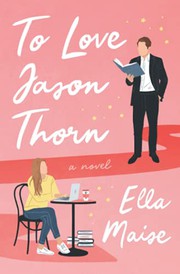
To Love Jason Thorn
Childhood friends Olive and Jason reunite when the Hollywood star returns home, fake a romance for the cameras, and face old family wounds before trust turns…
2,506-word summary · 11 min read

This Man
Ava O Shea meets Jesse Ward while designing The Manor House, and their obsessive affair tests her work and limits.
2,209-word summary · 10 min read

The Coincidence of Callie & Kayden
Callie saved Kayden in an alley and meets him again in college, where both must face assault and abuse to learn trust.
2,578-word summary · 11 min read


Playing for Keeps
Childhood neighbors Haley and Jason turn a long prank war into a fake relationship that turns real.
2,571-word summary · 11 min read
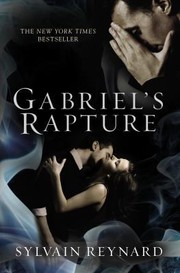
Gabriel's Rapture
A professor faces a hearing while Julia fights for her own name in Florence, testing love through distance and work.
2,480-word summary · 11 min read

Effortless
Kiera and Kellan try to build trust after choosing each other, tested by tour life, jealous fans, and Denny's lingering presence.
2,568-word summary · 11 min read
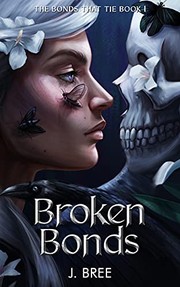
Broken Bonds
Oleander returns after five years on the run to face the five men she is bonded to, in J. Bree's 2021 opener of resentment, training, and slow trust.
2,582-word summary · 11 min read