
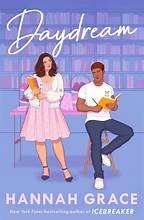
Daydream
2,611-word summary 12 min read 448 pages in the book
- First published
- 2024
- Publisher
- Atria Books
- Pages
- 448
- ISBN
- 9781668026250
- Series
- Maple Hills (#3)
Reading options
What's inside (9 sections)
I came to this one as someone who had already met Henry Turner in Icebreaker, where he was the manageable, funny one at the edges of Anastasia and Nate's story. In Daydream he gets the spotlight, and I wanted to see whether a side character could carry a whole book. He can, mostly. What I did not expect was that the strongest presence here would be the woman he starts spending his time with, a bookish junior named Halle Jacobs who spends most of the book trying to work out who she is when nobody is asking her to take care of them.
Daydream came out on 27 August 2024 from Atria Books, a 448-page paperback that is book three of the Maple Hills series. It is told in alternating first-person chapters from Halle and Henry, and it picks up with them in junior year at the fictional University of California, Maple Hills. If you have read the earlier books you will recognise the campus, the hockey house and a long list of familiar faces. If you have not, the book does a reasonable job of filling you in, though it leans hard on the idea that you already care about these people.
A breakup that barely registers
The book opens with Halle making breakfast for her boyfriend, Will Ellington, and him telling her he wants to break up. Will has been her childhood friend and her only real friend for as long as she can remember. Their families are close: Halle's parents split up, her mother married her stepfather Paul, and the family moved from New York to Arizona for Paul's job, where the Ellingtons lived next door. Holidays and vacations were shared for a decade, so to everyone around them Halle and Will looked inevitable.
Here is the thing that surprised me. Halle feels almost nothing when Will ends it. She loves him in the way you love someone you have known forever, but she is not in love with him, and the breakup mostly makes her realise how much of her life has been organised around other people's needs. As the eldest daughter she learned to put everyone first, and she did the same with Will. She says yes to things she does not want and rearranges her schedule around his hockey commitments without much of a fight.
So she decides to build a life that is hers. She takes a job at a bookstore, starts her own book club, and picks up work at The Huntington Hotel. She is living in her late grandmother's house near campus, which gives her a bit of independence, and she is determined to make new friends for the first time. She also decides to enter a writing contest, with a summer creative writing course in New York City as the prize. The only problem is that she has hardly any life experience to draw on. She has never travelled much, never had the kind of romantic history her favourite fictional heroines have, and has never had sex. Will was never romantic with her, and she has never really dated anyone else.
That setup is the engine of the whole book. Halle wants to write a romance but has not lived one, and the novel is largely about her collecting the experiences she thinks she needs. It is a slightly contrived premise, and Grace leans on it for most of four hundred pages, but it does give the book a clear shape.
A crashed book club and a lopsided bargain
Henry enters the story when he accidentally wanders into Halle's book club. The meeting is a meet-and-greet style gathering, and he ends up talking with Halle and getting to know her. The detail I liked is that this is not a grand romantic meet-cute. It is a small, mildly awkward accident that two people turn into something.
Henry has his own problems. He procrastinated his way into a difficult class with a professor he cannot stand, and he is now the captain of the hockey team, a title he did not want and cannot afford to fail at. His coach, Coach Faulkner, is watching his academic progress closely. Henry needs to pass, and he needs someone who can help him get through the reading.
Halle, it turns out, is an academic superstar with tutoring experience, having helped her younger sister Gigi with homework for years. When she hears about Henry's trouble with the class material, she offers to help. In return, Henry suggests he take her on dates to give her the experiences she needs for her novel. The arrangement has a playful name in the book: a rule book that Halle writes up, full of guidelines about being honest and supporting each other's goals, with the big rule sitting on top of all of it, which is that they must not fall in love.
I enjoyed this section more than I expected to. The bargain gives both characters something concrete to want, and the rule book is a cute device that Grace uses to generate both humour and tension. The trouble is that the premise asks us to believe a lot of things. Henry is supposedly terrible at his class reading but is suddenly keeping up, and Halle is supposedly focused on her writing but spends most of her time out with Henry. The book waves these contradictions through on the strength of the chemistry, which is real enough to carry them for a while.
Dates, rules and a happy drift
Once the deal is in place, the middle of the book settles into a comfortable rhythm. Henry and Halle study together and then start doing everything else together. They bake cookies, go for drives, listen to audiobooks, visit the beach, go to parties and have long conversations about their families and the things they want. Halle talks about the pressure of being the eldest daughter and about her complicated feelings toward Will. Henry talks about hockey, his mothers, and the art he does on the side. He paints to calm down, and his sketchbooks gradually fill up with drawings of Halle.
Halle becomes part of Henry's circle. She gets to know Aurora Roberts, Emilia Bennett, Anastasia Allen and Poppy Walker, and she becomes close to Henry's coworker and friend Campbell Walker, who goes by Cami. Henry keeps his own close friendships going with Nate Hawkins and Russ Callaghan, both familiar from earlier books. The group is warm and talky, and Grace clearly enjoys writing them. There is a lot of advice giving: when Henry and Halle are confused about where their arrangement is heading, they ask their friends, and Cami, Aurora, Anastasia, Nate and Russ all urge them to say what they actually feel.
The simple pleasure of this stretch is watching two people become friends before they become anything else. Henry is careful not to be Will. He does not want to pressure Halle into a relationship, and he worries that asking for more will cost him the friendship he has come to value. Halle, for her part, is self-conscious about her lack of experience and keeps measuring herself against the heroines in the novels she reads. The book is at its best when it stays close to those small insecurities, because they feel like the real thing.
It is also here that the length starts to show. There are a lot of scenes of people going somewhere and talking about their feelings, and the pacing slackens. I found myself skimming a few of the party conversations, and the repeated rounds of asking whether they should say how they feel start to feel like a stalling tactic. A fair summary is that the book is longer than its story strictly needs. Grace has said she tends to write characters who carry a piece of herself, and you can feel that affection in every page, but affection is not the same as editing.
When the past turns up at a hockey game
The mood shifts when Will and both families come to campus for a hockey game, Henry's team playing Will's. This is where the book stops being a comfortable drift and becomes a proper confrontation.
Before the game, Will corners Halle in the hallway of the house and bullies her about having a new boyfriend and about changing who she is to be with him. Halle finally says what she actually thinks of their relationship and of the way he treated her, and it is a satisfying moment after hundreds of pages of her biting her tongue. Her mother finds Henry's sketchbooks around the same time and remarks, without much subtlety, on how many of the drawings are of Halle.
Then Henry and Will have it out in the locker room. Will makes crude remarks about Halle, her body and their sex life, and Henry stands up for her. Will lunges at him, Bobby steps in and starts fighting Will, and Henry gets hit in the scuffle. The coach comes in and blames Henry, threatening to take away his captaincy if he will not explain. Henry refuses, because explaining means dragging Halle and Will's mess into the open, and he walks out. Outside the arena he hears someone shouting and realises it is Halle.
The home side of that weekend belongs to Halle. Her mother confronts her for not wearing Will's jersey and for failing to support him, and Halle finally snaps. She tells her mother exactly how badly Will treated her and how much pressure the family has put on her to look after everyone else. Her mother, to her credit, hears her and comforts her. It is one of the better scenes in the book because it pays off the people-pleasing that the opening chapters set up.
Four weeks of silence, and an apology on tape
After the game, Henry and Halle go home and have sex, but the aftershocks are not so easily settled. Halle urges Henry to tell the coach what really happened, even if it means giving up the captaincy. Henry says he needs time to himself when he feels this way and goes to stay with his mothers for a few days. That few days turns into four weeks of almost no contact, and this is the part of the book I found hardest to forgive on Henry's behalf.
Grace gives Henry a reasonable interior life here. He is genuinely overwhelmed, and he has spent the whole book worrying about letting people down, so withdrawing is his way of coping. His friends eventually reach him: Nate and Robbie talk to him before a meeting with the coach, tell him it is fine to give up the captaincy, and take him out for dinner. Henry tells the coach he wants to step down, and the coach apologises for his earlier reaction and gives him a list of things to catch up on in school and practice. Anastasia admits she feels guilty for not being there for him, and Halle's friends drop by her house to check on her and help with the novel, which is now close to its deadline.
What brings them back together is a gift. Henry finds the draft of Halle's book on Russ's computer, where Anastasia has been editing it, and he records himself reading her author bio and the novel aloud as an audiobook. He also fills an envelope with sketches he made through the draft. He leaves it for her before spring break, and Halle listens to the recording in the security line at the airport. She calls her friends, cancels her family vacation, and turns up at Henry's door. She thanks him for the gift, tells him she loves him, and they agree to be exclusive.
The audiobook gesture is the book's best idea. It is specific to these two people, it uses Henry's talent and Halle's ambition, and it says sorry through an act of attention rather than a speech. I wish the surrounding months had been handled with half as much care, because four weeks of silence is a lot of pain for one thoughtful present to smooth over. Halle spends those weeks convinced Henry and his friends will get tired of her, and the book asks her to accept his explanation rather than hold him to account for much of anything.
The contest result and what comes next
The epilogue jumps three months ahead. Halle and her friends are waiting to hear about the writing contest, and the news is that she is only a runner-up. This is a small, honest letdown after all the build-up, and I respected it. Then Grayson, her brother, takes her outside and tells her that he and their mother have agreed to pay for the writing course in New York whether she won or not. He has been living on the East Coast and offers his apartment for the summer while he looks for somewhere new out West.
Henry then reveals that he is taking art classes in the city for the same summer, so the two of them will be together in New York. They tell each other they love each other and kiss, and that is where the book leaves them. It is a tidy, happy ending that gives Halle her writing and Henry his art, and it ties up the contest thread without pretending she won.
I liked that the contest does not go the obvious way. It keeps the focus on Halle choosing her own life rather than being rewarded by a judge, and the family money that funds the course comes with a different kind of baggage than the people-pleasing she has been fighting. Still, the ending lands softly after such a long, uneven middle, and the emotional work of the last third is mostly done by the audiobook scene rather than by a sustained arc.
What works, what drags, and who should read it
So, would I hand this to a friend? That depends on the friend. For a reader who already loves the Maple Hills crew, this is the book that finally gives Henry his turn, and fans of hockey romances will find plenty of the heat and banter the series is known for. The scenes between Halle and her friends are warm, and Halle's struggle to stop living for other people gives the romance a bit of weight it would otherwise lack.
For a reader who wants a tighter story, this will feel long. Publishers Weekly called it a meandering third college romance, and the complaint is fair. The book keeps finding new ways to delay the confession it has been building toward, and the side characters, while charming, get a great deal of page time. The book is also explicit, with open-door sexual scenes between adult characters, and it includes references to substance misuse and brief mentions of drink spiking and assault. If those are hard limits for you, this is not the book.
My own view is that the good parts are very good and the weak parts are mostly a matter of length. I would not start here, because a lot of the warmth comes from knowing Nate, Russ, Anastasia and the rest from the earlier books. But if you have read Icebreaker and Wildfire and want to see where Henry ends up, Daydream gives him a satisfying landing, and it gives Halle a life of her own in the process. That is enough to recommend it to the right reader, even if I would have liked it a hundred pages shorter.
FAQ
Do I need to read Icebreaker and Wildfire before Daydream?
No. Daydream centers on Henry Turner, a side character from Icebreaker, with a new central romance, and it can be read on its own. Much of the warmth comes from familiar faces such as Nate, Russ and Anastasia, so fans of the earlier books get more out of it.
Is Daydream spicy and who is it for?
It is an open-door new adult romance with explicit consensual scenes between adult college students. It also deals with people-pleasing, family pressure, a possessive ex, references to substance misuse and brief mentions of drink spiking and assault.
When was Daydream published and which book is it in the series?
It was first published on 27 August 2024 by Atria Books as a 448-page trade paperback with ISBN 9781668026250. It is book three of the Maple Hills series, after Icebreaker and Wildfire.
Similar books
More from Maple Hills first, then related titles.

Wildfire
Hockey goalie Russ Callaghan and bold Aurora Roberts reunite as camp counselors after a one-night stand in this Maple Hills summer romance.
2,931-word summary · 13 min read

Icebreaker
Figure skater Anastasia Allen shares a rink with hockey captain Nate Hawkins and sparks fly at UC Maple Hills.
2,176-word summary · 10 min read

Wrecked
A reckless Formula 1 driver meets the PR specialist hired to shadow him, and both are forced to face the grief they have been outrunning.
2,329-word summary · 10 min read

Collided
Sophie bets she can resist playboy Liam, then pit walls fall.
2,219-word summary · 10 min read

The Play
Briar U hockey star Hunter coaches quiet junior Demi in confidence and fake dating until real feelings break the plan.
3,080-word summary · 14 min read

The Legacy
Four Briar hockey couples face weddings, proposals, and parenthood three years after graduation.
2,172-word summary · 10 min read
The Graham Effect
A hockey legacy and a sharp newcomer trade lessons, banter, and slow trust at Briar.
2,377-word summary · 11 min read

The Risk
Brenna needs a fake boyfriend for an internship interview and picks rival star Jake, who wants real dates in return.
2,911-word summary · 13 min read

Throttled
F1 driver Noah hates his teammate son Maya, then hires her to fix his image and falls for her.
1,942-word summary · 9 min read

The Chase
Summer needs housing and gets stuck with hockey player Fitzy, who flirts while she grieves and grows.
1,920-word summary · 9 min read

The Goal
Sabrina plans for Harvard Law until an unexpected pregnancy ties her to steady hockey player Tucker.
3,201-word summary · 14 min read

Mile High
A Chicago hockey star and a new team flight attendant clash on every road trip until banter turns into care.
3,189-word summary · 14 min read

The Score
Playboy Dean chases Allie, who wants a fresh start after a bad breakup.
2,700-word summary · 12 min read
The Mistake
Logan chases Grace for a second chance after one thoughtless night while graduation pressure builds.
2,363-word summary · 11 min read

The Deal
Hannah tutors hockey star Garrett in exchange for help getting another guy.
1,906-word summary · 8 min read

Reckless
Kiera and Kellan marry in secret as the D-Bags explode onto the charts, then fight to keep their private life from becoming the band's best publicity.
2,231-word summary · 10 min read

Finding Perfect
A novella that closes the Hopeless series, following Daniel and Six as a long kept secret about their son forces them to finally talk, search, and find a…
2,315-word summary · 10 min read

Breathe
A seventeen-year-old takes her pregnant mother's housekeeping job on an Alabama island and meets the owner, a teen rock star who wants nothing more than to be…
2,983-word summary · 13 min read

Saving 6
Joey Lynch protects his siblings from a violent father while falling for his boss's daughter Aoife, in the third Boys of Tommen novel.
2,680-word summary · 12 min read

Forever Too Far
Engaged and pregnant, Blaire Wynn expects a quiet life in Rosemary Beach with Rush Finlay, but his loyalty to his troubled sister Nan puts their wedding at…
2,342-word summary · 10 min read
One to Watch
A plus-size fashion blogger takes the lead role on a reality dating show to prove she belongs on television, and finds she might want what the cameras offer.
2,478-word summary · 11 min read
To Love Jason Thorn
Childhood friends Olive and Jason reunite when the Hollywood star returns home, fake a romance for the cameras, and face old family wounds before trust turns…
2,506-word summary · 11 min read

This Man
Ava O Shea meets Jesse Ward while designing The Manor House, and their obsessive affair tests her work and limits.
2,209-word summary · 10 min read

The Coincidence of Callie & Kayden
Callie saved Kayden in an alley and meets him again in college, where both must face assault and abuse to learn trust.
2,578-word summary · 11 min read


Playing for Keeps
Childhood neighbors Haley and Jason turn a long prank war into a fake relationship that turns real.
2,571-word summary · 11 min read

Gabriel's Rapture
A professor faces a hearing while Julia fights for her own name in Florence, testing love through distance and work.
2,480-word summary · 11 min read

Effortless
Kiera and Kellan try to build trust after choosing each other, tested by tour life, jealous fans, and Denny's lingering presence.
2,568-word summary · 11 min read

The Takeover
An arrogant CEO and the sharp employee forced to staff his deal trade insults, trips and late nights across a long push-pull, until pride and jealousy force…
2,580-word summary · 11 min read