
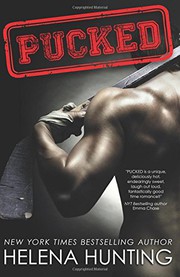
Pucked
2,117-word summary 9 min read 392 pages in the book
- First published
- 2015
- Publisher
- Helena Hunting
- Pages
- 392
- ISBN
- 9780993800139
- Series
- Pucked (#1)
Reading options
What's inside (7 sections)
I came to this book expecting a standard hockey romance, the kind where the hero is a cocky athlete and the heroine is somehow immune to him until she is not. What I found was funnier and more specific than that. Helena Hunting gives us Violet, a twenty-two year old junior accountant who would rather be home with a book than at a hockey game, and Alex Waters, the star center everyone warns her about. The first book of the Pucked series came out in 2015, self published through the author's own Ink and Cupcakes outfit before a wider paperback edition appeared, and it has the loose, first person energy of something written for readers who like their romance loud and their heroines sharp.
The thing that won me over early is that Violet is not written as a fan. She has a famous pro athlete for a stepbrother, a man everyone calls Buck, and years of watching him behave badly have left her convinced that most hockey players are not worth the trouble. She says as much in the opening chapter, and the book earns that cynicism by letting her be right about Buck at least. When her mother shoves a plane ticket at her and insists the family fly to Atlanta to support Buck's first away game with the Hawks, Violet tries every angle to get out of it. She has work to finish on the Kuntz account. She has a hundred pages to read for her book club. None of it works. Her mother is a force of nature, and her stepfather Sidney, who scouts for the NHL, has already booked first class seats and a suite at the same hotel as the team.
A game she did not want to attend
The opening chapter is a genuinely comic piece of writing, and it tells you what kind of book this is going to be. Violet is interrupted mid morning by her mother letting herself into the pool house she has lived in for four years, a arrangement that saves her rent but costs her any privacy. Her mother is forever offering coffee, gossiping about the magazine photos of Buck with a coach's niece, and deploying what Violet calls hypotesticals to get her way. The pool house itself is a small masterpiece of a setting. It is technically on the family property, which means her mother can walk in whenever she likes, and Violet's failed search for an apartment has left her stuck there.
She works as a junior accountant at a public relations firm that handles sports financial management, a job she got through her internship and, quietly, through Sidney's connections. So even at her desk she is surrounded by hockey. Her friend and colleague Charlene is the opposite sort of person, a lifelong Hawks fan who follows every game and begs Violet to take a picture of a player named Darren Westinghouse at the after party. Violet agrees only to get Charlene off her back. The book club, run by a woman named Lydia, is another source of irritation, because Lydia has assigned Tom Jones and Violet is behind on it.
All of this setup matters because it establishes Violet as someone with a full life that hockey keeps intruding on. She is not waiting around to be rescued by a handsome stranger. She has rent problems, a demanding mother, a job she is trying to keep up with, and a book she resents reading. When she finally gets to the arena, she is there under protest, clutching her copy of Fielding and a pack of cigarettes she does not actually smoke, which she uses as an excuse to escape uncomfortable social situations. That little prop becomes important later.
Alex Waters, number eleven
At the game, Violet finds herself behind a group of girls squealing about a player named Alex Waters. She half watches the play, mostly confused by the rules, and is startled by a fight in which a player with striking hazel eyes slams an opponent into the boards. The player is Waters, number eleven, and she watches him get thrown into the penalty box for it, furious and muttering to himself. When he comes back out, he scores almost immediately, and Violet finds herself cheering along with the rest of the arena despite having sworn off the whole sport.
The after party is where the two actually meet, and the scene is built almost entirely out of embarrassment. Violet's meticulously packed outfit falls apart because the only bra she brought is a fuchsia leopard print number, visible through a thin pink shirt. Alex's teammate Buck drags her over to the team table, and she ends up sitting beside Waters, who introduces himself with a smile and a milk mustache. It turns out he is the man from the milk advertisement she was looking at earlier that morning, a fact that lands with predictable mortification. Their conversation is a series of escalating double meanings, and Violet keeps assuming he cannot possibly be intelligent.
Then he catches a Shakespeare reference. She makes a crack about Buck wanting to go all Ophelia on her, and Alex, a Canadian who calls certain body parts beavers, responds with a pun about Butterson making a crap nun. Violet is genuinely thrown. She has built a whole theory about hockey players being idiots, and one sentence from Alex dismantles it. He also recognizes the book she is reading when he notices her with Tom Jones, and calls reading Fielding at a hockey game cerebral. That is the moment her interest shifts from physical to something else, and the book handles it with a light touch. She announces that she thinks literacy is sexy, and then, in a move she herself describes as completely out of character, she grabs his shirt and kisses him outside the bar.
One night and a very persistent campaign
The publisher's description gives away the shape of what follows. Violet treats the night as a single, delicious exception and fully intends to leave it there. Alex has other plans. He calls, texts, emails, and sends what the blurb calls extravagant and quirky gifts, and the whole point of the book is watching her resistance wear down. She wants badly to keep believing he is a player, because believing it is the only thing that makes her safe. The problem, as the description puts it, is that he is a total player and she does not want to be part of the game.
That push and pull is the engine of the novel. Hunting is very good at the small, awkward beats of a new attraction, the moment when a person realizes they have been reading someone wrong, and the way a carefully constructed defense can be undone by something as ordinary as a well timed book reference. The first chapter in particular has a voice that sounds like a real person talking, full of corrections, jokes that land badly on purpose, and a willingness to be ridiculous. Violet narrates her own embarrassment without ever asking the reader to feel sorry for her.
The book also understands why the pursuit works on a practical level. Alex does not try to win Violet over with grand statements. He keeps showing up in small ways, and the gifts are described as quirky rather than merely expensive, which suggests someone paying attention to who she is. That detail matters because Violet's whole complaint about hockey players is that they see women as interchangeable. If Alex had simply been rich and persistent, the story would have felt much thinner. Instead the novel keeps insisting that he noticed the things she thought nobody noticed, and that is the lever her skepticism cannot resist.
I found the title doing quiet work too. Pucked is a hockey word, obviously, but it also suggests the sense of being swept off your feet, and the book keeps both meanings alive. Violet spends most of the story insisting that she is not a puck bunny and that she is not the sort of woman who gets tangled up with a star player. The comedy comes from watching her own behavior contradict that claim in real time. Hunting never stops the story to explain the theme, which is one reason the reading experience stays light.
The supporting cast keeps the story from becoming a closed loop of two people flirting. Her mother is both a source of comedy and a real presence in her life, a woman whose boundaries are terrible but whose feelings are not fake. Buck, the stepbrother whose behavior started the whole family trip, is a walking cautionary tale about exactly the kind of man Violet expects Alex to be. Charlene gives her someone to talk to about the whole thing, and the book club gives the story its running joke about Tom Jones. Sidney, the stepfather whose job opened the door to this world, is decent and well meaning, which complicates Violet's blanket dislike of the sport.
What the book gets right
The best thing here is the voice. Violet is funny in a way that feels unpolished, and Hunting lets her be contradictory. She is a self described nerd who drinks beer to survive a party, a cynic who cheers when a player she admires scores, and a woman who lectures herself about hockey players while walking straight into an attraction she cannot talk herself out of. The literary angle is more than a cute detail. It gives the couple a private language, and it is the reason their first conversation goes somewhere instead of dying at the bar.
I also liked that the hockey is treated as a world Violet observes from outside rather than a sport the book expects you to love. She is clear that the violence bothers her and that the appeal of the players has limits. That distance makes her reactions more believable, and it keeps the book from turning into a tribute to professional athletes. The few game scenes work because they are filtered through someone who is watching a fight and a crowd rather than studying a playbook.
The steam is a major part of the appeal, and the book is unapologetic about it. Hunting writes desire as something both physical and conversational. Alex being interested in what Violet reads matters as much as his looks, and the blend is what makes the romance work for the readers who stuck with the series. If you want a clean, slow burn with the heat turned down, this is probably not the right book. If you want a heroine who can trade jokes before she sleeps with someone, it fits.
Where it strains
The central conceit has a shelf problem. Violet's whole argument against Alex is that he is a notorious playboy, and the novel needs the reader to believe both that this is true and that he is different with her. That is a familiar arrangement in this genre, and the book does not do much to make it feel new. Alex's pursuit also walks a line, since the calls and gifts are charming in the telling but would feel like pressure in a different story. Hunting knows this, and she keeps Violet's consent and her irritation explicit, but the latitude she gives Alex is still a choice some readers will dislike.
The supporting characters sometimes feel like they exist to produce a reaction from Violet. Buck is broadly drawn, her mother's interruptions can repeat, and Charlene mostly functions as an audience for the romance. The book club thread is amusing for a while and then becomes background noise. There is also a kind of loosness to the prose, especially in the early chapters, where a joke will run a little longer than it needs to. I did not mind it, because the energy carries, but readers who want tight editing may find it exhausting over a full length novel.
What stayed with me after finishing was less the plot than Violet's voice. This is a book about a woman who thinks she has figured out a type, meets someone who fits it, and discovers that the categories she uses to protect herself are too small. Hunting is at her best when she is writing that kind of small revision rather than a grand romantic gesture. The hockey and the steam give the story its surface, but the actual pleasure is watching a skeptical person decide, against her own advice, to be curious. That is a modest thing to do well, and the book does it with enough humor to make the rest of the series worth following.
FAQ
Is Pucked the first book in a series?
Yes. It opens the Pucked series by Helena Hunting and was first published in 2015. The story continues in Pucked Up and the books that follow.
Do I need to like hockey to enjoy Pucked?
No. Violet is a reluctant attendee who admits the rules confuse her, so the sport works mostly as a backdrop for the romance and the jokes.
Who are Violet and Alex?
Violet is a twenty-two year old junior accountant living in her family's pool house. Alex Waters is a star hockey center with a reputation as a playboy.
Similar books
More from Pucked first, then related titles.
Daydream
A bookish junior tutors a hockey captain in exchange for dating lessons, with one rule: do not fall in love. Daydream finally gives Henry Turner his own Maple…
2,611-word summary · 12 min read
Tangled
Told by a cocky businessman, a bet to win the new associate who rejects him turns into real pursuit, strict rules, a painful reveal and a wedding-level happy…
2,868-word summary · 13 min read

Wildfire
Hockey goalie Russ Callaghan and bold Aurora Roberts reunite as camp counselors after a one-night stand in this Maple Hills summer romance.
2,931-word summary · 13 min read
Icebreaker
Figure skater Anastasia Allen shares a rink with hockey captain Nate Hawkins and sparks fly at UC Maple Hills.
2,176-word summary · 10 min read
Reckless
Kiera and Kellan marry in secret as the D-Bags explode onto the charts, then fight to keep their private life from becoming the band's best publicity.
2,231-word summary · 10 min read

Wrecked
A reckless Formula 1 driver meets the PR specialist hired to shadow him, and both are forced to face the grief they have been outrunning.
2,329-word summary · 10 min read
Second First Impressions
A risk-averse retirement-villa manager and the developer's tattooed son are thrown together at work, where her fear of the outside world meets his relentless…
2,073-word summary · 9 min read
Finding Perfect
A novella that closes the Hopeless series, following Daniel and Six as a long kept secret about their son forces them to finally talk, search, and find a…
2,315-word summary · 10 min read
Chasing Harry Winston
Three friends turn thirty in Manhattan and make a wild pact: Emmy will sleep her way around the world, Adriana will settle down, and Leigh watches from the…
2,185-word summary · 10 min read

Breathe
A seventeen-year-old takes her pregnant mother's housekeeping job on an Alabama island and meets the owner, a teen rock star who wants nothing more than to be…
2,983-word summary · 13 min read

Winter Street
Kelley Quinn's Nantucket inn is ready for Christmas until he finds his wife kissing the man hired to play Santa. The whole family comes apart in the best way.
2,340-word summary · 10 min read

Forever Too Far
Engaged and pregnant, Blaire Wynn expects a quiet life in Rosemary Beach with Rush Finlay, but his loyalty to his troubled sister Nan puts their wedding at…
2,342-word summary · 10 min read

Size 12 Is Not Fat
Former teen pop star Heather Wells investigates two dorm elevator deaths while juggling her ex, her crush, and a size-12 wardrobe.
2,805-word summary · 12 min read
Mr. Maybe
Libby Mason wants a rich husband, but the wealthy man who proposes is dull and the broke writer she cannot forget is not offering forever.
2,322-word summary · 10 min read

One to Watch
A plus-size fashion blogger takes the lead role on a reality dating show to prove she belongs on television, and finds she might want what the cameras offer.
2,478-word summary · 11 min read
Eligible
Austen's Bennet sisters move to modern Cincinnati, where marriage is a reality show and the house is losing its value.
2,293-word summary · 10 min read

Big Swiss
A transcriptionist for a sex coach falls for one of his clients, the tall Swiss gynecologist she calls Big Swiss, in a funny novel about work and secrets.
2,523-word summary · 11 min read
Wedding Night
Lottie marries an old flame days after a breakup, then flies to a Greek island while her sister quietly works to sabotage the honeymoon. A farce about memory,…
2,213-word summary · 10 min read

Dash & Lily's Book of Dares
Two lonely New York teenagers trade dares in a red notebook left at the Strand, falling for each other on the page before they meet.
2,228-word summary · 10 min read
Dial A for Aunties
A wedding photographer accidentally kills her blind date, and her mother and three aunties help her hide the body during the biggest wedding of their careers.
2,076-word summary · 9 min read
The Bookish Life of Nina Hill
Bookstore Nina gains a family and pub-quiz love in Los Angeles.
2,399-word summary · 11 min read

Collided
Sophie bets she can resist playboy Liam, then pit walls fall.
2,219-word summary · 10 min read

Bridget Jones: The Edge of Reason
Bridget doubts Mark, takes a job with Daniel, and lands in trouble in Thailand.
2,198-word summary · 10 min read
To Love Jason Thorn
Childhood friends Olive and Jason reunite when the Hollywood star returns home, fake a romance for the cameras, and face old family wounds before trust turns…
2,506-word summary · 11 min read
This Man
Ava O Shea meets Jesse Ward while designing The Manor House, and their obsessive affair tests her work and limits.
2,209-word summary · 10 min read

The Coincidence of Callie & Kayden
Callie saved Kayden in an alley and meets him again in college, where both must face assault and abuse to learn trust.
2,578-word summary · 11 min read
Playing for Keeps
Childhood neighbors Haley and Jason turn a long prank war into a fake relationship that turns real.
2,571-word summary · 11 min read
Gabriel's Rapture
A professor faces a hearing while Julia fights for her own name in Florence, testing love through distance and work.
2,480-word summary · 11 min read

Effortless
Kiera and Kellan try to build trust after choosing each other, tested by tour life, jealous fans, and Denny's lingering presence.
2,568-word summary · 11 min read
You Deserve Each Other
Engaged and miserable, Naomi and Nicholas wage a prank war to force a breakup, then face money, mothers, and truth in Sarah Hogle's funny romance with a tender…
2,415-word summary · 11 min read