
Chasing Harry Winston
2,185-word summary 10 min read 280 pages in the book
- First published
- 2008
- Publisher
- Simon & Schuster
- Pages
- 280
- ISBN
- 9780743290111
Reading options
What's inside (9 sections)
I picked this up expecting the glossy, sharp fun of The Devil Wears Prada, because that is what the cover and the jacket copy promised. What I found was a book that wants to be two things at once: a frothy comedy about three New York friends making ridiculous resolutions, and a sincere attempt to say something about how women in their late twenties measure their lives. Sometimes those aims get along. Often they do not. Simon & Schuster published it in 2008, and it was Weisberger's third novel, arriving a couple of years after Everyone Worth Knowing. A 200,000-copy first printing tells you how many people were curious, and the reviews tell you how many of them came away disappointed. I finished it curious too, though not always in the way the author probably hoped.
Three friends, one birthday problem
The three women at the centre of the book have been friends since college, and they are all staring down the same milestone: turning thirty. Emmy, Leigh and Adriana live in Manhattan, they have good jobs or good connections, and they spend a lot of time over dinner complaining about men. The reviewer at Entertainment Weekly described them as sitting around watching Grey's Anatomy and moaning to each other about their problems, and that is a fair if unkind summary of the opening chapters.
Each friend carries a different version of the same anxiety. Emmy is the serial monogamist who believed she was headed for the ring and the baby, until her boyfriend of several years left her for his twenty-three-year-old personal trainer. The detail that stings most is that Emmy had been paying the trainer's fees. Leigh is a hard-driving editor at a publishing house who seems to have everything mapped out: a job she loves, a beautiful apartment she has just bought, and a boyfriend who meets every item on her checklist. Adriana is a Brazilian beauty, the daughter of a famous supermodel, who lives in her parents' penthouse and uses her looks to get whatever she wants. Her mother keeps reminding her that beauty is fleeting and that a younger, prettier girl is always around the corner.
None of them, in other words, is short of problems. The book's best joke is that each woman is convinced her particular trouble is the one worth solving, while the reader can see the others clearly.
The pact at the Waverly Inn
The engine of the plot is a resolution made over dinner at the Waverly Inn. In the publisher's own excerpt, Emmy and Adriana go at each other with the kind of liquor-fueled dare that sounds clever at midnight and binding by morning. Emmy announces that she wants company, and when Adriana asks what kind, Emmy says she is willing to "completely slut out" if Adriana agrees to a committed, monogamous relationship with a man of her choosing.
The terms are absurd and specific. Emmy will take what the book calls a Tour de Whore, sleeping her way around the world, one encounter for each continent. Adriana will do the one thing she has never done: stay with one man and, ideally, land an engagement ring and a house in Scarsdale. Adriana's response to the dare is delivered with the book's best comic timing. "Did my mother put you up to this?" she asks, and when she accepts, she wants to know when they start.
Leigh watches all of this from the sidelines and refuses to make a promise. She is the sensible one, the one who points out that neither of the other two will actually go through with it. The plan is for her to figure out her own resolution by the end of the following weekend. This is where the book quietly sets up its strongest idea, which is that the woman who refuses to change may have the most to lose by standing still.
The Waverly Inn scene works because Weisberger has a real ear for the way friends talk when they are trying to shock each other into honesty. The banter has bite. What follows, unfortunately, is a novel that keeps wandering away from the structure this scene promises.
Emmy's year on the road
Emmy's resolution sends her around the world, and the book follows her through a string of cities and a string of men. A new job scouting restaurant locations gives her a reason to travel, and she sells her apartment to fund the adventure. Paris comes first, then London, with stops in various European cities along the way. The men are charming and unsuitable, the encounters are meant to be liberating, and the whole thing looks wonderful from the outside.
The trouble is that Emmy is not built for this kind of life. She keeps calling Leigh and Adriana to report on her progress, or her lack of it, and it becomes clear that what she misses is the ordinary intimacy she was trying to escape. The travel has the gloss of a lifestyle magazine and the loneliness of a hotel room. Weisberger is at her best when she lets the shine fall away and shows Emmy sitting alone, wondering whether she has made a terrible mistake.
The trip eventually takes her to Sydney, where she meets Liam, a down-to-earth Australian who works in conservation. He is kind and steady, and their relationship grows slowly out of shared interests rather than desire or novelty. For the first time, Emmy starts to ask whether a fling-filled year was ever what she needed. She returns to New York with Liam in tow, and the second half of her story is about the awkward work of fitting a new life into an old one. It is the most heartfelt thread in the book, and also the one that most resembles a romance novel grafted onto a comedy.
Adriana and the ring
Adriana's plot runs on a different fuel. She approaches her thirtieth birthday with the conviction that her beauty is a limited resource and that she should spend it well. Her mother Sofia, a former supermodel, is a constant presence in her head, pushing her toward a man who can offer money and status. Adriana works the parties and galas, evaluates eligible men with the cool eye of an auctioneer, and keeps a set of rules about how much to reveal and when to leave.
Her obsession with appearances is played for laughs, and often it is funny. She is the one character who seems fully alive on the page, a force of nature who is unapologetically shallow and completely sure of herself. Reviewers kept coming back to her. Kirkus called her "a hoot," and the Entertainment Weekly critic said the novel would be unreadable without her. I felt the same pull. Adriana's vanity is so complete that it becomes a kind of honesty.
The book gives her an advice column, "The Brazilian Girl's Guide to Man Handling," after a magazine editor notices how effortlessly she manages men. It is a clever idea, since it lets Weisberger put the character's code on display as a set of rules that sound like a sexed-up version of The Rules. Adriana lands a wealthy fiancé and starts planning a lavish wedding, which looks like her pact fulfilled. Underneath, though, she is miserable. The relationship offers security and status but no real intimacy, and the closer she gets to the altar, the more she doubts the whole enterprise.
I should be honest that the ending here is handled in a way that frustrated some readers. One Amazon reviewer complained that a major storyline is wrapped up through a character telling the reader what happened in a flashback rather than letting it play out. I felt that too. Adriana's reckoning matters, and it deserved a scene.
Leigh and the difficult author
Leigh is the friend who does not sign on to the pact, and her storyline is the one that gives the book its title some of its weight. She is a star in the publishing business, close to the senior editor job she has wanted, engaged to a boyfriend who looks perfect on paper, and the proud owner of a new apartment. She is also suffering from panic attacks and a cluster of anxious symptoms that the book never fully explains. Her contentment is a performance, and the cracks show early.
The man who exposes them is Jesse Chapman, a brilliant and brooding author she is assigned to edit. He is the enfant terrible of the literary world, unconventional and intense, and the professional relationship turns into something else almost immediately. Weisberger writes the attraction as a clash between Leigh's ordered life and Jesse's messy brilliance. He is also married, a detail the Kirkus review states plainly and that hangs over the whole thread.
Leigh's boyfriend, a sportscaster, proposes, and she accepts even though she is not sure she loves him. Entertainment Weekly put it bluntly, quoting her thoughts about his kissing technique and noting that he satisfies her checklist. That is the book at its most pointed about the difference between a man who fits a list and a man who actually moves you. As Leigh spends more time with Jesse, the gap between the life she has planned and the life she wants becomes impossible to ignore.
This is the most interesting of the three arcs, and also the most familiar. The editor drawn to the difficult writer is an old setup, and Weisberger does not do much to refresh it. Still, Leigh's panic and her careful, checklist-driven approach to romance give her a specificity the other two sometimes lack.
Where the book loses its footing
For all the promise of the pact, the novel keeps drifting away from it. Entertainment Weekly gave the book a C minus and called the story a "blobby mess," arguing that the gimmicky setup gives Weisberger a structure she then promptly ignores. The plot lurches into side stories: Emmy's sister becomes pregnant, the three friends take a trip to Curaçao, and Leigh goes home for a tense dinner with her parents in Greenwich. None of these scenes is ruinous on its own, but together they make the book feel loosely assembled.
Kirkus made a similar complaint, calling the narrative choppy and saying the book would have benefited from more editing. That reviewer also found the characters' obsession with youth, along with their jealousy and cattiness, tiring. Publishers Weekly called the result a "hilarious, silly and entirely predictable chick lit romp," which about sums up the divided response. Library Journal argued that the book lacks the outsider-looking-in social critique that made The Devil Wears Prada so entertaining, and I think that is the sharpest point of all. The earlier novel had a target. This one mostly has a setting.
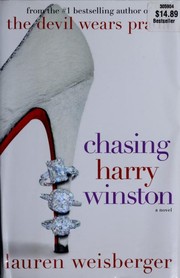
Reader reactions split along the same lines. On Goodreads the book sits at roughly 3.4 out of 5 across tens of thousands of ratings, with some readers calling it a perfect beach read and others complaining that the characters are underdeveloped and contradictory. A common criticism is that the book lacks depth, which feels a little unfair given the stiletto on the cover and the joke in the title. It is not trying to be War and Peace. It is trying, and partly managing, to be a smart comedy about a particular moment in a woman's life.
What the title is really about
The reference in the title is to Harry Winston, the luxury jeweller famous for diamond engagement rings. The joke is that the women of the book are all, in one way or another, chasing the ring: the proposal Emmy thought was coming, the Scarsdale house and diamond Adriana has set her sights on, and the marriage Leigh accepts without being sure she wants it. The pact is supposed to free them from that chase. Most of the time it just gives them a new way to run in circles.
What saves the book is the friendship. Emmy, Leigh and Adriana call each other, lie to each other, envy each other and show up anyway. That bond is the one thing none of them agrees to change, and it is the one thing the novel treats as solid. When the resolutions go awry, as they do, the women are still left with one another, and that is a warmer ending than the marketing copy suggests.
I would hand this to a reader who wants an easy, funny book about three friends and does not mind a messy middle. I would be careful with a reader who is looking for the bite of The Devil Wears Prada or a plot that pays off the promise of its first chapter. Weisberger can write a funny scene and a sharp line of dialogue, and Adriana alone is worth the price of admission. The book around her is slighter than it thinks it is, but it is never dull, and for a certain kind of afternoon that is enough.
FAQ
Is Chasing Harry Winston a true story?
No. It is a work of fiction and Lauren Weisberger's third novel, first published by Simon & Schuster on May 27, 2008.
What is the pact the three friends make?
Over dinner at the Waverly Inn, Emmy vows to have a string of encounters as she travels the world, while Adriana promises to stay faithful to one man and marry well. Leigh watches from the sidelines and refuses to join at first.
What did critics think of Chasing Harry Winston?
Reviews were mixed. Entertainment Weekly gave it a C minus and Kirkus called the narrative choppy, but many reviewers and readers found Adriana, the outspoken Brazilian socialite, to be the book's strongest creation.
Similar books
When Life Gives You Lululemons
Emily Charlton leaves Runway for Hollywood and ends up in Greenwich, where a supermodel's DUI and a senator husband's ambitions draw three women into a…
2,028-word summary · 9 min read
Everyone Worth Knowing
A young woman quits her banking job after a friend's engagement and lands in a New York PR firm where everyone is paid to know everyone.
2,360-word summary · 10 min read

Nick and Norah's Infinite Playlist
Rachel Cohn and David Levithan trade chapters as two music-obsessed teenagers spend one long New York night together, from a five-minute fake date to something…
2,355-word summary · 10 min read
Size 12 Is Not Fat
Former teen pop star Heather Wells investigates two dorm elevator deaths while juggling her ex, her crush, and a size-12 wardrobe.
2,805-word summary · 12 min read
Mr. Maybe
Libby Mason wants a rich husband, but the wealthy man who proposes is dull and the broke writer she cannot forget is not offering forever.
2,322-word summary · 10 min read
Bet Me
A sharp actuary agrees to dinner with a charming serial bettor, then spends the next month pretending the wager does not matter.
2,710-word summary · 12 min read

Big Swiss
A transcriptionist for a sex coach falls for one of his clients, the tall Swiss gynecologist she calls Big Swiss, in a funny novel about work and secrets.
2,523-word summary · 11 min read
Wedding Night
Lottie marries an old flame days after a breakup, then flies to a Greek island while her sister quietly works to sabotage the honeymoon. A farce about memory,…
2,213-word summary · 10 min read
Dash & Lily's Book of Dares
Two lonely New York teenagers trade dares in a red notebook left at the Strand, falling for each other on the page before they meet.
2,228-word summary · 10 min read
Bridget Jones: The Edge of Reason
Bridget doubts Mark, takes a job with Daniel, and lands in trouble in Thailand.
2,198-word summary · 10 min read
The Bromance Book Club
A Nashville pitcher joins a secret romance book club to save his marriage after his wife Thea asks for divorce. He trades pride for listening, chores, and…
2,932-word summary · 13 min read
Jemima J
Overweight London journalist Jemima Jones invents a slim online self for a California lover, starves to match the photo, then faces betrayal and learns to…
2,883-word summary · 13 min read
Ghosts
At 32, food writer Nina Dean faces ghosting by Max and her father's dementia in London.
2,677-word summary · 12 min read
Twenties Girl
Dumped and flailing, Lara Lington is haunted by her great-aunt Sadie, a 1920s ghost who wants her lost necklace back.
2,938-word summary · 13 min read
Can You Keep a Secret?
Emma blurts every secret to a stranger on a turbulent flight, then finds him running her company.
3,114-word summary · 14 min read
Something Borrowed
Good girl Rachel loves her best friend's fiance through a summer of weddings and lies.
2,100-word summary · 9 min read
The Distance Between Us
Seventeen-year-old Caymen Meyers distrusts rich people, then a wealthy boy keeps proving her wrong while her mother's doll shop struggles to survive.
2,231-word summary · 10 min read
The Vacationers
A New York family's two-week stay in Mallorca turns into a comedy of exposed secrets when a magazine editor's affair and a son's debts come to light.
2,324-word summary · 10 min read
The Rachel Incident
A funny, sharp novel about two twenty-somethings in recession-era Cork whose bookshop friendship, tangled romance and a married professor's lie leave a secret…
2,346-word summary · 10 min read
The Collected Regrets of Clover
A death doula who writes down the last words of strangers keeps her own heart locked away, until a new neighbor, a dying photojournalist and a road trip to…
3,055-word summary · 14 min read
Second First Impressions
A risk-averse retirement-villa manager and the developer's tattooed son are thrown together at work, where her fear of the outside world meets his relentless…
2,073-word summary · 9 min read
Roomies
A Broadway archivist with a crush on a subway busker marries him to solve his visa problem, and finds the roommates arrangement harder to keep practical than…
2,030-word summary · 9 min read
Rachel's Holiday
Rachel Walsh calls her cocaine use recreational until an overdose and a stay at a Wicklow rehab clinic force her to hear what her family and boyfriend have…
2,792-word summary · 12 min read
Finding Audrey
A fourteen-year-old who cannot leave the house or remove her dark glasses finds her way back through therapy, a film project and a patient new friend.
2,559-word summary · 11 min read
Winter Street
Kelley Quinn's Nantucket inn is ready for Christmas until he finds his wife kissing the man hired to play Santa. The whole family comes apart in the best way.
2,340-word summary · 10 min read
Watermelon
A woman left by her husband on the day their daughter is born retreats to her chaotic Dublin family, then slowly learns to stop believing his version of the…
2,295-word summary · 10 min read
Today Tonight Tomorrow
On the last day of senior year, academic rivals Rowan Roth and Neil McNair team up for a citywide Seattle scavenger hunt and start seeing each other…
2,233-word summary · 10 min read
Last Night in Brooklyn
A copywriter in 2005 Fort Greene trades a scripted engagement for a bar crowd, a rising designer, and a neighborhood being remade around her.
2,540-word summary · 11 min read
Austenland
A New York graphic designer obsessed with Mr. Darcy inherits a trip to a Jane Austen theme park, where the fantasy of Regency romance collides with the men…
2,030-word summary · 9 min read