
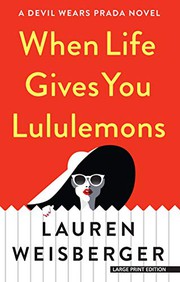
When Life Gives You Lululemons
2,028-word summary 9 min read 352 pages in the book
- First published
- 2018
- Publisher
- Simon & Schuster
- Pages
- 352
- ISBN
- 9781476778440
- Series
- The Devil Wears Prada (#3)
Reading options
What's inside (7 sections)
Emily after Runway
This is the third book in The Devil Wears Prada line, set about a decade after Andrea Sachs walked out of the fashion magazine Runway. It moves the spotlight to Emily Charlton, who was Miranda Priestly's other assistant and was played by Emily Blunt in the 2006 film. Emily has left New York and reinvented herself in Hollywood as a celebrity stylist and image consultant specializing in crisis management.
Her career is in free fall. She is hopeless with social media, and a hotshot rival with millennial skills is poaching her Hollywood clients. She needs one big win, or she may as well go back to Runway. That threat hangs over the whole book. Emily's new life is less secure than she wants anyone to know, and the past is always available as a measure of who she has become.
Emily's social-media problem is more than a character quirk. Her whole profession depends on controlling what the public sees, and the tools have changed faster than she has. The rival who is taking her clients is younger and fluent in the platforms that now decide reputations. Weisberger uses that generational gap to give Emily something real to lose. She is not simply vain. She is a skilled professional whose skill has been devalued.
That makes the prospect of returning to Runway more complicated than a joke. Emily knows exactly what that life would be like, and she knows she would be good at it again. Going back would be a kind of surrender, but it would also be a return to a world where she knew the rules. The book keeps both possibilities open.
I picked it up because the site has the first book and this is the second sequel. You do not need to have read them, though the character's history is part of the joke. Miranda Priestly makes a cameo, and Emily's Runway years keep surfacing in conversation.
Lauren Weisberger published this in June 2018, and it was a New York Times bestseller. The UK edition was retitled The Wives, which tells you something about how the book was marketed on either side of the Atlantic. The American title is a joke about athleisure and the suburbs.
Greenwich
The setting is Greenwich, Connecticut, a world of manicured lawns and extra-strong Tito's and sodas. The neighborhood has an opinion about its infamous new neighbor, and everyone shares it. Weisberger is very good on the way a suburb produces judgment as a collective activity. Nobody in Greenwich is doing anything, but everybody is discussing what everybody else did.
Karolina Hartwell is the new neighbor. She was the face of L'Oréal and an internationally known supermodel. Now she is the wife of Graham Hartwell, a newly elected New York senator with his eye on the presidency, which the book describes as all very Kennedy-esque. Karolina has been all over the tabloids after a DUI arrest with a Suburban full of other people's children, her stepson and his friends.
Karolina's fall is written with sympathy even when the book is mocking her. She was a working woman at the top of a brutal industry, and she married into a political family that wanted a wife who would photograph well. The DUI story gave the public a reason to enjoy her humiliation, and the tabloids did what tabloids do. Weisberger understands that a scandal is a product. It is manufactured, distributed and consumed, and the person at the center of it has the least control over the story.
The detail about the Breathalyzer is the book's best piece of evidence that something is wrong. A woman who asks to be tested is asking for proof of her innocence. Nobody gives it to her, and the absence says more than the arrest did.
The charge is suspect. She was not drunk, and she begged for a Breathalyzer test that she was never given. That detail is the engine of the mystery. A woman with every advantage has been publicly humiliated, and the official story of what happened does not fit.
Miriam Kagan is the link between Emily and Karolina. She was Emily's friend at summer camp, and until recently she was a partner at one of Manhattan's most prestigious law firms. Now she is a stay-at-home mother in Greenwich. She dusts off her Harvard law degree, which is both a joke and a plot point. Miriam is the one person in this world who knows how to challenge a legal finding, and she has been using her brain to organize birthday parties.
Miriam's decline is the saddest thread in the book. She was a partner at a prestigious firm, and now she is introduced in the neighborhood by reference to her husband. The moment she decides to use her law degree again is the moment she starts to become herself to the other women. Weisberger writes that return without sentiment. Miriam is rusty and uncomfortable and much smarter than everyone around her.
Her suspicion about her own husband's fidelity is what makes her a believable investigator. She is not approaching Karolina's case as a lawyer who has been handed a file. She is a woman who has started looking closely at the men in her own life and does not like what she sees. That is the emotional reason the case matters to her, and it makes her more than the plot's legal expertise.
Graham's public philandering is another thread. He appears in the society pages with the president's glamorous daughter, a connection that could advance his political career. Miriam also begins to suspect that her own husband is cheating, which puts marital fidelity on the same plane as Karolina's marriage. The book is interested in how many arrangements in this world are maintained by not asking questions.
The trio
Emily and Miriam investigate the DUI and conclude that Karolina was set up by her husband. The three friends then set out to bring him down. That is as far as the sources I consulted go in describing the specific ending, and I will not invent a final confrontation or a precise mechanism for how Graham is exposed. What the book establishes clearly is the alliance: three women with different skills and different reasons to be angry decide to act together.
Emily brings the understanding of image and public relations. Miriam brings the legal training. Karolina is the woman whose life has been used as a story by other people. The publisher's description calls them an unlikely trio who desperately need each other, which is a fair account of the dynamic. None of them could do this alone, and none of them would have asked for help a year earlier.
The Greenwich Material is the book's sharpest comedy. Weisberger lampoons athleisure, trophy children, birthday-party one-upmanship, plastic surgery and vaginal rejuvenation. There is a fear among the neighborhood women that their husbands will leave them if they are not smokin' hot and sexually available. A designer-clad mother hosts a sex-toy party where every item is assessed by how much pleasure it will give the men. That scene is funny and rather sad. The women have built a whole social order around being evaluated, and they have internalized the evaluator.
Emily, Karolina and Miriam are the counterpoint. They are described as refreshing against the Greenwich mothers, who are all swimming in the extremely shallow end of the pool. That line is the book's view of the suburb in a sentence. The women are not evil. They are trapped in a competition they did not design and cannot win.
What the book is doing
Weisberger's original novel drew on her brief tenure as an assistant to Vogue editor Anna Wintour, and the whole series has been interested in the cost of working for a woman who treats people as accessories. This book moves that interest into a different world. Hollywood image management and suburban politics are both industries for manufacturing appearances, and Emily is at home in both.
The Runway past is a running measure. Emily has become the kind of person who manages other people's crises, and the book keeps asking whether she has escaped Miranda Priestly or simply become her. The cameo is brief, but it works because the reader knows what Emily's old life sounded like. When she hears it again, the years fall away.
The book was published in 2018 and appeared on both the hardcover fiction and combined print-and-e-book fiction lists dated June 24 of that year. Reviews were positive within the genre. Kirkus called it juicy and delicious, with rich people behaving scandalously on every page. Publishers Weekly called it a treat for Weisberger's fans and a page-turning beach read.
Those descriptions are accurate. This is not a literary novel, and it does not try to be. It is a comedy about privilege with a mystery attached, and its verdict on the neighborhood is delivered through jokes rather than argument.
The series history is worth a note. The Devil Wears Prada appeared in 2003 and drew on Weisberger's own brief time as an assistant to Anna Wintour. Revenge Wears Prada followed in 2013. This book moves the action away from fashion, but the earlier novels are never far away. Andrea's departure is the starting point, Emily's old job is the measure of her current one, and Miranda's cameo is a reminder that the world she left still exists.
I also want to note how the book treats money. The Greenwich women have a great deal of it, and the comedy comes from watching them treat their anxieties as if they were problems of taste or fitness. A party where vibrators are judged by the pleasure they give men is funny, and it is also a picture of a group that has converted its power into a set of rules for pleasing the people above them. Weisberger is sharper here than the title suggests.
What I finished with
I finished the book thinking about how different Emily is from Andrea. Andrea walked away from the magazine and found a life that looked like her own. Emily stayed in the orbit of image management and simply changed industries. That is a more interesting character decision than it first appears. The book is not really about whether Emily can win a client. It is about whether a person who learned to survive by managing appearances can ever stop.
The title's joke is better than it needs to be. Lululemon stands in for a whole lifestyle of expensive calm, and the phrase about lemons and lemonade is turned into a joke about what a woman is expected to do with humiliation. Karolina has been handed a public disgrace, and the book's answer is that she should not make lemonade. She should find out who handed it to her.
I was frustrated by the ending's lack of specificity in the sources I could verify, and I have kept my account general for that reason. What I can say is that the book is clearly interested in the moment when three women stop managing other people's stories and start telling their own. That shift is the satisfying part, and it does not depend on how the last scene is staged.
It was a New York Times bestseller in 2018, appearing on both the hardcover fiction and combined print-and-e-book fiction lists. The UK edition was published as The Wives. The earlier books in the series are The Devil Wears Prada and Revenge Wears Prada.
The book's verdict on Greenwich is delivered through description rather than argument. The women are not cruel. They are busy maintaining a world in which their value depends on being desired, and the comedy comes from watching them mistake that arrangement for a choice. Weisberger is at her best in the smaller scenes: a conversation over drinks, a party where everyone is performing, a friend who says the thing nobody else will. Those moments give the book more warmth than its title promises.
FAQ
Do I need to have read the earlier Devil Wears Prada books?
No. The book follows Emily Charlton rather than Andrea Sachs, and it establishes her situation. Fans will recognize Miranda Priestly in a cameo and measure Emily against her Runway past.
Why is the UK edition called The Wives?
It was retitled The Wives and published by HarperCollins in the UK. The American title uses Lululemon as shorthand for a suburban athleisure lifestyle.
Who is Karolina Hartwell?
A former L'Oréal face and international supermodel married to a New York senator with presidential ambitions. She was arrested for a DUI with her stepson and his friends in the car, but she was not drunk and was denied a Breathalyzer test.
Similar books
More from The Devil Wears Prada first, then related titles.
The Devil Wears Prada
Andrea Sachs takes an assistant job for Miranda Priestly at Runway and loses herself.
3,203-word summary · 14 min read
Everyone Worth Knowing
A young woman quits her banking job after a friend's engagement and lands in a New York PR firm where everyone is paid to know everyone.
2,360-word summary · 10 min read
Chasing Harry Winston
Three friends turn thirty in Manhattan and make a wild pact: Emmy will sleep her way around the world, Adriana will settle down, and Leigh watches from the…
2,185-word summary · 10 min read
The Distance Between Us
Seventeen-year-old Caymen Meyers distrusts rich people, then a wealthy boy keeps proving her wrong while her mother's doll shop struggles to survive.
2,231-word summary · 10 min read
The Vacationers
A New York family's two-week stay in Mallorca turns into a comedy of exposed secrets when a magazine editor's affair and a son's debts come to light.
2,324-word summary · 10 min read
The Rachel Incident
A funny, sharp novel about two twenty-somethings in recession-era Cork whose bookshop friendship, tangled romance and a married professor's lie leave a secret…
2,346-word summary · 10 min read
Rachel's Holiday
Rachel Walsh calls her cocaine use recreational until an overdose and a stay at a Wicklow rehab clinic force her to hear what her family and boyfriend have…
2,792-word summary · 12 min read

Nick and Norah's Infinite Playlist
Rachel Cohn and David Levithan trade chapters as two music-obsessed teenagers spend one long New York night together, from a five-minute fake date to something…
2,355-word summary · 10 min read
Watermelon
A woman left by her husband on the day their daughter is born retreats to her chaotic Dublin family, then slowly learns to stop believing his version of the…
2,295-word summary · 10 min read
Last Night in Brooklyn
A copywriter in 2005 Fort Greene trades a scripted engagement for a bar crowd, a rising designer, and a neighborhood being remade around her.
2,540-word summary · 11 min read
Size 12 Is Not Fat
Former teen pop star Heather Wells investigates two dorm elevator deaths while juggling her ex, her crush, and a size-12 wardrobe.
2,805-word summary · 12 min read
Mr. Maybe
Libby Mason wants a rich husband, but the wealthy man who proposes is dull and the broke writer she cannot forget is not offering forever.
2,322-word summary · 10 min read
Bet Me
A sharp actuary agrees to dinner with a charming serial bettor, then spends the next month pretending the wager does not matter.
2,710-word summary · 12 min read

Big Swiss
A transcriptionist for a sex coach falls for one of his clients, the tall Swiss gynecologist she calls Big Swiss, in a funny novel about work and secrets.
2,523-word summary · 11 min read
Wedding Night
Lottie marries an old flame days after a breakup, then flies to a Greek island while her sister quietly works to sabotage the honeymoon. A farce about memory,…
2,213-word summary · 10 min read
Dash & Lily's Book of Dares
Two lonely New York teenagers trade dares in a red notebook left at the Strand, falling for each other on the page before they meet.
2,228-word summary · 10 min read
One of Us Is Dead
In Buckhead, Atlanta, five women narrate a murder among manicures, fundraisers, and social warfare. Jeneva Rose's 2022 thriller is a gossipy revenge fantasy…
2,471-word summary · 11 min read
Bridget Jones: The Edge of Reason
Bridget doubts Mark, takes a job with Daniel, and lands in trouble in Thailand.
2,198-word summary · 10 min read
The Bromance Book Club
A Nashville pitcher joins a secret romance book club to save his marriage after his wife Thea asks for divorce. He trades pride for listening, chores, and…
2,932-word summary · 13 min read
Jemima J
Overweight London journalist Jemima Jones invents a slim online self for a California lover, starves to match the photo, then faces betrayal and learns to…
2,883-word summary · 13 min read
Ghosts
At 32, food writer Nina Dean faces ghosting by Max and her father's dementia in London.
2,677-word summary · 12 min read
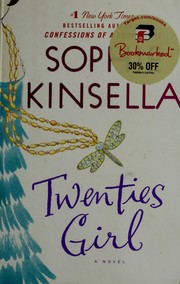
Twenties Girl
Dumped and flailing, Lara Lington is haunted by her great-aunt Sadie, a 1920s ghost who wants her lost necklace back.
2,938-word summary · 13 min read
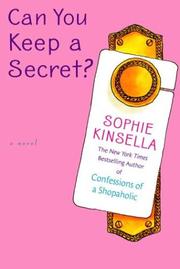
Can You Keep a Secret?
Emma blurts every secret to a stranger on a turbulent flight, then finds him running her company.
3,114-word summary · 14 min read
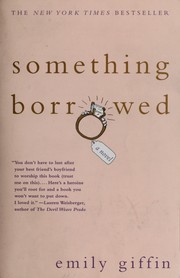
Something Borrowed
Good girl Rachel loves her best friend's fiance through a summer of weddings and lies.
2,100-word summary · 9 min read
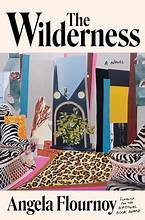
The Wilderness
Four Black women move through twenty years of friendship in Angela Flournoy's discontinuous, widely praised second novel.
2,141-word summary · 10 min read
The Rest of Our Lives
A law professor drives his daughter to college, then heads west instead of home, testing a private promise he made twelve years ago.
2,238-word summary · 10 min read
The Long Haul
Greg Heffley's summer road trip goes sideways with a towed boat, a live pig, and a family in a purple van.
2,311-word summary · 10 min read
The Impossible Fortune
Osman gathers the Coopers Chase pensioners for a fifth mystery that opens on a quiet year, a wedding, a vanishing guest and a code worth a fortune in Bitcoin.
2,685-word summary · 12 min read
The Collected Regrets of Clover
A death doula who writes down the last words of strangers keeps her own heart locked away, until a new neighbor, a dying photojournalist and a road trip to…
3,055-word summary · 14 min read