
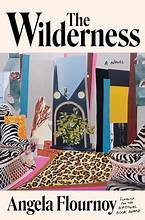
The Wilderness
2,141-word summary 10 min read 304 pages in the book
- First published
- 2025
- Publisher
- Mariner Books
- Pages
- 304
- ISBN
- 9780063318779
Reading options
What's inside (9 sections)
A book that refused to settle
I started The Wilderness expecting a straightforward novel about female friendship and found something considerably stranger. Angela Flournoy's second novel, published by Mariner Books on 16 September 2025, follows four Black women through their twenties, thirties and forties, but it refuses to behave like the books it resembles. It moves backwards and forwards in time, switches between first-person narrators, and often reads more like a set of linked stories than a novel with one accumulating line. I found that frustrating for the first fifty pages and then completely convincing.
The frustration was my own fault. I wanted to know which woman was the centre of the book, and Flournoy declines to give me one. The closest thing to a protagonist is Desiree, but even she is given only a share of the pages. Her older sister Danielle gets an interlude of her own. Around them are Nakia, January and Monique, each allowed to take the story in a direction that does not always connect neatly to the others. The effect is that nobody owns the book, which turns out to be the point.
What held me was the quality of the attention. Flournoy, whose debut was The Turner House in 2015, writes these women as people who have lives off the page. They have jobs, grudges, sexual histories, money problems and private disappointments that the novel only partly explains. Kirkus Reviews observed that the discontinuous design lets each woman be rendered in depth and from multiple angles, and that is exactly what happens. You get used to not being told everything, and after a while the gaps feel like respect.
Desiree on the train to Zurich
The opening is a long way from the usual first scene of a friendship novel. Desiree is twenty-two and travelling through Paris on her way to Zurich with her grandfather. He intends to die the next day by assisted suicide. She is the only family he has left, or so it seems, and the trip is a kind of farewell that neither of them quite knows how to conduct.
Desiree is almost entirely alone in the world. Her mother has been dead for years, her father has been absent just as long, and her relationship with her older sister Danielle is badly strained. She has no prospects and no clear plan, and she drifts into the group of friends who will fill the rest of the book. The surprising thing is that this adrift young woman turns out to be the anchor. Everyone else leans on her, even when she has nothing to offer, and the novel keeps returning to her steadiness as the years pass.
That reversal is one of the book's quiet strengths. Desiree is not the most articulate or the most successful of the four, and she is certainly not the most certain. But she is the one who stays, and longevity is its own kind of authority. Flournoy never announces this. She simply lets Desiree be present in scene after scene, holding the others together while her own life remains unresolved.
The structure and the women in it
The four friends are drawn with sharp economy. Monique starts as a librarian and becomes an influencer, a shift that the novel treats as both a career change and a change in how she sees herself. January is a melancholic mother of two sons, and her children are never far from the edges of her scenes. Nakia is a lesbian restaurateur, whose work gives the book some of its best settings and its sense of pressure. Desiree moves between them, and Danielle appears in her own section, which complicates the sister relationship without explaining it away.
The timeline is deliberately broken. Flournoy moves among the women's twenties, thirties and forties without signalling a clear order, and the first-person voices change without much warning. Early on I kept checking to see whose chapter I was in and when it was set. After a while I stopped, because the book asks to be read as a collection of moments rather than a sequence. The Washington Post praised the way the first-person narration pulls the reader into the characters' minds, and that is the real effect. You stop asking what happens next and start asking what it feels like to be this person at this moment.
Danielle's interlude is the part of the book I found most intriguing. She is introduced as the older sister with whom Desiree barely speaks, and for a while she exists only as a sore subject. Then Flournoy gives her a section of her own, and the strain between the sisters becomes something more complicated than a grudge. The relationship is never smoothed over. The interlude offers a glimpse of what Danielle has been carrying, but it does not ask the reader to forgive her or to take her side. It simply widens the frame, so that the friendship at the centre of the book is seen against a family history that none of the women can escape.
This is also where the novel takes its biggest risk. A discontinuous structure can easily become an excuse for not building anything. Some of the connections between the women's lives are thin, and I finished one section unsure how it related to the one before it. Flournoy seems untroubled by that, and the book is stronger for her confidence. The sections accumulate a picture of a friendship rather than a plot about one.
The New Republic argued that she breaks with the established tropes of the female-friendship novel, and the claim is fair. This is not a book about women bonding over men or over a shared career, and it has no interest in the idea that friendship is a warm substitute for family. It is closer to a record of how a group of people becomes a permanent part of one another's lives without ever fully agreeing on what that means.
The wilderness of ordinary adult life
The years the novel covers are full of the ordinary events that add up to a life. There are hookups and breakups, the arrival of the Covid-19 pandemic, financial woes, career changes and stretches of caregiving. Flournoy calls this territory the wilderness, and the word does a lot of work. It is not a literal place. It is the condition of being an adult without a map, in which the dangers are small and constant rather than dramatic.
The pandemic sections are among the most pointed, because the book understands that a crisis does not affect a group of friends evenly. People lose work, lose patience, lose the ability to be present for one another. Money becomes a quiet divider. Caregiving falls unevenly, usually on the person least able to refuse it. Flournoy notices these distributions without lecturing about them, and the result is a book that feels socially alert without being a thesis.
January's caregiving and her sons are a good example. She is described as melancholic, but the novel does not treat that as a fixed personality trait. It is a condition produced by a life of managing other people's needs. Similarly, Monique's move into influencing is not played as a simple sellout. It is a woman finding a way to be seen and paid, and the book lets both the appeal and the hollowness of that be true.
The novel is also very good on work. These women are not defined by their jobs, but their jobs determine how much of themselves they have left at the end of a day. Librarian, influencer, mother, restaurateur: each role comes with its own demands, and the book notices how easily a career can become a way of describing a person instead of a thing they do. Flournoy lets her characters complain about work without making them boring, because the complaints are really about time and recognition and the fear of being stuck.
The men in these women's lives come and go. That is not a criticism of the book but a description of its priorities. The relationships that last are the ones among the women, and even those are imperfect. Friendship here is not a safe harbour. It is a set of obligations that people meet unevenly, sometimes generously and sometimes not at all. That is a more adult view than most novels of this kind offer.
The near future and the larger argument
The boldest choice in The Wilderness is the decision to set several scenes, including its shattering climax, in the near future. Up to that point the book can be read as a portrait of a friendship. Those scenes widen it into something else. Private worries about love and work begin to sit beside an argument about violence and oppression, and about whether mitigation is possible through community, care and chosen family.
This is a difficult move, and I can see why some readers might resist it. A novel that has spent two hundred pages inside the small details of ordinary lives suddenly asks those details to answer a political question. The book does not resolve the tension, and I think that is intentional. The point is not that friendship can solve anything on a large scale. It is that people who have built a life together are the ones who notice when something is wrong, and who are able to act on a scale that a stranger cannot.
Flournoy's earlier novel, The Turner House, was also interested in how families and communities hold together under pressure. Here the unit is chosen rather than given. The four women are not related, and their loyalty is not guaranteed by blood. The near-future scenes test whether a chosen family can do what an actual one often fails to do. The answer the book offers is cautious, and it is more hopeful than a cynical reading would expect.
That combination is what made me keep returning to the book. It is willing to be a novel about feelings and a novel about social reality at the same time, without treating either as more serious than the other. The friendship is not a metaphor for politics, and the politics is not a distraction from the friendship. They occupy the same pages, and the reader has to hold both.
The reception, and a fair objection
The novel was well received, and the praise was fairly consistent. Kirkus called the result elegant and upsetting, admiring both the precision of the character work and the book's hard look at social and political reality. Publishers Weekly gave it a starred review and called it a knockout. It was longlisted for the 2025 National Book Award for Fiction, was a finalist for the National Book Critics Circle Award and the Kirkus Prize, and was named one of The Washington Post's ten best books of 2025.
I understand the acclaim, though I would add a note of caution. The structure that makes the book distinctive also makes it uneven. A few of the sections end before they have earned their ending, and the jump into the near future, while brave, can feel abrupt if you have settled into the earlier rhythm. There were moments when I wanted Flournoy to stay with a scene longer, particularly in Nakia's restaurant, where the setting promised more than the pages delivered.
But I am not sure those are failures in the sense that a tighter book would have avoided them. The messiness is part of the design. A life of friendship is not neatly shaped, and a novel that imitates its shape will have loose ends. The book's best pages, especially those set in the near future, are strong enough that I forgave the rougher transitions.
What stays with you
I finished The Wilderness thinking less about any single character than about the period of life it describes. The twenties, thirties and forties are when people discover that the promise of an adult life does not include a map, and that the people who know you best are often the only ones who can see you changing. Flournoy has written that condition with unusual precision, and she has done it without making it cozy.
The title works because it refuses to be pinned to one meaning. It is the wilderness of a career that changes without warning, of a friendship that survives without being simple, and of a country whose private troubles are never entirely private. Desiree and her friends never quite master it. They get better at navigating it together, which is a smaller claim and a more believable one. That is the book's quiet achievement: it treats survival as something that happens in company, and it is honest about how little company can actually guarantee.
FAQ
Is The Wilderness Angela Flournoy's first novel?
No. It is her second novel, published by Mariner Books on 16 September 2025. Her debut, The Turner House, appeared in 2015.
Is this a conventional friendship novel?
Not really. Flournoy moves back and forth in time among first-person narrators, and several scenes, including the climax, are set in the near future.
Did the book receive awards or recognition?
It was longlisted for the 2025 National Book Award for Fiction, was a finalist for the National Book Critics Circle Award and the Kirkus Prize, and was named one of The Washington Post's ten best books of 2025.
Similar books
Dream Count
Four women narrate the 2020 lockdown in their own voices: a travel writer, a friend in early labor, a banker cousin and a housekeeper assaulted in a hotel room.
2,286-word summary · 10 min read
The Vacationers
A New York family's two-week stay in Mallorca turns into a comedy of exposed secrets when a magazine editor's affair and a son's debts come to light.
2,324-word summary · 10 min read
Last Night in Brooklyn
A copywriter in 2005 Fort Greene trades a scripted engagement for a bar crowd, a rising designer, and a neighborhood being remade around her.
2,540-word summary · 11 min read
Little Earthquakes
Four Philadelphia women meet during pregnancy and discover that new motherhood is nothing like the plan, while friendship becomes the thing that holds them…
1,997-word summary · 9 min read
Summer Sisters
Vix and Caitlin share Martha's Vineyard summers from age twelve into adulthood, through first love, grief, marriage, and a disappearance that still haunts Vix.
3,633-word summary · 16 min read
The Story of the Lost Child
Elena and Lila age through motherhood, quakes, and a vanishing.
2,500-word summary · 11 min read
Those Who Leave and Those Who Stay
Elena publishes into Florence salons while Lila labors through Naples factories across the 1970s.
2,034-word summary · 9 min read
The Bean Trees
Taylor Greer flees Kentucky, inherits Cherokee toddler Turtle, and roots with Tucson strays.
2,082-word summary · 9 min read

Universality
Natasha Brown's short second novel turns a lockdown fracas over a gold bar into a sharp satire of money, identity and public argument.
2,302-word summary · 10 min read
The Rest of Our Lives
A law professor drives his daughter to college, then heads west instead of home, testing a private promise he made twelve years ago.
2,238-word summary · 10 min read
Palaver
A mother shows up uninvited at her estranged son's Tokyo apartment, and the two spend the weeks before Christmas talking their way toward something like…
2,465-word summary · 11 min read
The Rachel Incident
A funny, sharp novel about two twenty-somethings in recession-era Cork whose bookshop friendship, tangled romance and a married professor's lie leave a secret…
2,346-word summary · 10 min read

The Kitchen God's Wife
Amy Tan's second novel pairs a San Jose speech therapist with her Chinese mother, whose account of war, an abusive husband, and a narrow escape comes out in a…
2,896-word summary · 13 min read
The Emperor of Gladness
Ocean Vuong's second novel follows a young addict pulled back from a bridge in a dying Connecticut mill town and into the home of an elderly immigrant woman…
2,693-word summary · 12 min read
The Correspondent
A retired lawyer in Annapolis writes letters across a decade to family, literary heroes, and one recipient she never mails. Evans's debut turns correspondence…
2,296-word summary · 10 min read
The Collected Regrets of Clover
A death doula who writes down the last words of strangers keeps her own heart locked away, until a new neighbor, a dying photojournalist and a road trip to…
3,055-word summary · 14 min read
Red at the Bone
A girl's coming-of-age ceremony in a Brooklyn brownstone opens a family story shaped by Tulsa, teenage pregnancy, class and a second tragedy on September 11.
2,108-word summary · 9 min read
My Friends
A dying artist sends an eighteen-year-old stranger a painting, pulling her into the story of four teenagers and one summer on an abandoned pier.
2,219-word summary · 10 min read
Hollow Bones
On 11 September 2001, two-month-old Molly Fitzgerald loses her mother at the World Trade Center. She grows up planning for disasters, until a crisis in her new…
2,703-word summary · 12 min read
Good Dirt
A stoneware jar made by an enslaved potter links a prominent Black New England family across a hundred and fifty years of prosperity, grief and buried history.
2,069-word summary · 9 min read
Flashlight
Susan Choi's Booker-shortlisted novel opens with a father and daughter on a breakwater in 1978, then follows the loss outward through four generations and…
2,849-word summary · 13 min read
Finding Audrey
A fourteen-year-old who cannot leave the house or remove her dark glasses finds her way back through therapy, a film project and a patient new friend.
2,559-word summary · 11 min read
Dear Martin
Nic Stone's debut follows Justyce McAllister, a scholarship student at a mostly white Atlanta prep school, who starts writing letters to Dr. King after a…
2,596-word summary · 12 min read
Behold the Dreamers
A Cameroonian chauffeur and his wife chase the American dream while driving a Lehman Brothers executive through the 2008 crash in Mbue's debut novel.
2,578-word summary · 11 min read
The Mermaid Chair
Jessie Sullivan returns to her childhood home on Egret Island to care for her agoraphobic mother, then finds her marriage, her faith, and a monk's vow thrown…
2,237-word summary · 10 min read
The Boston Girl
Eighty-five-year-old Addie Baum tells her granddaughter how she grew up in Boston's North End, chased education and love, and became the woman she is.
2,439-word summary · 11 min read
That Summer
A restless Philadelphia wife befriends a glamorous consultant who found her through a misdirected email and an old secret.
2,372-word summary · 11 min read

We Are Okay
Marin fled San Francisco after her grandfather vanished and stopped answering anyone. When Mabel visits her college dorm, she has to say what happened.
2,253-word summary · 10 min read

One to Watch
A plus-size fashion blogger takes the lead role on a reality dating show to prove she belongs on television, and finds she might want what the cameras offer.
2,478-word summary · 11 min read
Between Sisters
Estranged sisters Meghann and Claire reunite in Washington when Claire announces a rushed wedding, then face their mother's desertion and a medical crisis.
2,467-word summary · 11 min read