
The Yiddish Policemen's Union
2,247-word summary 10 min read 414 pages in the book
- First published
- 2007
- Publisher
- HarperCollins
- Pages
- 414
- ISBN
- 9780007149827
Reading options
What's inside (8 sections)
The first thing I noticed reading The Yiddish Policemen's Union is how short the sentences are. Chabon published this novel in 2007 with HarperCollins, and by his own account he wrote it as an exercise in restraint, with shorter sentences and shorter paragraphs than his usual work. Coming from the author of The Amazing Adventures of Kavalier and Clay, that restraint is striking. The book is a detective story, an alternate history, and a meditation on exile, but it refuses to show off. It took me a few chapters to settle into that quieter voice, and then I could not put it down.
A city that should not exist
The premise is the kind of idea that keeps a writer company for years. Chabon first wrote about it in a 1997 essay for Harper's called Guidebook to a Land of Ghosts, where he noted the lack of Yiddish-speaking countries in which a phrase book would be useful. In his research he came across a real proposal to settle Jewish refugees in Alaska during the Second World War, and the notion stuck. He started the novel in 2002, discarded a draft, delayed publication twice, and finally released it in May 2007.
In this version of history, the United States adopted the Slattery Report and set aside land in Alaska for European Jews fleeing the Nazis. The divergence is small and specific: Anthony Dimond, the Alaska Territory delegate who blocked a vote on the report, died in a car crash. Two million Jews are murdered in the Holocaust instead of six million. Israel is founded in 1948 and destroyed three months later, leaving Palestine a patchwork of competing groups, while the United States embraces a neo-Zionist movement that wants to reclaim a Jewish state by force.
Sitka, Alaska, has become a sprawling Yiddish-speaking metropolis, the center of a federal district granted temporary status for sixty years. The book is set as that status is about to expire. A president who is an evangelical Christian and a Christian Zionist is promising the Reversion, the transfer of Sitka back to the state of Alaska. One of the city's landmarks is the Safety Pin, a tower built for a world fair in 1977. Beyond the border live the Tlingit, with whom the Jews have a history of friction, intermarriage, and shared municipal life.
Chabon drops hints about a larger altered world without stopping to explain it. Germany crushed the Soviet Union in 1942, the war ran until 1946, and Berlin was destroyed with nuclear weapons. John Kennedy was never assassinated and married Marilyn Monroe. Orson Welles finished his film of Heart of Darkness. These details are thrown off casually, the way people mention the weather, and that is what makes the world feel inhabited rather than designed. The reader has to accept that the history is bigger than the case.
A draft thrown away
The novel took years, and the story of its making explains some of its shape. Chabon began work in February 2002, inspired by that Harper's essay about Yiddish phrase books and the Alaska settlement idea. In late 2003 he mentioned the book on his website under the title Hatzeplatz, a Yiddish expression for the back of nowhere. By 2004 he was telling readers it would appear in the fall of 2005, then he threw out the draft and started again. His publisher pushed the date to April 2006, and in December 2005 he announced another delay because he felt HarperCollins was rushing him. An excerpt appeared in the Virginia Quarterly Review in the fall of 2006, and the finished book came out on May 1, 2007.
The rejected draft was roughly six hundred pages, written in the first person, with the same characters and a completely different story. That fact helps explain the lean quality of the published version. Chabon has described the result as an exercise in restraint, with shorter sentences and paragraphs than he normally writes. He also called it a homage to Raymond Chandler, Dashiell Hammett, Ross Macdonald, and Isaac Babel. You can hear all four in the book without any of them being copied. The dialogue snaps, the descriptions are precise, and the narration keeps its distance from Meyer even when he is at his worst.
That careful construction is part of why the book can feel cool at times. Nothing is wasted, and very little is left loose. For a reader interested in how a novel gets made, the long gestation and the discarded draft are almost as interesting as the story itself.
A body in the hotel
The detective is Meyer Landsman, an alcoholic homicide investigator with the Sitka police. He lives in the hotel where the story begins, which tells you most of what you need to know about how his life has gone. A man has been found dead there, and beside the body is an open cardboard chessboard with a game set up on it. Landsman calls his partner and cousin, Berko Shemets, who is half Jewish and half Tlingit, and the two of them start asking questions.
Back at the station they get news that their unit has a new commanding officer: Bina Gelbfish, Landsman's ex-wife. Their marriage is one of the book's quiet losses, referenced in clipped exchanges rather than explained at length. Landsman's family history is a run of departures. His chess-addicted father, his mother, and his sister Naomi, a bush pilot who died in a plane crash, are all gone. The one older relative still around is Hertz Shemets, Berko's father, a veteran and former federal agent whose career ended badly when the people he worked for burned him.
The investigation moves through Sitka's chess clubs, where the victim was known as Frank. Landsman and Berko eventually learn his name: Mendel Shpilman, son of the Verbover rebbe, the most powerful organized crime figure in the city. Mendel had been a heroin addict, abandoned by both parents. Many Jews believed he was the Tzadik ha-Dor, the potential messiah born once in every generation. The family still wants a public funeral, arranged by their lawyer Aryeh Baronshteyn, and the contrast between that ceremony and the wasted young man on the hotel floor is one of the book's sharpest ironies.
Chabon writes the police work with real pleasure. There are interviews, records, and a slow accumulation of small facts. The dialogue has the clipped rhythm of Chandler and Hammett, two of the writers he has named as influences, along with Ross Macdonald and Isaac Babel. Landsman is a good detective because he notices what other people are tired of noticing, and a bad one because he is drinking through most of the case. The tension between those two facts gives the book its texture.
The messiah business
The deeper plot concerns what Mendel's death was connected to. Landsman follows a trail that leads back to his sister Naomi, who flew a plane to a set of buildings in Tlingit territory whose purpose nobody will explain. When he goes there himself, he is knocked out and thrown into a cell. The walls carry graffiti in Naomi's handwriting. He wakes to find Baronshteyn and a doctor insisting he is in a legitimate rehabilitation center, and he escapes by attacking his captor.
A Tlingit police chief named Willie Dick finds him hurt and half naked and reunites him with Berko. Back in Sitka, the two detectives visit Hertz, and the visit turns into a confrontation about a race riot that killed Berko's mother. Hertz tries to shoot himself in the head and is rushed to the hospital, which lands the personal history right on top of the case. This is the novel at its most controlled. A family argument and a murder investigation keep colliding, and neither one resolves the other.
What the detectives uncover is a paramilitary group operating from the mysterious compound. Its members want to destroy the Dome of the Rock and build a new Temple in Jerusalem, an act they believe will hurry the birth of the messiah. An evangelical Christian Zionist American government backs them. When the news reports that the Dome has been bombed, the abstract plot becomes a fact with consequences, and the pressure on Landsman and Berko changes shape. American agents detain them and offer a bargain: they can stay in Sitka when the Reversion comes if they keep quiet about what they have learned. Landsman says he will, and is released.
The messiah thread is the part of the book I found hardest to read comfortably. It is deliberate, of course, that a murdered addict is treated as a religious possibility by people more interested in prophecy than in him. The novel keeps returning to the gap between what Mendel was and what others needed him to be. That gap is the moral center of the story, and Chabon handles it without softening it. Mendel never gets to explain himself, because the people around him were always talking over him.
The Reversion and the people left behind
For all its plot machinery, the book is most alive when it stays with the question of what happens to a place when its status runs out. Sitka has been a temporary home for sixty years. The Reversion means some residents will stay legally and others will not. Berko has made arrangements for his family. Landsman has not, and the difference between them says more about his state of mind than any number of drinking scenes.
The Tlingit relationship adds another layer. Berko's heritage gives him a footing in both communities, and the novel is careful to show friction and intimacy side by side. There is no easy claim that everyone got along, and no easy claim either that the two peoples only fought. Intermarriage and shared politics are part of the picture. Hertz's role in the old race riot complicates any sentimental reading of the family, and Berko has to carry a history he did not choose.
Bina, now Landsman's commanding officer, is the person he goes to when the case finally breaks open. Their scenes together have a worn, practical sadness. They know each other too well to perform, and the book gives them a kind of tenderness that never becomes a reunion. I liked that restraint. The marriage is over, and the case has not saved it, and nobody pretends otherwise.
There is a fair criticism to make here. The world-building is so dense that the detective plot sometimes has to wait while the author finishes an idea about alternate geopolitics. Readers who came for a straightforward mystery may find the digressions on German victories or a Third Russian Republic slow. The Yiddish itself is mostly flavor, sprinkled into dialogue and signs rather than presented in any way that demands knowledge from the reader. And while the book won the Hugo, Nebula, Locus, and Sidewise awards, it is not an easy or cheerful read. It is a noir that happens to be set in a Jewish homeland that never was.
The chess problem at the end
The solution arrives through an object that has been in plain sight since the first chapter. Landsman keeps returning to the chessboard beside Mendel's body, assuming it is an unfinished game. Remembering a problem he once saw from the opposite side at Hertz's house, he realizes the position is not a game at all. It is a composed chess problem, and the two views belong together. He takes Bina to see Hertz, who is recovering at Berko's home, and Hertz confesses.
Hertz killed Mendel. He did it at Mendel's own request, hoping that the death of the supposed messiah would ruin the government's plan to bring about a messianic age through violence. The confession resolves the murder but not the conspiracy, and the book refuses to tidy either one away. Landsman calls a journalist named Brennan and says he has a story. The reader is left to wonder whether he intends to expose Hertz's role in the killing or the larger plot around the Dome. That open ending frustrated some readers, and I understand why. After so much careful accumulation, the refusal to choose feels deliberate to the point of being stubborn.
Still, it fits the novel's sense of proportion. Landsman has spent the book failing to control the story of Mendel's death, and in the last page he decides to control at least one version of it. Whether he exposes his uncle or the government, he is the one who will decide what gets said. It is a small, grim kind of agency, and it is all the character believes in anymore.
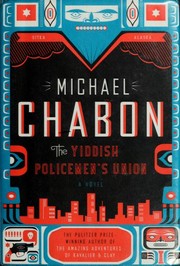
The cover, designed by Will Staehle, pulls together pulp detective imagery, Jewish visual references, and the art of the Pacific Northwest, including Tlingit and Haida forms. That mixture describes the book well. Chabon is writing a hard-boiled mystery, a speculative history, and a story about what it means for a community to be temporary, and he keeps all three in the same frame. The sentences stay short, the paragraphs stay short, and nothing is explained twice.
I would hand this to a reader who likes mysteries with unusual settings and does not mind a book that leaves a few doors open. I would be careful about recommending it to someone who only wants a solve. The murder matters, but it is not the whole reason the book exists.
FAQ
What is The Yiddish Policemen's Union about?
It is a 2007 detective novel by Michael Chabon, set in an alternate Sitka, Alaska, where a Jewish refugee settlement exists.
Did the book win any awards?
Yes. It won the Hugo, Nebula, Locus, and Sidewise awards. HarperCollins published it in 2007, and the first hardcover edition runs 414 pages.
Do I need to know Yiddish to read it?
No. Chabon sprinkles Yiddish words into dialogue and signs, but the meaning is almost always clear from context.
Similar books
The New York Trilogy
Three linked novels turn a wrong-number call into a puzzle about names, authorship, and the stories people tell to stay sane.
2,259-word summary · 10 min read
The Maltese Falcon
Sam Spade hunts a jeweled bird through lies after his partner is killed.
2,529-word summary · 11 min read
Case Histories
A Cambridge PI takes three cold cases that tangle with his own loss.
2,465-word summary · 11 min read
The Big Sleep
Marlowe takes a blackmail job for the Sternwoods and finds murder and daughters money cannot save.
2,243-word summary · 10 min read

There Will Be Bodies
Digging out a villa buried by Vesuvius, Flavia Albia finds chained corpses and a death someone tried to hide for ten years.
2,152-word summary · 10 min read
The Last Coyote
On stress leave, Harry Bosch reopens the unsolved murder of his mother, a prostitute strangled when he was twelve, and finds corruption reaching the DA's…
2,069-word summary · 9 min read
The 5th Horseman
Two linked cases pull Lindsay Boxer and the Women's Murder Club into a hospital full of strange deaths and a luxury-car murder spree.
2,609-word summary · 12 min read
Evil Under the Sun
Poirot's Devon holiday turns deadly when a flirtatious actress is strangled at a secluded seaside hotel in this 1941 puzzle.
2,380-word summary · 11 min read
Wild Dark Shore
On a remote island between Tasmania and Antarctica, a family guards a vast seed bank until a storm washes a stranger ashore and the radios go dead.
2,449-word summary · 11 min read
What We Can Know
In McEwan's eighteenth novel, a lonely scholar in a flooded, diminished Britain chases a vanished poem that could win him the professorship he has long wanted.
2,408-word summary · 11 min read
The Word Is Murder
A fictionalised Anthony Horowitz is talked into chronicling a prickly ex-detective's case: a woman murdered hours after planning her own funeral. A clever…
2,296-word summary · 10 min read
The Unquiet Grave
In Dervla McTiernan's fourth Cormac Reilly novel, a body found in a Galway bog turns out to be a missing school principal, and the case opens into something…
2,253-word summary · 10 min read
The Tunnel
A painter in a Buenos Aires prison recounts the glance, the woman and the jealousy that led him to murder the only person who understood him.
2,313-word summary · 10 min read
The Secret of the Old Clock
The first Nancy Drew novel: a sixteen-year-old detective follows a clue hidden in a clock to overturn a will and restore a family's inheritance.
2,011-word summary · 9 min read
The Running Grave
In the seventh Cormoran Strike novel, Robin goes undercover inside a Norfolk cult while Strike digs into a child's death from decades earlier.
2,615-word summary · 12 min read
The Paying Guests
A widowed mother and her unmarried daughter take in lodgers in 1922 south London, and a secret affair between Frances and Lilian pulls them into a murder case.
2,661-word summary · 12 min read
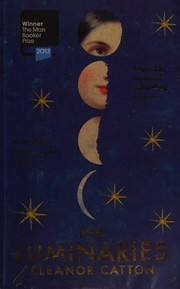
The Luminaries
Eleanor Catton's Booker-winning novel drops a young prospector into an 1866 New Zealand gold town where twelve men untangle a web of hidden gold, murder and…
2,949-word summary · 13 min read
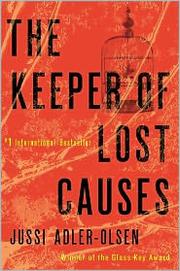
The Keeper of Lost Causes
Jussi Adler-Olsen introduces Carl Mørck and Department Q, a Copenhagen cold-case unit in a basement, and a missing politician whose file refuses to stay closed.
2,759-word summary · 12 min read

The Ice Princess
Camilla Läckberg's debut follows writer Erica Falck and detective Patrik Hedström as a frozen bathtub in a small Swedish town unravels a secret kept for…
2,321-word summary · 10 min read
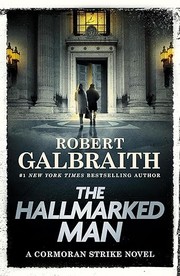
The Hallmarked Man
A body in a silver vault behind Freemasons' Hall sends Strike and Robin into a world of coded letters, secret societies and a girl whose whole identity may be…
3,084-word summary · 14 min read
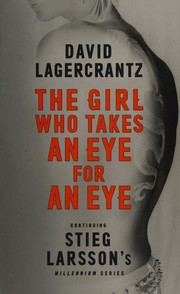
The Girl Who Takes an Eye for an Eye
Lisbeth Salander investigates a secret childhood experiment from prison while Mikael Blomkvist uncovers a twin conspiracy behind a wealthy businessman.
2,059-word summary · 9 min read
The Girl in the Ice
A young socialite is found frozen beneath the ice in a south London park, and DCI Erika Foster returns to work to lead the case. Grief, privilege and three…
2,492-word summary · 11 min read
The Beekeeper's Apprentice
In 1915 a bookish fifteen-year-old American girl stumbles across a retired Sherlock Holmes keeping bees on the Sussex Downs, and talks him into taking her on…
2,215-word summary · 10 min read
The Beautiful Mystery
In a cloistered Quebec monastery, a chant-singing monk is murdered and Gamache must break a vow of silence to find the killer. Eighth in the Chief Inspector…
2,262-word summary · 10 min read
Possession: A Romance
A London Library discovery sends two scholars chasing a secret Victorian love affair, in a Booker-winning novel of invented letters, poetry and the race to own…
2,394-word summary · 11 min read
Jack & Jill
A senator is killed with a nursery-rhyme calling card as a child is murdered near Alex Cross's home. The third Alex Cross novel pulls him toward two cases, one…
2,646-word summary · 12 min read
Fractured
In Karin Slaughter's second Will Trent novel, a mother kills the wrong man in an Atlanta mansion, and a GBI agent with a hidden reading difficulty finds a…
2,219-word summary · 10 min read
Five Little Pigs
Sixteen years after a painter's murder, Poirot reopens the case at the request of a daughter who believes her dead mother was innocent.
2,027-word summary · 9 min read
Body of Evidence
Kay Scarpetta investigates the murder of a reclusive romance novelist who opened her door willingly, and finds a missing manuscript and a web of…
2,007-word summary · 9 min read
A Trick of the Light
In the seventh Gamache novel, a woman is found dead in Clara Morrow's garden after her first solo show, and the case leads back through old reviews, AA amends,…
2,200-word summary · 10 min read