
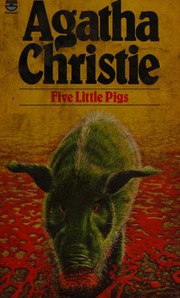
Five Little Pigs
2,027-word summary 9 min read 192 pages in the book
- First published
- 1943
- Publisher
- Collins Crime Club
- Pages
- 192
- ISBN
- 9780006163725
- Series
- Hercule Poirot (#25)
Reading options
What's inside (8 sections)
A letter from a dead mother
Sixteen years after the murder, twenty-one-year-old Carla Lemarchant receives a final letter from her mother Caroline Crale. Caroline died in prison, and the letter says she was innocent. Carla asks Hercule Poirot to reopen the case.
The original facts are straightforward. Caroline was convicted of poisoning her husband, the painter Amyas Crale, with coniine from poison hemlock. She died in prison within a year of the verdict. At the family home, Alderbury, she had admitted stealing the coniine from Meredith Blake's laboratory because she had contemplated suicide. She had carried a cold bottle of beer out to Amyas. The prosecution assumed she had poisoned the beer because Amyas was openly having an affair with his young painting model, Elsa Greer.
Poirot establishes that five other people were present that day, and he calls them the five little pigs after the nursery rhyme. Each suspect's line from the rhyme becomes a chapter title, which is one of the book's cleverest structural devices. It sounds like a game. It turns out to be a way of organizing a very serious inquiry into how a person can be condemned by the story everyone believes.
Poirot begins by reviewing the original case rather than visiting the scene, which is a striking choice. Sixteen years have passed, and the house is no longer a place where the truth can be found. The truth is in what people wrote and said, and in the gaps between their accounts. That is a better setup than a fresh corpse. Christie is writing about the way a story hardens into fact when nobody checks it.
The book's first line from Carla's letter is a direct appeal, and it gives Poirot a reason to care that goes beyond professional interest. A daughter is asking whether her mother was a murderer. That personal stake is rare in Christie and it gives the investigation an emotional weight the puzzle alone would not have.
I picked this up because it is one of Christie's most admired novels and because Robert Barnard called it the best Christie of all. It is a standalone Poirot book with no series number on the site that matters to the reading. The book was first published in the United States in 1942 as Murder in Retrospect, and in Britain in 1943 under the title used here.
The five
Philip Blake is a stockbroker who "went to market." He openly disparaged Caroline but was secretly attracted to her. His account includes a quarrel in which the teenage Angela said she hoped Amyas would die of leprosy. That detail seems like nothing at the time, which is why it matters later.
Meredith Blake, Philip's elder brother, is a reclusive amateur herbalist at Handcross Manor who "stayed at home." He had once hoped to marry Caroline, and after the murder he proposed to Elsa, who refused him. His laboratory is the source of the poison, which makes him both a witness and a suspect.
Elsa Greer "had roast beef." She was twenty, Amyas's mistress and his model, and she is now the spoiled society Lady Dittisham. She has the most obvious motive and the least interest in helping. Cecilia Williams "had none." She is the devoted governess, and she kept a reproduction of G. F. Watts's painting Hope in her room, which Caroline described as a blind girl sitting on an orange with a one-stringed harp.
Angela Warren "cried wee wee wee all the way home." She is Caroline's half-sister, a disfigured archaeologist. When they were children, Caroline threw a paperweight that blinded Angela in one eye and scarred her face. Caroline's guilt lasted a lifetime, and that guilt is the book's most important piece of hidden history.
Each suspect is given a way of speaking that makes them distinct. Philip is brisk and dismissive, Meredith vague and apologetic, Elsa careless with other people's feelings, Cecilia practical, Angela sharp. Christie is not writing a novel about a single type of criminal. She is writing about five people who have each made a life out of one version of the past, and she lets them talk long enough to reveal what that version costs them.
The Watts reproduction in Cecilia's room is one of the book's quiet details. The painting shows a blind figure with a single harp string, and the description of it keeps returning in different contexts. It is a picture of hope that cannot see, which is close to the book's subject. Everyone in the case has been hoping for something they refuse to look at directly.
Other figures in the case include Sir Montague Depleach for the defence, Quentin Fogg K.C. for the prosecution, George Mayhew, Edmunds, the family solicitor Caleb Jonathan and Superintendent Hale. Jonathan reads Juliet's balcony lines and compares Elsa's passion to Juliet's, which tells you how the adults in this story talked about a girl's obsession.
The interviews
Poirot interviews all five. None has an obvious motive, and only Angela insists that Caroline was innocent. That is the first crack in the case. A person with nothing to gain by defending her mother's memory is the only one who believes in it.
The decisive detail comes from testimony rather than evidence. After drinking the beer Caroline brought, Amyas said that everything tasted foul. That means he had already tasted something foul beforehand. It is a small line in a witness statement, and it changes the whole case. Poirot's method here is pure attention. He does not find a new document or a hidden weapon. He notices that one sentence does not fit with the others.
He gathers the five, Carla and Carla's fiancé John Rattery at Meredith Blake's house for the reconstruction and solution. Christie uses the classic country-house gathering, and the chapter works because every person in the room has been living with the case for sixteen years. They have all arranged their lives around a version of what happened. None of them wants it rearranged.
The truth
Caroline was innocent, but she refused to defend herself because she believed Angela had killed Amyas. She saw her silence as atonement for having blinded her sister as a child. That is the book's most devastating idea. A woman accepted a conviction and died in prison because she thought she deserved to suffer for something else.
Angela had handled the bottle but had added nothing to it. Caroline assumed that a childish prank by Angela had accidentally killed her husband. She could not imagine that her sister would try to kill Amyas, and she could not bring herself to name her in court.
The real murderer is Elsa Greer. She took seriously Amyas's promises to marry her, not realizing that he was only keeping her from leaving until he finished his masterpiece. She overheard him reassuring Caroline that he would not divorce her, and she decided on revenge. Having seen Caroline take poison from Meredith's laboratory, Elsa stole it from Caroline's room and put it in a glass of warm beer she gave Amyas. That explains his remark about everything tasting foul before Caroline's cold beer arrived.
Poirot tells Carla and John that he will take his findings to the police, but he admits that a posthumous pardon for Caroline or a conviction for Elsa is unlikely without physical evidence. That is an unusually bleak ending for a detective novel. The truth is known, and it changes nothing official.
As she leaves, Elsa says that Amyas and Caroline escaped her revenge. She is the one who truly died, because her life has been empty. Christie gives the villain the last word, and it is a disturbing one. Elsa has arranged her own life as a punishment, and she can no longer tell whether it is justice or self-pity.
The reception
Critics have loved the book across generations. Maurice Wilson Disher wrote about it in the Times Literary Supplement, Maurice Richardson in The Observer and J. D. Beresford in The Guardian. Robert Barnard called it the best Christie of all. Charles Osborne described it as immediately convincing and even moving in its inevitability and its bleakness.
That word, bleakness, is the key. The book solves the crime in a way that satisfies the form and refuses the consolation the form usually offers. The murderer will probably not be punished. The innocent woman cannot be vindicated. The daughter gets the truth and nothing else.
The book's treatment of Elsa is what makes the ending work. She is not presented as a woman driven mad by love. She is presented as a woman who believed what a man told her and organized her life around it, and then discovered that he had been performing. Her revenge is small and practical, and it succeeds completely. She gets away with it, and her punishment is that she has nothing left to want. That is a much more interesting fate than a prison sentence.
The adaptations have often softened that. A 1960 play called Go Back for Murder removed Poirot and replaced him with a lawyer named Justin Fogg, and had Carla leave her fiancé for him. A 2003 television episode with David Suchet had Caroline executed and renamed Carla as Lucy. A 1994 BBC Radio version featured John Moffatt as Poirot, and a French television version appeared in 2011.
The publication history has a small complication worth noting for the metadata. The work first appeared in the United States in May 1942 from Dodd, Mead under the title Murder in Retrospect, and the British edition under the title Five Little Pigs followed in 1943. The site uses the British title and the 1943 date, which is when this book acquired the name readers know. The first British hardcover ran to 192 pages, while the American edition ran to 234.
What I finished with
The title is from This Little Piggy, and Christie uses it more seriously than the rhyme suggests. The pigs in the nursery rhyme go to market, stay at home, eat roast beef, have none and cry all the way home. In her version, each line becomes a way of reducing a person to a single trait. Philip is the stockbroker, Meredith the recluse, Elsa the beautiful woman, Cecilia the governess and Angela the damaged child. The novel is about how a community does that to people, and how a detective undoes it.
One more thing about the reconstruction scene. Poirot gathers everyone at Meredith Blake's house rather than in his own rooms, which puts the suspects back in a setting connected to the crime. The house is full of objects that carried meaning sixteen years ago, and the reading of the case happens among them. Christie understands that a solution is more convincing when it arrives in the place where the story was made.
I finished the book admiring its fairness. Christie hides the answer in plain sight, in the line about the taste of the beer and in Caroline's long silence. A careful reader can get there. What makes it more than a puzzle is that the solution requires understanding why a woman would let herself die rather than name her sister. That is not a clue. It is a character, and it is the reason the book has lasted.
The book was adapted several times. A 1960 stage version removed Poirot and replaced him with a lawyer, while a 2003 television episode with David Suchet changed the names of some characters. A BBC radio version from 1994 featured John Moffatt as the detective.
The book's solution is satisfying because it depends on character rather than on a hidden physical clue. The line about the taste of the beer is available to every reader from the first interviews, but its meaning depends on understanding Elsa's pride and Caroline's guilt. Christie hides the answer in plain sight and then makes the reader accept it emotionally. That is why critics from the Times Literary Supplement to Robert Barnard have ranked it so highly. It is a puzzle that cares about the people inside it.
FAQ
Why is the book called Five Little Pigs?
Poirot names the five other people present at the murder after the characters in the nursery rhyme This Little Piggy. Each suspect's line from the rhyme becomes a chapter title.
What was the original US title?
The work first appeared in the United States in 1942 as Murder in Retrospect. The British edition under the title Five Little Pigs followed in 1943.
Does the murderer get caught?
Poirot says he will take his findings to the police but admits that a conviction is unlikely without physical evidence. The book is unusually bleak about the limits of solving a crime after sixteen years.
Similar books
More from Hercule Poirot first, then related titles.
The Mysterious Affair at Styles
Hastings reunites with refugee Poirot at Styles Court after Emily Inglethorp is poisoned in her locked room.
2,856-word summary · 13 min read
The Murder on the Links
Poirot arrives in France too late to save his client, who is found stabbed in a grave and was not the man he claimed to be. Christie's second Poirot novel.
2,055-word summary · 9 min read
The Murder of Roger Ackroyd
Retired Poirot probes a locked study murder in King's Abbot, told by the village doctor.
3,582-word summary · 16 min read
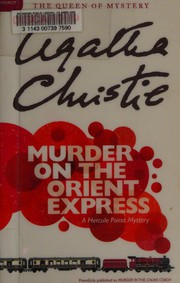
Murder on the Orient Express
Poirot is trapped by snow with thirteen strangers after an American is found stabbed in his berth.
2,004-word summary · 9 min read
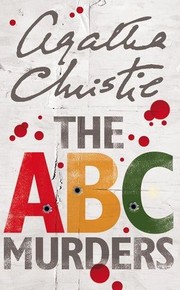
The ABC Murders
Poirot and Hastings chase a killer who leaves an ABC railway guide near victims in Andover, Bexhill, and Churston. A salesman looks guilty, but publicity hides…
3,302-word summary · 15 min read
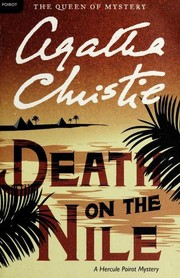
Death on the Nile
Poirot takes a Nile cruise where a young heiress is shot dead in her cabin.
4,077-word summary · 18 min read
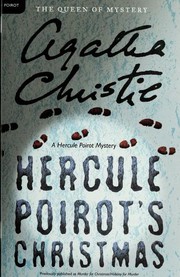
Hercule Poirot's Christmas
Simeon Lee invites his family to Gorston Hall for Christmas, then is found dead in a locked room. Poirot sorts a household where nearly everyone has a reason…
2,348-word summary · 10 min read

One, Two, Buckle My Shoe
Poirot links a dentist murder to a missing banker and stolen millions.
2,549-word summary · 11 min read
Evil Under the Sun
Poirot's Devon holiday turns deadly when a flirtatious actress is strangled at a secluded seaside hotel in this 1941 puzzle.
2,380-word summary · 11 min read
Hallowe'en Party
A girl boasts she once saw a murder, then drowns in an apple-bobbing bucket. Poirot investigates both the claim and the killing.
2,232-word summary · 10 min read
Crooked House
A family gathered around a dying patriarch in a twisted old house, and one of Christie's most famous revelations about who killed him.
2,059-word summary · 9 min read
The Body in the Library
A strange girl found dead in a library pulls Miss Marple into lies about dance halls and film.
2,017-word summary · 9 min read
The Memoirs of Sherlock Holmes
Doyle's second Holmes collection gathers twelve Strand stories, including the early case of the Gloria Scott and the confrontation with Moriarty at Reichenbach…
2,390-word summary · 11 min read
The Maltese Falcon
Sam Spade hunts a jeweled bird through lies after his partner is killed.
2,529-word summary · 11 min read
The Sign of Four
Mary Morstan's pearls lead Holmes and Watson from foggy London to Agra treasure and a Thames chase.
2,114-word summary · 9 min read
The Adventures of Sherlock Holmes
Twelve Strand cases from Irene Adler to the Copper Beeches, with Holmes at his sharpest and strangest.
3,579-word summary · 16 min read
The Hound of the Baskervilles
Holmes Watson probe spectral hound killing Baskervilles on Dartmoor.
2,596-word summary · 12 min read
A Study in Scarlet
Watson meets Holmes in Baker Street, a Brixton body bears the word Rache, and a Utah revenge tale explains it.
2,208-word summary · 10 min read
At Bertram's Hotel
Miss Marple finds a luxury hotel fronting robbery and murder.
2,550-word summary · 11 min read
The Man in the Brown Suit
Anne Beddingfeld sees a Tube death in London and chases a paper clue to South Africa, diamonds, and the hidden Colonel.
2,292-word summary · 10 min read
The Murder at the Vicarage
Vicar Leonard Clement narrates the shooting of Colonel Protheroe while Miss Marple watches St Mary Mead.
2,926-word summary · 13 min read
And Then There Were None
And Then There Were None retold: ten to Soldier Island, rhyme deaths, no one left to tell.
2,137-word summary · 9 min read
There Will Be Bodies
Digging out a villa buried by Vesuvius, Flavia Albia finds chained corpses and a death someone tried to hide for ten years.
2,152-word summary · 10 min read
The New York Trilogy
Three linked novels turn a wrong-number call into a puzzle about names, authorship, and the stories people tell to stay sane.
2,259-word summary · 10 min read
The Last Coyote
On stress leave, Harry Bosch reopens the unsolved murder of his mother, a prostitute strangled when he was twelve, and finds corruption reaching the DA's…
2,069-word summary · 9 min read
The 5th Horseman
Two linked cases pull Lindsay Boxer and the Women's Murder Club into a hospital full of strange deaths and a luxury-car murder spree.
2,609-word summary · 12 min read
The Word Is Murder
A fictionalised Anthony Horowitz is talked into chronicling a prickly ex-detective's case: a woman murdered hours after planning her own funeral. A clever…
2,296-word summary · 10 min read
The Unquiet Grave
In Dervla McTiernan's fourth Cormac Reilly novel, a body found in a Galway bog turns out to be a missing school principal, and the case opens into something…
2,253-word summary · 10 min read
The Secret of the Old Clock
The first Nancy Drew novel: a sixteen-year-old detective follows a clue hidden in a clock to overturn a will and restore a family's inheritance.
2,011-word summary · 9 min read
The Running Grave
In the seventh Cormoran Strike novel, Robin goes undercover inside a Norfolk cult while Strike digs into a child's death from decades earlier.
2,615-word summary · 12 min read