
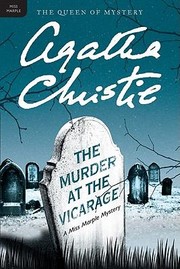
The Murder at the Vicarage
2,926-word summary 13 min read 304 pages in the book
- First published
- 1930
- Publisher
- Collins Crime Club
- Pages
- 304
- ISBN
- 9780062073600
- Series
- Miss Marple (#1)
Reading options
What's inside (6 sections)
I picked up The Murder at the Vicarage because I wanted to see where Miss Marple begins. Agatha Christie published it in 1930 with Collins Crime Club, in a 256-page first edition. The modern William Morrow paperback I used runs 304 pages with ISBN 9780062073600. It is book 1 in the Miss Marple series, set in the village of St Mary Mead. I expected a gentle cozy with tea and gossip. What I found was sharper, a village full of debt, affairs, and spite, watched by an old woman who misses very little.
The narrator is not Marple. It is the Reverend Leonard Clement, the vicar of St Mary Mead, trying to hold a parish together. He lives at the vicarage with his much younger wife Griselda, lively and frank, and his sixteen year old nephew Dennis. Their maid Mary is sullen and a poor cook.
Clement opens with a famous grumble. Anyone who murdered Colonel Protheroe would be doing the world a service. He says it while carving beef, half joking, half tired. Protheroe is the local magistrate, rich, loud, fond of lecturing. He controls church funds, quarrels with the vicar about accounts, treats a poacher named Archer harshly, patronizes his gentle daughter Lettice, and married a second wife, Anne, much younger than himself. Almost everyone in the village has a reason to resent him. Clement likes order and dislikes Protheroe's bullying, but he takes his duties seriously.
St Mary Mead is drawn with care. There is the church and the vicarage, the Old Hall where the Protheroes live, a studio in the vicarage grounds lent to Lawrence Redding, a young painter who fought in the war. There is Dr Haydock, the bluff doctor and Clement's friend. And there is Miss Marple, a white haired old maid who lives near the vicarage gate, gardens a great deal, and watches the lane.
The setup turns on an affair Clement stumbles into. Walking in the woods, he comes on Anne Protheroe in the arms of Lawrence Redding. Anne is nervous and unhappy. Redding is charming and urgent. Clement promises not to tell, but urges Redding to leave the village. Redding says he will go. Anne says little. Clement leaves feeling he has done his duty and fearing he has done no good.
The next day Clement is meant to meet Protheroe at the vicarage to go over church accounts. There have been whispers about missing money and about Hawes, Clement's young curate, a pale intense man with odd views who has been ill and strange. Before the meeting, Clement gets a call asking him to visit a dying parishioner, Mrs Abbott. He goes at once, only to find no one sent for him and no one is dying. By the time he walks back, annoyed and late, Redding meets him at the vicarage gate, pale and distracted. Inside the study, Colonel Protheroe sits dead at the writing desk, shot through the head.
A body in the study and a clock that lies
Christie builds the puzzle from small physical facts, and Clement reports them like a man trying to be exact.
Protheroe is slumped over his own letter. A pistol lies nearby. On the desk is a note in Protheroe's hand saying he cannot wait any longer and must go ahead, timed at 6:22. The study clock has been moved to show the same time, though it is always kept fast. Dr Haydock examines the body and places death earlier than the note suggests. That gap matters. If the note is true, Protheroe was alive at 6:22. If Haydock is right, he was dead before then.
Other details confuse the police. Colonel Melchett, the county man, arrives with Inspector Slack, who is brisk and rude and dislikes the village. Witnesses report hearing a shot in the woods around 6:30, away from the house. A maid named Clara recalls a sneeze, or what she took for a sneeze, earlier. The pistol belongs to Redding. He left it at the vicarage on an earlier visit, hidden in a plant pot by the study window, or so he later says. Anne walked past Miss Marple's garden that evening in a close fitting dress with no handbag, stopping to chat so Marple could see she carried nothing and seemed herself.
Then come the confessions. Redding walks into the police station and says he killed Protheroe. His story names a time that does not fit Haydock's finding. Anne then says she killed her husband. Her story also fails on details. Each seems to confess to shield the other. The police, faced with two false sounding admissions, let both go for lack of proof. The village talks of nothing else.
Clement keeps his own notes while trying to run a parish. Griselda swings between fear and jokes. Dennis watches Lettice. Lettice drifts through, vague and lovely, looking for a lost yellow beret she says she left in the study. Archer the poacher has a grudge and no alibi worth much. Hawes behaves oddly, talks about sin and punishment, then attempts suicide and is saved by Haydock. A mysterious newcomer, Mrs Lestrange, elegant and reserved, has taken a cottage and asks odd questions about the Protheroes. An archaeologist called Dr Stone and his bright assistant Miss Cram are digging a barrow on Protheroe land, with Stone proving to be less than he claims.
Miss Marple watches all of it from her garden and her window. She listens, notes who passes at what time, remembers what dress Anne wore, wonders why Redding carried a large stone through the wood, and recalls that he is known as a good amateur actor. She tells Clement her method plainly. Human nature is much the same in a village as anywhere else.
Small village facts carry weight here. Who walks where. Who carries a bag. Who is seen together and how they look. Christie gives Marple a front row seat without making her omniscient. I liked that patience. It feels like detection rather than magic.
Lovers who confess and a village that gossips
The middle of the book is a slow turn through suspects, and Christie uses Clement's kindness to show each one without caricature.
Anne Protheroe is the most watched. Young, pretty, tied to a hard older man, in love with Redding, she admits the affair to Clement with miserable honesty. She says Protheroe would never divorce her. She says Redding wants her to have money and ease. She confesses and retracts and confesses in ways that exasperate Slack. Clement pities her but cannot clear her. Marple likes her and still concludes she is under Redding's thumb and would do as he told her.
Redding is harder to like on purpose. He is handsome, quick, plausible, used to being forgiven. He paints Lettice and other village women, borrows the studio, charms Griselda, spars with Clement. He claims he came to the vicar to say goodbye, left his pistol by accident, telephoned no one, heard nothing. Then he claims he shot Protheroe in a quarrel. Then he sulks. His changes of story are not panic alone. They are too neat in their errors, always pointing away from the true time and method. Marple notices he does not behave like a guilty man trying to seem natural. He behaves like an innocent man trying to seem guilty in a way no one will believe.
Lettice Protheroe gets my sympathy. She is Protheroe's daughter by his first marriage, treated coldly at home, allowed little money, watched closely. She floats, loses things, says odd bright things that sound empty until you hear the fear under them. She searches the study for her beret. She drops Anne's earring by the desk and later admits she did it on purpose because she believed Anne killed her father and wanted proof to matter. She also slashed an old portrait in the attic. That act looks mad until its reason comes out. It showed the first Mrs Protheroe, and Lettice feared police would recognize the sitter.
Mrs Lestrange is the true stranger. She came to St Mary Mead recently, lives quietly, pays in cash, avoids questions. Gossip says she is after money or a man. Dr Haydock, who knew her years ago, protects her privacy fiercely. She asks Clement about Lettice with controlled feeling. Christie keeps her back for the reveal, where she proves to be Lettice's mother, Protheroe's first wife, believed dead by the village, now terminally ill and come to see her daughter once before the end. Her secret meeting with Protheroe that week, where he refused to let her see Lettice openly, gives her a apparent motive that misleads both police and reader.
Hawes the curate adds a darker thread. He has quarreled with Protheroe over money, or Protheroe says so. He preaches strangely about doom. He is found poisoned after taking a powder, with Protheroe's missing letter in his pocket, looking like suicide from remorse. Haydock saves him. Marple later shows the letter was planted and the powder swapped, an attempt to make Hawes look like the murderer who killed himself. That side plot shows Redding's planning and coldness better than any speech.
Stone and Miss Cram supply comedy and a useful blind alley. Stone claims learning and turns out to be a known thief using the dig as cover. Cram admits she carried a suitcase to the wood for Stone in good faith. Archer the poacher proves to have been elsewhere. Griselda and Dennis sent a fake call of their own as a joke to frighten Mrs Price-Ridley, which by chance went through near the false shot and tangled the timeline. Griselda's late admission that she is pregnant lands as relief after strain.
I found this stretch slow in places, and that is fair to say. There are long teas, long calls, long rehearsals of who saw whom. Clement is a gentle narrator, not a driver. Slack is unpleasant without being interesting. Yet the slowness serves the solution. When Marple lays out times and clothes and stones, every dull detail pays.
How Marple reads the time trick
The solution is best taken step by step, because Christie designed it as a trick about trusting confessions.
Marple argues that both lovers are guilty together, and that their confessions were built to fail. Redding planned, Anne shot, Redding covered. The steps, as she lays them to Clement and Melchett, run like this.
On Thursday afternoon Redding calls at the vicarage knowing Clement is out. He hides his pistol in the bowl of a plant stand by the study window. At about half past five he telephones from the North Lodge in a woman's voice, pretending to be Mrs Abbott's people, to pull Clement away. The vicar leaves. Anne and her husband walk toward the village. Anne wears a tight dress and carries no handbag, and she stops at Marple's garden to be seen. That display is deliberate. Marple is known to notice, and they need a witness who will later swear Anne could not have hidden a gun.
Anne slips round to the study window, takes the pistol from its hiding place, comes up behind the deaf Protheroe as he writes, shoots him through the head, drops the pistol, and runs to the studio. The shot makes less noise than expected. Clara the maid hears something she takes for a sneeze. A silencer, Marple suggests, later removed by Redding. At the studio Anne meets Redding. They stay inside a while, then come out trying to look easy. Marple watches and feels the falseness. If they had just parted as lovers told to separate, they would have looked wretched. Instead they look gay and careful. They need an alibi and witnesses, so they provide themselves with one.
Redding then goes to the vicarage, timing his walk to meet Clement on the path. Inside he finds Protheroe dead and finds something unexpected, the letter Protheroe was writing to Clement about Hawes and church money. He pockets it because it may be useful. He leaves his own forged note with 6:22 on it, written to look like a clumsy attempt to blame Anne, knowing a forgery that fails will help her. He sets the study clock to match. He takes pistol and silencer, meets Clement at the gate acting distraught, then later marches to the police with the pistol and a wild story that cannot be true.
He still needs a shot to be heard at the right wrong time, otherwise suspicion of Anne may linger around the true hour. In the wood he rigs picric acid crystals with a heavy stone hung above and a slow fuse, so the charge pops about twenty minutes later near half past six while he and Anne are in view. When Clement meets him in the wood carrying that stone, Redding claims it is for Marple's rock garden. Marple knows her own garden and knows the stone is the wrong sort. That wrong stone puts her on the track.
The Hawes thread follows. Redding keeps the stolen Protheroe letter, learns it points to Hawes, visits Hawes, swaps a sleeping powder for poison, and slips the letter into Hawes's pocket so the death will read as suicide after murder. Haydock saves Hawes. Marple, with Haydock's help, sets a trap. Haydock hints that someone saw the swapping of powders. If Redding is innocent the hint means nothing. If guilty it should frighten him into action. That night Redding goes to the Old Hall, throws gravel at Anne's window, and speaks urgently while hidden officers listen. What they hear leaves no doubt. Both are arrested. Their trial is public knowledge, Clement says, and needs no retelling.
Lettice then explains her part. Her mother Mrs Lestrange is Protheroe's first wife, dying, come under a false name to see her. Protheroe refused her. Lettice met her mother briefly on the footpath, then feared she would be blamed and cut up the attic portrait so police would not recognize her. Stone is exposed as a thief. Cram is cleared as a dupe. Griselda tells Clement she is pregnant. The parish breathes again.
I admire the shape even where I doubt the mechanics. The double false confession is clever. The weak point is practical. Could Anne shoot, leave, reach the studio, and compose herself in the minutes allowed, with Marple so near. Could a stone and acid pop be timed so neatly in a damp wood. The Times Literary Supplement in 1930 made much the same complaint. I share the doubt and still enjoy the audacity.
First Marple, village truth, and fair doubts
As a first appearance, Marple is less soft than later books make her. She gossips. She judges. She says sharp things about wives and girls and men who charm. She calls herself a noticing person without apology. She compares Anne to a girl who married for money, Redding to a boy who would not run off with a penniless woman, Lettice to a child hiding fright. Some of those judgments sting now. The book treats Anne's youth and beauty as explanation, Lettice's vagueness as nature, Griselda's high spirits as a phase before motherhood. Modern readers may wince at how quickly women are sorted. I did, even while liking Griselda's wit and Lettice's late candor.
Clement as narrator helps and hinders. He is kind to Marple when Slack sneers, which lets her speak. He records times, letters, and clothes with clerical care. He is also slow to suspect people he likes, which keeps the book honest about village blindness. His marriage is the warmest thread. Griselda teases him about sermons, manages Mary the maid badly, spends money they lack, and stands by him when suspicion touches the vicarage itself. Dennis is less developed, mostly a voice for jokes and a crush on Lettice, but his part in the prank call usefully tangles the case.
Fair doubts belong here beyond mechanics. The book leans on coincidence. Two false calls at near the same hour, Griselda and Dennis joking while Redding schemes, confuse everyone including Marple for a stretch. Christie admits it through Marple and turns it into proof that timelines need witnesses, not assumptions. Still, a mystery that needs two phone tricks and a chemistry trick and a forged note and a planted suicide may feel built rather than found. The New York Times review in 1930 called the solution an anticlimax and tired of the spinsters. I understand the tiredness. There are pages where talk circles and Clement reports talk about talk.
Why it holds despite that is Marple's eye for conduct. She does not catch Redding by science. She catches him by behavior. Lovers saying goodbye do not look happy. A woman proving she has no gun tries too hard to be seen. A man bringing a garden stone brings the wrong stone. A maid's sneeze is not a sneeze. Those are village observations, not laboratory proofs, and they fit a killer who relied on villagers seeing what he wanted them to see.
Who should read it. Readers who want the start of Marple and the full map of St Mary Mead should start here. Those who want fast action should look elsewhere. This is a vicar's notebook, slow and close, with a hard center. I finished it fond of Clement, wary of Redding, and glad Marple gets the last quiet word about secrets kept. The village is not cozy in the way the label promises. It is watchful, needy, and often unkind.
FAQ
When was The Murder at the Vicarage published?
It was first published in 1930 by Collins Crime Club in a 256-page first edition. This post cites the 304-page William Morrow paperback with ISBN 9780062073600.
Is it really the first Miss Marple book?
Yes. It is the first novel to feature Miss Marple and St Mary Mead, Miss Marple book 1, followed by The Body in the Library.
Who killed Colonel Protheroe?
Anne Protheroe shoots her husband with a pistol Redding hid at the vicarage, while Redding forges the note, moves the clock, and rigs a woodland shot to fake the time.
Similar books
More from Miss Marple first, then related titles.
The Body in the Library
A strange girl found dead in a library pulls Miss Marple into lies about dance halls and film.
2,017-word summary · 9 min read

At Bertram's Hotel
Miss Marple finds a luxury hotel fronting robbery and murder.
2,550-word summary · 11 min read
The Murder on the Links
Poirot arrives in France too late to save his client, who is found stabbed in a grave and was not the man he claimed to be. Christie's second Poirot novel.
2,055-word summary · 9 min read

The ABC Murders
Poirot and Hastings chase a killer who leaves an ABC railway guide near victims in Andover, Bexhill, and Churston. A salesman looks guilty, but publicity hides…
3,302-word summary · 15 min read
The Murder of Roger Ackroyd
Retired Poirot probes a locked study murder in King's Abbot, told by the village doctor.
3,582-word summary · 16 min read
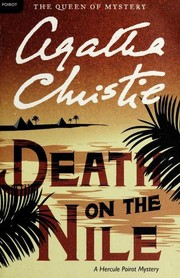
Death on the Nile
Poirot takes a Nile cruise where a young heiress is shot dead in her cabin.
4,077-word summary · 18 min read
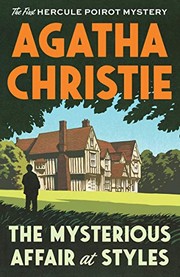
The Mysterious Affair at Styles
Hastings reunites with refugee Poirot at Styles Court after Emily Inglethorp is poisoned in her locked room.
2,856-word summary · 13 min read
Murder on the Orient Express
Poirot is trapped by snow with thirteen strangers after an American is found stabbed in his berth.
2,004-word summary · 9 min read

The Moonstone
A cursed yellow diamond vanishes on the night of a birthday party, and eight witnesses tell what they saw.
2,603-word summary · 12 min read
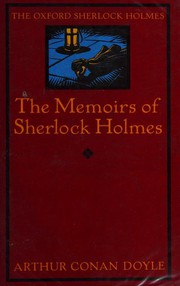
The Memoirs of Sherlock Holmes
Doyle's second Holmes collection gathers twelve Strand stories, including the early case of the Gloria Scott and the confrontation with Moriarty at Reichenbach…
2,390-word summary · 11 min read

The Caves of Steel
Detective Elijah Baley must solve a Spacer's murder in a domed New York, partnered with R. Daneel Olivaw, a humaniform robot built in the victim's image.
2,445-word summary · 11 min read

The Maltese Falcon
Sam Spade hunts a jeweled bird through lies after his partner is killed.
2,529-word summary · 11 min read
The Sign of Four
Mary Morstan's pearls lead Holmes and Watson from foggy London to Agra treasure and a Thames chase.
2,114-word summary · 9 min read

The Adventures of Sherlock Holmes
Twelve Strand cases from Irene Adler to the Copper Beeches, with Holmes at his sharpest and strangest.
3,579-word summary · 16 min read

The Hound of the Baskervilles
Holmes Watson probe spectral hound killing Baskervilles on Dartmoor.
2,596-word summary · 12 min read
A Study in Scarlet
Watson meets Holmes in Baker Street, a Brixton body bears the word Rache, and a Utah revenge tale explains it.
2,208-word summary · 10 min read

One, Two, Buckle My Shoe
Poirot links a dentist murder to a missing banker and stolen millions.
2,549-word summary · 11 min read

The Man in the Brown Suit
Anne Beddingfeld sees a Tube death in London and chases a paper clue to South Africa, diamonds, and the hidden Colonel.
2,292-word summary · 10 min read
And Then There Were None
And Then There Were None retold: ten to Soldier Island, rhyme deaths, no one left to tell.
2,137-word summary · 9 min read

The Crying of Lot 49
A California woman named executor of her ex-lover's estate follows a muted post horn into a possible centuries-old postal conspiracy, and Pynchon refuses to…
2,003-word summary · 9 min read

How the Light Gets In
Gamache investigates the murder of the last Ouellet quintuplet while the Sûreté he served is dismantled from inside by the man who took his protégé.
2,279-word summary · 10 min read

Bury Your Dead
Recovering from a failed raid that killed his officers, Gamache investigates a murder in a Quebec City library while Beauvoir reopens a case in Three Pines.
2,022-word summary · 9 min read

The Trespasser
A Dublin Murder Squad detective investigates a staged dinner-party killing and finds a cover-up that reaches into her own department.
2,051-word summary · 9 min read

Rules of Prey
Minneapolis detective Lucas Davenport hunts a killer who leaves a new rule at every scene and treats murder as a game of wits.
1,914-word summary · 9 min read

The Late Show
Exiled to the LAPD night shift after accusing her supervisor, Renée Ballard keeps two cases that were meant to be handed off at dawn: a brutal assault and a…
2,563-word summary · 11 min read

Finger Lickin' Fifteen
Lula sees a celebrity chef decapitated and talks Stephanie into entering a barbecue contest to lure the killers, while Ranger hires her to find a security leak…
2,248-word summary · 10 min read
The Lottery
In Jackson's 1948 story, a village draws lots to keep the corn heavy, and the chosen person is stoned by her neighbors.
3,080-word summary · 14 min read

Fearless Fourteen
Bounty hunter Stephanie Plum babysits a teenager, guards a fading singer, and hunts nine stolen million dollars under her boyfriend's basement.
2,466-word summary · 11 min read

3rd Degree
The third Women's Murder Club novel follows a San Francisco terror cell and a three-day killing schedule, and it costs the club a member.
2,685-word summary · 12 min read
The Vanishing Stair
Stevie Bell returns to Ellingham Academy under a secret bargain, chasing the truth about a 1936 kidnapping while a new death makes the school feel smaller and…
2,026-word summary · 9 min read