
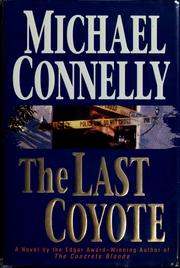
The Last Coyote
2,069-word summary 9 min read 400 pages in the book
- First published
- 1995
- Publisher
- Little, Brown and Company
- Pages
- 400
- ISBN
- 9780316153904
- Series
- Harry Bosch (#4)
Reading options
What's inside (9 sections)
The fourth Harry Bosch novel is the one where the detective finally turns the lens on himself. That is why I went back to it. The earlier books are about other people's deaths; this one is about the death that made Bosch who he is. Michael Connelly published it in 1995 through Little, Brown and Company, between The Concrete Blonde and Trunk Music in the Bosch sequence. It won the 1996 Dilys Award from the Independent Mystery Booksellers Association, and it is the shortest route into the character's private history.
The facts I cite come from the Little, Brown first edition: 400 pages in the commonly cited listing, ISBN 9780316153904. Library catalog records for that same first edition list 383 pages, so you may see either number depending on where you look. The story is unchanged.
A detective forced to sit still
The book opens with Bosch in trouble at work. An incident leads the Los Angeles Police Department to put him on involuntary stress leave, and he is required to see a police psychologist named Carmen Hinojos. The exact detail of the incident is less important than what it does. For the first time in the series, Bosch has nothing to investigate at the office and too much time on his hands.
Connelly uses that forced idleness well. Bosch is not a man who rests. Cut off from his job, he decides to spend the leave on a case that has obsessed him since childhood: the murder of his mother, Marjorie Lowe. She was a prostitute who was strangled when Harry was twelve years old. The killer was never found. Bosch has carried the file and the question for decades, and now he finally has the freedom to chase it.
Hinojos becomes an unlikely partner in the investigation. Their sessions are not a subplot about healing. She pushes him, he deflects, and the case keeps intruding into the therapy hour. That double structure gives the book a rhythm the earlier Bosch novels do not have. Every time he thinks he is getting closer to the killer, his therapist asks a question about why he needs the answer so badly.
The stress leave is also a way for Connelly to strip Bosch of his badge and see what remains. Without a squad car and a case assigned to him, he is just a man with a grudge and a file. He still uses the skills, of course. He knows how to read a city record and how to make a hostile witness talk. But the work has changed shape. He is not solving a murder for the department. He is solving it for a twelve-year-old boy who never got an answer, and that difference makes him both more determined and less careful.
A mother's name in a old case
Bosch starts with the people who knew Marjorie. He visits Meredith Roman, a friend of his mother's, and learns that Meredith was supposed to meet a local prosecutor named Arno Conklin at Hancock Park on the night of the murder. That single detail opens the whole case. It suggests Marjorie's last hours were not random, and that the people around her were connected to men with power.
From there, Bosch works the case the way he works everything: with a reporter and a pile of city records. Keisha Russell, a crime reporter at the Los Angeles Times, helps him dig into Conklin. The trail runs to Gordon Mittel, a close associate of Conklin who has become an influential political donor, and to Johnny Fox, Marjorie's pimp. Fox is reportedly dead, killed in a hit and run while handing out campaign literature for Conklin. A pimp distributing a prosecutor's campaign flyers is the kind of detail that tells you how dirty the arrangement was.
Connelly is good at this stage of the book. The dead prostitute case from thirty years ago could have been a sentimental excuse to make Bosch noble. Instead it is handled like any other homicide, with witnesses who have aged, records that have gone missing, and favors that were arranged decades ago and still hold.
Keisha Russell earns her place in the story. She is not a love interest or a convenient source who appears with one name and vanishes. Bosch needs a reporter because a reporter can ask questions a detective cannot, and because old newspaper archives are often the only record that survives a closed case. Connelly writes their exchanges with a professional warmth that is rare in the series. They trust each other's judgment without pretending to trust each other's instincts.
The procedural detail is what makes the early chapters convincing. There are filing systems, old reports, and the small humiliations of asking a bureaucracy for something it would rather not find. Bosch knows which doors open with a badge and which need a favor. That texture matters because the case is thirty years old. A murder investigated badly in 1962 leaves behind a paper trail of bad decisions, and Bosch has to read those decisions as carefully as he reads the physical evidence.
Hancock Park, Florida, and Las Vegas
The investigation takes Bosch out of Los Angeles. He looks through old city records and finds that only one of the original investigating officers is still alive, a man named Jake McKittrick living in Florida. Getting to McKittrick means posing as a potential buyer in the gated community where he lives, and that leads to an encounter with the homeowner, Jasmine Corian. The relationship with Jasmine is one of the softer threads in the novel. Bosch is usually closed to everyone, and here he allows himself a brief, honest connection.
What McKittrick tells him is the key to why the case died. Early in the investigation, Bosch's senior partner, Eno, was called into the Assistant DA's office and told not to pursue Fox. The only way they could interview Fox was in Conklin's office, with Conklin and Mittel in the room. After that interview, the case went cold. It was not a failure of detection. It was a decision made by people who had the power to make it.
Bosch follows Eno's trail to Las Vegas. Eno is long dead and invalid, cared for by a woman posing as his sister. Bosch intimidates her into letting him take some of Eno's old files. In those files he finds the proof that turns suspicion into a pattern: Eno had been receiving a thousand dollars a week since the murder, paid through a dummy corporation whose officers included Eno, Mittel, and Conklin. That is the moment the book becomes a story about bribery as much as homicide.
The fundraiser and the dead boss
Before he leaves town, Bosch uses his superior's name to get into one of Mittel's fundraisers. He impersonates Harvey Pounds, the adversarial boss whose name he has every reason to resent, and has an envelope delivered to Mittel containing a newspaper article about Fox's death. It is a small act of provocation, the sort of move Bosch makes when he wants to see who flinches.
When he returns to Los Angeles, Pounds has been murdered. Bosch is brought to Parker Center for questioning, and the realization hits him hard: using Pounds's name at the fundraiser may have gotten the man killed. The guilt is personal, and Connelly lets it sit there. Bosch is not a detective who treats collateral damage as an abstraction.
Keisha gives him the name of Monte Kim, the writer of the old article on Fox. Kim reveals that he once had photographs of Conklin and Fox in the company of Marjorie and Meredith, and used those photos to blackmail Conklin into giving him a job. Every layer of the case turns out to be the same arrangement: someone knew something, and someone paid to keep it quiet.
What Conklin says, and what Mittel does
When Bosch finally confronts Conklin, he gets a version of events that changes the shape of the case. Conklin says he and Marjorie were planning to marry on the day she died. He believes Mittel killed her. For a moment it looks like Bosch has found his man, and that the killer was the donor who had everyone else in his pocket.
Then Bosch is abducted and held by Mittel himself. Mittel tells him Conklin is dead, and the scene turns into a physical fight for survival. Bosch overwhelms Mittel's henchman, Jonathan Vaughn, and knocks him out with a billiard ball. A pursuit and struggle follow, and Mittel dies in a fall from a cliff. Bosch goes back to the house and finds that Vaughn is gone.
The obvious move would be to close the case here. The man who had the motive and the means is dead, and Bosch has a convenient physical confrontation to explain it. Instead he asks for Mittel's fingerprints to be compared with those recovered from his mother's killer. They do not match. That refusal to take the easy answer is the best thing Bosch does in the book, and it is the reason the last chapters matter.
It is worth pausing on how unusual that is. Bosch has broken rules throughout the novel, and a lesser detective in his position would call it a clean solve and go home. The whole case has been built on the idea that powerful men arranged for his mother's murder to be buried. Finding one of those men dead at the bottom of a cliff would satisfy almost everyone. Bosch keeps going because the evidence says no, and because he has finally learned to distrust the answer he wants.
The clothing in the photographs
The solution arrives in a therapy session. Hinojos looks at the crime-scene photographs from Marjorie's murder and notices something wrong about her clothing. That small discrepancy is enough to break Bosch's assumptions. He goes to see Meredith Roman, the friend who gave him his first lead, and finds that she has killed herself.
Meredith was the killer. The woman who told Bosch where to look had been hiding the answer in plain sight for thirty years. The reveal is quiet, and that is what makes it work. There is no confession scene and no chase. A psychologist spots a detail in a photograph, and a detective who has spent the whole book demanding facts has to accept that he looked at the wrong person because he wanted the story to be about power.
Vaughn then confronts Bosch with a gun and tells the last truth. He is Johnny Fox. The hit and run was staged, and Fox is the man who killed Pounds and Conklin. The police arrive, and Fox is shot while trying to escape. Bosch ends the novel visiting Jasmine in Florida, which is as close to a peaceful ending as Connelly gives him.
Where it sits and how it holds up
The Last Coyote is book four in the Harry Bosch series, which runs from The Black Echo through many later novels. It follows The Concrete Blonde and comes before Trunk Music. You can read it alone, because Connelly explains the necessary background, but it hits harder if you already know the detective. He is more reckless here than in the later books, and his rage at his mother's murder drives choices that a more seasoned Bosch would question.
Library Journal praised the prose and the way the plot is woven together, and the book won the Dilys Award while picking up nominations for the Anthony, Macavity, and Hammett prizes. Those awards make sense. The construction is tight, with the therapy sessions and the cold case feeding each other instead of running in parallel.
The book has its rough patches. Some of the coincidences are heavy, especially the way Bosch keeps running into the one person who holds the next piece of information. The Florida and Las Vegas sections slow the pace, and Jasmine's role never quite amounts to more than a brief respite. Connelly also lets Bosch's rule breaking slide in a way that would be harder to excuse in a real police procedural. But the central question holds: what does it cost a man to solve his own family's murder? The answer here is that it costs him the story he had been telling about himself, which is a more interesting price than any shootout.
FAQ
Where does The Last Coyote fit in the Harry Bosch series?
It is book four, published in 1995 by Little, Brown and Company, after The Concrete Blonde and before Trunk Music. It reads fine on its own.
Did The Last Coyote win any awards?
Yes. It won the 1996 Dilys Award from the Independent Mystery Booksellers Association and was nominated for the Anthony, Macavity, and Hammett prizes.
Who killed Bosch's mother?
Meredith Roman, a friend of his mother's, was the killer. Bosch reaches her only after his therapist spots an inconsistency in the crime-scene photographs, and Meredith has already died by suicide.
Similar books
More from Harry Bosch first, then related titles.
The Black Echo
Harry Bosch links a fellow veteran's death to a tunnel bank robbery and a dangerous FBI investigation in Los Angeles.
2,133-word summary · 9 min read
The Black Ice
Harry Bosch works a Christmas-night death the Robbery-Homicide Division does not want him near, and the trail runs from a dead cop to a drug operation across…
2,399-word summary · 11 min read
Nightshade
Connelly launches Detective Stilwell on Catalina Island, where a beheaded buffalo and a Jane Doe in the harbor pull a quiet sheriff's post into violence and…
2,272-word summary · 10 min read

The Late Show
Exiled to the LAPD night shift after accusing her supervisor, Renée Ballard keeps two cases that were meant to be handed off at dawn: a brutal assault and a…
2,563-word summary · 11 min read
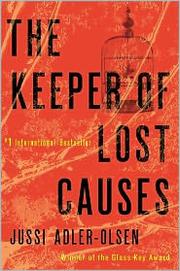
The Keeper of Lost Causes
Jussi Adler-Olsen introduces Carl Mørck and Department Q, a Copenhagen cold-case unit in a basement, and a missing politician whose file refuses to stay closed.
2,759-word summary · 12 min read
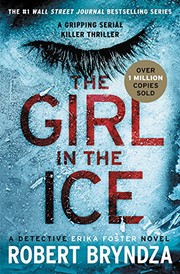
The Girl in the Ice
A young socialite is found frozen beneath the ice in a south London park, and DCI Erika Foster returns to work to lead the case. Grief, privilege and three…
2,492-word summary · 11 min read
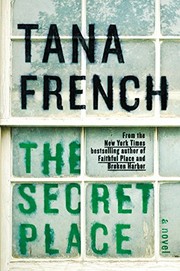
The Secret Place
Two Dublin detectives revisit a murder on the grounds of a girls' boarding school, where a bulletin board note and rival cliques hide the truth.
2,271-word summary · 10 min read
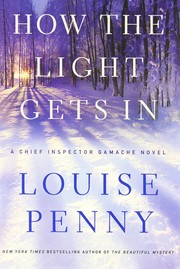
How the Light Gets In
Gamache investigates the murder of the last Ouellet quintuplet while the Sûreté he served is dismantled from inside by the man who took his protégé.
2,279-word summary · 10 min read
Bury Your Dead
Recovering from a failed raid that killed his officers, Gamache investigates a murder in a Quebec City library while Beauvoir reopens a case in Three Pines.
2,022-word summary · 9 min read

The Trespasser
A Dublin Murder Squad detective investigates a staged dinner-party killing and finds a cover-up that reaches into her own department.
2,051-word summary · 9 min read

Rules of Prey
Minneapolis detective Lucas Davenport hunts a killer who leaves a new rule at every scene and treats murder as a game of wits.
1,914-word summary · 9 min read
The Bat
Oslo detective Harry Hole aids Sydney police after a young Norwegian woman is murdered and finds a wider pattern. Grief, drink, and a lost partner shape the…
2,766-word summary · 12 min read
The Big Sleep
Marlowe takes a blackmail job for the Sternwoods and finds murder and daughters money cannot save.
2,243-word summary · 10 min read
The Reversal
Mickey Haller prosecutes a child killer's retrial with ex-wife Maggie and half-brother Harry Bosch on his team.
2,056-word summary · 9 min read
The Fifth Witness
A foreclosure case turns into a murder trial when a client's banker turns up dead, and a slick Los Angeles lawyer wins a case he wishes he had lost.
2,154-word summary · 10 min read
The Brass Verdict
Mickey Haller takes over a murdered lawyer's caseload and a Hollywood double-murder trial, with Harry Bosch circling the edges.
2,672-word summary · 12 min read
The Lincoln Lawyer
Mickey Haller defends a rich assault suspect from his Lincoln while doubting his innocence.
2,317-word summary · 10 min read

There Will Be Bodies
Digging out a villa buried by Vesuvius, Flavia Albia finds chained corpses and a death someone tried to hide for ten years.
2,152-word summary · 10 min read
The 5th Horseman
Two linked cases pull Lindsay Boxer and the Women's Murder Club into a hospital full of strange deaths and a luxury-car murder spree.
2,609-word summary · 12 min read
Evil Under the Sun
Poirot's Devon holiday turns deadly when a flirtatious actress is strangled at a secluded seaside hotel in this 1941 puzzle.
2,380-word summary · 11 min read
The Word Is Murder
A fictionalised Anthony Horowitz is talked into chronicling a prickly ex-detective's case: a woman murdered hours after planning her own funeral. A clever…
2,296-word summary · 10 min read
The Unquiet Grave
In Dervla McTiernan's fourth Cormac Reilly novel, a body found in a Galway bog turns out to be a missing school principal, and the case opens into something…
2,253-word summary · 10 min read
The Summons
A law professor is summoned home to find his judge father dead and more than three million dollars hidden in the house.
2,265-word summary · 10 min read
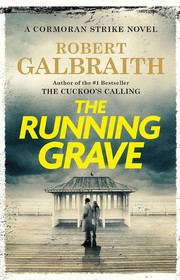
The Running Grave
In the seventh Cormoran Strike novel, Robin goes undercover inside a Norfolk cult while Strike digs into a child's death from decades earlier.
2,615-word summary · 12 min read

The Ice Princess
Camilla Läckberg's debut follows writer Erica Falck and detective Patrik Hedström as a frozen bathtub in a small Swedish town unravels a secret kept for…
2,321-word summary · 10 min read
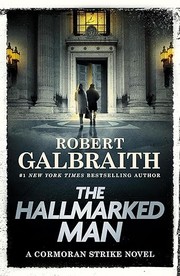
The Hallmarked Man
A body in a silver vault behind Freemasons' Hall sends Strike and Robin into a world of coded letters, secret societies and a girl whose whole identity may be…
3,084-word summary · 14 min read
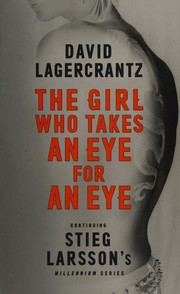
The Girl Who Takes an Eye for an Eye
Lisbeth Salander investigates a secret childhood experiment from prison while Mikael Blomkvist uncovers a twin conspiracy behind a wealthy businessman.
2,059-word summary · 9 min read
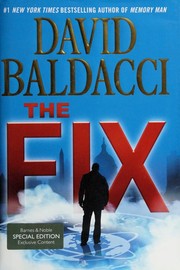
The Fix
Amos Decker watches a government contractor shoot a teacher outside FBI headquarters, then turn the gun on himself. The DIA wants the case shut.
2,315-word summary · 10 min read
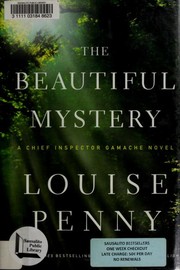
The Beautiful Mystery
In a cloistered Quebec monastery, a chant-singing monk is murdered and Gamache must break a vow of silence to find the killer. Eighth in the Chief Inspector…
2,262-word summary · 10 min read
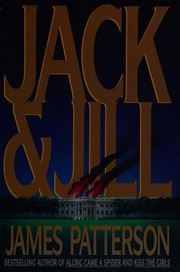
Jack & Jill
A senator is killed with a nursery-rhyme calling card as a child is murdered near Alex Cross's home. The third Alex Cross novel pulls him toward two cases, one…
2,646-word summary · 12 min read