
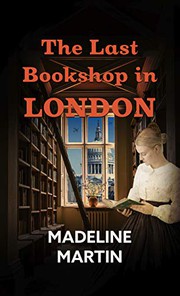
The Last Bookshop in London
2,264-word summary 10 min read 320 pages in the book
- First published
- 2021
- Publisher
- Hanover Square Press
- Pages
- 320
- ISBN
- 9781335284808
Reading options
What's inside (8 sections)
I read this one in a week when I had walked past two closed bookshops on my own street, so the idea of a shop lasting through the Blitz pulled at me before I had turned the first page. Madeline Martin published it in 2021, and it is a work of historical fiction about a young woman who does not much like reading and ends up running a bookshop anyway. The version I read runs 320 pages and came from Hanover Square Press.
The story opens in August 1939 and finishes just after the war, which gives it a clean arc. What I remember most is not the romance or the suspense but the scenes of Grace Bennett reading aloud to people in a shelter while bombs fall on London. Those chapters are the reason the book works.
Two women head for the city
Grace Bennett is twenty-three when she arrives in London with her best friend Viv. Her mother has died, and her uncle Horace and his family have made it clear that she is no longer welcome at home. London is supposed to be the fresh start. The city they find is already putting up blackout curtains and handing out flyers that urge men to join the war effort. Martin is good at the small details of that moment: the drawn curtains, the strange furniture in the rooms they rent, the sense that everyone knows something the girls do not.
They stay with Mrs. Weatherford, an old friend of Grace's mother, who takes them in, cooks for them, and generally runs their lives with a firm hand. Her son Colin works with the exotic animals sold at Harrods, which is a colorful touch that mostly serves to get him out of the house. Viv, who is stylish and quick, lands a job at Harrods almost immediately. Grace, who has no references and no confidence, does not.
Mrs. Weatherford solves the problem in her usual way. She goes to Mr. Evans, the owner of Primrose Hill Books, and basically bullies him into giving Grace a six-month trial. Mr. Evans is gruff, suspicious of change, and quite sure he does not need an assistant. Grace is equally sure she will fail. That arrangement, two people who expect the worst of each other, becomes the engine of the early chapters.
Uncle Horace is barely in the book, but his absence does a lot of work. Grace arrives with no family behind her and no money to fall back on, which makes the letter of recommendation feel like a lifeline rather than a formality. Viv, by contrast, has parents she is eager to escape, and her job at Harrods is the first thing in the novel that goes smoothly. The friendship between the two women is easy at first and more strained later, which felt true to me. They are not the same kind of person, and the war gives each of them a different way to be useful.
A job Grace did not ask for
Primrose Hill Books is a mess when Grace starts. She cleans it, sorts the stock, and rearranges things in ways Mr. Evans initially resents. What she wants is a letter of recommendation, because that is her way into a real job. The shop is a means to an end for her, and Martin takes her time letting that change.
While Grace is settling in, Germany invades Poland. Children are evacuated to the countryside, blackouts become compulsory, and Britain declares war. The first air raid sends Grace, Viv, Mrs. Weatherford and Colin into the Anderson shelter in the backyard. It is an odd sort of introduction to war, sitting in a small structure in your own garden waiting for the all clear, and the book keeps that domestic scale even when the bombing gets worse.
Martin is patient about the daily work. Grace learns which books people ask for, which ones sit untouched, and how to straighten a shelf so the shop looks inhabited rather than abandoned. Mr. Evans watches her do all of this and says very little. I liked that the change in the shop is visible before anyone admits it. When customers start coming back, the reason is Grace, even though Mr. Evans takes a while to say so out loud.
The person who opens Grace's mind to the books around her is George, a regular customer who comes into the shop and offers suggestions. He lends her a copy of The Count of Monte Cristo, and she is surprised to find herself hooked by it. Before that, she has treated the shelves as scenery. I enjoyed this slow turn. Grace does not become a bookish person overnight; she is dragged into a story by a book that happens to be sitting in her hands.
Then George apologizes in a letter and explains that he volunteered for the Royal Air Force and has been called up. He leaves the Count of Monte Cristo with her. A little later, a letter arrives for Mrs. Weatherford saying that Colin has been drafted, and after that, that he has been killed fighting in France. The book does not soften either piece of news, and the shift in the household is immediate. Mrs. Weatherford stops going to the shelter when the sirens sound, which worries Grace badly.
Becoming a warden
Grace decides she needs to do something that resembles what Viv is doing. Viv wants to join the Auxiliary Territory Service and help end the war, and Grace cannot picture herself being that brave. Instead she signs on as an Air Raid Precautions warden and works alongside Mr. Stokes. Her job is to get people into shelters, to help put out fires started by bombs, and to keep a level head when everyone else is panicking.
I liked that the book refuses to treat Viv's choice as the braver one. Viv gets the uniform and the adventure, and she also gets the fear and the separation. Grace stays in the neighborhood and does a job that is boring for hours and terrifying for minutes. The novel keeps both women in the same house, so their different kinds of service are always visible to each other. That is a smarter way to write a war than sending everyone off to the front.
This is the part of the novel where Grace stops being a passenger. She directs crowds toward the public shelter at Farringdon Station, and at the request of the people huddled there she starts reading aloud from Middlemarch. The choice of book matters. Middlemarch is long, patient and full of ordinary people making difficult choices, and in a shelter it gives the listeners somewhere else to be for a few minutes.
The reading becomes a habit. Even on nights when there is no raid, people gather at Primrose Hill Books to hear Grace read. That is the book's central idea in action: a shop full of objects nobody can use in the dark becomes a place where a community can sit together. I found these scenes convincing because Martin lets them be a little awkward at first. Grace is not a performer, and the crowd is not there for literature. They are there for the sound of a steady voice.
Her warden duties also put her in contact with Mr. Stokes, and their rounds give the novel some of its best quiet scenes. There is a stretch where she has to usher people into the public shelter at Farringdon Station and keep them calm while the sirens go on and on. She is not fearless. She is simply the person who has been given a job and intends to do it. That ordinary competence is the book's idea of bravery, and it suits Grace far better than a uniform would.
Mr. Evans, meanwhile, has his own fear. One morning Grace finds him drinking scotch in the back room, and he admits that he is afraid of losing her, because he lost his daughter Alice in a car accident and has not recovered. It is a straightforward piece of characterization, but it changes how Grace sees him. The gruff old man was never simply difficult; he was protecting himself.
A night out, and a night of loss
Christmas brings a pause. Viv and George both come back to London, and Grace and Viv get a rare night out at a dance hall. Grace and George go to the Ritz, which is the kind of small reward the book earns honestly by that point. I wanted that night to last longer than it does, and the book seems to know it. Four nights after Christmas, German planes bomb Paternoster Row, where most of the city's bookshops stand. Grace is on warden duty and checks on Mr. Pritchard, a bookseller and friend of Mr. Evans, only to find that he has been killed in the flat above his shop.
That scene stopped me. Up to then the danger had been mostly noise and inconvenience, and suddenly a person Grace knows is gone. Martin does not dwell on it, which is probably the right choice. The war in this book is carried by a series of small removals: Colin, Mr. Pritchard, eventually Mr. Evans. Each one leaves a space in the daily routine, and the routine has to carry on.
Months pass and Grace keeps hosting readings at the shop. Then Mr. Evans has a heart attack among the shelves, and Grace realizes that all her warden training will not help her save him. A solicitor later tells her that he has left her everything he owns, including the bookshop. I had expected some resistance from his family or from the neighborhood, but there is none. Grace simply inherits it, with the letter he wrote for her tucked inside the shop.
Rebuilding the shop
The letter is the emotional center of the ending. In it, Mr. Evans writes that his shop has never been in better hands, including his own. Grace finds it after a night of bombing has wrecked the building she has just inherited. She is standing in the damage with proof that the man who hired her reluctantly came to trust her completely. It is a tidy piece of plotting, and I forgave the tidiness because the feeling is earned.
Then the community does something that genuinely surprised me. The people who have been coming to the readings band together and rebuild the shop overnight, and they start calling it the Last Bookshop in London. The phrase is sentimental, and on paper it sounds like a line from a cover blurb. In the context of the book it lands, because those people have been gathering there for months and have already decided that the place belongs to them.
Grace's own response is practical. She does not give a speech about civilization surviving. She gets the shelves back in order. That is the book's consistent argument: a bookshop is a place where people do practical things together, and the reading follows from that. When the women in the shelter ask her to read, they are not asking for culture. They are asking her to keep doing what she was doing when the shop was still standing.
The epilogue jumps to 1945, a month after the war ends. Grace renames the shop Evans and Bennett, honoring the man who gave her the chance. Mrs. Weatherford has taken in Jimmy and Sarah, and Viv has moved back to London. Grace welcomes Viv and George home. It is a happy ending in the fullest sense, with the living returning and the dead remembered in the name above the door.
What I think of it now
The parts of this book that stayed with me are the quiet ones. A woman reading a novel in a shelter because people ask her to. A shop being swept and straightened by somebody who does not yet care about books. An old bookseller admitting he is frightened. Martin writes those moments without pushing them, and they carry more weight than the plot mechanics around them.
The weaker parts are the ones that wrap up too smoothly. Viv and George both come back, the shop is rebuilt in a single night, and the grief arcs settle into place with a neatness that real life rarely offers. George in particular is more of a promise than a person for most of the book, since he spends much of it away in the RAF. Grace's change from reluctant clerk to committed owner is the stronger thread, and I wished the book trusted it more.
Mrs. Weatherford's household gets the same gentle treatment. Colin's death is reported in a letter, and the women respond by keeping the meals going and sitting together. The book never asks us to admire their composure. It simply shows a house where one chair stays empty and nobody mentions it for a while. Those small omissions convince me more than the speeches in the epilogue.
That said, 320 pages is a comfortable length for this story, and the historical detail is worn lightly. There is no lecture about the Blitz, just blackout curtains, sirens, shelters and the slow erosion of a neighborhood's book trade. If you like novels about bookshops, this one earns its place. If you want a war story with moral ambiguity, look elsewhere. Martin is writing about what a small place can hold when the world outside is falling apart, and she is good at it.
FAQ
Is The Last Bookshop in London based on a true story?
It is a work of historical fiction with invented characters, set in London from August 1939 through 1945.
What edition and page count does this summary use?
It uses the 2021 Hanover Square Press edition at 320 pages, with ISBN 9781335284808.
Does Grace actually become a reader?
Yes. She starts out uninterested in books, but George's gift of The Count of Monte Cristo pulls her in, and she later reads aloud to people in shelters.
Similar books
The Bronze Horseman
On the day Germany invades the Soviet Union, Tatiana Metanova meets a mysterious Red Army officer, and their love is tested by the Siege of Leningrad.
2,461-word summary · 11 min read

Corelli's Mandolin
A British doctor's daughter on a Greek island falls for the Italian captain billeted with her, until the German arrival turns a gentle occupation into a fight…
2,247-word summary · 10 min read
The Orphan's Tale
A Dutch teenager rescues a Jewish baby from a death train and joins a German circus, where a Jewish aerialist teaches her to fly.
2,943-word summary · 13 min read
Code Name Verity
In 1943 France, captured agent Verity writes a confession for von Linden to buy time. Her pilot friend Maddie survives the crash and searches for her by…
2,690-word summary · 12 min read
The Paris Library
Odile lands her dream job at the American Library in Paris as war closes in, then hides that past in Montana until teen Lily draws it out.
2,813-word summary · 13 min read
The English Patient
In a ruined Italian villa in 1945, a burned man, a nurse, a thief, and a sapper trade pasts shaped by desert love and war.
2,006-word summary · 9 min read
The Nightingale
Nightingale retold: Vianne and Isabelle in occupied France, hide children, run routes, trials.
1,950-word summary · 9 min read
All the Light We Cannot See
Doerr's All the Light We Cannot See retold: blind Marie-Laure, Werner the radio boy, and Saint-Malo.
1,962-word summary · 9 min read
The Teacher of Nomad Land
In 1941 Iran, an orphaned boy straps a chalkboard to his back and sets off to teach nomads, hoping to keep his little sister with him.
2,534-word summary · 11 min read

The Pianist
A Polish pianist endures the Warsaw Ghetto, the Umschlagplatz, and life hidden in the ruins of the 1944 uprising, until a German officer asks him to play.
2,481-word summary · 11 min read
The Forest of Vanishing Stars
A girl raised in the Polish wilderness uses her survival skills to hide Jewish refugees, until a secret from her own past catches up.
2,250-word summary · 10 min read
She Who Became the Sun
A peasant girl takes her dead brother's name and becomes Zhu Chongba, climbing from a Buddhist monastery toward a fractured China's throne.
2,170-word summary · 10 min read
I Must Betray You
In 1989 Romania, a seventeen-year-old is forced to inform on an American diplomat's family and records the truth in a hidden notebook.
2,258-word summary · 10 min read
The Binding
In an alternate Victorian England, binders remove unbearable memories into books, and a young apprentice discovers his own past was erased from him.
2,036-word summary · 9 min read
Possession: A Romance
A London Library discovery sends two scholars chasing a secret Victorian love affair, in a Booker-winning novel of invented letters, poetry and the race to own…
2,394-word summary · 11 min read

Hiroshima
In 1946 John Hersey followed six ordinary people through the atomic bombing of Hiroshima and its aftermath, using a plain style that made the reporting feel…
2,991-word summary · 13 min read

Endling
A Ukrainian scientist breeds endangered snails from her van and funds the work by posing as a mail-order bride, until a kidnapping plot meets the outbreak of…
3,041-word summary · 14 min read
Birdsong
A love affair in Amiens before the First World War and a granddaughter's search through encoded journals decades later, joined by the tunnels of the Somme.
2,041-word summary · 9 min read

At the Water's Edge
A Philadelphia socialite follows her husband and his friend to wartime Scotland to hunt the Loch Ness monster, and finds herself instead: a novel of friendship…
2,906-word summary · 13 min read
The Killer Angels
A Pulitzer-winning novel of Gettysburg, told through Lee, Longstreet, Chamberlain, and Buford. Shaara turns a familiar battle into a chain of choices made by…
2,242-word summary · 10 min read
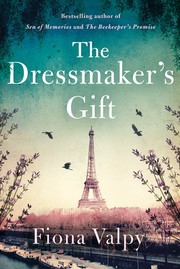
The Dressmaker's Gift
In occupied Paris, three seamstresses hide dangerous secrets, and decades later one granddaughter returns to the same building to learn what really happened.
2,277-word summary · 10 min read
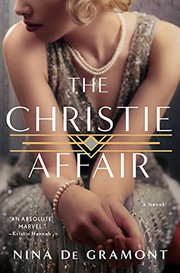
The Christie Affair
Agatha Christie vanishes for eleven days in 1926, and her husband's mistress claims to know why. Nan O'Dea's account runs from an Irish convent to a Yorkshire…
2,384-word summary · 11 min read

Manhattan Beach
A Brooklyn girl works the Navy Yard and dives for warships while chasing the gangster who may know why her father vanished.
2,251-word summary · 10 min read

84, Charing Cross Road
Over twenty years, letters between a cash-strapped New York writer and a London bookseller grow into a warm, funny friendship built on rare books and food…
2,343-word summary · 10 min read
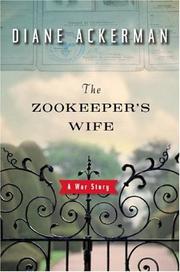
The Zookeeper's Wife: A War Story
The directors of the Warsaw Zoo hid roughly three hundred Jews in empty cages and outbuildings after the German invasion, while Jan worked for the resistance.
2,065-word summary · 9 min read

The Japanese Lover
A Polish refugee and the son of a Japanese gardener fall in love in San Francisco in 1939, then keep the affair secret for nearly seventy years.
2,286-word summary · 10 min read
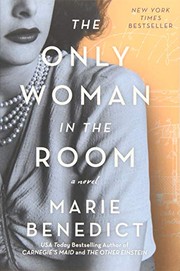
The Only Woman in the Room
A novel about Hedy Lamarr's escape from an arms-dealer husband, her Hollywood career, and the frequency-hopping patent the Navy ignored.
2,067-word summary · 9 min read

Sophie's Choice
A young Southern writer in 1947 Brooklyn befriends a brilliant, unstable couple and slowly learns the story of the Polish Catholic woman at the center of their…
2,798-word summary · 12 min read
A Long Walk to Water
Two eleven-year-olds in southern Sudan, twenty-three years apart: a Dinka boy fleeing war and a Nuer girl walking hours for water, until their stories meet at…
2,217-word summary · 10 min read

The Echo of Old Books
Barbara Davis's 2023 novel sends a rare-book dealer in 1984 New Hampshire hunting for the authors of two unpublished volumes that tell opposite sides of one…
2,491-word summary · 11 min read