
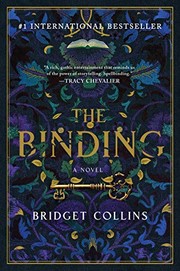
The Binding
2,036-word summary 9 min read 448 pages in the book
- First published
- 2019
- Publisher
- The Borough Press (HarperCollins UK)
- Pages
- 448
- ISBN
- 9780062838094
Reading options
What's inside (7 sections)
A trade for forgetting
In the alternate England of this novel, bookbinders practice a controversial craft. They can remove a client's unbearable memories and bind them into handmade books. The client forgets. The memory is preserved, locked away in a vault, available to no one who lives in the ordinary world. It is a beautiful idea and a troubling one, and Bridget Collins spends the whole book working out what it would mean if such a trade existed.
Emmett Farmer is a farmer's son who becomes ill. He is weak, hallucinating and frightened, and his parents send him away from the farm to apprentice with Seredith, an elderly binder who lives on the marsh road. There is an irony in this that the book does not hide. Emmett's family feared books so much that they beat him as a child for buying one at the Wakening Fair, and now they are sending him to make books for a living.
The opening chapters are quiet and strange. Seredith welcomes him into a workshop full of leather, tools and marbled paper, and Emmett finds an unexpected sense of belonging in the work. She forbids him to enter the locked rooms. The restriction is the source of the book's tension, and Collins is patient about it. For a long time the reader knows no more than Emmett does about what is kept behind those doors.
Lucian
A pale young man begins watching Emmett through the window. This is Lucian Darnay, an aristocratic client who comes for a binding and questions Emmett with a desperation that feels like hostility. Emmett collapses, and wakes tied to his bed while Seredith sews Lucian's book. She names his condition binder's fever, a dangerous reaction suffered by people with the gift for binding, and tells him he may become an unusually capable binder.
Binder's fever gives Collins a way to make the magic physical. Emmett does not simply discover that he has a gift. His body reacts to it, and the reaction is dangerous. He wakes tied to his bed because he is a danger to himself and to the work. That detail changes the texture of the apprenticeship. Seredith is not a benign mentor handing down a harmless craft. She is managing a hazardous substance, and her refusal to explain it is both protection and control.
The workshop itself is one of the book's strongest creations. Collins writes about the smell of leather, the weight of tools, the marbling of paper and the exact movements of binding with the affection of someone who has done the work. That affection makes the darker revelations harder. You can see why Emmett wants to belong there, which is why the locked rooms matter so much. The place offers him a home and withholds the thing that would explain it.
The first real evidence of what binding costs comes through Gytha's friend Milly. After hours in a private room, Milly emerges calm and vacant. Emmett has removed something from her, and the change is visible. Later he finds a hidden vault and sees the skeleton of Milly's baby worked in mother-of-pearl on a book cover. Seredith explains that binders do not trap people, only memories. The baby was fathered by Gytha's own father, who also abused her, and the binding allowed Milly to go on living without carrying it.
Milly's vacancy is the image the book keeps returning to. She has not been hurt in any way that a doctor could measure. She is calm. She has simply lost the part of herself that was in pain, along with the part that knew why. Collins never asks us to decide whether this was a kindness. She shows us the result and leaves the judgment with the reader, which is harder than taking a side.
The mother-of-pearl skeleton on the book cover is the book's most striking image. Someone made something beautiful out of the evidence of a crime. That is what the binder's art does throughout the novel: it turns unbearable material into an object that can be shelved. The transformation is seductive, and the novel's horror comes from recognizing how tempting it is.
That distinction, between trapping a person and trapping a memory, is the book's central moral claim. It is also the claim the novel steadily undermines. If a memory contains everything that makes a person who they are, removing it is a kind of violence, however gentle the intention.
Milly's father comes with torches and oil demanding the book. Seredith freezes, paralyzed by memories of the old Crusade against binders, and Emmett alone faces the mob. He warns them that the violence will stain their lives, and rain extinguishes the torches. It is a striking scene because Emmett has no power beyond his certainty that he is right. Collins lets that be enough.
The stolen life
Seredith dies before she can teach Emmett the binding itself. Her son de Havilland, a polished commercial binder, takes over the house, claims Emmett as his apprentice, empties the vault and moves him to Castleford. De Havilland is a useful antagonist because he is not sinister. He is a businessman. Where Seredith treated binding as a sacred and dangerous calling, her son treats it as a service with clients and fees. He empties the vault because the space is valuable, and he moves Emmett to Castleford because that is where the work is. The loss of the vault is a quiet catastrophe. All those stored lives are simply disposed of by a man who sees them as inventory.
Castleford is colder than the marsh. The change of setting matters, because Emmett has gone from a place where the magic was hidden to a place where it is industrialized. That is the book's larger argument about the trade. Once a power like this becomes ordinary, the question is no longer whether it is right. It is who can afford it.
De Havilland sends Emmett to the Darnay estate to bind Nell, a maid. Through her memories, Emmett sees that Piers Darnay repeatedly raped her and had her memories removed so he could abuse her again without consequence.
This is the book at its darkest. The bond between class power and the magic is explicit. The wealthy can pay to have their crimes removed from the minds of their victims, and the victims can be made compliant. Binding is not a neutral technology. It is a tool that the powerful use on people who cannot refuse.
Emmett finds a stack of books delivered for Piers, and one of them bears his own name. He throws it into the fire. The burning returns the memories he was made to surrender, and the novel doubles back to the winter before. Emmett's sister Alta fell through ice on a frozen moat and was rescued by Lucian, who wrapped her in his cloak. Alta became infatuated. Lucian adopted a puppy named Splotch, which gave him a reason to keep visiting the farm. At the Wakening Fair he explained to Emmett that real books contain real memories, some sold for strangers to consume. That was why his parents feared them.
Lucian intended to propose to Alta. Emmett, jealous, told him not to, and Lucian kissed him. They began a secret relationship, and Lucian gave Emmett the ring originally meant for Alta. Alta discovered the affair and told their parents. Piers Darnay's agent Acre tried to buy Emmett's compliance with money and a binding, then beat Splotch to death and threatened Alta when Emmett refused. Emmett was forced into a cart and, under Acre's coercion, asked a binder to erase Lucian from his memory. That is the illness and the gap that opened the book.
What the fire releases
Piers tells Lucian that Nell has been bound for him and that Lucian himself was bound two months earlier, his memories stored in a book he cannot access. Lucian tries to warn Nell, but she cannot remember the abuse. He finds her hanging in Piers's study, cuts her down and cuts his own hand on broken glass. He tracks de Havilland, watches Acre drug him, steals the bronze vault key and finds Emmett in Castleford. The two ride back to the marsh and find the vault already emptied.
At the wedding of Lucian and Honor Ormonde, Lucian recognizes Lord Latworthy, a collector who has read his bound memories, and flees. Emmett helps him into Latworthy's library, where Lucian finds his gray-green volume behind a grille but refuses to burn it. That refusal is important. He is afraid of what he will learn, and he is also afraid of destroying the only record of himself. Emmett sets the library ablaze to release the book. As the upper floor collapses, Lucian's memories return: abuse, complicity and truths he cannot yet separate from his father's story. The fire frees many other people's memories too.
In the ending, Lucian wakes outside with Emmett. He remembers their love and the betrayals, apologizes, and they take hands as a carriage approaches. The past is restored but not repaired. That is the book's final word on its craft. Knowing what was done to you does not undo it, and a memory returned is not the same as a person healed.
Collins is also interested in what it means to remember on someone else's behalf. The vault holds lives that no one is allowed to visit, and the people who put them there go on with their days. That arrangement is comfortable for everyone except the person whose memories are locked away. The novel asks whether a memory that cannot be shared is still real, and it never gives an easy answer.
What Collins is asking
The novel is in three parts with a split chronology, and it asks a difficult question about consent. A person who agrees to a binding may be agreeing under pressure, or may not understand what they are agreeing to. A person who performs the binding may believe they are helping. The book refuses to make either party entirely innocent. Even Seredith, who is genuinely kind, keeps a vault full of other people's suffering, and her hesitation in the face of the mob costs her everything.
Collins drew the idea from volunteering at Samaritans while taking bookbinding classes, which explains the book's interest in who has the right to control another person's story. The leather and tools are described with real affection. This is a novel written by someone who loves books, and it is also a novel about the ways books can be used to own people.
The prose is assured and often beautiful. Collins is very good at the sensory details of the workshop and at the slow accumulation of dread. She is less good at exposition in the final chapters, when several revelations arrive in quick succession and the reader has to work to keep the chronology straight. The book's length, around four hundred pages, is mostly justified, though the middle section in Castleford could be tighter.
The title is equally apt for a book about people being closed inside covers. A binding is a craft, a legal arrangement and a kind of prison, and Collins uses all three meanings throughout. By the last page, the word has acquired a fourth: the act of holding someone's hand and deciding not to let go.
The publication history has a small wrinkle worth knowing. Some catalog records give the work a 2018 date, but the first UK edition appeared from The Borough Press in January 2019 and the US edition from William Morrow that April. If you see the book dated 2018, it is an advance or metadata date rather than the real publication. The 2019 date is the one used here.
I finished it wanting to talk about the ethics of the trade rather than the fate of the lovers. That is a measure of the book's success. The romance is moving, but the idea underneath it is more disturbing and more durable. A book that can hold your memories is a book that can be used to silence you, and Collins never lets the reader forget it.
FAQ
What is a binding in The Binding?
It is a magical book in which a binder removes a client's unbearable memories. The client forgets, and the memory survives physically in the book, usually kept in a locked vault.
Is The Binding a romance?
It is a romance between Emmett and Lucian Darnay, but it is also a fantasy about consent, class power and who controls a person's story. The UK edition appeared in January 2019 from The Borough Press.
Where did the idea for the book come from?
Collins drew on her experience volunteering at Samaritans while taking bookbinding classes, combining an interest in listening to people's painful stories with the craft of making books.
Similar books
The Paper Magician
A graduate magician is assigned to paper magic instead of metal, then must face a woman who tears out her mentor's heart.
2,454-word summary · 11 min read
The Rules of Magic
Franny, Jet, and Vincent Owens test strict family rules and a love curse in 1960s Manhattan and Massachusetts in Alice Hoffman's warm prequel about love, loss,…
2,686-word summary · 12 min read
The Starless Sea
A graduate student finds a book that retells his childhood and follows its clues to an underground Harbor of stories.
2,582-word summary · 11 min read
Carry On
Simon Snow returns to Watford for his last year as a failing Chosen One, with his roommate Baz missing and the Humdrum wearing his face.
2,662-word summary · 12 min read
She Who Became the Sun
A peasant girl takes her dead brother's name and becomes Zhu Chongba, climbing from a Buddhist monastery toward a fractured China's throne.
2,170-word summary · 10 min read
Forced Bonds
The Sanctuary's shield is down and the Resistance is inside. Oli must complete her bond group, including the hostile Nox, before the war costs her everything.
2,316-word summary · 10 min read
Wolfsong
Ox Matheson grows up believing he is worth nothing. Then the Bennett family moves in next door, werewolves with a secret, and a boy named Joe begins to howl…
2,823-word summary · 13 min read
Wings
A homeschooled fifteen-year-old grows a blue flower from her back and learns she is a faerie sent to guard a hidden gate. Pike's debut makes plant lore feel…
2,506-word summary · 11 min read
Water Moon
A woman inherits a Tokyo pawnshop that trades in regrets, finds her father gone and one glowing bird freed, and crosses into another world to learn what her…
2,087-word summary · 9 min read
The Unicorn Hunters
Arden trades Russian folklore for fifteenth-century Brittany in a standalone about a duchess, a forced marriage, and a unicorn hunt that hides a secret wedding.
2,559-word summary · 11 min read
The Paying Guests
A widowed mother and her unmarried daughter take in lodgers in 1922 south London, and a secret affair between Frances and Lilian pulls them into a murder case.
2,661-word summary · 12 min read
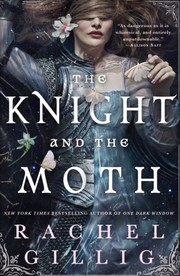
The Knight and the Moth
Six of seven Diviners vanish, and the last one flees a cathedral with a mocking knight and a gargoyle who calls everyone Bartholomew. Gillig's gothic fantasy…
2,936-word summary · 13 min read
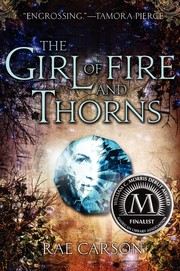
The Girl of Fire and Thorns
Rae Carson's debut follows Elisa, an insecure princess born with a godstone in her navel, who is married to a foreign king and must grow into the leader a…
2,331-word summary · 10 min read
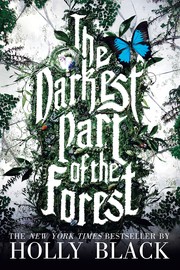
The Darkest Part of the Forest
In a town built around a sleeping horned boy in a glass coffin, a girl discovers she has been spending her nights as a faerie king's knight and remembers none…
2,012-word summary · 9 min read
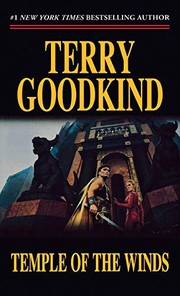
Temple of the Winds
In Sword of Truth book four, a magical plague sweeps the Midlands and prophecy demands that Richard enter the Temple of the Winds, but only through an…
2,962-word summary · 13 min read
Spark of the Everflame
A village healer stops taking the powder that keeps her strange powers quiet. After a dying king names her his heir, Diem Bellator faces a choice between a…
2,293-word summary · 10 min read
Shadowland
Ever Bloom cannot touch Damen without risking his life. As she hunts for a cure, a mysterious surfer named Jude arrives and her loyalty to Damen is tested.
2,301-word summary · 10 min read
Possession: A Romance
A London Library discovery sends two scholars chasing a secret Victorian love affair, in a Booker-winning novel of invented letters, poetry and the race to own…
2,394-word summary · 11 min read
Nightbane
Isla Crown has thirty days to defend Lightlark after Grim threatens to destroy it, while memories of the year she spent with him return.
2,353-word summary · 10 min read

My Policeman
In 1999 a retired teacher writes a confession to the dying man her husband once loved, unpacking a 1950s Brighton love triangle that cost three people…
2,450-word summary · 11 min read

Magic Study
Sentenced to die in Ixia, Yelena returns to the land she was stolen from to learn the magic that made her an outlaw.
2,542-word summary · 11 min read

Magic Bleeds
The fourth Kate Daniels novel finds Kate investigating a magical plague in Atlanta while her relationship with Curran fractures and an ancient enemy tied to…
2,236-word summary · 10 min read
Chain of Iron
In Edwardian London, a fake marriage, a murderer stripping Shadowhunters of their runes and a dead brother in a glass coffin draw the Herondales into a bargain…
2,029-word summary · 9 min read
Brida
A young Irishwoman convinced she has a spiritual Gift seeks out a forest Magus and a Dublin witch, and learns that her gift is to bridge the visible and…
2,012-word summary · 9 min read
Blood of the Fold
In Sword of Truth book three, Richard Rahl takes command of Aydindril while a zealot army and an emperor who walks in dreams threaten everything he loves.
2,321-word summary · 10 min read

Quicksilver
Saeris Fane steals from the desert queen's reservoirs until a gateway flings her into the frozen fae world, where Kingfisher needs her alchemist magic.
2,311-word summary · 10 min read
Onyx Storm
A quest south with Violet Sorrengail, a dragon rider racing to cure Xaden before he turns venin. Yarros trades the academy for islands, irids and a costly war.
2,368-word summary · 11 min read

Magic Strikes
Drafted into the Order of Merciful Aid, Kate Daniels investigates the beating of her friend Derek and finds a hidden tournament where rakshasas fight in human…
2,012-word summary · 9 min read

Innamorata
A mute necromancer heiress engineers a royal marriage to reach a forbidden library, then falls for the prince she plans to use.
2,464-word summary · 11 min read
Dominion
Jean Kwok opens a trilogy in a world of four Dominions, where a memoryless refugee bonds with a tyger queen and uncovers a royal past.
2,213-word summary · 10 min read