
Reading options
What's inside (7 sections)
I came to The Starless Sea sideways, because I had loved The Night Circus but heard this one was harder to love. A friend told me it was beautiful and confusing in equal measure, and that stuck in my head for months. I finally started it on a quiet week when I wanted something to sink into rather than race through. The opening hooked me at once, with a graduate student finding a book in a library that should not know his name, and yet it does.
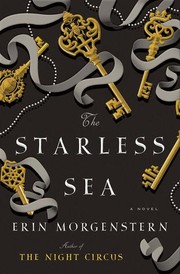
The Starless Sea was published November 5, 2019 by Doubleday, in a first United States hardcover of 512 pages. It is a standalone novel, not part of a series, and it follows The Night Circus by eight years. Spoilers follow here, because this is a full retelling with room to talk about how the ending works and where the book stumbles.
Zachary Ezra Rawlins is the center of the frame story. He is a graduate student in Vermont, bright and bookish, the kind of person who notices games inside stories and stories inside games. He spends his days among library stacks and his evenings with his friend Katya, usually called Kat, who is working on her own degree and who teases him with affection. One day in the university library he pulls an old, unmarked volume called Sweet Sorrows from the shelves. It has no author listed. It reads like a collection of linked fables about a hidden underground world full of books, doors, keys, bees, and swords. He reads late into the night, charmed and unsettled, until he reaches a story about a boy who finds a painted door on a wall and decides not to open it. The details match a moment from Zachary's own childhood exactly. The book is older than the memory. That should be impossible.
That impossibility drives the first third. Zachary cannot let the coincidence go. He asks librarians about the book and gets nowhere. He notices small marks in the margins and starts following them like a trail. Three symbols keep returning in the stories and around his search: a bee, a key, and a sword. They show up on pins, on bookplates, in party invitations, in casual conversation. At first he thinks he is imagining patterns. Then Kat points out that he is not the only one watching. Someone else wants Sweet Sorrows back.
The Painted Door He Walked Past
The childhood memory matters because it explains Zachary. As a boy he saw a door painted on a wall, vivid and deliberate, with a bee and a key and a sword worked into the design. He stood in front of it, hand half raised, and then talked himself out of trying the knob. It looked like street art. He told himself doors do not appear on walls. He walked away and the painting was gone the next day. Most children would forget. Zachary remembered, with a mix of embarrassment and grief. Sweet Sorrows tells that story back to him, down to small physical details he never told anyone, and suggests the door was real and waiting.
As an adult he gets a second chance. Clues lead him to New York City, to a glittering masquerade party hosted for bookish people where masks hide job titles and allegiances. There he meets Dorian, a storyteller with charm and careful manners who tells a strange and lovely tale about Fate being torn apart by owls after falling in love with Time. He also notices Mirabel, with cropped pink hair and a direct stare, who seems to know more than she says and who moves through the crowd like security. The party is connected to a secret group called the Collector's Club, led by a severe woman named Allegra, which collects rare books and guards knowledge about the underground world. The club believes the hidden place is safer if fewer doors lead to it. Zachary learns that Mirabel paints working doorways, real entrances disguised as murals, and that Dorian once belonged to the club's orbit but broke away because he opposes the closing of doors.
The middle of this section plays like a heist crossed with a library puzzle. Dorian asks Zachary to help steal a book called Fortunes and Fables from the Collector's Club, a collection of fairy tales tied to the underground. Zachary agrees, partly from curiosity and partly because Dorian is persuasive company. The theft goes wrong on the way out. Zachary is caught between guards and locked rooms, and Dorian pulls him toward a painted door in Central Park. It opens. Zachary goes through. Dorian is seized at the threshold by Allegra's people, drugged and taken, just as the door shuts. Zachary falls out of the ordinary city and into the place he has only read about.
Down to the Harbor on the Starless Sea
The Harbor on the Starless Sea is an underground warren of tunnels, stairwells, ballrooms, bedrooms, kitchens, and libraries, built over long generations on the shore of a vast lightless sea. The sea itself is made of honey, thick and dark and sweet smelling, lapping at stone docks where small boats wait. Time behaves oddly down here. People speak different languages and still follow each other. Cats wander freely. Statues shift when no one looks directly. Stories can be tasted. One memorable scene has Zachary accepting a mint that opens in his mouth like a small dream, with flavor carrying narrative. Ballrooms stand empty with dust on the chairs. Shelves hold books in many hands. Lamps burn low because few residents remain to tend them.
When Zachary arrives, the Harbor feels past its height and thinly populated. He finds Mirabel, who is blunt about danger and tender underneath. He meets Rhyme, a young acolyte who gave up speech and sight in pieces as part of service to the place, and who communicates through gesture and presence. He meets the Keeper, the ageless harbor master who watches over rooms and rituals with quiet care. Together they free a groggy Dorian after a close chase through corridors, getting him away from Allegra just in time. Dorian needs rest. Zachary needs answers. He starts to explore, finding stairs that lead to older levels built atop one another as the honey sea rose and fell over time.
What Zachary wants most is purpose. Notes appear for him in unexpected places, directing him to find a man lost in time mentioned in Sweet Sorrows. He finds another in world book, The Ballad of Simon and Eleanor, which tells of two residents who lived generations apart yet met through a fold in time within the Harbor. They fell in love across that gap, had a child, and then lost each other when the fold closed. Both set out into the lower depths to search again. The child, the text implies, is Mirabel. Allegra, it turns out, raised Mirabel after those parents vanished, then grew frightened by visions of collapse and ruin. She formed the Collector's Club to seal doors and starve the Harbor of new visitors, believing isolation might preserve what remains.
Stories Inside Stories
The structure is the point and also the problem. Apart from one late section, each of the six books of the novel pairs the forward motion of Zachary's plot with long excerpts from the books he is reading. Sweet Sorrows gives the founding myths. Fortunes and Fables gives short fairy tales with morals that tilt sideways. The Ballad of Simon and Eleanor gives a love story that turns out to be family history. One recurring tale describes Fate as a woman who falls in love with Time, is judged by a parliament of owls, and is torn apart so her heart is cut out and hidden. Another follows a girl who trades her future for entry. Another follows a key collector who cannot stop gathering keys even after forgetting what they open. Bees return as messengers. Swords return as tests. Keys return as choices.
I found these interludes easy to enjoy one by one and hard to hold together at first. Morgenstern writes them in plain, fable like sentences that make strange settings feel close. A kitchen where stories are cooked into candy. An inn where lost characters wait for someone to ask the right question. A dollhouse with rooms that match rooms in the Harbor. A pirate who keeps a library in a ship's hold. A painter who only paints doors. Each piece has polish. Taken together over hundreds of pages, they slow Zachary's urgency. You want him to run, and instead you get another twelve pages about a previous visitor. Readers who love myths and nested boxes will be happy. Readers who want cause and effect may start flipping ahead to find the main thread.
The book anticipates that restlessness and tries to fold it into theme. Characters argue about whether people live inside stories or stories live inside people. Zachary, who studies games and play, starts to see his own actions as moves that the Harbor recognizes. Dorian, who tells stories for a living, worries that telling shapes outcomes in ways he cannot control. Mirabel insists she can only nudge, not command, and that choice has to stay with Zachary. Kat, reading from above ground through journals and messages, pieces together a theory that the Harbor feeds on attention and retelling. It is a clever loop. The books Zachary reads describe the place he enters, and his entry gives those books new pages. The question is whether cleverness can carry four hundred pages of wandering. For me it carried most of them, but not all.
Mirabel, Dorian, Katya, and the Heart
The people kept me reading when the structure wobbled. Mirabel is fierce without becoming a cipher. She paints doors, fights when needed, and carries the weight of being the daughter of Simon and Eleanor, raised by Allegra and then opposed to her. She loves the Harbor but refuses to lie about its decline. Late in the book she admits she is one of many returns of Fate, reborn in different forms after that first tearing apart, and that the Keeper is Time in another shape. She says this plainly, without triumph, and asks Zachary to decide for himself what to do with the knowledge. Her romance with the Keeper feels old and tired in a believable way, more partnership than fireworks.
Dorian is the most charming and the most changeable. Barefoot at odd moments, quick with a story, willing to steal and to apologize in the same hour, he starts as a guide and becomes a partner. His break with the Collector's Club is moral rather than dramatic. He saw doors sealed and visitors turned away and decided the cost was too high. His affection for Zachary grows through shared reading, through comparing notes on Sweet Sorrows and Fortunes and Fables and trying to solve them side by side. That shared study is one of the warmest parts of the book. Two people with books open on a table, arguing gently about Simon, about owls, about what a key really opens. It felt true to how readers actually fall for each other.
Katya grounds the above ground half. While Zachary is below, Kat keeps a journal of her search, calling his phone, visiting his apartment, talking to librarians, and slowly accepting that his wild story might be real. She meets Allegra, refuses an invitation to join the Collector's Club, and agrees to stop digging in order to protect the secret. She builds her career, tries to move on, and then receives quiet directions to an abandoned building with a new painted door. In the closing movement she chooses to open it. Outside that door, Mirabel and Rhyme and the Keeper wait in ordinary street clothes, patient. The image works because Kat earned it through pages of doubt and care rather than sudden belief.
The climax leans into myth. Allegra forces her way below to close doors from inside, triggering quakes that drop her and Dorian into caverns under the Harbor. Dorian lands in the honey sea and is pulled out by Eleanor, now a skilled sailor who knows its currents. Allegra dies on impact. Eleanor brings Dorian to an inn described in Fortunes and Fables, where figures from those tales give him a living human heart saved from Fate when she was first torn apart, and warn him about spirits and false visions in the deep. Searching for Zachary, Dorian fights through illusions and, in confusion, strikes a fatal blow against the person he came to save. In a strange waiting space Zachary meets Mirabel, thanks her for the chance to find Simon, and accepts an end. Dorian then gives Zachary that saved heart, replacing the ruined one, and Zachary returns. Simon joins them. Eleanor's ship carries them upward as honey floods the old Harbor and pulls its rooms apart. Destruction and rescue happen together, which felt right for a book about endings that feed beginnings.
Where It Drags and Who Should Still Try It
Fair criticism belongs here, because admiration without limits would mislead. The middle is long. Between Zachary's arrival below and Allegra's final push, the plot circles through exploration, reading, conversation, and more exploration. Locations blur. New names arrive with capital letters and then vanish for a hundred pages. The Collector's Club, interesting at first as an archive with strict rules, turns into a more conventional blocking force late in the story, with guards and chases that sit oddly beside fables about owls and honey. I also wanted more time with Zachary and Dorian as a couple before the book tested them with sacrifice. Their bond is appealing, but key turns rely on devotion that the page count does not always earn through shared scenes.
Pace is the other issue. Morgenstern writes beautiful rooms. Gilded ballrooms with salt on the tables. Stairwells that smell of smoke and sugar. Libraries where dust hangs in lamplight. After a while I started skimming descriptions to reach decisions. Some interludes repeat the same lesson about stories needing tellers and tellers needing listeners. Trimming thirty or forty pages from the central exploration would have kept tension higher without losing atmosphere. Readers who prefer tight thrillers or strict magic with clear costs may find this frustrating. The Harbor runs on feeling and symbol more than procedure. No one explains why honey stays a sea or how doors choose painters. The book asks for acceptance.
I stayed because the warmth is real. This is a story about people who love books so much they build homes inside them, and about what happens when those homes empty out. Zachary begins as a reader who walked away from a door and becomes someone who walks toward one, knowing the cost. Mirabel begins as a guard and becomes a chooser. Dorian begins as a talker and becomes a doer. Kat begins as a skeptic and becomes a keeper of the secret in her own way. The final door opening for Kat, with old friends waiting on a city street, gave me the lift the middle sometimes lacked. If you enjoy slow explorations with cats in corridors, candy that tells tales, and love that crosses time without easy explanations, give it room and read it in long sittings. If you need speed and clarity on every page, borrow first and see how the first hundred pages sit before committing to all 512.
FAQ
Is The Starless Sea part of a series?
No, it is a standalone novel first published by Doubleday in 2019 with 512 pages in the first United States hardcover. No sequel is needed to follow the ending.
How does Zachary find the Harbor?
Zachary Ezra Rawlins finds Sweet Sorrows in his university library and reads a story from his own childhood inside it. Clues involving a bee, a key, and a sword lead him through a New York masquerade to a painted door into the Harbor.
What are the stories inside the story?
They are linked fables such as Sweet Sorrows, Fortunes and Fables, and The Ballad of Simon and Eleanor. The main plot pauses for these tales, which explain the Harbor, Fate and Time, and Mirabel's parents.
Similar books

Inkdeath
The final Inkworld novel sends Mo into the land of the dead, leaves Meggie choosing between two boys, and ends the Adderhead's immortality with three written…
2,062-word summary · 9 min read

The Rose & the Dagger
Shahrzad is pulled from her Caliph husband and left in a desert camp of rebels, needing to break his curse and end a war before it ends her.
2,520-word summary · 11 min read

We Hunt the Flame
In a fractured Arabia-inspired world, a disguised huntress and a prince-assassin race to find a magic-restoring book and confront an ancient evil.
2,195-word summary · 10 min read
A Fate Inked in Blood
In Norse-inspired Skaland, a fish gutter hiding a goddess's blood is claimed by a jarl, bound by oath, and guarded by the son she cannot want.
1,971-word summary · 9 min read
When the Moon Hatched
An assassin who hears air takes a job that throws her to dragons and a hunter.
2,083-word summary · 9 min read

A Winter's Promise
Ophelia reads objects and is sent to marry Thorn on a cold ark.
2,502-word summary · 11 min read
Daughter of No Worlds
A former slave with rare magic hires exiled warrior Max to train her for a daring rescue, sparking slow burn love and wider war in this big 520-page fantasy…
2,529-word summary · 11 min read
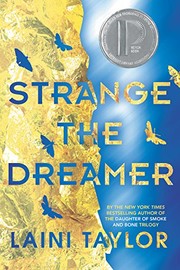
Strange the Dreamer
Orphan librarian Lazlo Strange joins a quest to the lost city of Weep, where blue-skinned godspawn haunt dreams.
2,221-word summary · 10 min read
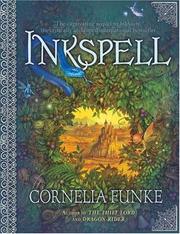
Inkspell
Meggie and Farid read themselves into the Inkworld, where Mo is wanted as the Bluejay and words can wound.
2,406-word summary · 11 min read
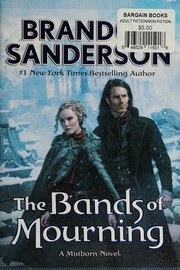
The Bands of Mourning
Wax and Wayne hunt a mythical metalmind while southern visitors and the Set close in.
2,461-word summary · 11 min read

Poison Study
Sentenced to die, Yelena becomes the Commander's poison taster and learns survival in Ixia has a daily price.
2,501-word summary · 11 min read
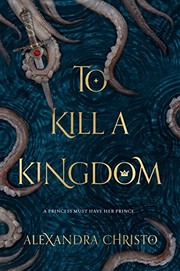
To Kill a Kingdom
A siren princess turned human must steal a siren-hunting prince's heart to win back the sea.
2,248-word summary · 10 min read

Fire
A human monster who reads minds is pulled into war in the Dells and must decide how to use her power.
2,727-word summary · 12 min read
Wizard's First Rule
Woods guide Richard joins Kahlan and wizard Zedd to find the Boxes of Orden before Darken Rahl, learning why people believe lies.
2,220-word summary · 10 min read
Finale
Sisters face waking Fates with debts due, loving princes, and choices that break immortal math.
1,995-word summary · 9 min read
Stardust
Tristran Thorn climbs over the wall of Wall to fetch a fallen star and finds Yvaine, witches, and princes hunting her.
2,490-word summary · 11 min read
Inkheart
Bookbinder Mo reads characters alive and daughter Meggie is pulled into Capricorn's hunt for Inkheart.
2,910-word summary · 13 min read
House of Flame and Shadow
Bryce lands outside Midgard while Hunt sits in Asteri dungeons and the war for two worlds builds.
2,983-word summary · 13 min read
Graceling
Katsa, Graced with killing, breaks from her uncle's use of her and follows a kidnapped prince toward a hidden king.
2,517-word summary · 11 min read
A Kingdom of Flesh and Fire
Poppy travels to Atlantia with Hawke as Casteel while war, prophecies, and her own gifts close in.
3,048-word summary · 14 min read
The Night Circus
Two young magicians duel inside a black-and-white circus that only opens at night, and fall in love against the rules.
2,660-word summary · 12 min read

The Blinding Knife
Kip trains to join the Blackguard while the Prism hides his true identity, loses his colors, and fights a war against a rogue drafter who wants to birth a god.
2,049-word summary · 9 min read
Dawnshard
Rysn sails toward forbidden Akinah to save her dying larkin and finds a Dawnshard guarded by the Sleepless.
3,229-word summary · 14 min read

Vow of Thieves
Kazi and Jase return to Tor's Watch to find it occupied, and their marriage is tested by captivity, betrayal, and a war for the town of Hell's Mouth.
2,059-word summary · 9 min read
The Field Guide
Three siblings move into a creepy Maine estate, anger a brownie, and find a forbidden guide to the fairy world in the first Spiderwick book.
2,033-word summary · 9 min read

Magic Burns
A magic flare hits Atlanta, and mercenary Kate Daniels must recover stolen maps, find a missing witch, and keep a teenage girl alive while Celtic gods try to…
2,021-word summary · 9 min read
Secrets of the Dragon Sanctuary
Kendra is replaced by a plant copy and held by the Society, while Seth steals a unicorn horn so the family can enter a dragon sanctuary.
2,590-word summary · 12 min read

Lioness Rampant
Alanna searches for the Dominion Jewel with the Shang Dragon, then returns to Tortall to face Duke Roger at Jonathan's coronation.
2,478-word summary · 11 min read

Blood Bonds
Oleander is chained in a Resistance camp, and her five Bonds have to find her before Silas Davies finishes what he started in this third Bonds that Tie book.
2,018-word summary · 9 min read

Archenemies
Nova steals for the Anarchists while Adrian hides his Sentinel identity, and a serum that erases prodigy powers puts them both at risk.
2,485-word summary · 11 min read