
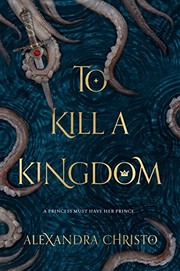
To Kill a Kingdom
2,248-word summary 10 min read 352 pages in the book
- First published
- 2018
- Publisher
- Feiwel & Friends
- Pages
- 352
- ISBN
- 9781250112682
- Series
- Hundred Kingdoms (#1)
Reading options
What's inside (8 sections)
I picked this one up because the premise sounded like a dare. A siren princess who rips out princes' hearts, and the story is told from her side of the water. Alexandra Christo published it in 2018 with Feiwel & Friends, and the hardcover runs 352 pages. I finished it in three sittings, which tells you most of what you need to know, though not quite all of it.
The chapters trade off between Lira and Elian, each speaking in first person. That choice does a lot of work here. You get the monster's hunger and the hunter's certainty side by side, and the fun is watching both of them turn out to be wrong about nearly everything.
The Prince's Bane
Lira is royalty under the sea and a horror story above it. Her mother is the Sea Queen, a ruler who treats cruelty as policy and affection as a rumor. Lira was raised inside that cold logic. Every year on her birthday she takes the heart of a human prince and keeps it as a trophy, and sailors across the kingdoms know her by a nickname: the Prince's Bane.
Christo does not soften her at the start, which I respected. Lira kills cleanly and without apology. She loves her own strength, her tail, her song, the fear she can put into a ship with a few notes. What she does not have is anyone who tells her the truth. Her mother praises the killing and punishes anything softer, so Lira has learned to show only teeth.
The sirens here are not the dreamy singers of old stories. They are predators with a culture built around tribute and obedience. The Sea Queen demands hearts the way other rulers demand taxes, and her court runs on fear dressed up as loyalty. That setup gives the book its engine, because Lira believes in this order completely. She thinks the sea made her perfect and humans are simply meat that builds boats.
What hooked me early was how quickly Christo makes Lira interesting without making her nice. You can see her vanity and her fear in the same paragraph. She is young, certain, and completely her mother's creature, and the book lets you enjoy her sharpness while waiting for the day something finally cuts back.
There is also a cold family story underneath the adventure. The Sea Queen is not a distant evil. She is present, watchful, and exact about what she expects from her daughter. Every interaction between them carries the weight of a parent whose love has conditions attached. Readers who grew up around that kind of pressure will recognize the shape of it, even with the scales and teeth added on top.
The prince who hunts sirens
Elian is the heir to Midas, the strongest of the Hundred Kingdoms, and he wants almost nothing to do with his throne. While his father holds court, Elian sails the ship Saad with a small crew he chose himself, hunting the sirens that drown sailors. He is good at it. He has studied their habits, their waters, their tricks, and he carries the confidence of someone who has survived every story told about him.
His mission has a shape beyond revenge. Elian is searching for the Eye of Keto, an artifact old enough to bind even the Sea Queen. With it, he believes, the killing could stop for good, because the sea itself could be brought to heel. It is a prince's plan: find the biggest weapon, aim it at the biggest problem, and sort out the details later.
His crew follows him because he has earned it, not because of his blood. The scenes aboard the Saad are some of the warmest in the book, full of teasing and routine, the small rituals of people who trust each other with their lives. You get deck life in quick strokes: watches kept, meals shared, jokes that only make sense after months at sea. It gives Elian something Lira does not have, which is people who chose him freely.
I liked that Elian is not a soft prince playing at piracy. He has killed sirens and would do it again. His hatred is specific and has reasons behind it. The book lets him be wrong in the opposite direction from Lira. Where she was taught humans are prey, he was taught sirens are vermin. Both of them were given simple stories by people they love. The voyage exists to complicate those stories until they break.
Word from home follows him from port to port, and he mostly ignores it. His father wants an heir, not a hunter. That tension never takes over the plot, but it sits in the background and explains why Elian holds his crew so tightly. They are the family he picked. The throne is the one he was handed.
A punishment with two legs
The turn comes when Lira breaks one of her mother's laws during a hunt. I will leave the exact offense alone, since the book parcels it out, but the punishment is the point. The Sea Queen strips Lira of her song, her strength, and her tail, and throws her onto land in a human body. No claws. No voice that can sink ships. Just legs that bleed, lungs that burn, and a hunger she has never felt before.
The bargain attached is brutal in its simplicity. Lira must bring her mother the heart of Prince Elian, the siren hunter of Midas, before the winter solstice. Do it, and she earns back the sea. Fail, and she stays human forever, stuck in the weak flesh she despises.
This is the Little Mermaid shape with the morals flipped. The sea girl walks on land for a prince, except she plans to murder him, and the sea witch is her own mother. Christo plays fair with the fairy tale without copying it. The references sit in the background while Lira's problem stays practical. She cannot swim, cannot fight, cannot sing, and the one man she needs to kill is the most guarded person on the ocean.
Her first days ashore are rough in ways the book renders well. Cold. Pain. Clothes that chafe. Food that has to be chewed. Sleep that comes with dreams she cannot control. Lira, who has never been weak for a single hour, has to learn everything while hiding what she is. Pride keeps her upright. Hunger keeps her moving. It is a strong section, and it earns the reader's sympathy without asking Lira to apologize for who she was.
There is something quietly smart about how the book handles her disgust. Lira hates human frailty, and the story does not rush to correct her. It lets her sit in the discomfort until need forces her to adapt. By the time she stops complaining, you realize she has started surviving, and the shift happened without a speech about it.
Passage aboard the Saad
Elian's crew pulls a drowning girl out of the water, and of course it is her. Lira talks fast, claims to be a victim of a wreck, and offers him something he cannot refuse: knowledge that could lead him to the Eye of Keto. Elian agrees to carry her along. She plans to learn his routines, find a quiet moment, and cut out his heart. He plans to use her information and drop her at the next safe port. Both of them are lying. Both of them are also, inconveniently, telling the truth about the things that matter.
Life aboard the Saad gives the book its best stretch. Lira has to pull her weight with a body she does not trust. She learns knots and watches and the names of winds. The crew teases her, tests her, and slowly makes room for her. Elian watches all of this with suspicion that thins by degrees. He catches her staring at the sea like a homesick animal. She catches him being kind to his people when he thinks no one important is watching.
The romance builds the way slow burns should, through friction. They argue about everything: the sea, killing, duty, whether mercy is stupidity. Lira says things no human girl would say, then covers with a shrug. Elian notices and files it away. Small moments pile up. A shared watch in bad weather. A story traded for a story. A moment when each of them could betray the other and does not.
My one complaint about this stretch is that Lira's cover should probably break sooner than it does. Elian is supposed to be clever, and some of her slips are large. The book asks you to accept that affection is clouding his judgment, which is fair enough for a romance, but a reader who likes airtight plotting may frown here. I chose to go with it, since the emotional logic holds even when the spy logic wobbles.
Hunting the Eye of Keto
The search for the Eye carries the back half. Following old maps, sailor stories, and Lira's own knowledge of hidden waters, the Saad moves from port to port across the kingdoms, chasing the artifact piece by piece. Each stop costs something: gold, blood, information traded to people who cannot be trusted. Lira's sea knowledge keeps proving its worth, which binds her tighter to a crew she is supposed to be betraying.
This is also where the middle sags a little. The stops start to blur, each with a new hostile welcome and a narrow escape, and the pattern shows. Readers who came for the banter will not mind. Readers who want the world to widen may wish the Hundred Kingdoms felt more distinct from each other. Apart from Midas and a few sketched ports, the setting stays backdrop rather than becoming a place you could map. For a series named after its kingdoms, that is a fair thing to want more of.
What saves it is the pressure building inside Lira. Every kindness aboard the ship makes her mission heavier. Every cruelty she remembers from her mother's court makes the sea look smaller. Elian, meanwhile, starts asking questions his father would hate. If sirens can be loyal, funny, and brave, what exactly has he been killing? The book handles his doubt better than most hunter stories do. He does not flip in a single speech. He resists, backslides, and hates himself a little for softening, which felt honest.
The strongest beat in this whole section is Lira realizing she no longer wants the reward she is working for. She cannot admit it yet, even to herself. But the reader can see her choosing, in small ways, the people around her over the mother waiting below. By the time the Eye is finally in reach, the question is no longer who will hold the weapon. It is who Lira has become while chasing it.
The alternating voices pay off here. Because you sit inside both heads, you feel the dread of two people walking toward a collision neither wants anymore. Dramatic irony can feel cheap when it is overused, but Christo rations it well. You know enough to ache, not enough to be bored.
What the sea takes, and what it keeps
Everything comes due in the final waters. I will not walk through the last fight move by move, except to say the Eye does what old weapons do in stories like this: it works, and its price is higher than anyone planned. Lira ends up facing her mother with everything she has learned on land standing against everything she was taught under the sea. The Sea Queen does not bend, does not explain, does not love anyone in a way that helps. What happens between them settles the question the whole book has been asking, which is whether Lira belongs to her blood or to herself.
The ending lands where it should. Lira pays for her choice and keeps the scars of it. She remains human, which the book treats as neither a curse nor a prize but a fact she has chosen. Elian gives up the simpler story he sailed out with. The pair that walks away from the wreckage is harder and kinder than the pair that started, and the last pages give them something they have both earned rather than something the plot hands them.
Fair criticism, collected in one place. The villains besides the Sea Queen are thin. The middle quests blur. The romance follows a familiar shape, and experienced readers will see two or three turns coming well ahead. The kingdoms themselves could have been drawn with more care. None of that spoiled the trip for me, because the voices carry it. Lira is a genuinely prickly heroine, Elian is more than a handsome hunter, and their arguments have actual ideas in them about mercy, loyalty, and what we owe the people who raised us.
Who should read it? Anyone who likes enemies-to-lovers fantasy with sea monsters, sharp banter, and a heroine who starts out genuinely dangerous. Anyone who wants intricate court politics or a carefully mapped magic system should look elsewhere. At 352 pages it does not waste much time, and for a 2018 fantasy it holds up well against newer books crowding the same shelf. I closed it satisfied, which is the highest praise a book like this can earn: it promised teeth and a love story, and it delivered both.
FAQ
Is To Kill a Kingdom part of a series?
Yes. It is the opener of the Hundred Kingdoms series, published by Feiwel & Friends in 2018, and Lira and Elian's story is told complete inside this book.
Is this a Little Mermaid retelling?
Loosely. It borrows the shape of the bargain, a sea girl turned human for a prince's sake, then rebuilds it around a siren who kills princes and a prince who hunts her kind.
Who will enjoy this book most?
Readers who like enemies-to-lovers fantasy with sea monsters, banter, and a 352-page plot that moves will feel at home. Readers wanting intricate politics may find it thin.
Similar books
More from Hundred Kingdoms first, then related titles.

The Rose & the Dagger
Shahrzad is pulled from her Caliph husband and left in a desert camp of rebels, needing to break his curse and end a war before it ends her.
2,520-word summary · 11 min read

We Hunt the Flame
In a fractured Arabia-inspired world, a disguised huntress and a prince-assassin race to find a magic-restoring book and confront an ancient evil.
2,195-word summary · 10 min read

A Winter's Promise
Ophelia reads objects and is sent to marry Thorn on a cold ark.
2,502-word summary · 11 min read
Daughter of No Worlds
A former slave with rare magic hires exiled warrior Max to train her for a daring rescue, sparking slow burn love and wider war in this big 520-page fantasy…
2,529-word summary · 11 min read
Strange the Dreamer
Orphan librarian Lazlo Strange joins a quest to the lost city of Weep, where blue-skinned godspawn haunt dreams.
2,221-word summary · 10 min read

Poison Study
Sentenced to die, Yelena becomes the Commander's poison taster and learns survival in Ixia has a daily price.
2,501-word summary · 11 min read

Fire
A human monster who reads minds is pulled into war in the Dells and must decide how to use her power.
2,727-word summary · 12 min read

Finale
Sisters face waking Fates with debts due, loving princes, and choices that break immortal math.
1,995-word summary · 9 min read
Graceling
Katsa, Graced with killing, breaks from her uncle's use of her and follows a kidnapped prince toward a hidden king.
2,517-word summary · 11 min read

Inkdeath
The final Inkworld novel sends Mo into the land of the dead, leaves Meggie choosing between two boys, and ends the Adderhead's immortality with three written…
2,062-word summary · 9 min read

Vow of Thieves
Kazi and Jase return to Tor's Watch to find it occupied, and their marriage is tested by captivity, betrayal, and a war for the town of Hell's Mouth.
2,059-word summary · 9 min read

Lioness Rampant
Alanna searches for the Dominion Jewel with the Shang Dragon, then returns to Tortall to face Duke Roger at Jonathan's coronation.
2,478-word summary · 11 min read

Archenemies
Nova steals for the Anarchists while Adrian hides his Sentinel identity, and a serum that erases prodigy powers puts them both at risk.
2,485-word summary · 11 min read

The Siren
Saved from a shipwreck in 1930, Kahlen becomes a siren who sings men to their deaths for the Ocean, until a boy in a college library makes her want a life she…
2,369-word summary · 11 min read

The Golem's Eye
Two years after The Amulet of Samarkand, Nathaniel is a rising bureaucrat, Bartimaeus is his unwilling servant again, and something made of clay is tearing…
2,299-word summary · 10 min read

The Queen of the Tearling
Nineteen-year-old Kelsea leaves the woods to take her throne, ends a shipment of human captives, and draws the Red Queen's revenge.
2,357-word summary · 10 min read
The Magician
Sophie and Josh flee to Paris with Nicholas Flamel, where John Dee, Machiavelli, and an awakened god close in on the missing pages of the Codex.
2,162-word summary · 10 min read

Lore
Lore Perseous, the last of a hunted bloodline, is pulled back into the Agon when a wounded Athena offers her revenge against the god who killed her family.
2,188-word summary · 10 min read

In the Hand of the Goddess
Alanna, still disguised as a boy, survives war, court plots, and a death duel as the Goddess's chosen warrior in the second Song of the Lioness book.
2,018-word summary · 9 min read

Blue Moon
Ever Bloom tries to save her immortal boyfriend, Damen, from a mysterious illness while a new student named Roman quietly takes control of her school and her…
1,998-word summary · 9 min read
An Enchantment of Ravens
Isobel, a mortal artist in the fairy town of Whimsy, paints a portrait of the autumn prince and falls in love with him, breaking the laws of her craft.
2,087-word summary · 9 min read
A Fate Inked in Blood
In Norse-inspired Skaland, a fish gutter hiding a goddess's blood is claimed by a jarl, bound by oath, and guarded by the son she cannot want.
1,971-word summary · 9 min read

Fable
Abandoned on a lawless island at fourteen, Fable spends four years diving for gems to buy passage off it, straight into the cutthroat trade of the Narrows.
2,320-word summary · 10 min read

The Indigo Spell
Sydney Sage hunts an aging witch, learns forbidden magic, and finally admits she loves Adrian, while the Alchemist tattoo on her cheek may be controlling her.
2,604-word summary · 12 min read

When the Moon Hatched
An assassin who hears air takes a job that throws her to dragons and a hunter.
2,083-word summary · 9 min read

The Winner's Curse
An aristocratic girl buys a slave who is secretly a prince plotting rebellion.
2,124-word summary · 9 min read

The Iron Queen
Meghan faces the Iron King past while Ash pays a winter price.
2,548-word summary · 11 min read
Furies of Calderon
Furyless Tavi defends Calderon Valley when the Marat return and lords scheme.
2,587-word summary · 11 min read

The Golden Lily
Sydney Sage guards Jill at Amberwood Prep in Palm Springs, studies forbidden magic, favors Adrian over Brayden, and faces Alchemist custody in this second…
2,988-word summary · 13 min read

Lirael
A Sightless Clayr girl and a prince afraid of Death join the Dog and Mogget to stop necromancers from waking the Destroyer Orannis at the Red Lake while old…
2,692-word summary · 12 min read