
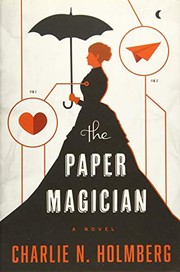
The Paper Magician
2,454-word summary 11 min read 224 pages in the book
- First published
- 2014
- Publisher
- 47North
- Pages
- 224
- ISBN
- 9781477823835
- Series
- The Paper Magician (#1)
Reading options
What's inside (8 sections)
I picked up The Paper Magician because the idea sounded so small and specific. Origami that comes alive. It is Charlie N. Holmberg's debut novel, published in 2014 by 47North, and it is the first book in a series that eventually ran to four titles. The edition I read runs 224 pages and carries ISBN 9781477823835. What I did not expect was how much heart the book puts into a magic system built from something as ordinary as folded paper, or how quickly it turns from a cozy apprenticeship story into something darker.
An idea that started with origami
Holmberg has said the idea came after she learned Japanese and was introduced to origami. She thought it would be fun to write about paper folding that came to life, and what began as a side magic became the whole story. She also took advice from Brandon Sanderson about limiting what magic can do. Instead of magicians who can do anything, she built a world where each magician can manipulate only one man made material and must bond to something specific. That constraint is the best thing in the book.
It is worth pausing on how unusual that choice is. Most fantasy lets its practitioners do a little of everything, or gives them a single flashy gift with no rules around it. Holmberg does the opposite. Her magicians are defined by a narrow craft, and the drama comes from what that craft can and cannot do. Ceony cannot simply wish a problem away. She has to fold, crease, and shape her way through it, and the limits make her victories feel earned. When the story later turns violent, those limits still hold, which is more than many books manage.
Her editor pushed her to set the story in a historical period rather than another world, and Holmberg drew on the British drama Downton Abbey for the atmosphere. She wrote it while living in Moscow, Idaho, and it was the ninth novel she completed before it became the first one published. Both this book and its sequel were sold to 47North, Amazon's speculative fiction imprint, in 2013. Knowing that history makes the finished book feel more deliberate. The historical setting is doing real work here rather than serving as decoration.
Holmberg also said she wanted to avoid giving her protagonist a love interest with any semblance of perfection. That decision shapes the whole book. Emery Thane is not a flawless mentor who appears to hand Ceony a set of answers. He is a man with a past he regrets and a temper he keeps leashed. Ceony herself is allowed to be abrasive and wrong. The result is a romance that grows out of two people being imperfect together, and it is one of the reasons the early chapters feel warmer than the plot alone would suggest.
One material, one bond, one bad assignment
The story is set in 1902. Ceony Twill has just graduated at the top of her class from the Tagis Praff School for the Magically Inclined. In her world, every magician bonds to a single man made substance. Some work with metal, some with glass, some with paper. Ceony hoped to become a Smelter and bend metal to her will. Instead, for reasons she does not understand at first, she is assigned to Folding, which is paper magic. It feels like a disaster. Paper is what you write on, not what you shape into weapons or power.
The money for her tuition arrives from an unknown source, which is the first of several convenient mysteries in the plot. Someone has paid for her schooling and arranged this apprenticeship. Ceony is sent to learn from Emery Thane, a Paper Magician who lives in a strange cottage outside the city. When she arrives, she is greeted by a paper skeleton. It is a perfect introduction to the book's tone: funny, a little eerie, and full of wonder at what a skilled Folder can make.
The apprenticeship itself is the best stretch of the novel. Emery teaches Ceony how to fold paper into living shapes and how to read the small movements of a paper puppet. She learns to tell fortunes with folded paper and to make a paper dog that follows her around. The dog becomes a small companion that makes the cottage feel less lonely. Emery talks to her about creating entertainment for people, about magic as something that can bring joy rather than just power. It is gentle, patient storytelling, and it made me want to spend more time in that cottage.
That theme of entertainment is easy to miss, and it is the book's quiet argument. Ceony arrives expecting magic to be about status and strength, the way her school treated it. Emery keeps steering her toward amusement, toward the delight on a person's face when a paper figure moves. The fortune telling scenes and the paper puppets are more than charming set dressing. They are the antidote to the blood magic that arrives later, which is all about taking things from people. Holmberg stacks the deck, but she does it with a light hand, and the contrast lands.
The school itself gets only a handful of pages, but those pages establish the stakes well. Ceony is the top of her class and still gets handed the assignment nobody wanted, which is a small, familiar injustice that makes her sympathetic before anything dangerous happens. The money from an unknown party smooths the practical problem of tuition and quietly hints that someone is steering her life. I rolled my eyes at the convenience the first time, but it does set up the idea that Ceony has been chosen for a purpose she did not pick, which matters once the Excisioners appear.
Blood magic and the day everything changes
The calm does not last. Holmberg introduces an evil called blood magic, practiced by people known as Excisioners, who use a forbidden art that Ceony's world has tried to wipe out. Emery has been part of efforts to hunt them down, which means he has enemies. The turning point comes when Lira, Emery's former wife, attacks him. Using blood magic, she tears his heart out of his chest. It is a shocking scene, and the book does not soften it.
Ceony has seconds to act. She folds a replacement heart out of paper and puts it into Emery's chest, which keeps him alive but is only a temporary fix. To truly save him, she must get his real heart back from Lira. That mission pulls her out of the cottage and into a wider world of Excisioners and danger. The shift is abrupt. One chapter Ceony is making paper animals, the next she is hunting down a woman who can cut out hearts. Reviewers noted the tonal jolt, and I felt it too, though the danger does give the story a momentum the early chapters lack.
The Excisioners are described as people who practice a forbidden art that the world has tried to purge, and Emery's history with that purge is what puts a target on him. The book does not spend much time building them as an organization. They function more as a threat that pulls Ceony forward than as a fully imagined enemy. That is a missed opportunity, because the idea of blood magic as the mirror image of paper craft is strong. Where Ceony makes things, the Excisioners cut them apart. Holmberg gestures at that opposition in the climax but never quite develops it the way the setup promised.
The contrast is part of the design. Holmberg wanted flawed characters and themes of forgiveness and self love, and she deliberately avoided making Ceony's love interest perfect. Emery is gentle and skilled but carries pain and secrets. Ceony is talented and stubborn, and her feelings for her teacher are complicated by the fact that he is her mentor. The romance grows out of the apprenticeship rather than being pasted on, which is one of the book's quieter strengths.
Inside the heart
The strangest and most memorable part of the book is what happens when Ceony is pulled inside Emery's heart. It is a literal journey into the organ she made from paper, and it becomes a way for her to learn who Emery really is. She sees his memories and his past, including the marriage to Lira and the reasons that relationship ended. The device lets Holmberg do something clever: she turns a rescue mission into a character study, so that saving Emery means understanding him.
The sequence works because it changes the texture of the book. Up to this point the magic has been external, all folding and movement Ceony can see with her own eyes. Inside the heart it becomes interior. Ceony is moving through someone else's memories, reading the emotional record of a man she thought she knew. It is a bold swing for a short debut novel, and it mostly pays off. The scenes where she pieces together what Emery was before he became her teacher give the romance a weight it would otherwise lack. Her feelings run deeper than a crush on a handsome mentor. She is learning what it costs to be the person who stays and cares for someone.
There is a practical cleverness to it as well. Because the replacement heart is made of paper, it follows that Ceony can enter it and reshape parts of it, which turns an organ into a kind of landscape she can navigate. That logic is consistent with the rules Holmberg set up, and it is the kind of idea that only works if you have committed to a narrow magic system from the start.
Lira is the antagonist, and she is more than a simple villain. She is Emery's ex wife and a practitioner of blood magic, and her attack is personal. Ceony has to face her more than once, and the final confrontation forces Ceony to decide what kind of magician she will be. The paper magic she has learned becomes a way to resist the violence of blood magic, which fits the book's larger idea that creation can answer destruction.
I wanted more time with this part of the story. The heart journey is fascinating and could have carried a longer book. Instead it moves quickly, and Ceony emerges to face Lira again before the reader has fully settled into the idea. This is where the complaint about the ending starts to bite. Valerie Laub, reviewing for Drexel University's The Triangle, praised the vivid scenes but called the ending incredibly rushed and the novel underdeveloped. Rebecca James at School Library Journal noted inconsistencies in the storyline. Both criticisms are fair.
What works and what drags
The magic system is the reason to read this book. The idea that a magician can only shape one material, and must bond to it, gives every scene a clear logic. The paper magic is tactile and specific: folding, creasing, shaping, the small satisfying details of a craft. Holmberg clearly knows origami, and the book is at its best when Ceony is learning what paper can do. Christine Rappleye of the Deseret News called it an interesting twist on magic, and that is exactly right.
The historical setting also works. The 1902 framework, with its manners and class habits, gives the story a pleasant old fashioned feel, and the Downton Abbey influence shows in the way the household and the social expectations are drawn. Publishers Weekly compared the book to Patricia Wrede, which tells you something about its register: gentle, inventive, and aimed at readers who like their fantasy with good manners.
That comparison is fair but it also marks the ceiling. The book never quite reaches the richness of the writers it is compared to. The secondary characters around the cottage are thin, and the wider world of magicians feels sketched rather than built. You get the sense that there is a larger society of Folders, Smelters, and other bonded craftspeople just beyond the page, and Holmberg never opens the door. For a first novel that is understandable, and the sequels clearly had room to expand it, but reading this one alone can feel like being shown one room of a much bigger house.
The weak points are real. The plot relies on a few conveniences, starting with the mystery tuition money and the assignment to paper that turns out to be meaningful. The shift from cozy apprenticeship to life and death pursuit happens fast. The ending resolves the Lira threat in a way that feels compressed given how much the heart journey promised. And the romance, while sweeter than many, sometimes pushes Ceony's own arc into the background. If you want a book that takes its time, this one can feel like it is racing toward its sequel.
Where the story led
The Paper Magician was nominated for a 2014 AML Award for young adult speculative fiction and made the 2015 American Library Association Fantasy Reading shortlist. It was followed by The Glass Magician in 2014, The Master Magician in 2015, and The Plastic Magician in 2018. Holmberg has said she did not plan a series at first, but the books found an audience. Disney bought the film rights in 2016, with Ashleigh Powell attached to write the script and producer Allison Shearmur involved. Holmberg has been careful to note that a rights purchase does not guarantee a movie.
The awards tell you where the book found its readers. A nomination for the Association for Mormon Letters award in young adult speculative fiction and a spot on the American Library Association's 2015 Fantasy Reading shortlist both point to the same audience: younger readers and adults who want their fantasy inventive but not bleak. Holmberg's background, including her time in Moscow, Idaho and her ties to the Mormon arts community, sits quietly behind that reception. Nothing in the story is preachy, but the emphasis on forgiveness and self love gives it a moral shape that those organizations recognized.
For a debut, the book is remarkably assured in its central idea. It builds a small, coherent world around an everyday material and then finds both wonder and dread in it. The paper dog and the fortune telling puppets are the parts I remember most fondly. The heart journey is the part I wish had more room. If you like magic systems with firm rules, historical fantasy with a gentle hand, and a heroine who learns that her worst assignment might be the right one, this is an easy book to recommend. Just go in expecting the last stretch to move faster than the rest.
FAQ
Is The Paper Magician part of a series?
Yes. It is the first of four books, followed by The Glass Magician, The Master Magician, and The Plastic Magician. It was Holmberg's debut novel, published by 47North in 2014.
What is the magic in this book based on?
Each magician bonds to one man made material and can only shape that substance. Ceony works with paper and folds it into living forms, an idea Holmberg developed from origami and Brandon Sanderson's advice to limit magic.
Is this book appropriate for young readers?
It was nominated for a young adult speculative fiction award and has a gentle tone, but the heart removal scene and blood magic are genuinely dark, so younger readers may find those parts disturbing.
Similar books
More from The Paper Magician first, then related titles.
Wings
A homeschooled fifteen-year-old grows a blue flower from her back and learns she is a faerie sent to guard a hidden gate. Pike's debut makes plant lore feel…
2,506-word summary · 11 min read
The Girl of Fire and Thorns
Rae Carson's debut follows Elisa, an insecure princess born with a godstone in her navel, who is married to a foreign king and must grow into the leader a…
2,331-word summary · 10 min read
The Darkest Part of the Forest
In a town built around a sleeping horned boy in a glass coffin, a girl discovers she has been spending her nights as a faerie king's knight and remembers none…
2,012-word summary · 9 min read
The Binding
In an alternate Victorian England, binders remove unbearable memories into books, and a young apprentice discovers his own past was erased from him.
2,036-word summary · 9 min read
Shadowland
Ever Bloom cannot touch Damen without risking his life. As she hunts for a cure, a mysterious surfer named Jude arrives and her loyalty to Damen is tested.
2,301-word summary · 10 min read
Nightbane
Isla Crown has thirty days to defend Lightlark after Grim threatens to destroy it, while memories of the year she spent with him return.
2,353-word summary · 10 min read
Magic Study
Sentenced to die in Ixia, Yelena returns to the land she was stolen from to learn the magic that made her an outlaw.
2,542-word summary · 11 min read
Chain of Iron
In Edwardian London, a fake marriage, a murderer stripping Shadowhunters of their runes and a dead brother in a glass coffin draw the Herondales into a bargain…
2,029-word summary · 9 min read

The Siren
Saved from a shipwreck in 1930, Kahlen becomes a siren who sings men to their deaths for the Ocean, until a boy in a college library makes her want a life she…
2,369-word summary · 11 min read

The Rose & the Dagger
Shahrzad is pulled from her Caliph husband and left in a desert camp of rebels, needing to break his curse and end a war before it ends her.
2,520-word summary · 11 min read

We Hunt the Flame
In a fractured Arabia-inspired world, a disguised huntress and a prince-assassin race to find a magic-restoring book and confront an ancient evil.
2,195-word summary · 10 min read
Blue Moon
Ever Bloom tries to save her immortal boyfriend, Damen, from a mysterious illness while a new student named Roman quietly takes control of her school and her…
1,998-word summary · 9 min read
An Enchantment of Ravens
Isobel, a mortal artist in the fairy town of Whimsy, paints a portrait of the autumn prince and falls in love with him, breaking the laws of her craft.
2,087-word summary · 9 min read

The Indigo Spell
Sydney Sage hunts an aging witch, learns forbidden magic, and finally admits she loves Adrian, while the Alchemist tattoo on her cheek may be controlling her.
2,604-word summary · 12 min read
Rebel Angels
Gemma returns to the realms to bind magic while facing Circe and London season.
2,708-word summary · 12 min read
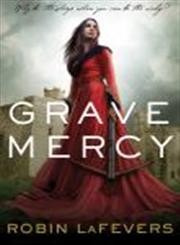
Grave Mercy
Convent assassin Ismae spares Gavriel and hunts traitors in Brittany.
2,357-word summary · 10 min read
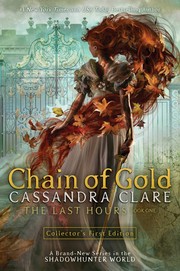
Chain of Gold
Cordelia and James hunt demons in Edwardian London while hearts tangle.
2,364-word summary · 11 min read
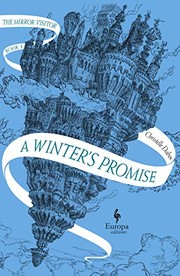
A Winter's Promise
Ophelia reads objects and is sent to marry Thorn on a cold ark.
2,502-word summary · 11 min read
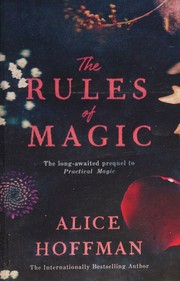
The Rules of Magic
Franny, Jet, and Vincent Owens test strict family rules and a love curse in 1960s Manhattan and Massachusetts in Alice Hoffman's warm prequel about love, loss,…
2,686-word summary · 12 min read
The Golden Lily
Sydney Sage guards Jill at Amberwood Prep in Palm Springs, studies forbidden magic, favors Adrian over Brayden, and faces Alchemist custody in this second…
2,988-word summary · 13 min read
Daughter of No Worlds
A former slave with rare magic hires exiled warrior Max to train her for a daring rescue, sparking slow burn love and wider war in this big 520-page fantasy…
2,529-word summary · 11 min read
Strange the Dreamer
Orphan librarian Lazlo Strange joins a quest to the lost city of Weep, where blue-skinned godspawn haunt dreams.
2,221-word summary · 10 min read
Blood & Honey
Married witch Lou and hunter Reid flee church and coven while dark magic tempts Lou to save them.
2,280-word summary · 10 min read
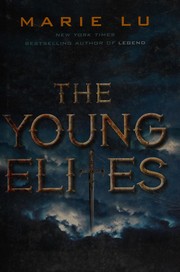
The Young Elites
Adelina survives fever and execution to join a secret group of gifted malfettos plotting against the queen of Kenettra.
3,310-word summary · 15 min read
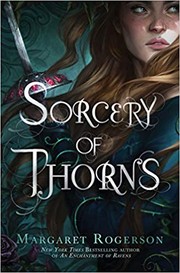
Sorcery of Thorns
An apprentice librarian framed for sabotage joins a sorcerer and his demon servant to stop attacks on the Great Libraries.
2,926-word summary · 13 min read
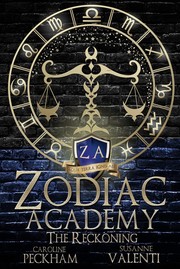
The Reckoning
Twin heirs survive trials and hazing at Zodiac Academy while the heirs start to split.
1,984-word summary · 9 min read
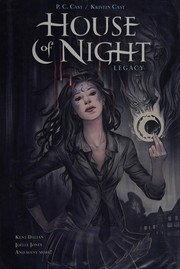
Burned
Zoey's soul hides in the Otherworld while Stark must die to fetch her and Stevie Rae burns secrets.
2,074-word summary · 9 min read
Poison Study
Sentenced to die, Yelena becomes the Commander's poison taster and learns survival in Ixia has a daily price.
2,501-word summary · 11 min read
To Kill a Kingdom
A siren princess turned human must steal a siren-hunting prince's heart to win back the sea.
2,248-word summary · 10 min read
The Shadows Between Us
Alessandra plans to woo the Shadow King, marry him, and kill him for his throne, then finds someone else wants him dead first.
2,571-word summary · 11 min read