
Wings
2,506-word summary 11 min read 290 pages in the book
- First published
- 2009
- Publisher
- HarperTeen
- Pages
- 290
- ISBN
- 9780061668036
Reading options
What's inside (8 sections)
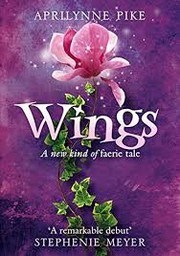
I picked this up because I kept hearing it described as the answer to Twilight, and I wanted to know what the fuss was about. What I found was a strange and rather charming book about a girl who grows a flower out of her back. Wings was Aprilynne Pike's debut, published on May 5, 2009, by HarperTeen in the United States and by HarperCollins in Britain. The first American hardcover runs 290 pages, which is not much room for a secret world, a romance, a family crisis and a showdown with monsters. Pike fits all of it in anyway, and the speed is part of the experience.
The story is told by Laurel Sewell, a fifteen-year-old who has been homeschooled her whole life and has spent all of it on her family's land near Orick, California. Then her adoptive parents do something that upends her days: they buy a bookstore in Crescent City and enroll her at Del Norte High School. Laurel has never sat in a classroom before. She finds the lighting harsh and the desks confining, and she struggles to concentrate. This is the first honest note the book strikes, and it is a good one. Pike understands that for a girl taught at home, the first day of school is not a social milestone but a kind of sensory assault.
Laurel does make friends, though. There is David, a handsome boy in her year who is patient with her, and Chelsea, a friendly girl with a crush on David who is fascinated by Laurel's strict vegan diet. The diet is not a quirk thrown in for flavor. It is a clue, and the clues in this book are planted early and paid off later with a neatness that becomes one of the novel's real pleasures.
A girl who does not quite fit
Laurel's differences run deeper than a dislike of fluorescent light. Early on she tells David that she was not adopted in the usual way. She was left in a basket on her parents' doorstep when she was three, with no memories at all except her own name. That detail sits at the center of the book. A girl with no past is a girl who can be anything, and Pike slowly reveals that Laurel is something quite specific.
She also has an odd relationship with her own body. She never gets pimples, which is why the large one that appears on her back a few months into the school year is so strange. She tries an herbal salve of her mother's, but the bump only grows. One morning she wakes to find an enormous blue flower growing out of the small of her back.
Her reaction is the right one, I think. She does not scream or run to the doctor. She is frightened and embarrassed, so she keeps it to herself for a while and then tells David. He is surprised, but he notices something she has not: the blossom resembles a pair of wings. He gets his microscope, and together they confirm that what is growing out of her is plant matter. The scene is calm and curious rather than hysterical, and that calm is what makes it work. Two teenagers looking at a flower through a microscope is a stranger image than any chase scene, and it stayed with me.
Tamani, and the truth about faeries
While Laurel is coming to terms with her back, other adults are circling her family's land. A man named Jeremiah Barnes comes to visit her parents, offering to buy the small plot near Orick that they are selling to pay for the bookstore. He asks a curious question: have they ever had trespassers on the property? The question is a thread that pays off much later, and on a first reading it slips by as polite small talk.
Laurel and her parents go out to visit the old house, and there she meets Tamani. He is a young man, handsome and intriguing, and he is entirely unsurprised by the flower on her back. He offers answers. He tells her that she is a faerie, just as he is, and that faeries are a highly evolved form of sentient plant.
Laurel does not take this well. She leaves angry and threatens to call the police if she finds him trespassing again. Later she notices a strange glitter on her arm where he touched her. Pike is patient about all of this. She lets Laurel be annoyed and skeptical, which makes the eventual acceptance feel earned rather than instant.
The mythology is the best thing in the book, and it is worth dwelling on. In Pike's invention, faeries are plants. They reproduce through pollination, which is what that glitter on Laurel's arm turns out to be: Tamani's pollen. There are different kinds, tied to the seasons. Laurel is a Fall faerie, which gives her an innate sense of plants and magic and the ability to make elixirs and potions. Tamani is a Spring faerie, the most common and least powerful kind, able to entice other faeries, animals and even humans. A Winter faerie named Jamison appears later. The seasons are not decorative labels here. They explain what each character can do and why they matter.
Tamani is on the land for a reason. He is one of several sentries guarding something powerful, and he has been watching over Laurel because she is a scion, a faerie sent to live among humans so that she will one day inherit her parents' land. When he learns that her parents intend to sell, he insists she find a way to stop them. It is a heavy thing to ask of a fifteen-year-old who only last week was worrying about a pimple, and the book does not shy from the unfairness of it.
The tests, the dance and the falling petals
Laurel goes home and tries to avoid David, but she ends up telling him what Tamani said. When David says the idea makes sense, she storms off. She asks her father whether she has ever been to a doctor, and he tells her she was taken once, when she was found. The doctor could not hear her heartbeat. That small family memory is the hinge the book turns on, because it means her parents have known, in some half-understood way, that she was never quite ordinary.
David talks her into considering Tamani's claim and suggests they test it. They find that her blood is clear. David cannot hear a heartbeat. He suspects she does not even have a heart. It is an unsettling run of discoveries, and Pike handles it with a light touch by keeping David in the room as a companion rather than a lecturer. When Laurel is shaken, David kisses her to comfort her. She is flattered but tells him it is too much to deal with right now. The romance never gets a chance to crowd out the mystery, which is partly why the two threads sit together so comfortably.
They also work out that Laurel exhales oxygen and takes in carbon dioxide. This is the sort of detail that could be a throwaway in another book, but here it becomes the mechanism of a rescue later on. Pike plants her tricks and collects them.
David invites Laurel to a school dance and suggests her costume be a faerie. It is a sweet gesture with an edge of irony, since by now she knows there is truth in the joke. At the dance a student hands her one of her own petals, which has fallen off without her noticing. She realizes the blossom is wilting. By the next morning all the petals have dropped, and she goes looking for Tamani for answers. That is how she learns what a Fall faerie is, and why she is different from the Spring faerie who has been following her.
Trolls and a gate to Avalon
The family plot thickens in a way that is less elegant than the plant mythology. Laurel's father, Mark, becomes very ill. He does not improve, and the doctors eventually give him a week to live. Barnes returns with a higher offer and paperwork to sign, and Laurel's mother agrees because she needs money for Mark's medical bills. The pressure is blunt, almost mechanical, and I felt the story shift gears here from a quiet mystery into a race against a deadline. Some readers will enjoy the urgency. I found I missed the slower early chapters.
Laurel is convinced Barnes is hiding something, so she and David drive to his office. Inside they find a hideous creature chained up. Barnes discovers them, punches David and orders two lackeys to throw the pair into a river to drown. The scene is the book's first real burst of danger, and it arrives suddenly enough to be genuinely startling.
They survive because of that odd detail about Laurel's breathing. Sealing their mouths together, they can share the oxygen she exhales while she takes in the carbon dioxide he breathes out. It is a clever bit of problem solving, and it is also, I will admit, a very convenient one. The book asks you to accept a lot of coincidence in its final third.
Once they are free and back at David's car, Laurel understands that this is bigger than a real estate deal and says they need Tamani. He explains that Barnes and his men are trolls, primates like humans rather than plants, and that they want the land because it holds a gate to Avalon. He suspects Barnes poisoned Mark to force a sale, and he is sure Barnes does not know Laurel is a faerie, because a troll who knew would never have tried to drown her. The logic is tidy and a little too convenient, but it is consistent with the rules Pike has set up.
The confrontation and what Laurel decides
David and Laurel drive Tamani back to Barnes's office. Tamani slips inside and kills the other trolls by snapping their necks. Barnes finds him and shoots him in the leg. While Barnes is distracted, Laurel picks up his gun and orders him to stop. It is at that moment that Barnes realizes she is a scion. Laurel shoots him in the shoulder, drops the gun in surprise, and Tamani grabs it, but Barnes gets out through a window before anyone can stop him.
Back at the property, the other sentries take the wounded Tamani to Avalon to heal. Jamison, a Winter faerie, is told about the trolls and warns Laurel to stay on her guard. He also gives her two gifts: an elixir that will heal her father and a diamond so her parents will not have to sell the land to cover the bills. I have mixed feelings about this stretch of the book. The elixir and the diamond wrap up the family problem very neatly, and the father's illness has served mostly as a way to push the characters to this point. Still, Jamison's warning keeps the danger alive even as the immediate crisis resolves.
Laurel gives her father the elixir and tells her parents the truth about herself. She and David share a kiss. A few weeks later she sees Tamani again, healed and back on sentry duty. He suggests she come and live in the house on the property, where it would be easier to guard the gate. She declines. She says she has to stay with her friends and family. That choice is the real ending of the book, and it is a more interesting one than the fight with Barnes. Laurel is offered a safe, special life and turns it down for the messy ordinary one she has already made.
What lands and what grates
The plant mythology is what I would tell a friend about. The idea that faeries are sentient plants, that they pollinate, that their seasons determine their powers, and that an entire hidden world is rooted in the ground of northern California feels fresh in a way that most teen fantasy of this period did not. The book's title refers to the flower on Laurel's back, but it also points to the way Pike lets the natural world carry the supernatural. Nothing here is imported from some other world. It grows out of the soil.
The reception when the book came out bears this out. Wings reached the New York Times bestseller list in its first week and climbed to number one on the Children's Chapter Books list in its second. It was a Publishers Weekly bestseller, and Stephenie Meyer supplied a cover blurb praising the originality of the mythology. Booklist noted that the novel was clearly aimed at the Twilight crowd but had less edge and blood, and mentioned a familiar love triangle. Romantic Times gave it a Top Pick. There were nominations from the American Library Association, the Cybils Awards and the Whitney Awards. For a first novel that was a remarkable launch, and it is easy to see why readers responded to the central invention.
The familiar triangle is also the book's weakest thread. David and Tamani stand in for two kinds of life, the safe human one and the dangerous magical one, and Laurel's pull between them is telegraphed from her first conversation with each. Pike handles it gently, and Laurel's final decision sidesteps a clean choice, but the romance never develops the texture that the faerie lore does. The trolls are flatter still. Barnes is a villain with no inner life, a man who punches teenagers and owns a chained creature, and his crew exists to be defeated. The book is better when it is curious about plants than when it is arranging a fight.
There is also a smoothness to the plotting that can feel synthetic. The father's illness arrives to create pressure, the diamond arrives to remove it, and Barnes escapes so the story can continue in the sequels. Pike wrote three more books in the series and later a fifth, Arabesque, set ten years after the fourth, so the open ending was clearly a plan. Reading it on its own, though, I felt the machinery working.
I would hand this to a reader who likes their fantasy rooted in something concrete, and to anyone who remembers the mid 2000s teen paranormal boom and wants to see one of its more original entries. I would be careful with a reader who wants subtly drawn villains or a romance that takes its time. Wings is at its best when Laurel is looking through a microscope at a flower growing out of her own skin, trying to work out what she is. It is at its least convincing when it turns that wonder into a brawl. The invention more than survives the roughness, and the last image of Laurel choosing her ordinary life over a protected one is a quiet, decent note to end on.
FAQ
Is Wings part of a series?
Yes. It is the first book in Pike's Wings series, followed by Spells in 2010, Illusions in 2011, Destined in 2012 and Arabesque in 2016.
What is the flower growing out of Laurel's back?
It is a plant blossom shaped like a pair of wings, and it marks Laurel as a Fall faerie who can sense plants and make elixirs and potions.
Why was Wings compared to Twilight?
It appeared in 2009 during the teen paranormal romance boom and has a love triangle, and Stephenie Meyer supplied a cover blurb praising its mythology. Booklist noted the familiar triangle and the lighter tone.
Similar books
The Girl of Fire and Thorns
Rae Carson's debut follows Elisa, an insecure princess born with a godstone in her navel, who is married to a foreign king and must grow into the leader a…
2,331-word summary · 10 min read
The Darkest Part of the Forest
In a town built around a sleeping horned boy in a glass coffin, a girl discovers she has been spending her nights as a faerie king's knight and remembers none…
2,012-word summary · 9 min read
Shadowland
Ever Bloom cannot touch Damen without risking his life. As she hunts for a cure, a mysterious surfer named Jude arrives and her loyalty to Damen is tested.
2,301-word summary · 10 min read
Nightbane
Isla Crown has thirty days to defend Lightlark after Grim threatens to destroy it, while memories of the year she spent with him return.
2,353-word summary · 10 min read

Magic Study
Sentenced to die in Ixia, Yelena returns to the land she was stolen from to learn the magic that made her an outlaw.
2,542-word summary · 11 min read
The Paper Magician
A graduate magician is assigned to paper magic instead of metal, then must face a woman who tears out her mentor's heart.
2,454-word summary · 11 min read

The Siren
Saved from a shipwreck in 1930, Kahlen becomes a siren who sings men to their deaths for the Ocean, until a boy in a college library makes her want a life she…
2,369-word summary · 11 min read

The Rose & the Dagger
Shahrzad is pulled from her Caliph husband and left in a desert camp of rebels, needing to break his curse and end a war before it ends her.
2,520-word summary · 11 min read

We Hunt the Flame
In a fractured Arabia-inspired world, a disguised huntress and a prince-assassin race to find a magic-restoring book and confront an ancient evil.
2,195-word summary · 10 min read
Blue Moon
Ever Bloom tries to save her immortal boyfriend, Damen, from a mysterious illness while a new student named Roman quietly takes control of her school and her…
1,998-word summary · 9 min read
An Enchantment of Ravens
Isobel, a mortal artist in the fairy town of Whimsy, paints a portrait of the autumn prince and falls in love with him, breaking the laws of her craft.
2,087-word summary · 9 min read

The Indigo Spell
Sydney Sage hunts an aging witch, learns forbidden magic, and finally admits she loves Adrian, while the Alchemist tattoo on her cheek may be controlling her.
2,604-word summary · 12 min read
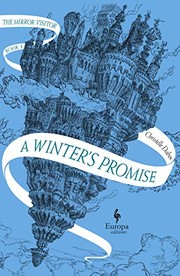
A Winter's Promise
Ophelia reads objects and is sent to marry Thorn on a cold ark.
2,502-word summary · 11 min read

The Golden Lily
Sydney Sage guards Jill at Amberwood Prep in Palm Springs, studies forbidden magic, favors Adrian over Brayden, and faces Alchemist custody in this second…
2,988-word summary · 13 min read
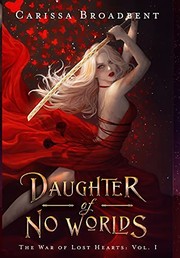
Daughter of No Worlds
A former slave with rare magic hires exiled warrior Max to train her for a daring rescue, sparking slow burn love and wider war in this big 520-page fantasy…
2,529-word summary · 11 min read
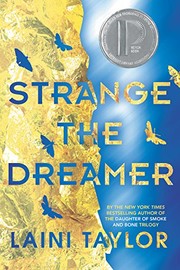
Strange the Dreamer
Orphan librarian Lazlo Strange joins a quest to the lost city of Weep, where blue-skinned godspawn haunt dreams.
2,221-word summary · 10 min read
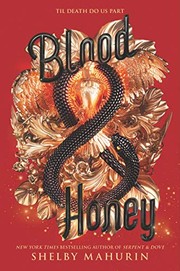
Blood & Honey
Married witch Lou and hunter Reid flee church and coven while dark magic tempts Lou to save them.
2,280-word summary · 10 min read
The Young Elites
Adelina survives fever and execution to join a secret group of gifted malfettos plotting against the queen of Kenettra.
3,310-word summary · 15 min read
Sorcery of Thorns
An apprentice librarian framed for sabotage joins a sorcerer and his demon servant to stop attacks on the Great Libraries.
2,926-word summary · 13 min read
The Reckoning
Twin heirs survive trials and hazing at Zodiac Academy while the heirs start to split.
1,984-word summary · 9 min read
Burned
Zoey's soul hides in the Otherworld while Stark must die to fetch her and Stevie Rae burns secrets.
2,074-word summary · 9 min read
Poison Study
Sentenced to die, Yelena becomes the Commander's poison taster and learns survival in Ixia has a daily price.
2,501-word summary · 11 min read
To Kill a Kingdom
A siren princess turned human must steal a siren-hunting prince's heart to win back the sea.
2,248-word summary · 10 min read
The Shadows Between Us
Alessandra plans to woo the Shadow King, marry him, and kill him for his throne, then finds someone else wants him dead first.
2,571-word summary · 11 min read

Fire
A human monster who reads minds is pulled into war in the Dells and must decide how to use her power.
2,727-word summary · 12 min read
A Curse for True Love
Evangeline wakes married with no memory of Jacks while Apollo and Jacks hunt.
2,287-word summary · 10 min read
Finale
Sisters face waking Fates with debts due, loving princes, and choices that break immortal math.
1,995-word summary · 9 min read
The Ballad of Never After
Evangeline hunts four missing Arch stones with Jacks to free a cursed Apollo and learns what his rescue will cost.
3,690-word summary · 16 min read
Legendary
Tella enters a new Caraval in Valenda to pay a debt with Legend's name, while curses and waking Fates raise the cost.
2,886-word summary · 13 min read
Carry On
Simon Snow returns to Watford for his last year as a failing Chosen One, with his roommate Baz missing and the Humdrum wearing his face.
2,662-word summary · 12 min read