
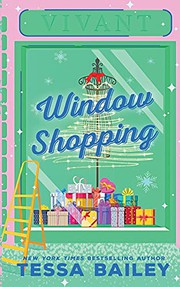
Window Shopping
2,049-word summary 9 min read 256 pages in the book
- First published
- 2021
- Publisher
- Hachette UK / Piatkus
- Pages
- 256
- ISBN
- 9780349433332
Reading options
What's inside (8 sections)
A tragedy in tinsel
The book opens two weeks before Christmas on Fifth Avenue in Manhattan. Stella Schmidt, twenty-five, dressed all in black with heavy eyeliner, stands alone outside the famous Vivant department store and stares at its holiday window display. She calls it "a tragedy in tinsel." She is unable to lie, which is the first thing you learn about her, and it is about to get her into trouble.
Aiden Cook overhears. He is thirty-two, the manager of the store and a member of the family that owns it, and he wears a bow tie with candy canes on it. He asks for her opinion and then challenges her to do better. Stella, who is guarded and wants to be left alone, eventually sketches a replacement window in the air with an Expo marker, describing the design in vivid detail. It is a charming meet in the particular tradition of holiday romances: a woman who has no reason to be nice to a man says exactly what she thinks, and he is delighted by her.
Tessa Bailey first published this in 2021, and the widely sold Piatkus paperback appeared in early 2022. It is a short, standalone romance, around 250 pages depending on the edition, and it is set in a post-pandemic New York. The subtitle on some editions calls it an opposites-attract, feel-good festive romance, which is accurate. It is heavy on banter and explicit spice, and it has a plot about a Christmas window display, which is exactly as silly and as charming as it sounds.
Stella's honesty is the engine of the opening chapters. She does not say the window is a tragedy in tinsel because she wants to be difficult. She says it because that is what she sees, and she genuinely cannot produce a polite lie on demand. That trait is both her charm and the reason her life went wrong. A woman who cannot lie is easy to use, and the book's account of the toxic friendship that led to her conviction makes that clear. She was pulled into something she did not fully choose, and she served four years for it.
Her description of the replacement window is the first time we see what she can do. She draws it in the air with an Expo marker, talking through the design as though she can already see it installed. Aiden's reaction is immediate and physical. He is not attracted to her clothes or her face first; he is attracted to her mind at work. That is a better foundation for a romance than the genre usually offers, and Bailey holds onto it through the rest of the book. Even when the physical relationship takes over, the memory of that first sketch is what makes it feel earned.
The job
Aiden tells Stella she should apply for the job of window dresser. She refuses at first, certain that a high-end store would never hire an ex-convict. She goes home and applies anyway. Aiden reviews her application, notes her training in fashion and design and her prison record, and hires her on a trial basis while worrying internally that hiring her without formal experience looks suspicious.
That tension is the book's central complication. Stella served four years for armed robbery. She studied fashion and window design before a toxic friendship pulled her into the crime, and she is desperate for a clean start. She knows how hard it is to get a second chance and she knows how quickly a good opportunity can disappear. Aiden's family would never approve of her, and the store's rules forbid a relationship between a manager and an employee. To be together openly they would need to file a love contract with human resources, which would expose her record to his family.
Aiden's family is the source of the book's class tension. They are wealthy, judgmental and convinced that Vivant belongs to them by right. He has been handed a role in the company rather than choosing one, and the effort to seem grateful and competent has swallowed most of his adult life. The bow ties and the holiday cheer are part of that performance. This is why Stella's lesson to him matters. When she tells him it is okay not to be happy, she is giving him permission to stop acting, which is the same gift he gives her when he keeps treating her as an artist instead of a criminal.
The employment rule gives the book its structure. A manager and an employee cannot date without disclosure, and disclosure would mean the family learning about Stella's record. The rule is mundane and bureaucratic, which is what makes it effective. There is no villain forbidding the relationship. There is a human resources form. That is enough, because the fear on both sides is real: Stella will lose the job she needs, and Aiden will lose the argument he has never been able to win with his family.
What follows is a reverse grumpy-sunshine dynamic. Stella is the grump, Aiden the relentless optimist. He comes from Tennessee, wears cheerful ties, and is described in terms borrowed from rodeo clowns and daddy-longlegs. His energy is so relentless that it is almost a form of aggression. She keeps waiting for him to reveal the ordinary person underneath the cheer, and he keeps refusing to be anyone else.
The Parloni sisters and the residents of the building are not here; this book is smaller than that. Its world is the store, Stella's neighborhood, and the social circle of Aiden's family. That smaller scale suits the story. A holiday romance about a window display does not need a large cast, and Bailey keeps the focus on the two leads.
What they teach each other
The emotional structure is simple and effective. Aiden teaches Stella that it is okay to be happy. Stella teaches Aiden that it is okay not to be happy. He has spent his life being the cheerful one in a family that expects it, and she has spent hers assuming that happiness is something that gets taken away. Their banter does the work of a slow courtship. He warns her that "the bow tie doesn't fool you," and she keeps discovering that there is a person behind it.
Stella pours herself into the Christmas windows. She decorates without stopping, turning the display into something wonderful, while trying very hard not to notice how attractive her boss is. The descriptions of her work are among the best parts of the book. Bailey writes about fabric, color and light with a genuine enthusiasm, and you believe that Stella is an artist even though her only credential is a prison record and a few years of design school.
The supporting characters fill out the world without demanding much attention. Aunt Edna, Jordyn, Leland, Seamus, Shirley and Nicole appear, as does a friend from Bedford Hills prison. They exist mainly to give Stella and Aiden people to talk to and to widen the gap between the life Stella built inside and the life Aiden has always had. The store itself is a character, a place where appearance is everything and where a window display can make a woman feel seen for the first time.
The party
The plot turns at a company party. Stella is accused of theft, and Aiden publicly stands up for her and confronts his family, risking his own standing in the process. It is the book's big gesture, and it works because the accusation is so plausible to everyone in the room. Of course the ex-con stole something. The fact that Aiden does not hesitate is what makes the romance credible. He is not merely attracted to her. He has decided that her story is not the one everyone else gets to tell.
After that, they stop pretending. Their relationship becomes physical and explicitly so, and the title's refrain takes over. Stella keeps telling herself she is "just window shopping," looking but not committing. It is a good motif for a woman who has spent years assuming that nothing good can be kept. The physical scenes are a major part of the book's appeal for its intended audience, and Bailey writes them with the same directness she brings to the banter. There is no coy fading to black.
The festive set piece is a Christmas Eve ball at Vivant, where the romance comes to a head. Aiden declares his love with the line "I matching robes love you," referring to the matching holiday robes everyone is wearing. It is deliberately goofy, the sort of line that a more restrained writer would never risk. Bailey commits to it completely, and the book's tone makes it work. This is a romance that believes earnestness is attractive.
The ending
Stella learns to accept help and trust again. Aiden proves that he will choose her over his family's disapproval, and the disclosure of her past no longer defines her. The book closes with the happily-ever-after the genre promises, with the couple building a life together after the holidays. There is no elaborate resolution of the family conflict, which is a small weakness. Aiden's relatives are a source of pressure rather than fully developed opponents, and they fade once the romance is settled.
That is fine for this kind of book. The conflict was never really about the family. It was about whether Stella could believe that someone could know the worst thing about her and still want her, and whether Aiden could stop performing happiness long enough to want something real. Both questions are answered.
The title works on two levels. On one, Stella is literally windowshopping, looking at a display she has no expectation of owning. On the other, she is shopping the idea of a life she believes is not available to her. She keeps telling herself she is only looking at Aiden, only enjoying the attention, only passing time until the job ends or the truth comes out. The refrain is funny in the banter and painful in the quieter moments. It is the book's way of naming the difference between wanting something and believing you are allowed to have it.
What I thought
The book is very good at what it sets out to do. The banter is genuinely funny, the chemistry is immediate, and the Christmas setting gives the story a warmth that a contemporary romance set in an ordinary office would not have. Stella's prison record gives her a real stake in the outcome. She is not a woman who needs to be convinced to take a risk; she is a woman who has learned exactly how much a risk can cost. That makes her caution sympathetic rather than annoying.
Aiden is a harder sell. His cheerfulness is so extreme that it reads as a character trait rather than a personality, and the book asks us to find it charming for several hundred pages before it explains where it came from. When the explanation arrives, it helps, but it arrives late. There is also a structural problem common to short romances: the relationship moves from attraction to love very quickly once the barrier of the employment rule is removed. The book compresses the middle of the courtship and then spends its final chapters in the kind of explicit intimacy that its audience expects.
I should also note the publishing history, because it is confusing. The book first appeared in 2021 as an independent edition and through Hachette's UK list, with a Piatkus paperback in January 2022 and a HarperCollins US edition later that year. If you see it dated 2021 or 2022, both are defensible depending on the edition. The story is the same.
What stays with me is the image of Stella standing outside Vivant in the cold, telling a stranger that the window is a tragedy in tinsel. She has nothing to gain by saying it, and everything about the moment is honest. That is the book's best quality. It is a story about two people who are finally honest enough to be seen, told through a holiday display that exists to make people stop and look.
FAQ
When was Window Shopping first published?
It first appeared in 2021 as an independent edition and through Hachette's UK list. The Piatkus paperback followed in January 2022, and HarperCollins published a US edition later that year.
What is Stella's criminal record?
She served four years for armed robbery after being pulled into a crime by a toxic friendship. She studied fashion and window design before that, and the store job is her chance at a clean start.
Is Window Shopping part of a series?
No. It is a standalone holiday romance by Tessa Bailey, short and heavy on banter and explicit spice.
Similar books
Secretly Yours
A bubbly Napa gardener sends anonymous love letters to her grumpy professor neighbor in this steamy small-town rom-com.
2,504-word summary · 11 min read
Off to the Races
A disgraced politician's daughter takes a job training a difficult racehorse at Gold Rush Ranch, where her new boss carries a family scandal of his own.
2,318-word summary · 10 min read
99 Percent Mine
Darcy Barrett has wanted her twin brother's best friend since she was eight. When they inherit their grandmother's cottage, Tom Valeska arrives with power…
2,391-word summary · 11 min read
The Ex Talk
Two rival public radio producers pretend to be exes for a dating show, then fall for each other while the lie grows.
2,389-word summary · 11 min read
True Believer
Jeremy Marsh, a science journalist who debunks paranormal claims, comes to a small North Carolina town and falls for a librarian who believes in things he…
2,125-word summary · 9 min read

Marriage for One
Rose marries a cold lawyer to save her coffee shop, then discovers the arrangement was never only business.
2,032-word summary · 9 min read

Juniper Hill
Fleeing New York with her baby, Memphis takes a housekeeping job above Knox Eden's garage, and the grumpy chef becomes the first person she can rely on.
2,021-word summary · 9 min read
Beautiful Stranger
After a betrayal, Sara Dillon moves to New York and starts a no-strings affair with a British stranger, only to find that control and intimacy are harder to…
2,015-word summary · 9 min read
Same Time Next Summer
A woman planning a perfect wedding meets her first love back at the beach house.
2,329-word summary · 10 min read
The Simple Wild
City Calla flies to Alaska to face dying father and gruff pilot Jonah, learning bush life and love.
2,284-word summary · 10 min read
King of Sloth
Party heir Xavier chases publicist Sloane who refuses to fall in forced job.
2,017-word summary · 9 min read
Good Girl Complex
A people-pleasing college girl moves to beach town Avalon Bay and falls for a local boy who distrusts her whole world.
2,225-word summary · 10 min read

Funny You Should Ask
Chani profiles star Gabe Parker, then ten years later a reunion interview tests memory, work, and timing.
2,603-word summary · 12 min read
Before We Were Strangers
Matt waits fifteen years to ask Grace why she left after one college night that shaped them both.
2,386-word summary · 11 min read

And Now, Back to You
Two rival Baltimore meteorologists get stuck covering a historic snowstorm together, and bickering turns into something softer.
2,407-word summary · 11 min read
King of Greed
Billionaire Dominic fights to win back Alessandra after work obsession breaks their ten year marriage.
2,548-word summary · 11 min read
Heartless
Gruff single dad Cade Eaton hires bubbly Willa Grant as summer nanny in Chestnut Springs, and two months together wear down his walls.
2,967-word summary · 13 min read
Love Her or Lose Her
Rosie Vega wants more from life than a perfume counter and a silent marriage, so she asks her stoic husband Dominic to try therapy.
2,433-word summary · 11 min read
My Killer Vacation
A teacher and a bounty hunter share a Cape Cod rental with a corpse and a growing attraction.
2,625-word summary · 12 min read
It Happened One Summer
LA It girl Piper is cut off and sent to Westport where gruff captain Brendan challenges her glitter.
2,089-word summary · 9 min read
Thank You for Listening
A former child star turned audiobook narrator takes a final romance job to help her grandmother, only to fall for the secretive voice reading opposite her.
2,148-word summary · 10 min read

Kiss the Sky
Rose Calloway signs her family up for a reality show to save her fashion line, and her old rival Connor Cobalt keeps pace.
2,178-word summary · 10 min read

In Flight
A first class flight attendant loses her composure over a billionaire hotel owner with turquoise eyes, and neither of them is as unbroken as they look.
2,187-word summary · 10 min read

Wild Eyes
A country-pop star who does not own her own songs flees to a small Canadian mountain town and finds a horse trainer, his two children and a chance to make…
2,018-word summary · 9 min read
Twisted Palace
Twisted Palace closes The Royals with Reed accused of murder and a father back from the dead. Ella fights to clear his name while the family finally acts like…
2,303-word summary · 10 min read
The Wrong Bride
In Catharina Maura's Windsors opener, model Raven Du Pont takes her absent sister's place at the altar beside billionaire Ares Windsor, the man she has…
2,397-word summary · 11 min read

The Fake Out
A guarded hockey physiotherapist agrees to fake date her team's captain to spite her cheating ex, and finds he has been paying attention to her for years.
2,345-word summary · 10 min read
Ten Tiny Breaths
Four years after a drunk-driving crash took her parents, boyfriend and best friend, Kacey flees to Miami with her sister and falls for a neighbor hiding a…
2,599-word summary · 12 min read
Second First Impressions
A risk-averse retirement-villa manager and the developer's tattooed son are thrown together at work, where her fear of the outside world meets his relentless…
2,073-word summary · 9 min read
Roomies
A Broadway archivist with a crush on a subway busker marries him to solve his visa problem, and finds the roommates arrangement harder to keep practical than…
2,030-word summary · 9 min read