
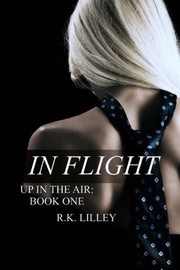
In Flight
2,187-word summary 10 min read 328 pages in the book
- First published
- 2012
- Publisher
- R.K. Lilley
- Pages
- 328
- ISBN
- 9780615741932
- Series
- Up in the Air (#1)
Reading options
What's inside (10 sections)
I picked this one up knowing that R.K. Lilley had worked as a first class flight attendant, and I wanted to see how much of that life made it onto the page. Plenty of it does. The early chapters know what a cabin feels like at cruising altitude, the small negotiations over a glass of champagne, the way a flight attendant learns to read a passenger before he speaks. That detail is the best part of the book, and it arrives before the romance takes over.
In Flight was first published in 2012 and is book one of the Up in the Air series. The edition I read is the 2013 self-published version, 328 pages, issued under the author's own name. It is an erotic romance for adults, and it announces that in the first few pages. If you want a gentle love story with a slow build and no explicit scenes, this is not it.
A first class cabin and a man who does not blend in
Bianca Karlsson is twenty-three and works first class. She is good at her job. She can move down the aisle in three inch heels with a tray of flutes balanced on one arm, and she is used to famous faces pretending not to need anything. What she is not used to is James Cavendish.
James is a billionaire hotel owner with a face that would get him recognized in an airport even if he were not famous. The book keeps coming back to his eyes, a bright turquoise that Bianca cannot look away from. When she first sees him, the composure that has carried her through years of difficult passengers simply goes. She is used to saying no and meaning it. With James, saying no takes effort she does not seem to have.
He notices. The attraction in these early scenes is built out of looks and small movements rather than conversation. James watches her the way a man might watch a puzzle he wants to solve, and the challenge in his gaze bothers her more than his money does. The book understands physical attraction as something that can embarrass you. Bianca is professional, and for the first time her job gives her nowhere to hide.
That setup is the strongest part of the novel. A first class cabin is a closed room at thirty-five thousand feet, and the narrow aisle makes every glance feel crowded. Once a flight is over, the passengers walk away and never meet again. The story leans on that temporary closeness, and it gives the first encounter a charge that later scenes in hotels and boardrooms never quite match.
Bianca's rules and why James breaks them
Bianca has built her life around keeping people at a distance. The book gives her a childhood history that explains why, though it is handled in broad strokes rather than with the patience a literary novel would bring. She does not trust easily, and she has a set of rules about what she will and will not do with the men who hit on her at altitude. James disregards those rules by showing up in a way that feels less like a proposition than a test.
His pursuit is relentless. He does not send flowers. He appears, he stares, and he makes his interest plain in a way that is flattering and unnerving at the same time. The book describes their dynamic as a dance of power, and that is accurate. Bianca is drawn to the part of him that seems to know what he wants, even when what he wants makes her nervous. The pull toward submission is there from early on, and the novel keeps returning to it.
That is also where the book asks for a certain kind of reader. James is dominant to the point of being controlling, and the sex scenes lean hard into that. The series is known for its BDSM content, and this first book does not soften it. There is a line where James tells Bianca he intends to ruin her for other men, and it reads differently depending on whether you find that thrilling or a warning sign. I heard both readings while I was reading it.
The power play is not only in the bedroom. James is used to getting his way in ordinary life because of who he is, and Bianca has spent years managing people who expect service. Their arguments carry that mismatch into every conversation. She wants to be seen as a person with her own limits. He keeps treating those limits as something to move past. The tension is genuine, even when the writing reduces it to the same few beats.
Why the job matters to Bianca
The flight attendant work is not only a setting. Bianca measures her life in flights and layovers, and the routine gives her something to be competent at when the rest of her life feels uncertain. She knows how to handle a difficult passenger, how to keep a tray steady during turbulence and how to smile at someone who is being rude. Those skills are concrete in a way that her emotional life is not. When James unsettles her, the job is the one place where she still knows exactly what to do.
The book gets the rhythm of the work right in small ways. There is the boarding rush, the long middle of a flight when the cabin goes quiet, the preparation for landing. I could tell the author had spent time in that environment, and the details never feel researched after the fact. Even the three inch heels, which sound like a joke on the page, make sense once you see how much of the job is about posture and presentation.
There is a class element too, though the book does less with it than it could. Bianca serves wealthy passengers for a living, and James is the kind of man who could buy the airline. Their first meetings happen in a space where she is working and he is being served, which gives their dynamic an awkward edge. She is doing a job he would never have to do. The novel notices that difference, then mostly sets it aside once the romance takes off. It is a missed opportunity, but the initial scenes carry a charge because of it.
Stephan and the life outside the plane
Stephan is Bianca's best friend, and he is the book's answer to the question of what happens when she is not working. He is steady where James is volatile. When Bianca is confused, Stephan listens. The friendship may not have the heat of the central relationship, but it has something the romance does not, which is ordinary trust. He is the person she can call without performing.
I appreciated those scenes more than I expected to. Erotic romances often let the supporting cast become a device for the couple, and Stephan sometimes does get used that way. Still, his conversations with Bianca give the book a second rhythm. When the intensity between the leads starts to feel relentless, a quiet scene with Stephan lets the reader breathe. He also has a way of naming what is happening before Bianca will admit it to herself, which gives him a useful role without making him a mouthpiece.
The contrast matters. James offers intensity and danger and the promise of a life Bianca has never had. Stephan offers the kind of affection that asks nothing in return. The book never really makes Bianca choose between them, but placing them side by side shows what she is giving up when she chases the more exciting option.
The pasts they both carry
The plot is less a sequence of external events than a slow uncovering of what made these two people. Bianca's scars come from her family life and from a loss she has never properly processed. James has his own history, glimpsed in flashes of violence and in the way he reacts when he feels cornered. The book suggests that his need to control comes from a childhood that taught him control was the only safety available.
That framing gives the romance its emotional weight. Neither character is simply looking for a good time. Both are trying, awkwardly and often badly, to find someone who will stay. When communication breaks down, it is because old fears get in the way. Bianca reads James's intensity as a threat. James reads her hesitation as rejection. The resulting fights are less about the present moment than about things neither of them has said out loud.
The author does not always stick the landing on this. Some of the revelations arrive in a hurry, and a couple of the more dramatic moments depend on characters refusing to ask an obvious question. But the underlying idea, that two guarded people can mistake chemistry for safety, is sound, and it keeps the book from being only a stack of sex scenes.
There is also a question the novel raises without fully answering. Bianca's mother is a source of pain she keeps trying to outrun, and James's family history is more suggesting than explained. Both backstories do work in the sense that they make the behavior legible. They would have needed another hundred pages to become fully realized.
Where the heat gets complicated
About two thirds of the way through, the balance shifts. The attraction that drove the early chapters starts producing consequences. James's possessiveness grows harder to dismiss as passion. Bianca's fear and desire get tangled together, and the book asks whether she can want someone who scares her without being hurt by him. That question is handled with more care than I expected, though not with complete success.
There is a moment where secrets come to light and the story tips into crisis. The ending is a cliffhanger, and it is a blunt one. The last pages resolve almost nothing about where Bianca and James stand, which is a commercial decision as much as a story one. Mile High is waiting, and the book makes sure you know it. I understand the choice and still found it irritating. A romance can leave you wanting more without stopping in the middle of an argument.
The writing itself is competent rather than distinctive. Dialogue is functional, and some of the inner monologue repeats the same points about Bianca's walls and James's control. The flight attendant background is the part that feels lived in. Once the story moves off the plane and into James's world of hotels and parties, the setting gets thinner. A billionaire's life is described with the same few strokes you would find in a dozen other books, and the novelty of the cabin is lost.
Where the story leaves its questions
The book is content to be a first installment. It introduces the world, gets the couple to a point of no return and then stops. In Flight does not try to resolve the questions it raises about Bianca's family or James's childhood. Those threads are clearly marked for later books, and the cliffhanger makes the intention obvious. Reading it as a complete story will leave you unsatisfied. Reading it as the opening move in a trilogy makes more sense.
That structure shapes the pacing. The early chapters move quickly because there is a lot of ground to cover. The middle slows down for the intimate scenes and the arguments. The final stretch races toward a revelation that is designed to make you grab the next book. The unevenness is built into the form. I did not mind it as much as I expected, because the individual scenes work on their own terms, but the book definitely ends mid-thought.
Fans of the genre will recognize the ingredients. There is the reserved heroine with a secret pain, the impossibly handsome dominant hero with a worse one, the best friend who sees clearly, and the misunderstanding that could have been avoided with one honest conversation. Lilley does not reinvent those pieces. She arranges them well, and the flight attendant background is enough to make the arrangement feel fresh for a while.
Who should read it
In Flight is for readers who want explicit, dominant and submissive romance with two damaged leads and are willing to accept a cliffhanger. It is not a book I would hand to someone looking for a gentle course in love, and it is definitely not for younger readers. The publisher labels it for ages eighteen and up, and that is not a formality.
For its fans, the appeal is easy to see. The chemistry is immediate, Bianca is easy to root for and James is the sort of fantasy figure the genre does well. For everyone else, the pacing and the ending will be hard to forgive. I landed in the middle. I liked the cabin scenes, liked Stephan and wanted more from the last hundred pages. If the first book leaves you invested, the trilogy has room to pay off what it sets up.
FAQ
Is In Flight part of a series?
Yes. It is book one of the Up in the Air trilogy, followed by Mile High and Grounded. The ending is a cliffhanger that points straight to the sequel.
Is this book explicit?
Yes. It is an adult erotic romance with dominant and submissive themes, and the publisher labels it for readers eighteen and older.
Who are the main characters?
Bianca Karlsson is a twenty-three-year-old first class flight attendant, and James Cavendish is a billionaire hotel owner whose dominance both attracts and alarms her.
Similar books
More from Up in the Air first, then related titles.

Rush
Gabe Hamilton has wanted his best friend's sister for years. When Mia signs a contract giving him control of her life, their secret arrangement turns obsessive…
2,591-word summary · 12 min read
Beneath This Man
Ava returns to Jesse after five days apart and finds his drinking, jealousy, and a hidden deception that changes what she can forgive.
2,341-word summary · 10 min read
The Casanova
Kate Landon's boss is also the pen pal she falls for online, hiding behind fake names, until family secrets and a trip to Paris get in the way.
2,274-word summary · 10 min read
The Wrong Bride
In Catharina Maura's Windsors opener, model Raven Du Pont takes her absent sister's place at the altar beside billionaire Ares Windsor, the man she has…
2,397-word summary · 11 min read
One with You
The final Crossfire novel finds Eva Tramell and Gideon Cross secretly married and fighting to stay that way, as old trauma, a tell-all book, and a dangerous…
2,344-word summary · 10 min read
My Dark Romeo
A debutante ball kiss traps Dallas Townsend in a marriage to Romeo Costa, a man who wants her as leverage in a war against his father and her fiance.
2,530-word summary · 11 min read

There Are No Saints
Two rival artists circle a struggling San Francisco painter. Cole Blackwell wants her, Alastor Shaw wants her dead. Book one of the Sinners duet.
2,190-word summary · 10 min read

The Predator
Coder Morana Vitalio and mob enforcer Tristan Caine chase stolen software while a case of missing girls from twenty years back catches up with them both.
2,296-word summary · 10 min read
Beautiful Stranger
After a betrayal, Sara Dillon moves to New York and starts a no-strings affair with a British stranger, only to find that control and intimacy are harder to…
2,015-word summary · 9 min read
The Marriage Bargain
A bookstore owner marries a billionaire friend's brother for a year to save home and company.
2,092-word summary · 9 min read

Love Redesigned
Rival designers Dahlia and Julian restore a Lake Wisteria Victorian while facing grief, family pressure, and old sparks.
2,248-word summary · 10 min read
King of Sloth
Party heir Xavier chases publicist Sloane who refuses to fall in forced job.
2,017-word summary · 9 min read
King of Greed
Billionaire Dominic fights to win back Alessandra after work obsession breaks their ten year marriage.
2,548-word summary · 11 min read
A Not So Meet Cute
A broke woman poses as a billionaire's pregnant fiancee and falls for him.
2,888-word summary · 13 min read
Entwined with You
Eva and Gideon marry in secret while a Corinne pregnancy claim, police questions, and reporter pressure test their bond in Crossfire book three.
2,971-word summary · 13 min read
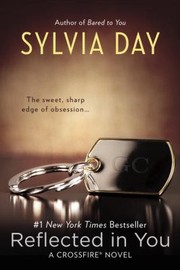
Reflected in You
Eva and Gideon deepen their obsessive love while facing past abuse and public exposure.
2,587-word summary · 11 min read
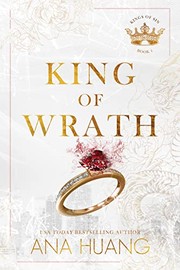
King of Wrath
Billionaire Dante Russo enters an arranged engagement with Vivian Lau and control slips into feeling.
2,975-word summary · 13 min read
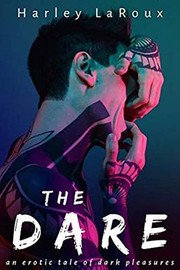
The Dare
A prom queen and the goth outcast she once bullied settle an old score over a beer pong game at a Halloween party.
2,152-word summary · 10 min read
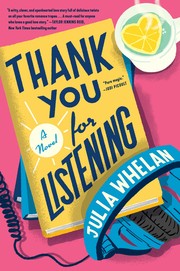
Thank You for Listening
A former child star turned audiobook narrator takes a final romance job to help her grandmother, only to fall for the secretive voice reading opposite her.
2,148-word summary · 10 min read

Kiss the Sky
Rose Calloway signs her family up for a reality show to save her fashion line, and her old rival Connor Cobalt keeps pace.
2,178-word summary · 10 min read

Window Shopping
Two weeks before Christmas, an ex-convict with an eye for design insults a department store window and ends up hired by its cheerfully relentless manager.
2,049-word summary · 9 min read

Wild Eyes
A country-pop star who does not own her own songs flees to a small Canadian mountain town and finds a horse trainer, his two children and a chance to make…
2,018-word summary · 9 min read
Twisted Palace
Twisted Palace closes The Royals with Reed accused of murder and a father back from the dead. Ella fights to clear his name while the family finally acts like…
2,303-word summary · 10 min read

The Fake Out
A guarded hockey physiotherapist agrees to fake date her team's captain to spite her cheating ex, and finds he has been paying attention to her for years.
2,345-word summary · 10 min read
Ten Tiny Breaths
Four years after a drunk-driving crash took her parents, boyfriend and best friend, Kacey flees to Miami with her sister and falls for a neighbor hiding a…
2,599-word summary · 12 min read
Roomies
A Broadway archivist with a crush on a subway busker marries him to solve his visa problem, and finds the roommates arrangement harder to keep practical than…
2,030-word summary · 9 min read
Pretend You're Mine
A broke stranger agrees to pose as a National Guard captain's girlfriend in Benevolence, Maryland, only to find his locked basement holds a grief that could…
2,260-word summary · 10 min read
Off to the Races
A disgraced politician's daughter takes a job training a difficult racehorse at Gold Rush Ranch, where her new boss carries a family scandal of his own.
2,318-word summary · 10 min read
Love Her or Lose Her
Rosie Vega wants more from life than a perfume counter and a silent marriage, so she asks her stoic husband Dominic to try therapy.
2,433-word summary · 11 min read

Beautiful Oblivion
Cami tends bar and keeps her long distance boyfriend a secret, until a night at the Red Door puts Trenton Maddox in her way.
2,322-word summary · 10 min read