
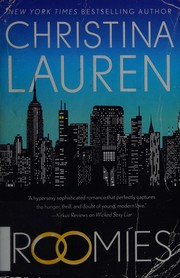
Roomies
2,030-word summary 9 min read 352 pages in the book
- First published
- 2017
- Publisher
- Gallery Books (Simon & Schuster)
- Pages
- 352
- ISBN
- 9781501165832
Reading options
What's inside (7 sections)
The busker on Fiftieth Street
Holland Lina Bakker is twenty-five, the youngest of six children, and still living in New York with her uncles. She works as an errand girl and archivist for their Broadway operation. She has a secret crush on an Irish busker she calls Jack, whose guitar playing she hears at the Fiftieth Street subway station and whose performance schedule she has memorized.
The book opens with the comic story of her birth in a taxi, which tells you the tone. Christina Lauren writes a rom-com with real confidence in its own silliness. Holland is funny, self-deprecating and slightly adrift. She has an MFA in creative writing and dreams of being a novelist, but she works for her uncles because it is available. Her uncles Robert and Jeff are a study in contrast: Robert is energetic and creative, Jeff calm and rational. Between them they have raised her.
One evening, tipsy and emboldened, Holland finally speaks to the busker. His real name is Calvin McLoughlin. They share an awkward, electric moment, and then a drunken man approaches and shoves her onto the subway tracks. Calvin intervenes but flees when the police arrive. Holland wakes in an ambulance with a broken arm, tended by paramedics Rossi and Gonzales, and angrily rejects a suicide-prevention hotline card because she insists she was pushed.
The aftermath of the subway incident is handled with a lightness that might feel wrong in a different book. Holland is in an ambulance with a broken arm, furious at Calvin for leaving and at the hotline card for existing. The paramedics are kind and practical. Her uncles arrive and take her home, and the first thing she does is work out how angry she is at the man who saved her. Christina Lauren is interested in the way a terrifying moment gets translated into a story you can tell at a party. By the time Holland describes it again, it has already become the story of the busker who vanished.
That is also how the crush survives. Holland's feelings were built on months of watching a man who never spoke to her. The attack gives that fantasy a dramatic shape, which is why she cannot let it go even when she is angry. She is not in love with Calvin McLoughlin yet. She is in love with a version of him that she wrote herself.
That opening is a very good piece of romantic comedy construction. It gives the couple an immediate physical memory, a misunderstanding, and a reason for each to think badly of the other. It also gives Holland a broken arm, which means she has to spend the next chapters unable to do the things she normally does. The injury is a plot device, but it is also a metaphor. Holland is forced to be still long enough to notice that her life is not going where she intended.
The band at the dive bar
At home, Holland cooks eggs Benedict for Robert, watches old movies with her uncles and eventually returns to the station to find Calvin playing a brighter set. He avoids her eye when he notices her cast. At work her boss Brian is condescending, and the departure of the volatile lead violinist Seth threatens the show. Holland feels useless and briefly considers returning to Iowa.
Her friend Lulu coaxes her out to a dive bar called Hole in the Hall to see a band named Loose Springsteen. Holland discovers that the guitarist is Calvin. He explains why he disappeared that night, and jokes about the names she has written on her cast. The scene is the book's best piece of chemistry. Holland has been fantasizing about a man who exists only in her imagination, and the real Calvin turns out to be funnier and more complicated.
Holland idolizes Luis Genova, the star of Robert's hit musical, and worries when Luis leaves and is replaced by the powerful-voiced Ramón. She proposes adding a classical guitar to the sound, and Robert agrees to hear her out. She takes him to hear Calvin busking, Robert is entranced, and Calvin, who has seen the show seven times, is invited to audition. At the audition he plays "Malagueña" and "Blackbird" and mesmerizes the room. Michael, a Broadway figure in the meeting, suggests hiring him, until Calvin reveals that his student visa expired years ago. He is in the country illegally and cannot take the job without a green card.
That revelation turns the romance into a transaction. Brian crudely jokes that Holland should marry Calvin to solve the visa problem. Robert rebuffs him, but the idea takes hold. Holland makes a pros-and-cons list and seeks advice from her laid-back brother Davis. She invites Calvin to lunch, orders gnocchi and proposes a marriage of convenience. He laughs, then agrees on the condition that they go on a real date first to see if they connect.
A marriage at City Hall
The date is a sold-out Calvin performance where he introduces Holland to his bandmates as his fiancée. She is secretly thrilled and completely overwhelmed. On a cold January day they marry at City Hall's Marriage Bureau with Lulu in attendance. Calvin surprises her with a traditional Irish flower crown, and their first kiss as husband and wife ignites sparks neither expected. After the ceremony they share a wager over who can eat more of a giant porterhouse steak, moving from awkward strangers toward a comfortable, flirtatious intimacy.
The City Hall ceremony is one of the book's best scenes because it refuses to be romantic until it suddenly is. Holland is nervous about the paperwork and the strangeness of what they are doing. Calvin, who has been treating the whole thing with easy humor, gives her the flower crown, and the gesture changes the temperature of the scene. Their first kiss is a surprise to both of them, and the book does not over-explain it. The porterhouse wager that follows is a way of not talking about what just happened, which is exactly what these two characters would do.
They set up house in Holland's apartment, reveal the marriage to Robert and Jeff at the theatre, and work through immigration paperwork. The comedy of the roommates arrangement comes from small miscommunications: an ex-girlfriend, Holland's vibrator, the boundaries of what a fake husband is allowed to know. The book's subtitle premise is a good one. A marriage with no emotional claim gives the characters permission to be together while pretending there is no risk.
Holland's feelings intensify. She wakes from a suggestively intimate dream beside him, and their breakfast banter grows openly flirty, even though both keep up the pretense that the marriage is purely practical. At a tequila dinner with Jeff, Lulu and Gene, a game of bidding to tell stories about Holland reveals her past, including a former boyfriend named Sam Dougherty. Jeff's thoughtful compliment about her self-awareness pushes her to confront the fact that she has no identity outside the roles she plays for other people.
That is the book's real subject, and it is the reason Roomies is more than a case of attractive people pretending to be married. Holland has spent her life being the youngest sister, the niece, the assistant, the woman with a crush. The marriage forces her to decide what she actually wants. Calvin, for his part, has been living in the country on borrowed time and pursuing a dream he has never allowed himself to believe in. Both of them are performing, and the performance begins to cost more than it protects.
The friendships
Calvin's first rehearsal with Ramón is chaotic. They oversleep, and he rushes from the shower after an early call from Robert. Brian needles Holland about her sanity, and the scene highlights her struggle to assert herself. Calvin celebrates a good performance by getting drunk, compliments Holland's freckles and observes that some friendships are ones "you outgrow but keep anyway." The comment is aimed at Lulu, whose behavior toward Calvin is becoming increasingly flirtatious, and it begins to fracture Holland's oldest friendship.
That fracture is one of the book's more honest elements. Romantic comedies often treat friendship as an uncomplicated source of support. Here, Lulu's jealousy and Holland's insecurity produce a real break. The two women have to work out whether their history is enough to survive a man they both want. Christina Lauren does not resolve it as simply as the romance, which is appropriate.
Backstage, Brian berates Holland, and Calvin defends and encourages her. He learns that she holds an MFA in creative writing and dreams of being a novelist while feeling stuck and unqualified. That conversation is the emotional center of the book. Calvin sees the person Holland is trying to become, not just the assistant she has settled into being. He gives her a gold claddagh ring symbolizing love and loyalty, and they discuss his Broadway dream, their fears and the boundaries of the fake marriage.
I want to say one more thing about the Broadway material, because it is the book's most distinctive choice. Most contemporary romances set in New York use the city as scenery. This one makes a musical production a real workplace with real pressures. The departure of a lead violinist is a crisis, the understudy situation has consequences, and the arrival of a new star changes the balance of everyone's jobs. Holland's role as an archivist matters because she sees the machinery that audiences never see. That is also a metaphor for her own life. She has been keeping other people's records while neglecting her own story.
The book was published in December 2017 by Gallery Books, with a UK paperback from Piatkus the following June. It was later adapted for screen development, which is the usual fate of a contemporary romance with this much visual appeal. The author site lists it as a standalone, and it works best that way.
What I thought
Kirkus noted that the book is told solely from Holland's point of view, so Calvin is deliberately less developed. That is the right observation. We see him through Holland's attraction, which means his interior life is mostly inferred. The trade-off is that the book captures the feeling of a crush with unusual accuracy. When Holland watches him play, the reader watches him the way she does.
I also appreciate the theatrical setting. Broadway gives the book a world with its own rhythms and hierarchies, where talent and visa status and union rules all matter. Robert and Jeff are warm, funny presences, and the show itself is a source of both comedy and stakes. The early chapters about Luis and Ramón are especially good at showing how a production absorbs the ambitions of everyone in it.
The weaknesses are the familiar ones of the genre. The late chapters resolve the marriage and the friendship quickly, and Brian is a villain so ordinary that he never becomes interesting. The immigration plot is treated as a problem to be solved by romance rather than as a real situation. But Holland's arc, from a woman who lives in her uncles' house and works their jobs to a person who claims a voice of her own, is satisfying. She gets a husband, but she also gets a novel, which matters more.
One detail I liked is the claddagh ring Calvin gives Holland. It is a traditional Irish symbol of love and loyalty, and it sits awkwardly with a marriage that began as an immigration solution. That awkwardness is the point. The ring is a promise neither of them knows how to make yet, and giving it is a way of making it without saying it. Holland wears it, which tells the reader more about her feelings than several chapters of narration could.
The title works on two levels. They are roommates, and the arrangement is the joke. But the question underneath is what it means to truly share a life with someone. By the end, the answer has changed from nothing to everything, and the book has earned the shift.
FAQ
Is Roomies part of a series?
No. The official author site lists it as a standalone. It was published in December 2017 by Gallery Books, with a UK edition from Piatkus in 2018.
Why do Holland and Calvin get married?
Calvin's student visa expired years ago and he cannot accept a Broadway job without a green card. Holland proposes a marriage of convenience after a crude joke by her boss gives her the idea.
Who are Christina Lauren?
It is the joint pen name of Christina Hobbs and Lauren Billings. They write contemporary romance, and the site has other books under the same authorSlug.
Similar books
Marriage for One
Rose marries a cold lawyer to save her coffee shop, then discovers the arrangement was never only business.
2,032-word summary · 9 min read
Beautiful Stranger
After a betrayal, Sara Dillon moves to New York and starts a no-strings affair with a British stranger, only to find that control and intimacy are harder to…
2,015-word summary · 9 min read
Thank You for Listening
A former child star turned audiobook narrator takes a final romance job to help her grandmother, only to fall for the secretive voice reading opposite her.
2,148-word summary · 10 min read
The Wrong Bride
In Catharina Maura's Windsors opener, model Raven Du Pont takes her absent sister's place at the altar beside billionaire Ares Windsor, the man she has…
2,397-word summary · 11 min read
Love Her or Lose Her
Rosie Vega wants more from life than a perfume counter and a silent marriage, so she asks her stoic husband Dominic to try therapy.
2,433-word summary · 11 min read
Chasing Harry Winston
Three friends turn thirty in Manhattan and make a wild pact: Emmy will sleep her way around the world, Adriana will settle down, and Leigh watches from the…
2,185-word summary · 10 min read
The Rom-Commers
A stalled screenwriter leaves her Texas caretaker life for six weeks in Los Angeles to fix a famous writer's terrible rom-com script, and finds far more than a…
2,356-word summary · 10 min read
The Mermaid Chair
Jessie Sullivan returns to her childhood home on Egret Island to care for her agoraphobic mother, then finds her marriage, her faith, and a monk's vow thrown…
2,237-word summary · 10 min read

Two by Two
Sparks's twentieth novel turns from first love to a marriage breaking up: Russell Green loses his wife and his job, then rebuilds his life around his…
2,192-word summary · 10 min read

One to Watch
A plus-size fashion blogger takes the lead role on a reality dating show to prove she belongs on television, and finds she might want what the cameras offer.
2,478-word summary · 11 min read

At First Sight
Jeremy and Lexie are married and expecting a baby when anonymous emails tell him the child may not be his.
2,317-word summary · 10 min read

2 States: The Story of My Marriage
A Punjabi boy from Delhi and a Tamil Brahmin girl from Chennai meet at IIM Ahmedabad, and turn a love marriage into a campaign to convince two families.
2,634-word summary · 12 min read
Dash & Lily's Book of Dares
Two lonely New York teenagers trade dares in a red notebook left at the Strand, falling for each other on the page before they meet.
2,228-word summary · 10 min read
The Marriage Bargain
A bookstore owner marries a billionaire friend's brother for a year to save home and company.
2,092-word summary · 9 min read
The Coincidence of Callie & Kayden
Callie saved Kayden in an alley and meets him again in college, where both must face assault and abuse to learn trust.
2,578-word summary · 11 min read
Love Redesigned
Rival designers Dahlia and Julian restore a Lake Wisteria Victorian while facing grief, family pressure, and old sparks.
2,248-word summary · 10 min read
Hello Stranger
Portrait artist Sadie loses face recognition after brain surgery and must finish a contest piece while falling for two men.
2,210-word summary · 10 min read
Before We Were Strangers
Matt waits fifteen years to ask Grace why she left after one college night that shaped them both.
2,386-word summary · 11 min read
The Rosie Effect
Married in New York, Don Tillman turns Rosie's pregnancy into research and nearly loses her, until a crisis forces him to listen.
2,869-word summary · 13 min read
The Wedding
Wilson Lewis courts his own wife again with Noah's help as daughter Anna plans her wedding.
2,076-word summary · 9 min read
Landline
A TV writer left alone at Christmas finds her mom's old phone reaches her husband in 1998, before they married.
3,042-word summary · 14 min read
King of Greed
Billionaire Dominic fights to win back Alessandra after work obsession breaks their ten year marriage.
2,548-word summary · 11 min read
Still Me
Lou spends a year in New York working for the Gopniks, torn between Josh, distant Sam, and the life she wants.
2,939-word summary · 13 min read
Entwined with You
Eva and Gideon marry in secret while a Corinne pregnancy claim, police questions, and reporter pressure test their bond in Crossfire book three.
2,971-word summary · 13 min read
The American Roommate Experiment
Blocked romance writer Rosie experiments with dating beside roommate Lucas.
2,011-word summary · 9 min read
The Seven Year Slip
A grieving publicist inherits a time slipping Manhattan apartment and falls for a chef living seven years in the past.
2,601-word summary · 12 min read
Bared to You
Eva starts over in New York and falls for Gideon Cross, whose past mirrors her own trauma.
2,471-word summary · 11 min read
Fifty Shades Freed
Married Ana and Christian face Hyde, Elena and a pregnancy neither planned.
3,213-word summary · 14 min read
My Favorite Half-Night Stand
Millie, a criminology professor who has always been one of the guys, invents a secret dating profile and matches with her best friend Reid.
2,362-word summary · 10 min read