
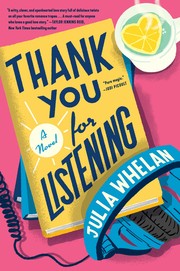
Thank You for Listening
2,148-word summary 10 min read 384 pages in the book
- First published
- 2022
- Publisher
- Avon
- Pages
- 384
- ISBN
- 9780063095564
Reading options
What's inside (9 sections)
I came to this book through its narrator. Sewanee Chester used to be a child star on film sets, and now she makes her living in a sound booth, reading other people's words into a microphone. Julia Whelan knows that world from the inside, and the pages set in the studio have a texture I have rarely seen in a romance novel. The rest of the book is a love story built around grief, second chances and the particular embarrassment of wanting something you once gave up.
Thank You for Listening was published in 2022 by Avon, an imprint of HarperCollins, and runs 384 pages. It is contemporary romance, but it is also a novel about work, about caring for a sick relative and about the strange intimacy of reading aloud to a stranger who will listen in a car on the way to work.
A life measured in hours of audio
Sewanee narrates audiobooks. She is good at it, and the work suits her because it lets her stay close to home and help care for her grandmother, who is ailing and needs more support than Sewanee can afford. The opening of the book puts us in her routine: the booth, the script, the constant small adjustments of breath and pace that turn a paragraph into a performance. Whelan writes those scenes with a calm confidence. She knows what a narrator does with a sentence before the reader has thought about it.
The job also functions as a hiding place. Sewanee stopped narrating romance years ago, after the accident that ended her acting dreams and taught her to be careful about hope. She does not buy what romance novels sell. She has watched enough of the business from the outside to be suspicious of a happy ending, and she has no interest in performing one. That is the wound the whole book circles.
Her grandmother gives the story its pressure. The care she needs is expensive, and Sewanee's carefully controlled life does not leave much room for a risk. When an offer arrives that could pay for more help, she takes it even though she hates what it asks of her. The decision is practical on the surface and full of dread underneath, and Whelan does not need a long speech to make that clear.
I liked the routine passages best. There is a honesty in describing a day that is mostly work and worry, with the glamour stripped away. Sewanee is not waiting for a casting agent to call. She is booking hours in a studio and trying to pay for caregiving, and that is a more interesting starting point for a romance than the usual one.
What the author knows about the booth
Julia Whelan is an audiobook narrator herself, and it shows in ways that go beyond technical vocabulary. The book understands that reading aloud is work, that a long session leaves your throat tired and that a difficult paragraph takes several tries. It also understands the stranger part of the job, which is that you can spend hours inside someone else's emotional life and still go home to your own problems. That double life is what the novel is really about.
Sewanee's skill is described in terms of choices rather than talent. She thinks about pacing, about where to place a breath, about how to keep a character distinct when two of them are speaking in the same scene. Whelan treats those decisions as craft, and the reader gets to watch a professional think. That is rare in a romance, where a heroine's work is usually a backdrop. Here the work is the story's language. When Sewanee and Brock grow closer, it happens through the same small decisions she makes with a script in front of her.
I also liked that the book does not make narration glamorous. The booth is cramped. The work is solitary. There are deadlines and difficult chapters and clients who want a different reading. Sewanee is good at her job, but it is still a job. That grounded approach makes her decision to leave romance behind feel like a real choice rather than a quirk.
A night in Las Vegas
The offer follows a trip she almost did not make. Sewanee goes to Las Vegas at the last minute for a book convention, and there she spends a whirlwind night with a charming stranger. The scene is written as a brief, bright interruption of her carefully managed life. It is fun, a little reckless and over by morning. She goes home expecting nothing more from it.
What she finds at home changes the calculation. One of the most beloved romance novelists in the world has chosen Sewanee to narrate her final book. The author is dying, and this last novel is meant to be a farewell. Sewanee's admiration for the woman makes accepting the job almost unavoidable, and the money means real help for her grandmother. She says yes, then discovers she will not be reading alone.
That turn is tidy, perhaps a little too tidy. A chance meeting in Vegas and a dream job arriving in the same week is the kind of setup a romance can get away with, and this one mostly does. The convenience is easier to accept because the emotional logic is sound. Sewanee is not taking the job for glamour. She is taking it because her grandmother needs care and because she owes something to a writer who meant a great deal to her.
The people who pull on Sewanee
The supporting cast is built around competing claims on the heroine. Her grandmother needs care and is the reason Sewanee keeps saying yes to work she does not want. The dying author needs someone she trusts to read her last book. Brock needs a partner who can match him without folding. Even the stranger from Las Vegas represents a version of Sewanee that can act without calculating the cost. Each of them wants something different from her, and the tension comes from the fact that she cannot give everyone what they need.
The grandmother is the most important of them and the least developed. I have already mentioned that I wanted more time with her. The book tells us that Sewanee loves her deeply and that the caregiving is expensive, but it rarely lets them simply be together. When the plot needs money, the grandmother becomes urgent. When it needs Sewanee to be free, she fades. That uneven treatment is the biggest structural weakness in the novel, because the relationship is supposed to be the reason for everything.
The late romance novelist is handled more cleanly. She exists mostly through her books and the trust she places in Sewanee, which is enough to make the job offer land. Her death gives the story its clock. Sewanee is not only recording a book; she is helping a writer say goodbye, and that responsibility is part of why she agrees.
A pseudonym and a secretive voice
Her co-reader is Brock McNight, the hottest and most private voice in the industry. The two of them are being paired for a project that will draw attention, and both have reasons to stay hidden behind the work. To take the job, Sewanee brings back the romance pseudonym she used years ago, a name that lets her step into a version of herself she had retired.
That device is the best idea in the book. A pseudonym is a mask, and a mask lets you say things you would not say with your own face. Sewanee and Brock record together, trading lines, listening to each other's timing and slowly learning who is on the other side of the performance. Their connection forms in the space between the scripted words. They are close before they know each other's real names, which makes the intimacy both plausible and strange.
Whelan is especially good on the mechanics of a shared recording. The pauses, the retakes, the way a voice can suggest a feeling the text never states, all of it becomes part of the courtship. It is a fresh way to write attraction, and it is the part of the novel I would point to if someone asked what makes it different. A glance across a crowded room is a standard move. Two people hearing each other breathe into microphones and adjusting their timing to match is something else entirely.
The pseudonym also lets the book ask a quiet question about performance. Sewanee is being paid to sell a version of love she no longer believes in, and yet the act of saying those words aloud starts to change her mind. Whelan never makes that process crass. It happens through the work, line by line, in a booth where no one can see your face.
When the recording stops
The second half of the book tests what happens when anonymity ends. Secrets surface, as the publisher's description promises, and the realities that Sewanee has kept at a distance come back into the room. The accident that ended her acting life is not treated as a single event she has simply overcome. Its effects sit in the way she refuses to plan, the way she protects her grandmother and the way she expects any good thing to be taken away.
Brock has his own version of that guardedness. His privacy is not only a career choice. As the two get closer, the book has to decide whether the connection they built behind the pseudonyms can survive being known. Some of this works well. Whelan writes the moment when performance gives way to honesty without a big speech, and that restraint is welcome. Other parts feel more familiar, especially a late stretch where misunderstandings pile up and the pace tightens toward a resolution.
I also wanted more of the grandmother. Her illness is the reason Sewanee says yes to the job, but she stays mostly in the background, more a source of pressure than a person. Given how much the book is about care and the fear of losing someone, that felt like a missed chance. A few pages of the two of them talking, without any plot work to do, would have deepened both the loss and the decision.
The Vegas stranger, too, is left as an idea more than a character once the story moves back home. The night itself is written with a light touch, which is fine for what it is, but the book never quite decides how much that encounter should matter later. It works best as a sign that Sewanee is still capable of impulse.
A fair look at the whole thing
The novel is warm and well made, and it trusts the reader to understand that grief does not end when a romance begins. Sewanee's arc is about risking desire again after she decided desire was dangerous, and the book earns that choice by showing how much she has invested in staying safe. The audiobook setting is more than a novelty. It gives the story a language for listening, for hearing what someone does not say and for the odd closeness of being known through a voice first.
The flaws are mostly ones of emphasis. Some of the supporting characters, particularly in the publishing world, are drawn broadly. A few coincidences do a lot of work, and the final act leans on a revelation that is not as surprising as the book seems to think. The prose is clean and unshowy, which suits the narrator but occasionally leaves a scene flatter than it should be.
There is also the question of how much the book trusts its own premise. The idea that a voice can carry a full relationship before two people have met is a strong one, and Whelan mostly commits to it. At a few points, though, the story rushes to a conventional reveal when it could have stayed with the stranger, quieter truth. I wanted another chapter in the booth, another exchange where nothing happens except two people finding the right way to say a line. Those are the moments the novel does best, and they are the ones I missed when it was over.
Still, I finished it in a mood the book clearly wants to leave you in: willing to believe that a second chance can be real, and that the people who love you are often the ones you have been listening to all along. If you have ever worked in a creative field where you hide behind the work, or if you simply like a romance that knows what grief feels like, this one is worth the hours. The title is not decoration. Listening is the skill Sewanee has to learn, and Whelan makes you want to learn it with her.
FAQ
Is Thank You for Listening a standalone novel?
Yes. It is a complete contemporary romance with no series commitment, published by Avon in 2022.
What is the audiobook connection?
The heroine narrates audiobooks for a living, and much of the romance unfolds while she records a novel with another voice actor. Author Julia Whelan draws on her own experience in the booth.
Does the book deal with grief?
Yes. Sewanee's career ended after an accident, and much of the story is about learning to want something again without assuming it will be taken away.
Similar books
Finding Perfect
A novella that closes the Hopeless series, following Daniel and Six as a long kept secret about their son forces them to finally talk, search, and find a…
2,315-word summary · 10 min read
The Collected Regrets of Clover
A death doula who writes down the last words of strangers keeps her own heart locked away, until a new neighbor, a dying photojournalist and a road trip to…
3,055-word summary · 14 min read

Ten Tiny Breaths
Four years after a drunk-driving crash took her parents, boyfriend and best friend, Kacey flees to Miami with her sister and falls for a neighbor hiding a…
2,599-word summary · 12 min read
Roomies
A Broadway archivist with a crush on a subway busker marries him to solve his visa problem, and finds the roommates arrangement harder to keep practical than…
2,030-word summary · 9 min read
Release Me
A guarded engineering graduate newly arrived in Los Angeles is used as bait at an art gala, then offered a million dollars to pose for a powerful man's private…
2,070-word summary · 9 min read
Pretend You're Mine
A broke stranger agrees to pose as a National Guard captain's girlfriend in Benevolence, Maryland, only to find his locked basement holds a grief that could…
2,260-word summary · 10 min read
The Rom-Commers
A stalled screenwriter leaves her Texas caretaker life for six weeks in Los Angeles to fix a famous writer's terrible rom-com script, and finds far more than a…
2,356-word summary · 10 min read
The Mermaid Chair
Jessie Sullivan returns to her childhood home on Egret Island to care for her agoraphobic mother, then finds her marriage, her faith, and a monk's vow thrown…
2,237-word summary · 10 min read
Say You'll Remember Me
A vet who writes off a sick kitten falls for the woman who saves it, then follows her into the hard, funny work of caring for a mother with dementia.
2,293-word summary · 10 min read

Sam's Letters to Jennifer
A grieving journalist reads her grandmother's letters and finds a decades-long love affair that changes how she sees her family.
2,310-word summary · 10 min read

Amy & Roger's Epic Detour
Amy Curry has not driven since the crash that killed her father. With Roger at the wheel and a box of maps between them, a cross-country trip becomes a slow…
3,034-word summary · 13 min read

Two by Two
Sparks's twentieth novel turns from first love to a marriage breaking up: Russell Green loses his wife and his job, then rebuilds his life around his…
2,192-word summary · 10 min read

One to Watch
A plus-size fashion blogger takes the lead role on a reality dating show to prove she belongs on television, and finds she might want what the cameras offer.
2,478-word summary · 11 min read

At First Sight
Jeremy and Lexie are married and expecting a baby when anonymous emails tell him the child may not be his.
2,317-word summary · 10 min read

2 States: The Story of My Marriage
A Punjabi boy from Delhi and a Tamil Brahmin girl from Chennai meet at IIM Ahmedabad, and turn a love marriage into a campaign to convince two families.
2,634-word summary · 12 min read

Marriage for One
Rose marries a cold lawyer to save her coffee shop, then discovers the arrangement was never only business.
2,032-word summary · 9 min read

Delilah Green Doesn't Care
Delilah returns to Bright Falls to photograph her stepsister's wedding and falls for Claire, a bookstore owner and single mother, while a cruel bet threatens…
2,315-word summary · 10 min read
Beautiful Stranger
After a betrayal, Sara Dillon moves to New York and starts a no-strings affair with a British stranger, only to find that control and intimacy are harder to…
2,015-word summary · 9 min read

Rule
A tattoo artist still grieving his twin and the polished girl who has loved him since she was thirteen finally collide one drunken night in Denver.
2,014-word summary · 9 min read
The No-Show
Three women are stood up on Valentine's Day by the same man, but the timeline is not what it seems. O'Leary's warmest book with a knife in it.
2,127-word summary · 9 min read

The Sky Is Everywhere
Lennie grieves Bailey while torn between Toby and Joe.
2,251-word summary · 10 min read
If Only I Had Told Her
Finn, Jack and Autumn speak after the crash that took one of them.
2,543-word summary · 11 min read
Everything We Keep
A widow questions her husband's death when a stranger claims his past.
2,307-word summary · 10 min read
The Upside of Falling
Two teens fake-date for a summer dare and end up facing grief, family secrets, and first love.
2,274-word summary · 10 min read
The Coincidence of Callie & Kayden
Callie saved Kayden in an alley and meets him again in college, where both must face assault and abuse to learn trust.
2,578-word summary · 11 min read

Love Redesigned
Rival designers Dahlia and Julian restore a Lake Wisteria Victorian while facing grief, family pressure, and old sparks.
2,248-word summary · 10 min read
Hello Stranger
Portrait artist Sadie loses face recognition after brain surgery and must finish a contest piece while falling for two men.
2,210-word summary · 10 min read
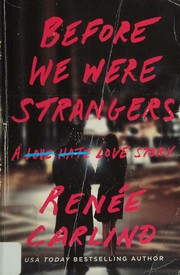
Before We Were Strangers
Matt waits fifteen years to ask Grace why she left after one college night that shaped them both.
2,386-word summary · 11 min read
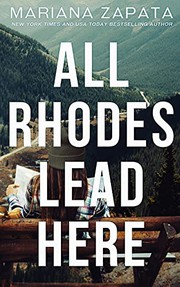
All Rhodes Lead Here
Grieving Aurora moves to Colorado to fix a farmhouse, finding slow healing with her gruff older neighbor Tobias Rhodes.
2,249-word summary · 10 min read
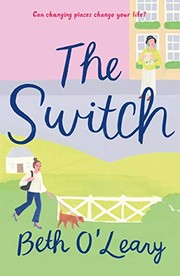
The Switch
A burned-out consultant and her 79-year-old grandmother swap London and Yorkshire homes for two months, facing grief, dating apps, and village politics.
2,782-word summary · 12 min read