
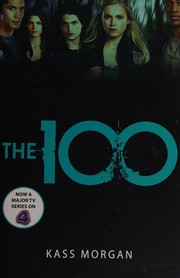
The 100
2,152-word summary 10 min read 323 pages in the book
- First published
- 2013
- Publisher
- Little, Brown Books for Young Readers
- Pages
- 323
- ISBN
- 9780316234474
- Series
- The 100 (#1)
Reading options
What's inside (9 sections)
Why I picked this up
I came to The 100 through the CW television show, the way a lot of readers did, and I expected the book to be a rough draft of the episodes I remembered. It is not. Kass Morgan published this novel in 2013, a year before the show premiered, and the adaptation took the premise and walked off in a different direction. Reading the book now feels like visiting a parallel version of a story I thought I already knew. That gap turned out to be the most interesting part of the experience for me. The premise is sturdy enough to survive the comparison, but the book has its own rhythm, its own mistakes, and a few choices the show quietly fixed.
The idea is easy to state and hard to resist. Three centuries after a nuclear apocalypse, the last known humans live in a cluster of satellites orbiting Earth, a place everyone just calls the Colony. Resources are so tight that nearly every crime carries the death penalty. The one exception is age: if you are under eighteen, you cannot be executed. That single rule sets the whole plot in motion and gives Morgan a convenient way to put a hundred teenagers in harm's way without making her adult characters monsters, at least not on paper.
The crime that starts everything
The story opens well before the drop ship ever leaves. Clarke Griffin is a former medical student who got caught up in her parents' work. Her mother and father were running illegal experiments on children, and they did it under pressure from the Vice Chancellor, a man named Rhodes who uses the threat of exposure to get what he wants. Clarke is arrested for a crime her parents committed, and she turns to her best friend Wells Jaha, the Chancellor's son, for help.
Wells swears he will keep her confidence. Then he tells his father, because he thinks he can save the Griffins from Rhodes by going over the Vice Chancellor's head. It backfires. The Griffins are arrested anyway, and Clarke's trust in Wells shatters. This betrayal is the emotional engine of the first third of the book, and Morgan handles it with a light touch. She does not make Wells a villain. He is a kid trying to do a good thing with the only lever he has, and the fact that it ruins his friendship is the point.
Two years pass. The Chancellor and his council make a desperate call: send a hundred juvenile prisoners down to Earth to test whether the planet can support life again. It is a one-way trip dressed up as a second chance. Clarke is on the list. So is Wells. So are Bellamy Blake and his younger half sister Octavia, along with Clarke's friend Thalia. The selection of the hundred is handled quickly, which is a shame, because the ship is full of people whose stories could have carried whole chapters on their own.
The logic behind the mission is bleak but understandable. The Colony's life support is failing, and the council needs to know whether Earth is livable before committing everyone to a return. Sending prisoners is a way to test the planet without risking citizens who still have a place in the social order. The kids are told they are being given a fresh start. Most of them know better. That gap between the official story and the real one gives the early chapters a quiet bitterness that I appreciated.
Morgan also takes care to establish what the Colony costs its people. Clarke gave up a place in medical training because of her parents' crime. Wells traded his friendship for a shot at saving a family he was not even sure deserved saving. Bellamy and Octavia grew up hiding from a system that would have separated them the moment it learned what they were. By the time the drop ship launches, none of these kids are innocent, and none of them are free. The mission is less a reward than an exile with a purpose.
The crash and the first days on the ground
The drop ship crashes somewhere on the East Coast of the former United States, and the survivors spill out into a world that looks familiar and is not. The air is breathable. The forests have come back. Almost everything else is wrong in ways the teenagers are not equipped to understand. Morgan is at her best in these early chapters, when the practical problems come first. Clarke, who had medical training in the Colony, starts treating the wounded. Bellamy, who has appointed himself a leader, starts making decisions and flirting with Clarke at roughly the same time.
The group dynamic is where the book earns its keep. These are not noble pioneers. They are prisoners, many of them violent, all of them scared, and the power struggles feel small and immediate rather than epic. Octavia, who seemed like a protective sister in the Colony, is revealed to have developed a drug addiction while locked up. Bellamy's whole identity is built around watching out for her, and watching him fail to do that gives his arc some real weight.
Then someone sets fire to the camp. Thalia dies in the blaze. The survivors investigate and find a farm not far from where they landed, which means they are not alone on Earth. That discovery is the hook that pulls the rest of the book forward, and it arrives at a good moment. Up to that point the story has been about kids against themselves. Now it is about kids against something unknown, and the stakes get cleaner.
The fire itself is handled well. Morgan does not give you a clear culprit right away, so the investigation becomes a way to watch the group turn on each other. Who had a reason to want the camp destroyed? Who was missing when the flames started? Octavia's disappearance in the aftermath hangs over everything, and Bellamy's refusal to accept that she might be gone pushes him into some of his worst decisions. In the TV version, the mystery expands into a long war with a large population of ground dwellers. In the novel it stays intimate, centered on a handful of people who are scared of being watched.
The farm is a good piece of world building because it is ordinary. It is not a ruined city or a military compound. It is a working piece of land that someone has kept going, which implies a whole society just outside the frame. That small detail does more to make Earth feel real than pages of description would have. It also lets Morgan ask a question the show would later make central: are the people who survived on the ground friends or enemies? The book leaves that answer open for the sequel.
What Morgan gets right about kids in charge
The strongest thread in The 100 is not the mystery or the romance. It is the question of what happens when authority evaporates and a group of teenagers has to invent rules from scratch. Bellamy's instinct is to command. Clarke's instinct is to care for people and worry about the consequences later. Wells, who grew up inside the Colony's power structure, understands procedure better than either of them and keeps trying to hold the group to some version of the law they left behind.
Morgan writes these conflicts at a human scale. Nobody gives a grand speech about the future of the species. They argue about food, about who gets to decide, about whether to trust a stranger. The romance between Clarke and Bellamy grows out of those arguments rather than sitting beside them, which makes it more convincing than it might have been. When Clarke pulls away from Wells because her feelings have shifted, the change is handled quietly and without much fuss. That restraint is one of the book's better habits.
The pacing is less consistent. The first half moves briskly, full of discoveries and decisions. The back half slows down as the plot starts reaching toward the next installment, and some chapters feel like they are arranging pieces rather than resolving anything. If you read the book expecting a complete story, you will hit the last page and find that a lot of the interesting questions are still open. That is partly the nature of a first book in a series, and partly a genuine weakness.
The parts that drag
I want to be fair about what does not work. The prose is functional rather than distinctive. Morgan tells you what characters feel more often than she lets you work it out, and a few of the emotional beats land softer than they should because of it. The hundred themselves are mostly names and a handful of defining traits. You will remember Clarke, Bellamy, Wells, Octavia, and Thalia. You will not remember most of the rest, and the book does not seem to want you to.
The Vice Chancellor is also a thin antagonist. Rhodes is corrupt and ambitious and willing to kill, and the story never gives him much beyond that. His scheme with the Griffins is the kind of political trouble that could have rooted the whole space station plot in something specific, but the Colony sections mostly serve as background for what happens on the ground. The space station life support crisis that shows up in the sequels is barely a shadow here.
There is also an odd tonal wobble. One minute the book is a sharp survival story about kids making brutal choices. The next it leans into a love triangle with the softness of a contemporary romance. Both modes are fine on their own, but Morgan does not always blend them smoothly, and a few scenes pivot from danger to flirtation faster than I could follow. The TV show, for all its own problems, understood that keeping the survival pressure constant made the relationships hurt more.
How the show changed the story
Reading this after watching the series is a strange experience because so much is different. The show keeps Clarke, Bellamy, Octavia, and a few others, but it reshapes almost everything else. Wells, who is central to the early book, becomes a much smaller figure on television. The Chancellor's son and the betrayal plot are largely scrapped. In their place the show builds a longer arc with new characters like Lexa and a much heavier emphasis on the ground war. The book's cozy, compact mystery about a farm in the woods expands into seven seasons of conflict.
That does not make the novel lesser, only smaller. Morgan wrote a tight young adult survival story with a romance tucked inside it. The showrunners built an epic. If you come from the show, expect the book to feel almost modest by comparison. The crash, the fire, and the discovery of other survivors are all here, but they play out in a few hundred pages rather than across years of television. Some readers will prefer the intimacy. Others will miss the scale.
One thing the book does better than the show is the initial conceit of the hundred as prisoners rather than delinquents chosen for their skills. Here they are genuinely dangerous kids, and the adults who send them down are genuinely desperate. That makes the mission feel more morally tangled than the cleaner version on screen, where the young people are often framed as uniquely qualified pioneers.
Who should read it
The 100 is a fast, readable first novel with a strong hook and a handful of characters worth caring about. It works best if you take it on its own terms as a book about teenagers trying to build a society out of nothing, rather than as a companion to the show. The science fiction is light, the romance is front and center, and the survival plot has enough tension to keep you turning pages.
The right reader for this book is someone who enjoys ensemble stories about young people under pressure, especially if they like watching relationships form while everything around the characters is falling apart. The pacing suits a quick read, and the chapters are short enough that it is easy to keep going. Readers who want hard science fiction or a fully built world will likely find it thin. The speculative setup is a stage for the characters, not a puzzle to be solved.
If you want a self-contained story, be warned that this ends with more questions than answers. The sequel, Day 21, picks up twenty-one days after the landing, and the four books together form a complete arc. Read the first one for what it is: a sharp premise, a few good people in impossible circumstances, and the beginning of something that got much bigger later.
FAQ
Is The 100 based on the TV show?
No. Kass Morgan published the novel in 2013, and The CW series premiered in 2014. The show kept the premise but changed many characters and plotlines.
Is The 100 a standalone novel?
No. It is the first of four books, followed by Day 21, Homecoming, and Rebellion. This volume ends with several mysteries unresolved.
What is the setting of The 100?
It is set about three centuries after a nuclear apocalypse. The survivors live in a space colony, and a hundred juvenile prisoners are sent down to Earth.
Similar books
More from The 100 first, then related titles.
Never Fade
Ruby, now a leader in the Children's League, must track down the boy whose memories she erased, because he holds the only proof of what caused the disease that…
2,188-word summary · 10 min read
The Death Cure
Thomas refuses WICKED's final test, remembers too much, and runs with the Gladers toward a last cure and a ship north.
2,955-word summary · 13 min read
Sunrise on the Reaping
Twenty-four years before Katniss, sixteen-year-old Haymitch Abernathy is swept into the fiftieth Hunger Games, where District 12 must send four tributes and…
2,198-word summary · 10 min read
The House of the Scorpion
A clone raised in a drug lord's poppy fields learns what he was made for and chooses what to do with the life he was given.
2,527-word summary · 11 min read

Wither
In a future where women die at twenty, sixteen-year-old Rhine is sold as a bride to a wealthy stranger and plots an escape from a beautiful prison.
2,395-word summary · 11 min read
Under the Never Sky
Exiled from her Pod, Aria crosses a storm-scarred wilderness with Outsider Perry to find family and the fabled Still Blue.
2,572-word summary · 11 min read
Life As We Knew It
Sixteen-year-old Miranda keeps a diary while an asteroid strike on the moon brings tsunamis, blackouts, and a frozen year of hunger to her Pennsylvania town.
2,485-word summary · 11 min read
Among the Hidden
Twelve-year-old Luke, an illegal third child, befriends Jen and faces the cost of stepping out of hiding.
2,923-word summary · 13 min read
The Infinite Sea
Cassie and Squad 53 wait out winter in a hotel while Ringer is retaken and learns the truth behind the 5th Wave.
2,985-word summary · 13 min read
The Kill Order
Mark survives flares and Flare virus as WICKED forms thirteen years before maze.
2,129-word summary · 9 min read
The City of Ember
Two twelve-year-olds trade jobs and chase a chewed-up note to save their fading underground city before its lights fail.
2,998-word summary · 13 min read
The 5th Wave
Cassie Sullivan crosses ruined Ohio to save Sammy after four alien waves, trusting Evan Walker while doubting him.
3,063-word summary · 14 min read
The Scorch Trials
Thomas and the Gladers cross a burned wasteland to reach haven while WICKED watches.
2,097-word summary · 9 min read
The Maze Runner
Maze Runner retold: Thomas wakes in Glade, walls move, Grievers sting, Teresa triggers end.
1,907-word summary · 8 min read
The Hunger Games
Suzanne Collins's The Hunger Games explained: the reaping, Rue, the tracker jackers, the nightlock berry standoff, and what the arena is really for.
2,295-word summary · 10 min read
Catching Fire
Suzanne Collins's Catching Fire explained: the Quarter Quell, the arena's secret, Finnick and Johanna, and the moment the Games turn into a rescue.
2,459-word summary · 11 min read
MaddAddam
Toby and Ren rebuild a camp after the plague while Zeb reveals the past and the Crakers invent a religion around Oryx and Crake.
2,201-word summary · 10 min read
The Last Contract of Isako
On a planet where your job is your worth, a legendary corporate samurai is offered one last contract that turns personal when her worst apprentice sits at its…
2,099-word summary · 9 min read
Opposition
In the Lux finale, Katy and Daemon face a fractured species, a government that hunts them, and a choice between their love and the future of mankind.
2,513-word summary · 11 min read
Monsters of Men
Todd Hewitt and Viola Eade are trapped between Prentiss's army, the Spackle and the Answer, in a war that keeps asking what a person becomes to win.
2,382-word summary · 11 min read
The Icebound Land
Captured and enslaved in Skandia, Will fights a drug that erases him while Halt and Horace cut a bloody road through Gallica to bring him home.
2,088-word summary · 9 min read

Iron Widow
Wu Zetian enlists to avenge her sister, kills her pilot, and becomes an Iron Widow in a mecha Huaxia where the machines are built to kill women.
2,444-word summary · 11 min read

Archenemies
Nova steals for the Anarchists while Adrian hides his Sentinel identity, and a serum that erases prodigy powers puts them both at risk.
2,485-word summary · 11 min read
Wilder Girls
At a quarantined boarding school off Maine, three girls with strange mutations search for a missing friend and learn what the adults have hidden.
2,594-word summary · 12 min read

Carve the Mark
On a planet divided between conquered and conqueror, the tyrant's sister and a kidnapped oracle's son discover that their gifts make them useful to everyone…
2,340-word summary · 10 min read
Leviathan
In an alternate 1914, a prince on the run and a girl disguised as a soldier meet aboard a living airship.
2,406-word summary · 11 min read