
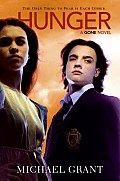
Hunger
2,726-word summary 12 min read 608 pages in the book
- First published
- 2009
- Publisher
- HarperTeen
- Pages
- 608
- ISBN
- 9780061449062
- Series
- Gone (#2)
Reading options
What's inside (8 sections)
I picked up Hunger because Gone had left me unsettled in a particular way. That first book ended with the dome still standing, the food still finite, and a couple of hundred kids who had no adults left to tell them what to do on Monday morning. I wanted to know what happened once the panic wore off and the cupboards actually emptied. This is that book. Hunger is the second novel in Michael Grant's Gone series, published in 2009 by HarperTeen, a long hardcover of about 608 pages carrying ISBN 9780061449062. It is not Roxane Gay's memoir of the same name, and it has nothing to do with her book. Different writer, different subject, identical word on the spine. Grant resumes the story three months after the first novel and immediately makes the situation worse in ways that feel less like spectacle and more like grim accounting.
Three months on, and no breakfast
The move forward in time is the smartest choice Grant makes here. Gone was about the sudden removal of every person over fifteen from the California coast town of Perdido Beach and the arrival of an opaque dome around it. Hunger assumes you know that and starts with the harder question: what does a town run by fourteen-year-olds look like after the novelty has worn off? Sam Temple, who could shoot burning light from his hands when frightened, has been voted mayor. He hates it. The job is not a crown in this book, it is a series of small humiliations, and Sam is at his best when he admits how little he knows. Astrid Ellison, the genius of the place, is still doing the arithmetic, still trying to make rationing sound like a plan rather than a prayer. Quinn Gaither, who surfs and jokes, has come up with the one genuinely useful idea: fish the ocean. Edilio Escobar keeps the peace without enjoying it, which is why people trust him.
The food situation is worse than mere shortage. Fields just outside town are infested with zekes, mutant carnivorous worms that burrow through the crops and make the farmland a death trap. Anyone who tries to harvest risks being eaten. So the kids are living on dwindling stores, and Quinn's fishing boats muscle their way out past the dome boundary into water that may or may not keep yielding. Grant keeps the logistics in front of us in a way the first book only hinted at. You learn how many calories matter, who gets a second helping, and what happens to a teenager who has been hungry for weeks. The title is not decoration.
The chapters that deal with provision work because they stay concrete. There is no grand speech about scarcity. There is a line at the storehouse, a count of crates, a decision about whether the littlest kids eat first, and the resentful silence of people who have been asked to be reasonable while starving. Sam's authority depends on his being the one who can stand in that silence longest without lying. When he does lie, or when he simply fails, the town feels it immediately. I found this section more convincing than a lot of the supernatural material. Post-apocalyptic stories often treat food as atmosphere. Here it is the plot engine.
The Human Crew and the trouble with Hunter
New powers keep surfacing as the children grow more afraid and more desperate. Two new arrivals drive the conflict. Duck Zhang can alter his own density, becoming light enough to drift or heavy enough to sink through matter. Hunter Lefkowitz can emit lethal microwave rays, a power he does not understand and cannot reliably switch off. Little Pete, Astrid's silent autistic younger brother, is revealed to be capable of making life, which is a far more unsettling gift than it sounds and one nobody is equipped to manage.
The ugliest turn comes when Hunter, panicking during a confrontation with Zil Sperry, kills his own roommate Harry. That single act flips the town's mood. Zil, who has gathered a group of non-mutant kids around him, names the group the Human Crew and starts talking about mutants as a separate, dangerous species. They capture Hunter and try to lynch him. Orc, the bully who became a gravel-skinned giant in the first book, breaks it up, and he is an oddly moving figure here: a thug given a second shape and no clear place to put it. Grant writes the lynching scene without softening it. The kids doing the dragging are not cartoon villains. They are frightened and angry, and Hunter really did kill someone, which is what makes the scene hard to shake.
This is where the book starts arguing with the idea that powers make someone special. Having a gift in the FAYZ, the Fallout Alley Youth Zone, is closer to having a dangerous medical condition. Hunter is a victim and a threat at once, and nobody in town has the maturity to hold both ideas. The Human Crew's rise is not really about hatred of mutants. It is about a group of ordinary kids discovering that a shared enemy gives them a kind of belonging the new order has not offered them. Zil understands this. Sam, who keeps promising fairness without being able to deliver much of it, does not. I thought this thread was the best thing in the novel, and I wished Grant had stayed with it longer.
A fair complaint about the middle chapters: they circle. Sam faces a crisis, convenes a council, gives ground, and faces a slightly larger version of the same crisis. Two meetings about food rules could have been one. The book runs north of six hundred pages and there are passages where the momentum stalls badly. That said, the repetition also has a purpose. Government by committee among traumatized children is supposed to feel exhausting. The frustration is partly the point, even if a tighter edit would have served the story better.
Gold, coyotes, and the thing under the mineshaft
One strand of the plot sends Albert Hillsborough out toward the mineshaft where the Darkness lives. Lana Arwen Lazar, the healer who hates being a healer, has told Albert about a cache of gold nearby. Albert wants it so the FAYZ can have currency, because he has decided that money is what a functioning society needs. He is the most interesting minor character Grant has: fourteen, brilliant with systems, controlling food and water in Perdido Beach, and quietly convinced that he is the only adult in the room. Quinn and Lana go with him. The gold itself matters less than what the trip uncovers about Lana.
Lana has been in the presence of the Darkness and has not recovered from it. On this excursion she abandons the others and tries to destroy the thing by detonating LPG in the mineshaft. It does not work. The Darkness subdues her. When it speaks, it calls itself the gaiaphage, and Grant finally shows its physical form: a shifting mass of green crystalline particles. This is the point where the series stops pretending the force beneath the town is a vague bogeyman. It has a name, a shape, and a hunger of its own.
The coyotes, talking animals introduced in the first book, are servants of this thing. They are more than creepy set dressing. They herd people, cut off escapes, and report back to the mineshaft. Their loyalty to the gaiaphage makes every outdoor scene edgy in a way the town scenes are not. Inside the dome, you can at least argue with someone. Outside, in the desert with the coyotes circling, argument is over.
I have mixed feelings about the money subplot. Albert's gold expedition reads like a detour until you realize it is the mechanism that gets Lana back down the hole, and it also tells us exactly what kind of person Albert is: someone who sees a monster's cave and thinks first about minting coins. He is not wrong about needing an economy. He is just hilariously out of his depth, and the book never lets him be entirely sympathetic or entirely ridiculous.
Caine wakes up
Across town at Coates Academy, Caine Soren comes out of a three-month fugue after his encounter with the gaiaphage. He is still the magnetic, ruthless telekinetic who nearly took Perdido Beach in the first book, and he is still capable of acting as though the last few months did not happen. He wants the nuclear power plant. He has decided that whoever holds the plant holds the FAYZ. This is not pure power lust, though there is plenty of that. He has glimpsed something in his haze and half understands that the thing underground needs something the plant can provide.
His crew is a study in dysfunction. Drake Merwin, whose severed arm regenerated into a whip-like tentacle, is a sadist who enjoys his work and has no interest in politics beyond the permission to hurt people. Diana Ladris, who can judge the strength of other mutants, is clever enough to see through Caine and still attached to him for reasons she will not examine. Computer Jack, hiding in Perdido Beach, gets manipulated by Diana into opening the plant's systems to Caine. Orsay Pettijohn, a mutant who can see into people's dreams, is captured by Drake during reconnaissance. Bug, who can camouflage himself, slips between the two camps. Grant handles this ensemble well enough that you can keep everyone straight, though the sheer number of named kids is a real barrier for a new reader. The first book demanded a mental index. This one demands a fuller one.
Caine's assault on the plant succeeds. Power to Perdido Beach is cut. Sam races over to confront him, and in the confrontation Caine learns the full extent of his own manipulation: the gaiaphage needs radioactive uranium to feed, and it has been steering him toward the reactor the whole time. He is not the mastermind he thinks he is. He is a tool with excellent cheekbones. Forced to comply, Caine takes uranium down to the mineshaft, damages the reactor on the way, and permanently ends electric power in the FAYZ. He leaves Drake behind to keep Sam busy.
What follows is one of the most vicious sequences in the series. Drake threatens to trigger a meltdown unless Sam allows himself to be tortured. Sam submits. Drake works him over, and Grant does not look away from it. Brianna Berenson, the speedster called the Breeze, saves him by cutting away part of Drake's tentacle, but Sam is left close to death. The physical cost lingers into the next book, which is something I respect. Too many books in this genre treat a beating as a temporary inconvenience. Here it changes what Sam is willing to do, and not in a heroic direction.
The thing wants to feed
Bug defects, trading information about Caine's plan for food, which is the most honest transaction in the novel. Edilio takes Orsay to the mineshaft, and she relays what the gaiaphage wants: to feed. Astrid puts together the theory that gives the book its shape. The gaiaphage arrived in a meteor strike thirteen years earlier, hitting the power plant. Radiation from the site sustains it and caused the mutations in the children. It has been nudging Pete, Lana, and Caine toward building or delivering a body it can inhabit that will be strong enough to survive the kids who oppose it. Astrid is not certain, and she says so. The theory is a scientist's best guess made from fragments, which is exactly how it should be delivered.
Edilio and Dekka, who controls gravity, go looking for Lana and find her under the gaiaphage's influence. Lana shoots Edilio, badly, then retreats into the shaft while coyotes go after Dekka. The confrontation that follows gathers nearly everyone: Caine, Drake, Diana, and Jack arrive first, then Sam, Quinn, Brianna, and Duck. Sam has worked out that the creature is not prepared for someone with Duck's particular ability, which is the kind of tactical thinking that makes him a believable leader even when he is terrified.
Drake, now loyal to the gaiaphage rather than to Caine, attacks Diana. Caine snaps. He defies the thing that has been steering him, hurls Drake and the uranium into the shaft, and collapses the entrance. It is a startling moment of moral clarity from a character who has spent two books being a beautifully dressed disaster. But the collapse traps Lana too, and Lana is the only healer, and Diana needs her. So Caine and Sam go back in, with Duck using his density to tunnel through the sealed rock.
The ending of the siege is brutal and strange. The gaiaphage is feeding on the uranium when they reach it. Duck sacrifices himself: Caine throws him at the creature and Duck uses his power at the moment of impact, opening a void that sucks the gaiaphage in. Lana is freed from its control and heals the others. Caine and Diana leave together. I found this resolution unsatisfying in a specific way. A being that has been building toward a physical form for the entire book is dispatched by a relatively sudden piece of improvisation, and the rules for what Duck can do with his density feel stretched to cover the need. The emotional logic works, since Duck has been looking for a way to matter. The mechanics feel thinner.
What is left in the plaza
The last chapters pull back to Perdido Beach and the cost of everything that just happened. Sam resigns as mayor and agrees to share authority with a council. This is a quieter ending than the first book gave us, and a more honest one. He is not a king who has won. He is a kid who has been in charge and would like to stop. A lot of townspeople still sympathize with the Human Crew, which means the political problem has not been solved by defeating the monster. The crops become reachable after the kids feed the zekes a strain of mutant blue bats Duck discovered earlier, a small practical victory that arrives too late to feel triumphant.
Hunter, brain-damaged by his own power and by the mob that nearly killed him, is exiled. The book does not give him a redemption arc or a hearing. He is simply removed, and the town moves on. It is a cold ending for a character whose accident started so much of the conflict, and I think Grant intends it that way. Some people in a crisis are problems to be managed rather than people to be saved. It is not a comfortable idea, but it sits well with the rest of the novel.
Then there is Brittney Donegal. She seemed to die during Caine's attack on the power plant, and she is buried in the graveyard the town has laid out in the plaza. She is actually immortal and fully conscious under the dirt. A slug is attached to her arm, and the slug is a piece of Drake's severed tentacle. That final image is a perfect piece of dread: a thing everyone thinks is over still lying in the ground, quietly alive. It points directly at the next book without feeling like a trailer. It made me close the novel uneasy rather than satisfied, which is a reasonable place for a middle volume to leave you.
Hunger is a book about maintenance under pressure. The powers are loud and the fights are messy, but what stays with me is the unglamorous work: counting food, guarding stores, deciding who is safe to let back into town. Sam's light matters far less than his willingness to stand in a square and admit what he does not know. The novel drags in the middle and occasionally leans too hard on a coincidence to get its characters where they need to be. Still, it deepens the first book's premise in the right direction. Taking the adults away did not make the children free. It made them responsible, and responsibility is heavier than any superpower on offer here. Read it after Gone, not instead of it, because the dome's rules and the town's wounds only accumulate meaning across the two.
FAQ
Is this the same Hunger as Roxane Gay's memoir?
No. This is Hunger by Michael Grant, book two of the Gone series, published in 2009. Roxane Gay's 2017 memoir is a different book by a different author.
Do I need to read Gone first?
Yes. Hunger picks up three months after the first novel and assumes you already know how the dome and the FAYZ work, so starting with Gone makes the politics and powers far easier to follow.
What is the gaiaphage?
It is the creature living in the mineshaft beneath the FAYZ, shown as a mass of green crystalline particles that feeds on uranium and has been manipulating Pete, Lana, and Caine. The novel explains it only in part.
Similar books
More from Gone first, then related titles.

Never Fade
Ruby, now a leader in the Children's League, must track down the boy whose memories she erased, because he holds the only proof of what caused the disease that…
2,188-word summary · 10 min read
The 100
Three centuries after a nuclear war, a hundred teenage prisoners are sent from a failing space colony to test whether Earth is livable again.
2,152-word summary · 10 min read
Sunrise on the Reaping
Twenty-four years before Katniss, sixteen-year-old Haymitch Abernathy is swept into the fiftieth Hunger Games, where District 12 must send four tributes and…
2,198-word summary · 10 min read

The House of the Scorpion
A clone raised in a drug lord's poppy fields learns what he was made for and chooses what to do with the life he was given.
2,527-word summary · 11 min read

Reveal Me
A Shatter Me novella told by Kenji, set between Defy Me and Imagine Me, as the rebels learn Anderson has taken hostages and Juliette faces Emmaline.
2,098-word summary · 9 min read

Wither
In a future where women die at twenty, sixteen-year-old Rhine is sold as a bride to a wealthy stranger and plots an escape from a beautiful prison.
2,395-word summary · 11 min read
Life As We Knew It
Sixteen-year-old Miranda keeps a diary while an asteroid strike on the moon brings tsunamis, blackouts, and a frozen year of hunger to her Pennsylvania town.
2,485-word summary · 11 min read
Among the Hidden
Twelve-year-old Luke, an illegal third child, befriends Jen and faces the cost of stepping out of hiding.
2,923-word summary · 13 min read
The Infinite Sea
Cassie and Squad 53 wait out winter in a hotel while Ringer is retaken and learns the truth behind the 5th Wave.
2,985-word summary · 13 min read
The Darkest Minds
A teen with mind powers escapes a government camp and joins three runaways in Bracken's 2012 dystopia, first in The Darkest Minds series.
2,038-word summary · 9 min read
Imagine Me
Juliette remembers who she was and storms the capital to end the Reestablishment for good.
2,090-word summary · 9 min read
The Kill Order
Mark survives flares and Flare virus as WICKED forms thirteen years before maze.
2,129-word summary · 9 min read
Destroy Me
Shot by Juliette, Warner holds his base together while his father arrives with harsher plans for her.
2,556-word summary · 11 min read
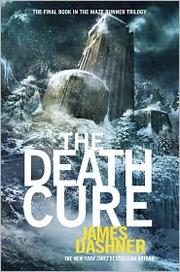
The Death Cure
Thomas refuses WICKED's final test, remembers too much, and runs with the Gladers toward a last cure and a ship north.
2,955-word summary · 13 min read
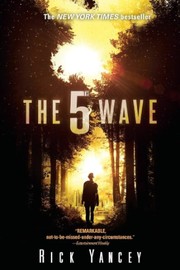
The 5th Wave
Cassie Sullivan crosses ruined Ohio to save Sammy after four alien waves, trusting Evan Walker while doubting him.
3,063-word summary · 14 min read
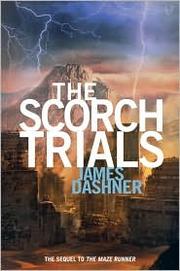
The Scorch Trials
Thomas and the Gladers cross a burned wasteland to reach haven while WICKED watches.
2,097-word summary · 9 min read

Shatter Me
Juliette Ferrars, whose touch kills, is locked up by the Reestablishment until Adam and Warner pull her into war.
2,115-word summary · 9 min read
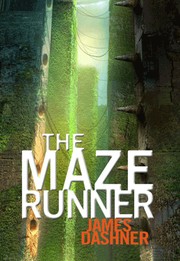
The Maze Runner
Maze Runner retold: Thomas wakes in Glade, walls move, Grievers sting, Teresa triggers end.
1,907-word summary · 8 min read
The Hunger Games
Suzanne Collins's The Hunger Games explained: the reaping, Rue, the tracker jackers, the nightlock berry standoff, and what the arena is really for.
2,295-word summary · 10 min read
Catching Fire
Suzanne Collins's Catching Fire explained: the Quarter Quell, the arena's secret, Finnick and Johanna, and the moment the Games turn into a rescue.
2,459-word summary · 11 min read
MaddAddam
Toby and Ren rebuild a camp after the plague while Zeb reveals the past and the Crakers invent a religion around Oryx and Crake.
2,201-word summary · 10 min read
The Faith of Beasts
Book two of The Captive's War. Human captives of the Carryx fight for a future while their highest-ranked champion decides to manufacture one.
2,262-word summary · 10 min read

Opposition
In the Lux finale, Katy and Daemon face a fractured species, a government that hunts them, and a choice between their love and the future of mankind.
2,513-word summary · 11 min read
Monsters of Men
Todd Hewitt and Viola Eade are trapped between Prentiss's army, the Spackle and the Answer, in a war that keeps asking what a person becomes to win.
2,382-word summary · 11 min read

Iron Widow
Wu Zetian enlists to avenge her sister, kills her pilot, and becomes an Iron Widow in a mecha Huaxia where the machines are built to kill women.
2,444-word summary · 11 min read

Wilder Girls
At a quarantined boarding school off Maine, three girls with strange mutations search for a missing friend and learn what the adults have hidden.
2,594-word summary · 12 min read
Starsight
Spensa Nightshade goes undercover aboard the Superiority space station Starsight to steal a hyperdrive, and finds a frightened bureaucracy where she expected…
2,568-word summary · 11 min read
Divergent: Official Illustrated Movie Companion
An oversize behind-the-scenes guide to the 2014 Divergent film, with casting stories, costume and set design, and scores of photos.
2,524-word summary · 11 min read