
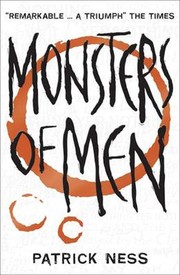
Monsters of Men
2,382-word summary 11 min read 602 pages in the book
- First published
- 2010
- Publisher
- Walker Books
- Pages
- 602
- ISBN
- 9781406310276
- Series
- Chaos Walking (#3)
Reading options
What's inside (7 sections)
I started the last Chaos Walking book with a feeling I do not usually bring to a finale. I wanted it to be over. The first two had left Todd Hewitt and Viola Eade in rough shape, and the second one had made a point of showing me that choosing the right side does not keep a person clean. I was braced for a fight and not for the argument this book turns into, which is about what a war does to the people who think they are running it. Patrick Ness published Monsters of Men with Walker Books in May 2010, and Candlewick brought it out in the United States that September. It is the third volume after The Knife of Never Letting Go and The Ask and the Answer, and it won the 2011 Carnegie Medal. The title comes from a line spoken back in the first book, that war makes monsters of men, and both Todd and Viola have been carrying it around ever since.
Three armies and no safe place
The war is already enormous when the book opens. A Spackle army is marching on New Prentisstown from one direction and the forces of the Answer are coming from the other. The city is the same place Todd and Viola once hoped would save them, renamed by Mayor Prentiss after he took it over. Prentiss is free again because Todd let him out to help defend the town, which is one of those decisions that looks practical for about two pages and then never stops costing anyone anything. Viola, meanwhile, is trying to reach the incoming settler ships to warn the people on them what they are flying into.
What struck me first was how little room there is for anybody to be a person. Todd is a soldier now. Viola is a soldier too. Prentiss is a president with an army, Mistress Coyle is running the resistance, and the Spackle have a leader called the Sky who is trying to keep his people from being wiped out. Every one of them has a reason. That is the problem the book keeps putting in front of you. Nobody here gets up intending to do evil, and the killing keeps scaling up anyway.
The fighting is brutal and it is also strangely bureaucratic. There are supply lines, negotiations, hostages, and arguments over who gets to use the scout ship that Bradley and Simone pilot. Coyle wants its missiles. Prentiss wants its fuel. Viola keeps being asked to decide whether a weapon is worth what it does to the people on the other end. Ness does not linger over gore, but he does let the consequences sit. A missile launched to save Todd kills most of the Spackle warriors, and the book does not pretend that this was clean or that it made anyone safer for long.
The Return and the price of a merciful act
The Spackle who matters most here is the one Todd once freed. In the first book, Todd saved an enslaved Spackle wearing a numbered band and gave him a name out of it. 1017 has become the Return, the only survivor of that work camp, and he has spent the years since building a grievance that nobody can reasonably call unreasonable. He wants revenge on Todd and on every settler who benefited from the slavery. He is also, in his own way, honest about it. He tells the Sky what he wants and argues with him when the Sky refuses.
The Sky is the Spackle leader, and he is trying to hold a position that becomes impossible. He refuses the Return's demand for more attacks, then reveals that the Spackle are keeping a hibernating prisoner named Ben. Ben is Todd's adoptive father, the man who raised him in Prentisstown, and the Sky offers him to the Return as a reward if the two armies ever make peace. That single detail wrecked me a little. A whole war is being negotiated around one sleeping man who has no idea he is being used as a bargaining chip.
The Spackle dam the river to cut off Prentiss's water and start attacking the town at random. During one raid, Todd knocks Prentiss unconscious and takes command himself, and Prentiss, far from being angry, praises the boy for showing he has the ability to do it. That is the moment I understood what Ness was doing with Todd. The praise is not a compliment. It is a diagnosis. Prentiss recognizes a person who can be shaped into a leader of violence because he has spent the whole trilogy shaping one.
Earlier mercy does not buy anybody protection here. The Return finally gets close enough to murder Viola, then stops when he sees the ID band on her arm and recognizes what it means. He spares her because of a piece of metal, not because he has forgiven anyone. It is a small scene and one of the truest in the book. Kindness does not cancel a system. A single good act does not make a person safe, and the novel refuses to offer the easy version where it does.
Prentiss, Coyle and the business of making a monster
Mayor Prentiss is still the most interesting person in the trilogy, which is an uncomfortable thing to say about a man who has done what he has done. He is patient, charming when it suits him, and very good at making other people participate in their own harm. At this stage he is running a city, commanding soldiers, and slowly being destroyed by the Noise itself. The experiments he has carried out have left him unable to filter the thoughts of every living thing on New World, and the book lets you watch that pressure build until it becomes a kind of madness. It is a fitting end for a man who built his power on hearing everything.
Todd's relationship with him is the spine of the novel. Todd keeps telling himself he is staying close to Prentiss to protect Viola or to keep the city from collapsing. He knocks the man out and takes over, he listens to him, he absorbs his lessons, and each step feels smaller than the last until Todd looks up and finds he has become the sort of person Prentiss can praise. I kept wanting him to walk away earlier. The book is right not to let him. It is much harder to show how someone slides into complicity than to show them making one bad choice.
Mistress Coyle is the answer on the other side, and she is no saint either. She has a gift for withholding information and treating people as assets. She presses Viola for details about the settler ships, uses her as a weapon when it is convenient, and eventually reveals a suicide bomb during a speech, intending to kill Prentiss. Todd saves him without meaning to. That is the pattern of the whole book: the person who does the right thing rarely intends to, and the person with the better politics is still capable of using a teenager as a bomb.
There is a stretch in the middle where the two sides negotiate because they have run out of things. Prentiss's army has no water and the Answer has no food, so they cooperate, with Prentiss setting traps and the Answer supplying explosives. It reads less like a heroic turning point than a piece of grim bookkeeping, and I mean that as a strength. Wars are full of moments where enemies negotiate because the alternatives are worse. Coyle spoils one round by sending a bomb into the Spackle stronghold, which earns a reply asking for two people to come and talk in the morning.
I will say this about the structure. There are a lot of moving parts in this book, and some of them get shuffled rather than developed. Bradley and Simone, the scout ship pilots, are mostly functions of the plot. Davy is gone, and I missed the ugly friendship he and Todd had in the second book because it gave Todd's moral slide a human face. Ness is carrying an enormous amount of setup here, and occasionally a character exists to deliver a piece of the war rather than to live in it. It is a reasonable trade for a finale, but it is a trade.
Viola's war and the sea
Viola gets the counterweight to Todd's story, and in some ways hers is worse. She is the one who tries to warn the settlers, the one Coyle recruits and trains, and the one who has to sit across from the Return and be spared because of a band on her arm. She sets off bombs. She watches people she knows get killed. She is also a teenage girl who is frightened and petty and brave in adjacent paragraphs, which is exactly how a person in that position would be. Ness keeps her judgment intact even while he lets her be corrupted a little by the organization she has joined.
The peace talks lead to a surprise Spackle attack the next day, but Prentiss has already positioned his artillery and his soldiers, so the attackers are cut down and the Sky surrenders. The Return goes to kill Ben anyway, furious at the surrender and still unable to finish the job. The Sky watches him fail, and Ben wakes up. Todd, who has lost nearly everyone, gets his father back, and for a few pages the book lets him be overwhelmed with happiness. He leaves Prentiss's side. It is the first thing in a long time he has chosen for himself rather than for a reason someone else gave him.
Prentiss does not accept that. He captures Todd, steals the scout ship, and flies it to drop flammable fuel on the forest, killing Spackle and destroying the land they live on. The Sky dies in that fire and hands leadership to the Return. Then Prentiss lands near the ocean, ties Todd up in a church, and waits. He is being eaten alive by the Noise by now. Todd escapes and the two of them fight with their thoughts as much as their bodies until Viola arrives and helps bring him down. Todd starts to force Prentiss into the water, and then Prentiss, apparently finally understanding what he has become, walks in himself and dies.
I want to be honest about how that scene landed with me. It is staged as a kind of grim satisfaction, and it is also the easy answer to a very hard question. A man who has spent three books doing terrible things gets to recognize his own immorality at the end and remove himself. It is moving, and it also lets the story off the hook in a way the rest of the book has earned the right to be harsher about. Ness has been very careful everywhere else about the idea that understanding evil is not the same as undoing it. Here he softens that rule for a few pages.
Then the Return arrives and mistakes Todd for Prentiss. He shoots Todd in the chest. Todd dies. Viola threatens to shoot the Return, and he accepts his death rather than stop her, but Ben says he can hear Todd's Noise coming back. The Spackle try to cure him with their medicine, and Viola refuses to forgive the Return. She sits with Todd's mother's journal and reads to him, hoping he will hear her and come back. In the coma, Todd wanders through his old memories, through his school and Farbranch, through human memories and Spackle memories from all over New World, searching for a girl whose name he cannot quite hold. He hears the journal and asks her to keep calling.
That ending is a gamble. A large part of me was furious at it, because Todd had earned a life and the book hands him a near death version of one instead. Another part of me respects the refusal to give a clean victory. This is a trilogy that has insisted, from the first book onward, that survival is not the same as being whole. The last pages make you sit with that instead of handing you a parade. I finished the book exhausted and a little cheated, and I would not change it.
What stays with you
The title is doing real work. War makes monsters of men is not a clever phrase dropped in for a cover, it is the question the whole trilogy has been circling. Todd is the boy who refused to use a knife early on and the soldier who learns to take command by the end. Prentiss is the monster who can explain himself. The Return is the victim who becomes an executioner and then chooses not to fire. Coyle is the healer who plants a bomb. Ness keeps refusing to sort these people into clean camps, and that is why the book is harder than most of the genre it sits in.
It is also a book with some weight problems. At 602 pages in the first edition it is long for a young adult novel, and a few of the war manoeuvres felt like they were there to fill out a battlefield rather than to change anyone. I found myself skimming one council scene and going back to make sure I had not missed a character arc. The phonetic spelling of the Noise, which is a wonderful idea in the first book, can be tiring by the third, especially in the long confrontations where everybody is broadcasting at once.
Still, the thing I keep coming back to is small. Viola reads a journal to a person who may not be able to hear her, because she has decided that is what love looks like now. There is no speech about it, no grand gesture. She just keeps reading. After three books of armies and presidents and bombs, that is the image that stayed with me, and I think it is the one Ness was aiming at all along. War makes monsters of men, but somebody still has to sit by the bed and call them back.
FAQ
Is Monsters of Men the last Chaos Walking book?
Yes. It is the third volume of Patrick Ness's trilogy, after The Knife of Never Letting Go and The Ask and the Answer, and it was first published in 2010.
Can I start reading here without the first two books?
Not comfortably. The war, the Noise, and the history between Todd, Viola, Prentiss and the Return all depend on the earlier books, so most of the emotional weight would be lost.
Why does the ending upset some readers?
Todd is shot dead, then shown in a coma while Viola reads his mother's journal and asks him to come back. The book refuses a clean victory, which some readers find frustrating.
Similar books
More from Chaos Walking first, then related titles.
The Knife of Never Letting Go
Todd Hewitt flees Prentisstown with silent Viola as Noise exposes the town lie, hunted by Aaron and Mayor Prentiss toward Haven and a cure rumor.
2,512-word summary · 11 min read
The Ask and the Answer
Todd and Viola are separated in occupied Haven, where the Mayor's Ask tortures suspects and the Answer plants bombs in the name of freedom.
2,265-word summary · 10 min read
The Toll
After Endura sinks and the Thunderhead falls silent, Greyson Tolliver becomes its sole voice while Citra and Rowan fight to return.
2,744-word summary · 12 min read
Thunderhead
Rowan hunts corrupt scythes as Scythe Lucifer while Citra, now Scythe Anastasia, defies the new order. Then Endura sinks.
2,396-word summary · 11 min read
Sunrise on the Reaping
Twenty-four years before Katniss, sixteen-year-old Haymitch Abernathy is swept into the fiftieth Hunger Games, where District 12 must send four tributes and…
2,198-word summary · 10 min read
The House of the Scorpion
A clone raised in a drug lord's poppy fields learns what he was made for and chooses what to do with the life he was given.
2,527-word summary · 11 min read

The 100
Three centuries after a nuclear war, a hundred teenage prisoners are sent from a failing space colony to test whether Earth is livable again.
2,152-word summary · 10 min read
The Faith of Beasts
Book two of The Captive's War. Human captives of the Carryx fight for a future while their highest-ranked champion decides to manufacture one.
2,262-word summary · 10 min read
Opposition
In the Lux finale, Katy and Daemon face a fractured species, a government that hunts them, and a choice between their love and the future of mankind.
2,513-word summary · 11 min read

Wilder Girls
At a quarantined boarding school off Maine, three girls with strange mutations search for a missing friend and learn what the adults have hidden.
2,594-word summary · 12 min read
Leviathan
In an alternate 1914, a prince on the run and a girl disguised as a soldier meet aboard a living airship.
2,406-word summary · 11 min read

Wither
In a future where women die at twenty, sixteen-year-old Rhine is sold as a bride to a wealthy stranger and plots an escape from a beautiful prison.
2,395-word summary · 11 min read

Never Fade
Ruby, now a leader in the Children's League, must track down the boy whose memories she erased, because he holds the only proof of what caused the disease that…
2,188-word summary · 10 min read
Life As We Knew It
Sixteen-year-old Miranda keeps a diary while an asteroid strike on the moon brings tsunamis, blackouts, and a frozen year of hunger to her Pennsylvania town.
2,485-word summary · 11 min read
Among the Hidden
Twelve-year-old Luke, an illegal third child, befriends Jen and faces the cost of stepping out of hiding.
2,923-word summary · 13 min read
The Infinite Sea
Cassie and Squad 53 wait out winter in a hotel while Ringer is retaken and learns the truth behind the 5th Wave.
2,985-word summary · 13 min read
Fairest
Queen Levana's rise from scarred princess to Lunar ruler fills the gap between Cress and Winter.
2,983-word summary · 13 min read
Gathering Blue
Orphaned weaver Kira is kept in the Council Edifice to mend the Singer robe, learning dyes and control until lasting blue thread opens choice.
2,954-word summary · 13 min read

The Kill Order
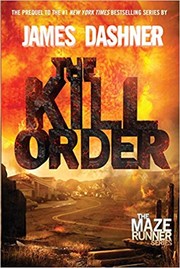
Mark survives flares and Flare virus as WICKED forms thirteen years before maze.
2,129-word summary · 9 min read
Between Shades of Gray
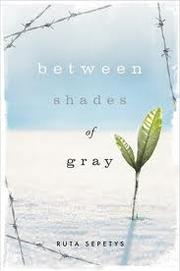
In 1941, fifteen-year-old Lina is deported from Lithuania to Siberia and uses her drawings to survive and send word to her father.
2,263-word summary · 10 min read
Attack on Titan, Vol. 1
Humanity hides behind three walls until the Colossal Titan breaks Wall Maria and Eren Yeager vows to destroy every Titan.
2,357-word summary · 10 min read

Winter
Scarred Princess Winter joins Cinder and her crew to stop Queen Levana's forced wedding and war between Luna and Earth.
3,179-word summary · 14 min read
Scythe
Citra and Rowan become apprentice scythes who must glean one another.
2,574-word summary · 11 min read
Cress
Imprisoned hacker Cress joins Cinder Scarlet Wolf Thorne to stop Levana's wedding to Kai.
2,534-word summary · 11 min read
The Death Cure
Thomas refuses WICKED's final test, remembers too much, and runs with the Gladers toward a last cure and a ship north.
2,955-word summary · 13 min read
The 5th Wave
Cassie Sullivan crosses ruined Ohio to save Sammy after four alien waves, trusting Evan Walker while doubting him.
3,063-word summary · 14 min read