
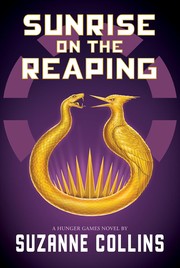
Sunrise on the Reaping
2,198-word summary 10 min read 400 pages in the book
- First published
- 2025
- Publisher
- Scholastic
- Pages
- 400
- ISBN
- 9781546171461
- Series
- The Hunger Games (#5)
Reading options
What's inside (9 sections)
I came to this book knowing exactly how Haymitch Abernathy ends up, which turned out to be the strangest way to read it. We meet him in the original trilogy as the drunk, sneering mentor who somehow keeps Katniss and Peeta alive, and I always assumed there was a story there that the books chose not to tell. Collins finally tells it, and she sets it twenty-four years before Katniss ever volunteers, at the fiftieth Hunger Games. That is the Second Quarter Quell, the one where District 12 has to send four tributes instead of two. Knowing the destination made every early scene ache a little, because I could see the person he was before the drink and the loss closed over him.
The book arrived in 2025 from Scholastic, four hundred pages in the edition I read, and it reads like a puzzle box built to fit into the gaps of a story readers already know by heart. That is both its great skill and its great limitation, and I felt both throughout.
A birthday reaping and a substitute tribute
Haymitch is sixteen when the reaping comes around, and the cruel detail Collins opens with is that it falls on his birthday. He works for a bootlegger, running liquor while keeping his mother and his little brother Sid fed and out of trouble. It is a small, sharp picture of District 12: a bright kid doing bad work for decent reasons, living with the constant arithmetic of who eats and who does not. His mother wants no part of the Games, and Sid is young enough that the whole business is still abstract. Haymitch carries the weight of both of them.
The one soft place in his life is Lenore Dove Baird, his girlfriend, whom he meets secretly in the woods. She is a Covey kid, and Collins gives their scenes a warmth and a slight magic that stand apart from the rest of the district. When they are together, Haymitch is not the bootlegger's runner or the brother who has to be responsible. He is just a boy who is in love, and the woods are the only place where that is true.
Then the reaping happens, and the scene turns violent in a way that announces what kind of book this is. Woodbine Chance is chosen and tries to run. He is shot in front of the crowd before anyone can stop it. Haymitch, who is there with the other kids, sees Lenore Dove caught in the press of Peacekeepers and shields her, and that one act of protection is enough to put him on the stage as the substitute. He does not volunteer in the way Katniss does. He is taken because he got in the way, which feels colder and more arbitrary, closer to how the Capitol actually works.
Four tributes and a body on the parade route
Because it is a Quarter Quell, District 12 sends four, and the other three are drawn from the same small pool of people Haymitch has known his whole life. There is Wyatt Callow, the oddsmaker's son, who reads the Games like a betting sheet and keeps his feelings tucked away behind numbers. There is Maysilee Donner, sharp-tongued and proud, who owns a shop in town and never lowers herself to play the grateful victim. And there is Louella McCoy, a girl from the Seam with a claim to Haymitch that is complicated by old family ties.
The trip to the Capitol is where the book shows you how the spectacle has grown since the early days. The tributes are dressed, paraded and watched, and the whole machinery is there to turn sixteen-year-olds into figures the audience can cheer for. Then, on the parade route, the chariot accident happens. Louella is thrown and dies. The scene that follows is the one I found hardest to read: Haymitch carries her body up to President Snow and applauds him, deliberately, with a kind of mockery so controlled that Snow cannot punish him for it without admitting he understands it. It is the first time Haymitch's defiance shows its shape. He has to perform grief, and he chooses to perform it as an insult.
Snow's response is chilling in its practicality. He does not allow a dead tribute to spoil the show. He sends a replacement from District 11, a drugged girl the Capitol costumes as Louella and nicknames Lou Lou. She is a body double, and the districts are meant to accept the substitution as if nothing has changed. The fact that Haymitch has to sit beside a stranger wearing his dead neighbor's face is the Capitol's cruelty in miniature: efficient and utterly indifferent to the person underneath.
Mentors with their own histories
The four get two mentors, Wiress and Mags, both former victors who know what the arena is really for. Wiress has a habit of seeing patterns that other people miss, and Mags is the quiet, steady one who has outlasted more Games than she cares to count. They are not glamorous figures, and Collins treats them with a respect the original books only hinted at. They teach the tributes the unglamorous essentials: how to read the arena and find water, and when to lie still.
One of the things I appreciated about Wiress and Mags is that the book lets them be old. They are not idealized fighters in their prime. They are survivors who have watched a lot of kids go into an arena and not come back, and you can feel that exhaustion in the way they prepare these four. Their job is not to turn the tributes into heroes. It is to keep them alive long enough to matter.
The larger plan comes from Beetee, who recruits Haymitch and his own son Ampert into a scheme to sabotage the arena from inside. The arena has a huge water tank, and if they can blow a hole in it, the whole structure might be cracked open. This is the thread that runs under the Games and gives the book its heist shape. Beetee is building the same kind of trap that Katniss will spring years later, and watching him do it the first time, with a different set of kids, is one of the stranger pleasures of this book. Haymitch has a role here beyond fighting. He is a collaborator, and for a while it looks as if the plan might work.
Inside the arena, and the ways the plan comes apart
Once the Games begin, the deaths arrive fast, and Collins does not soften any of them. Haymitch is poisoned by a stream and saves himself with charcoal tablets he has carried in, a detail that is both clever and grim. Wyatt, who understood the odds better than anyone, dies. So does Lou Lou, the girl who was never really Louella at all, and whose death seems to matter less to the Capitol than the interruption it causes. Ampert, Beetee's son, is devoured by squirrel mutts, which is the kind of ending that makes the whole sabotage plot feel suddenly, sickeningly expensive.
Maysilee's death is the one that stayed with me. She and Haymitch survive long enough to kill three young Gamemakers who are inside the arena doing maintenance, which is a strange, startling breach of the whole arrangement. Then she is killed by waterbird mutts. The friendship between the two of them had been the warmest thing in the arena, the banter and the shared refusal to be broken, and losing her takes the heart out of the story for a while.
There is a smaller, sadder thread with Wellie, a starving tribute whom Haymitch shares a sponsor gift with. It is a decent, human act, and it gets her killed. The Career tribute Silka murders her, and then Silka herself dies when her own axe rebounds off the force field. Haymitch's final explosion, the one meant to break the arena open, fails. The force field holds. The water tank plan does not deliver the freedom it promised.
What I noticed reading all of this is how little the arena is a place of glory. It is a place of bad luck and worse information, littered with bodies the Capitol is willing to spend. Haymitch survives not because he is the strongest but because he notices things, keeps a little poison in his pocket and refuses, at every turn, to give the audience the story they want.
What waits at home
The worst of the book comes after the Games, which is where it connects most directly to the Haymitch we already know. He comes home to find his family dead. His mother and Sid are gone, and the safety he was trying to buy with his bootlegging work turns out to have been worthless. Then Lenore Dove dies. He has given her a gumdrop that was poisoned, and he did not know it was poisoned. Snow arranged it. The girl he shielded at the reaping, the one person who made the story bearable, is taken from him by a man who never has to raise a hand himself.
This is the moment where the book explains its own title. The sunrise on the reaping is the moment a person learns what the world is willing to do to them, and Haymitch sees it clearly. He withdraws into drink, and Collins does not rush to redeem him. For a long stretch he is simply lost. Plutarch is the one who eventually urges him to keep fighting, which is an uncomfortable fit given what we know about Plutarch's later loyalties. It is a deliberate piece of casting: the people who survive the Capitol are often the people who learn to work its angles.
Plutarch's arrival is handled with a light touch, and it is one of the few scenes that looks forward rather than back. He does not offer Haymitch comfort. He offers him a way back into the fight, which is a colder kind of lifeline but the one Haymitch eventually takes. Reading it, I kept thinking of the mentor who later grumbles his way through the Capitol interviews, and realizing that this is the moment that makes that man possible.
By the end, Haymitch is not the boy from the woods anymore. He is the man Katniss will meet decades later, funny in a way that hides things and angry at a system he cannot bring himself to leave. The book closes the loop without pretending the loop is a happy one.
Where the book strains
I want to be fair about the parts that did not sit right with me. Reviewers made the same complaint, and I think it holds up. The book leans heavily on reinterpreting events that the original trilogy had already fixed, and it does not break much new thematic ground. If you came for a fresh argument about the Games, you will mostly find a fuller account of things you already understood. The Quarter Quell, the arena's force field, Beetee's trap, the way the Capitol manufactures consent: all of it is material Collins has used before, and this book is often content to show you the hinges rather than build a new machine.
That is a real limitation, but it is also part of the point of the project. A prequel written for people who know the original is going to trade in recognition. The pleasure is in the arranging, in seeing how a small act here becomes a legend there. For me that pleasure was genuine, especially in the scenes with Lenore Dove and in the slow accumulation of small betrayals that make Haymitch's drinking feel inevitable rather than weak. But I can see why a reader would find the whole thing tired, especially since Collins is working with a cast whose fates the trilogy already decided. The tension has a ceiling when the audience knows who lives.
There is also a question of tone. The early chapters carry a warmth that the later chapters grind down, and the shift is deliberate but steep. Readers who want the Covey warmth to last will find the second half a hard trade.
What stays with you
Still, I finished it glad that the story had been told. What I keep returning to is not the arena mechanics or the clever symmetry with Katniss's Games. It is Haymitch as a sixteen-year-old in the woods with Lenore Dove, trying to keep his little brother fed, before the Capitol took apart everything he loved and left him with a joke and a bottle. Knowing the ending does not spoil that. It makes the early pages hurt in a way that a first-time reader in 2025 could only guess at.
If you have never read the original trilogy, I would not start here. This book is built out of recognition, and it assumes you know why Haymitch's silences matter. If you have, it is a worthwhile, uneven return to a world that has never been shy about showing how power dresses itself up for an audience.
FAQ
Where does Sunrise on the Reaping fit in The Hunger Games timeline?
It is a prequel to the original trilogy, set twenty-four years before Katniss volunteers, at the fiftieth Hunger Games known as the Second Quarter Quell. The site lists it as order five in the series.
Who is Lenore Dove Baird?
She is Haymitch's girlfriend, a Covey girl he meets secretly in the woods. Her death from a poisoned gumdrop arranged by Snow helps explain the drink and withdrawal of the later mentor.
Does the book explain how Haymitch became the mentor Katniss knows?
Yes. It follows his Games, the deaths of his family and Lenore Dove, and his turn toward drink, ending with Plutarch urging him to keep fighting.
Similar books
More from The Hunger Games first, then related titles.

The Hunger Games
Suzanne Collins's The Hunger Games explained: the reaping, Rue, the tracker jackers, the nightlock berry standoff, and what the arena is really for.
2,295-word summary · 10 min read
Catching Fire
Suzanne Collins's Catching Fire explained: the Quarter Quell, the arena's secret, Finnick and Johanna, and the moment the Games turn into a rescue.
2,459-word summary · 11 min read
Mockingjay
Suzanne Collins's Mockingjay explained: Katniss as the symbol, District 13, Coin and Snow, and the speech that ruins victory for her.
2,474-word summary · 11 min read

Life As We Knew It
Sixteen-year-old Miranda keeps a diary while an asteroid strike on the moon brings tsunamis, blackouts, and a frozen year of hunger to her Pennsylvania town.
2,485-word summary · 11 min read
Among the Hidden
Twelve-year-old Luke, an illegal third child, befriends Jen and faces the cost of stepping out of hiding.
2,923-word summary · 13 min read

The 100
Three centuries after a nuclear war, a hundred teenage prisoners are sent from a failing space colony to test whether Earth is livable again.
2,152-word summary · 10 min read
Monsters of Men
Todd Hewitt and Viola Eade are trapped between Prentiss's army, the Spackle and the Answer, in a war that keeps asking what a person becomes to win.
2,382-word summary · 11 min read


The House of the Scorpion
A clone raised in a drug lord's poppy fields learns what he was made for and chooses what to do with the life he was given.
2,527-word summary · 11 min read

Wither
In a future where women die at twenty, sixteen-year-old Rhine is sold as a bride to a wealthy stranger and plots an escape from a beautiful prison.
2,395-word summary · 11 min read

Never Fade
Ruby, now a leader in the Children's League, must track down the boy whose memories she erased, because he holds the only proof of what caused the disease that…
2,188-word summary · 10 min read

The Infinite Sea
Cassie and Squad 53 wait out winter in a hotel while Ringer is retaken and learns the truth behind the 5th Wave.
2,985-word summary · 13 min read


The Kill Order
Mark survives flares and Flare virus as WICKED forms thirteen years before maze.
2,129-word summary · 9 min read
Between Shades of Gray
In 1941, fifteen-year-old Lina is deported from Lithuania to Siberia and uses her drawings to survive and send word to her father.
2,263-word summary · 10 min read
Attack on Titan, Vol. 1
Humanity hides behind three walls until the Colossal Titan breaks Wall Maria and Eren Yeager vows to destroy every Titan.
2,357-word summary · 10 min read
The Death Cure
Thomas refuses WICKED's final test, remembers too much, and runs with the Gladers toward a last cure and a ship north.
2,955-word summary · 13 min read
The 5th Wave
Cassie Sullivan crosses ruined Ohio to save Sammy after four alien waves, trusting Evan Walker while doubting him.
3,063-word summary · 14 min read

The Scorch Trials
Thomas and the Gladers cross a burned wasteland to reach haven while WICKED watches.
2,097-word summary · 9 min read

The Maze Runner
Maze Runner retold: Thomas wakes in Glade, walls move, Grievers sting, Teresa triggers end.
1,907-word summary · 8 min read
Insurgent
Insurgent retold: Tris guilty after war, Erudite hunts Divergent, Amity talks, Candor serum.
1,951-word summary · 9 min read
MaddAddam
Toby and Ren rebuild a camp after the plague while Zeb reveals the past and the Crakers invent a religion around Oryx and Crake.
2,201-word summary · 10 min read
I Must Betray You
In 1989 Romania, a seventeen-year-old is forced to inform on an American diplomat's family and records the truth in a hidden notebook.
2,258-word summary · 10 min read
A Guardian and a Thief
Over one week in near-future Kolkata, a mother's flight plan and a homeless young man's hunger collide over a set of stolen travel documents.
2,306-word summary · 10 min read

The Faith of Beasts
Book two of The Captive's War. Human captives of the Carryx fight for a future while their highest-ranked champion decides to manufacture one.
2,262-word summary · 10 min read

Opposition
In the Lux finale, Katy and Daemon face a fractured species, a government that hunts them, and a choice between their love and the future of mankind.
2,513-word summary · 11 min read

Iron Widow
Wu Zetian enlists to avenge her sister, kills her pilot, and becomes an Iron Widow in a mecha Huaxia where the machines are built to kill women.
2,444-word summary · 11 min read