
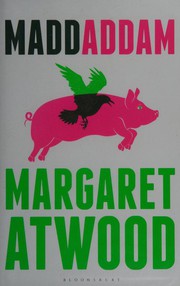
MaddAddam
2,201-word summary 10 min read 416 pages in the book
- First published
- 2013
- Publisher
- Bloomsbury Publishing
- Pages
- 416
- ISBN
- 9781408819708
- Series
- MaddAddam (#3)
Reading options
What's inside (10 sections)
Going back to the plague
I put off reading this one for a while. I had loved Oryx and Crake when it came out, and The Year of the Flood felt like a sideways step that repeated parts of the same catastrophe from different mouths. MaddAddam, published in 2013, is the book that ties those two timelines together, and I went in expecting a tidy wrapping up of loose ends. What greets the reader is stranger and, in its quieter chapters, more moving. This is a novel about people deciding what counts as a story after the machinery of the old world has stopped working.
A bit of orientation helps, because the trilogy is easy to tangle. Oryx and Crake followed Jimmy, also called Snowman, in the years just after a manufactured plague wiped out nearly everyone. The Year of the Flood retold the same collapse through Toby and Ren, two women connected to a religious environmental group called God's Gardeners. MaddAddam picks up afterward and stops treating the two books as separate tracks. The survivors from each one end up in the same place, and the novel keeps three or four strands moving at once.
That structure is the main reason the book feels different from its predecessors. The first two novels were built on parallel lines that deliberately avoided touching, and a fair amount of their pleasure came from recognizing the same event from two angles. Here the lines converge. Atwood keeps the habit of cutting backward in time, but the jumps now feel less like a game and more like an attempt to account for everything. The reader is asked to hold the corporate scientists, the Gardeners, the Crakers, and the few ordinary survivors in one frame, and to see how each group contributed to the world that came after.
Toby and Ren, still standing
The opening has a survivor's practicality that is bracing. Ren and Toby, both short on food and supplies, manage to rescue a young woman named Amanda from two men who have survived the plague in the worst possible way. These are the Painballers, violent criminals condemned to fight one another in a gladiator game called Painball before the world ended. They carry the markings of that life and treat other people as obstacles or entertainment. Saving Amanda is not a grand noble gesture so much as a decision that the remaining humans are worth protecting.
From there the group grows. Ren and Toby make contact with Jimmy, who has been living among the Crakers, the gentle engineered people Crake created to replace humanity. The camp they form is less a settlement than an armed encampment with a garden attached. People patrol, ration supplies, argue about whether to trust outsiders, and try to grow things in soil that may still be contaminated. Atwood is very good on the small logistics of staying alive: who can be spared for a watch, how to purify water, what to do with a wound you cannot properly treat.
Amanda's rescue wakes the Painballers' interest, and the threat of their return hangs over the middle of the book. The violence when it comes is sudden and ugly, and Atwood does not dress it up. One refreshing thing about this novel is that it refuses to make its heroes invincible. Toby and Ren are tired, often frightened, and clearly outnumbered. Their courage is the stubborn kind that keeps going because stopping is not an option.
Toby has the most grounded voice in the book. She was a gardener once, and her habits of patience and observation serve her better than anyone's fighting skills. Watching her move from reaction to choice is the quiet arc of the early chapters.
The camp itself has a texture that Atwood clearly enjoyed building. There are arguments about what the place is for, whether it is a refuge to hide in or the beginning of something that could last. Food has to be grown, water carried, and the perimeter watched by people who would rather be sleeping. The Crakers do much of the work without understanding the danger, which creates its own awkwardness. Nobody wants to treat them as tools, yet the group's survival depends on their labor and their trust. That tension never fully resolves, and the book is better for leaving it open.
Zeb tells Toby everything
The longest flashback belongs to Zeb, an older man who becomes Toby's lover and who, it turns out, knew the roots of this disaster better than anyone left alive. His account takes up a large stretch of the middle and is the strongest piece of writing in the book. Zeb grew up with a half-brother named Adam One, the man who would later lead God's Gardeners. Their father was a preacher who used the pulpit to defend the corporations and dismiss environmental warnings, a man whose comfort depended on the very system he claimed to guide morally.
Zeb's rebellion against his father is both petty and serious. He breaks into church accounts and drains them, then he and Adam vanish, take new names, and let their father believe they are dead. Over the years the two men drift toward the same conclusion from different directions. They help build God's Gardeners, the group that preserves seeds and hymns and warnings about a coming flood that turns out to be literal. The earlier book suddenly makes more sense. The Gardeners were never just a cult; they were one branch of a much wider resistance that included people willing to do far worse things than sing.
That resistance is the MaddAddam of the title, a loose network of genetic engineers and saboteurs who opposed the corporate order that Crake ultimately exploited. Zeb's memories introduce Pigoon, a brilliant and unsettling figure whose experiments push the book's interest in biological tinkering to its most uncomfortable place. Atwood keeps asking the same question from different angles: if you can redesign a living thing, what do you owe the thing you made? Crake never asked it. Zeb's circle at least argued about it.
The Zeb sections also do something clever with time. We already know, from the other books, roughly how this story ends, so the tension comes from watching people walk toward a cliff they can see coming. Zeb's account gives the trilogy the history it had been withholding, and it turns characters who once seemed like background figures into people with full lives.
The Crakers make their own stories
Here is the part of MaddAddam that lingers. Alongside the human survivors, the novel gives us chapters told from the Crakers' point of view. These are the pale, plant-eating, purring people Crake designed to inherit the earth, free of jealousy, religion, and most of the miseries that came with ordinary humanity. At first they are almost too innocent to be interesting. Then one of them, marked by a dark stripe, starts telling stories about Oryx and Crake as if they were gods. He invents rituals. He explains the world. Other Crakers begin to listen.
It is a neat reversal. The ones Crake made as controlled, contented animals start doing the very human thing he meant to engineer out of them: they make meaning. They turn the two people who created and destroyed their world into figures in a creation myth, complete with rules about what is allowed and what is forbidden. Atwood is plainly interested in how religion gets started, and she handles it without sneering. The Craker storyteller is not a fool. He is trying to give his people a way to live with things they cannot explain, and the stories give them comfort and a shape for their days.
The Crakers also become a genuine community in the camp, and the relationship between them and the humans is more complicated than simple gratitude. They can be relied on, but they do not think like us. Their calm can look like cruelty when someone is hurting. Watching Toby and the others learn to read them, and to be read by them, is one of the quiet pleasures of the book.
Oryx, Crake, and the stories people need
The Craker invention of religion has a second layer that I did not fully appreciate until later in the book. Their stories are about Oryx and Crake, the two people responsible for their existence, and the telling turns both into figures who never quite existed. Oryx, who was an exploited young woman in the earlier book, becomes a gentle maternal presence in their myths. Crake becomes a creator and a lawgiver. The Crakers build rules around these figures, including ideas about who may mate and how the dead should be treated, and they do it with the same serious imagination a child brings to a game that has suddenly become real.
Jimmy, by contrast, remembers them as they were. He knew Crake as a brilliant, cold roommate with a gift for systems and no patience for ordinary human mess. He knew Oryx as a woman whose life had been brutal long before Crake found her. The gap between those memories and the Crakers' stories is one of the saddest things in the novel. It is also the source of much of its humor, because Jimmy keeps hearing his own history recited back to him as scripture. Atwood lets both versions stand. The myths are false, and they are also useful, and the book never decides that one cancels out the other.
This is where MaddAddam becomes most clearly a novel about storytelling rather than just a novel about survival. The people with power in the old world controlled the stories through advertising, news, and science dressed up as progress. The Gardeners had their own stories, full of hymns and saints. Now the Crakers are making a third set, and the humans are too weakened to argue with them. The question of whose account gets preserved turns out to matter as much as who survives the plague.
Jimmy reaches the end
Jimmy's thread is the saddest and the shortest. The man who called himself Snowman in the first novel is now sick, thin, and dependent on the Crakers, who nurse him with a patience he finds hard to accept. He is the last person who knew Crake and Oryx as ordinary human beings, which makes him a kind of living archive. When he dies, a whole way of seeing the old world dies with him. The Crakers fold him into their stories in their own way, and the scene says something gentle about how people keep the dead around.
This thread is the weakest, in all honesty. Jimmy was a frustrating protagonist in Oryx and Crake, passive and prone to drifting, and he remains a difficult figure to warm to here. But Atwood writes his decline without asking us to forgive or admire him. He gets to be a tired man at the end of a long contradiction: he loved a world that was built to destroy itself, and he survived long enough to watch it go. That is enough.
What the book is arguing
Underneath the survival plot, MaddAddam is a novel about power and the stories that justify it. Crake's apocalypse was an act of arrogance by people who believed intelligence entitled them to redesign life. The corporations in the earlier books sold that idea as progress, and the Gardeners answered with a faith that was partly genuine and partly performance. Now that the old institutions are gone, the question becomes what the survivors will build from the wreckage.
Atwood's answer is modest. They build a camp. They plant things. They tell stories, some of them true. The new society in the last chapters is not a utopia and the book is careful not to call it one. Violence is still possible, grief is everywhere, and the Crakers' simple faith is already turning into something more formal. The ending suggests that civilization restarts with small, repeatable acts rather than grand designs, and that the people who insist on grand designs are the ones who got humanity into this mess.
Where it loses its grip
A novel with this many narrators and this much backstory occasionally stalls. Zeb's long account, good as it is, runs longer than the plot needs, and there are stretches where it is hard to track who is speaking or why a particular memory matters yet. The Painballers are threatening but thinly drawn, more a force of nature than characters with their own logic. The book also asks the reader to keep a great deal of information from two earlier novels in mind, which makes it a poor starting point for the trilogy.
Even so, finishing it leaves the sense that the three books form one argument rather than three separate stories. MaddAddam is denser and less propulsive than Oryx and Crake, and it is willing to be slow in a way that first book never was. The corporate satire and the horror of Crake's plan are still here. For readers who stayed with Toby and Ren, this is the book that finally lets them stop running and decide what they are running toward.
FAQ
Do I need to read the earlier books first?
Yes. MaddAddam is the third volume of the trilogy that began with Oryx and Crake in 2003 and continued with The Year of the Flood in 2009, and it continues both stories directly.
What are the Crakers?
They are the gentle, engineered people Crake designed to replace humanity after the plague. Here they create their own stories and a religion around Oryx and Crake.
Is this the final MaddAddam book?
Yes, it concludes the trilogy. Atwood published it in 2013, a decade after the first book, and it brings the human survivors and the Crakers together.
Similar books
More from MaddAddam first, then related titles.
Oryx and Crake
Snowman lives alone after the plague with Crake's green-eyed Children, remembering Jimmy, Crake and Oryx.
3,026-word summary · 13 min read
The Year of the Flood
Toby and Ren live through the plague apart, guided by God's Gardeners, then join to find Amanda.
2,422-word summary · 11 min read
I Who Have Never Known Men
Forty women in a cage, one child who remembers nothing, and a nearly empty world above the bunker. Harpman's quiet, unexplained dystopia.
2,025-word summary · 9 min read
The Testaments
Aunt Lydia, Agnes and Nicole conspire to bring down Gilead fifteen years later.
2,516-word summary · 11 min read
The Handmaid's Tale
Atwood's The Handmaid's Tale retold: Offred in Gilead, the Commander, Serena Joy, Mayday, and the van.
2,369-word summary · 11 min read
The 100
Three centuries after a nuclear war, a hundred teenage prisoners are sent from a failing space colony to test whether Earth is livable again.
2,152-word summary · 10 min read
Vox
In a near-future America, women are fitted with counters that allow them a hundred spoken words a day. A linguist fights to reclaim her voice and save her…
2,434-word summary · 11 min read
The Dream Hotel
A Muslim American archivist lands at LAX and is detained because her sleep implant says she might kill her husband. Lalami's near-future novel follows her into…
2,687-word summary · 12 min read
Sunrise on the Reaping
Twenty-four years before Katniss, sixteen-year-old Haymitch Abernathy is swept into the fiftieth Hunger Games, where District 12 must send four tributes and…
2,198-word summary · 10 min read

Iron Widow
Wu Zetian enlists to avenge her sister, kills her pilot, and becomes an Iron Widow in a mecha Huaxia where the machines are built to kill women.
2,444-word summary · 11 min read
The House of the Scorpion
A clone raised in a drug lord's poppy fields learns what he was made for and chooses what to do with the life he was given.
2,527-word summary · 11 min read

Wither
In a future where women die at twenty, sixteen-year-old Rhine is sold as a bride to a wealthy stranger and plots an escape from a beautiful prison.
2,395-word summary · 11 min read
Never Fade
Ruby, now a leader in the Children's League, must track down the boy whose memories she erased, because he holds the only proof of what caused the disease that…
2,188-word summary · 10 min read
The Twelve
The middle volume of the Passage trilogy braids the year America died, a picnic massacre decades earlier, and the survivors' war against the twelve master…
2,089-word summary · 9 min read
Life As We Knew It
Sixteen-year-old Miranda keeps a diary while an asteroid strike on the moon brings tsunamis, blackouts, and a frozen year of hunger to her Pennsylvania town.
2,485-word summary · 11 min read
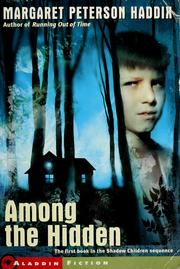
Among the Hidden
Twelve-year-old Luke, an illegal third child, befriends Jen and faces the cost of stepping out of hiding.
2,923-word summary · 13 min read
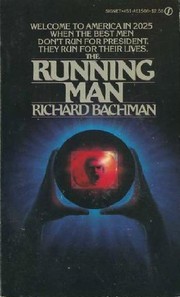
The Running Man
Out of work in a broken 2025, Ben Richards enters a televised manhunt where each hour alive pays cash.
2,922-word summary · 13 min read
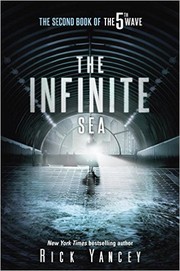
The Infinite Sea
Cassie and Squad 53 wait out winter in a hotel while Ringer is retaken and learns the truth behind the 5th Wave.
2,985-word summary · 13 min read
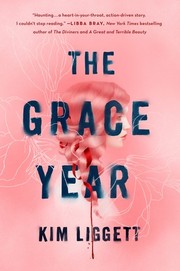
The Grace Year
In Garner County, Tierney James faces her grace year exile, where girls are blamed for magic and must survive a year outside the fence before they can return…
2,817-word summary · 13 min read
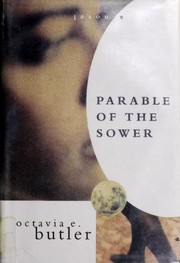
Parable of the Sower
Lauren Olamina flees burning Robledo with her Earthseed verses and walks north to plant a new faith.
2,311-word summary · 10 min read
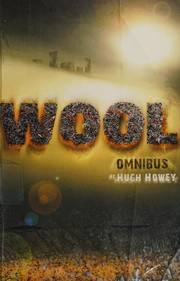
Wool Omnibus
In a buried silo, a sheriff asks to go outside, and a mechanic learns why no one returns from cleaning.
2,095-word summary · 9 min read
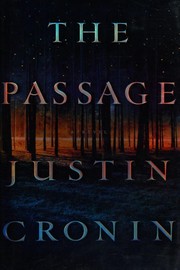
The Passage
A failed Army experiment makes blood-hungry virals, and a quiet girl named Amy may hold the answer a century later.
2,755-word summary · 12 min read

The Power
Girls gain electric skeins and the world reorders through four witnesses.
2,070-word summary · 9 min read
The Kill Order
Mark survives flares and Flare virus as WICKED forms thirteen years before maze.
2,129-word summary · 9 min read
Attack on Titan, Vol. 1
Humanity hides behind three walls until the Colossal Titan breaks Wall Maria and Eren Yeager vows to destroy every Titan.
2,357-word summary · 10 min read
The Death Cure
Thomas refuses WICKED's final test, remembers too much, and runs with the Gladers toward a last cure and a ship north.
2,955-word summary · 13 min read