
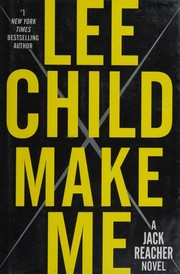
Make Me
2,352-word summary 10 min read 432 pages in the book
- First published
- 2015
- Publisher
- Delacorte Press
- Pages
- 432
- ISBN
- 9780804178778
- Series
- Jack Reacher (#20)
Reading options
What's inside (9 sections)
I came to this book expecting a rerun. Once a series reaches its twentieth entry, the hero tends to harden into a set of reflexes and the plots start to feel like the same chase wearing a different coat. What surprised me is how much of Make Me is built around a place instead of a pursuit. Reacher spends the opening chapters wandering a small Midwestern town trying to learn why it is called Mother's Rest, and Child lets that quiet question sit for a while before anybody throws a punch. It is a patient way to start a thriller, and it made me trust the story more than I thought I would.
It is also the first Reacher novel I read in the third person. The earlier books I know best put you inside his head in the first person, pleasingly blunt and often very funny. Here the camera sits a little further back. You still get his calculations, but you also get the town, the people around him, and a sense of a machine being watched rather than a voice you are stuck inside. It changes the texture of the book. Some of the old wisecracks land differently at that distance.
A town that will not explain itself
Reacher arrives in Mother's Rest on foot, with no plan beyond satisfying his curiosity about the name. He asks around. Nobody will tell him. The locals are polite in the way a locked door is polite, and the less they say, the more he wants to stay. This is comfortable territory for him, reading the mood of a place better than the people who have lived there all their lives. He notices which answers come too quickly and which questions get dodged.
Child spends real time on the texture of the place, and it pays off. Mother's Rest is not drawn as a quaint postcard with a dark secret underneath, the way a lesser thriller would do it. It feels like an actual small town where everybody knows why everybody else is there, and where a stranger asking the wrong question gets a polite answer that means nothing. I believed the silence before I understood it, which is exactly what a good mystery location should do. By the time the violence arrives, you feel like you have spent a few days in the place yourself.
He is not the only outsider pushing at the seams. Michelle Chang, a Chinese American woman who used to work for the FBI and now does private investigation work, is in town looking for her colleague Keever. Keever disappeared while working a lead, and Chang has almost nothing to go on. She does not even know who Keever's client was or what the job involved. Reacher's suspicion of the town's aloofness pulls him into her search, and the two of them make an odd but workable pair. Both are used to being underestimated, and neither is willing to take no for an answer.
The early pages move on conversation and observation rather than action. Reacher and Chang talk to people, get nowhere, and keep circling the same few facts. That could have felt sluggish in a lesser book. Here it reads like gathering evidence, and the payoff arrives in small pieces that only make sense later.
The name on the crumpled note
The first real break comes in Keever's motel room. Reacher finds a note that has been crumpled and thrown away, with the name Maloney and a phone number on it. The number leads to Westwood, the science editor at the Los Angeles Times, who has been fielding calls from conspiracy theorists. That detail matters. The world Maloney was calling about is one that normal newsrooms mostly ignore, which is exactly why a man could disappear chasing it. Westwood himself is a carefully drawn figure. He is not a crusading editor or a corrupt one, just a working journalist who has learned to screen a certain kind of call, and who recognises a real story when two strangers walk in with evidence. The exchange of exclusivity for help is the kind of deal Reacher would make without thinking twice, and it is refreshing to see a book let a reporter be useful rather than annoying.
Reacher and Chang go to Keever's home and find it torn apart, with all of his investigative notes gone. That settles the question of whether he simply walked away. Reacher believes Keever stumbled onto something and was killed for it. They travel to Los Angeles and meet Westwood, and the bargain they strike is a nice piece of pragmatism: they will hand him exclusive rights to whatever story they uncover if he helps them find it. Westwood gives them the numbers of callers who fit the profile of Keever's mystery client, and one of those numbers belongs to a man named Peter McCann in Chicago.
Maloney, it turns out, was a name on the way to something else. Following it takes the pair out of the small town and into a much wider and uglier network. Child is good at this stage of the book, the point where a local oddity suddenly expands into something with reach and money behind it.
A trail of hired killers
Peter McCann's house in Chicago is empty when Reacher and Chang arrive. A hitman named Hackett shows up, and Reacher deals with him and takes his handgun. The fight is short and practical, with none of the showmanship that later action writers borrowed from this series. Reacher does not enjoy it or explain it. He simply does what is required and moves on to the neighbor's door. That economy is one of the reasons the character has lasted so long. From a neighbor they learn that Peter had a sister, which sends them to Phoenix. More hired attackers are waiting there. Chang's contacts back at the Bureau identify the men as employees of a Ukrainian crime lord named Merchenko, and Reacher works out that Merchenko is taking orders from somebody who lives in Mother's Rest.
Then comes the moment that stretched my patience a little. Reacher and Chang happen to spot Merchenko sitting outside his own nightclub, entirely by coincidence, and Reacher kills him in broad daylight. I know coincidences happen in this series, and Child has used bigger ones before, but this one felt like the plot handing him a gift. The scene is charged and readable, yet I closed that chapter wishing the trail had been earned a bit more carefully.
Still, the killing works as a turn. With Merchenko out of the way, the people behind him lose their buffer, and Reacher can start asking what Peter McCann was actually investigating. The answer involves Peter's son Michael, a recluse who suffered from anhedonia and spent most of his time online. Peter had been trying to find out what happened to him.
The site on the pig farm
Back in Los Angeles, Reacher and Chang meet Westwood again and lay out the shape of it. The call about Maloney had concerned the deep web, and Michael had been drawn into that world. Westwood introduces them to a hacker in Palo Alto who searches the hidden corners of the internet and finds a site based in Mother's Rest offering assisted euthanasia. Michael had been talking to people who wanted to die and had arranged to meet one of them in the town to go through with it together.
The hacker in Palo Alto is a brief but useful presence. He does not become a sidekick or a comic relief computer genius, which is a relief in a genre that often treats technical skill as magic. He searches, he finds, and he hands over the address. Child keeps the deep web material at a level that a general reader can follow, without a page of terminology about routing or encryption. The point is not the technology. The point is that a town nobody pays attention to can hide an entire industry on the far side of a browser window.
That is the hinge of the whole book. The strange name, the silent locals, the missing men, the men with guns: all of it leads to an isolated pig farm that has been turned into a fortified operation. Reacher, Chang, and Westwood plan an assault, and the raid that follows is the most brutal sequence in the novel. Armed employees are killed, and the place is taken.
What they find inside explains why Keever died. The farmhouse has been converted into a film studio. People were recruited from the deep web with promises of painless, comfortable euthanasia, and when they arrived they were forced to appear in snuff films that were sold online. More than two hundred victims were murdered there before Keever found the operation. It is a genuinely sickening idea, and Child does not soften it. The scale of it gives Reacher's violence a clear moral purpose, which is not always the case in these books. The raid itself is grim work, and the book does not pretend that clearing a place like this is clean or quick. Reacher and his team go in prepared to kill, and the armed employees do not get a lecture first. What lingers after the shooting stops is the list of names they find, and the realization of how long the operation ran before anyone outside the town noticed.
What the title is really doing
The phrase Make Me works on a couple of levels. On the surface it echoes the request of the people who came to that farm, the ones asking to be helped out of their lives. Against that, Reacher is a man who makes others pay, and the book keeps returning to the idea of forcing a reckoning on people who believe they are beyond one. By the end he and Chang have avenged Keever, Peter, and Michael, and then they do something I did not expect: they go to Milwaukee and spend a little time together, with no gunfire and no chase.
That quiet ending is the part I kept thinking about. Reacher is usually a drifter who leaves town as soon as the work is done. Letting him sit still for a while, even briefly, gives the story a warmth the series rarely shows. It also raises the question of what Chang is doing in his life, and the book leaves that open rather than tying it into a neat bow.
The switching to third person is worth a word on its own. I found that I missed Reacher's voice in the early chapters, that flat and funny way he had of describing the world. But the wider view lets Child show how other people see him, which is useful when the story is partly about a woman who has been trained to read men like him. By the time the raid arrives, the tradeoff felt worth it.
The fair criticisms
This is a long book at 432 pages, and the middle section drags. There are a lot of drives to airports, conversations with neighbors, and phone calls that mostly restate what is already known. The coincidence with Merchenko is the lowest point for me, because the book has been careful up to then and suddenly stops being careful. The villains are also almost comically evil, running a snuff film operation on a pig farm, which removes some of the moral ambiguity that made the best Reacher novels interesting.
The villains' plan also depends on a coincidence that the book asks you to accept twice: that a journalist's caller list leads to the right man, and that the crime lord is sitting outside his own club at the exact moment Reacher drives past. I forgave the first because it is the kind of break investigations sometimes get. The second felt like the author opening a door for his hero.
The handling of suicide and euthanasia is another thing to flag. The subject is central, and Child treats the victims with sympathy, but the plot uses their desperation as fuel for a revenge story. If you are sensitive to that material, this is a heavier read than the average entry in the series, and the farmhouse reveal is not something you can unsee.
None of that makes it a bad book. It makes it an uneven one that is strongest at the beginning and at the end, with a routine investigative stretch in between. The character of Michelle Chang is the best thing in it, a competent and wary presence who pushes Reacher rather than simply following him, and I would happily read another book that pairs them again.
Where it sits for a new reader
Make Me is the twentieth Jack Reacher novel, published in 2015 by Delacorte Press in the United States, and it comes after Personal in the sequence. A newcomer could read it on its own, since the case is self-contained and Chang has no history with Reacher, but you would miss the weight of a two-decade run and the pleasure of noticing what has changed. The third person voice, the darker subject matter, and that unexpectedly gentle ending all land harder if you know where he has been.
Readers who want the classic first-person Reacher experience should start with Killing Floor or One Shot instead. This book is a late-run experiment that keeps the muscles and changes the camera. It also sits immediately before Night School in the sequence, so picking it up here gives you a clean entry point into the later stretch of the series.
For a longtime reader, this is not the first Reacher I would hand to someone, but it is far from the last. It has a strong opening, a memorable partner for its hero, a genuinely vile conspiracy, and an ending that suggests the drifter might be capable of staying put for a moment. That is more than a formula would promise, and it is enough to make the book worth the time.
FAQ
Is Make Me part of the Jack Reacher series?
Yes. It is the twentieth Jack Reacher novel, published in 2015 by Delacorte Press, and it follows Personal in the sequence.
Why does Make Me feel different from earlier Reacher books?
Child tells this one in the third person rather than Reacher's usual first-person voice, and it ends with him spending quiet downtime in Milwaukee with Michelle Chang.
What is the euthanasia operation on the pig farm?
A deep web site lured suicidal people to Mother's Rest with promises of painless euthanasia, then forced them into snuff films sold online. More than two hundred victims were killed before Keever found the operation.
Similar books
More from Jack Reacher first, then related titles.

Killing Floor
Ex-military policeman Jack Reacher is arrested for murder in Margrave, Georgia, then learns the victim was his brother.
2,872-word summary · 13 min read
Tripwire
In Key West, Jack Reacher follows a murdered detective's trail to New York, an old mentor's files, and a loan shark stealing a dead soldier's name.
2,688-word summary · 12 min read
Running Blind
Jack Reacher must catch a killer who murders women with no forced entry and no trace.
2,008-word summary · 9 min read

Echo Burning
Reacher hitches a ride with a Texas woman who wants her abusive husband killed, then has to prove she did not murder him when he comes home.
2,209-word summary · 10 min read
Without Fail
Reacher is asked to test vice presidential security by planning to kill.
2,084-word summary · 9 min read
Persuader
Reacher goes undercover in a Maine crime family to find a missing DEA agent and the man he once failed to kill, and Lee Child keeps the whole thing tight,…
2,278-word summary · 10 min read
The Enemy
In January 1990, MP major Jack Reacher investigates a dead general, a stolen briefcase, and three murders tied to an Army power struggle.
2,123-word summary · 9 min read

One Shot
Six shots, five dead in Indiana, and James Barr asks for Jack Reacher. Reacher leaves Miami to test the proof in this 2005 Delacorte Press thriller, 376 pages,…
2,972-word summary · 13 min read
The Hard Way
A man Reacher sees drive a ransom-laden Mercedes pulls him into a retired colonel's hunt for his missing wife and stepdaughter.
2,637-word summary · 12 min read

Bad Luck and Trouble
A deposit of $1,030 summons Jack Reacher back to his old army unit, which is being picked off one name at a time.
2,366-word summary · 11 min read
Gone Tomorrow
Reacher stops a suicide bomber on the subway, then hunts her handlers.
2,308-word summary · 10 min read

61 Hours
A bus crash strands Jack Reacher in a snowbound South Dakota town where a drug gang, a corrupt police force, and a single witness are on a collision course.
2,227-word summary · 10 min read

Worth Dying For
Reacher stops for one night in rural Nebraska and finds a family that runs the county, a missing girl and a shipment worth killing for.
2,021-word summary · 9 min read
The Affair
In 1997, Reacher goes undercover in a Mississippi town where a murder near an army base collides with a senator's power. The case that ends his military career.
2,039-word summary · 9 min read
A Wanted Man
Hitchhiking home to Virginia, Jack Reacher accepts a ride from three strangers and finds himself inside a murder case that someone has decided to erase.
2,788-word summary · 12 min read
Never Go Back
Reacher returns to his old military unit to find Major Susan Turner jailed and two invented cases hiding an opium smuggling ring.
2,245-word summary · 10 min read
The Midnight Line
A West Point class ring in a Wisconsin pawnshop sends Jack Reacher across the Midwest, from a biker's lie to a wounded veteran hiding from the opioid trade.
2,590-word summary · 12 min read
The 5th Horseman
Two linked cases pull Lindsay Boxer and the Women's Murder Club into a hospital full of strange deaths and a luxury-car murder spree.
2,609-word summary · 12 min read
Zero Day
Army investigator John Puller is sent alone to a West Virginia coal town to solve a colonel's murder, and finds a much larger secret buried nearby.
3,434-word summary · 15 min read
The Running Grave
In the seventh Cormoran Strike novel, Robin goes undercover inside a Norfolk cult while Strike digs into a child's death from decades earlier.
2,615-word summary · 12 min read
The Keeper of Lost Causes
Jussi Adler-Olsen introduces Carl Mørck and Department Q, a Copenhagen cold-case unit in a basement, and a missing politician whose file refuses to stay closed.
2,759-word summary · 12 min read
Jack & Jill
A senator is killed with a nursery-rhyme calling card as a child is murdered near Alex Cross's home. The third Alex Cross novel pulls him toward two cases, one…
2,646-word summary · 12 min read
Fractured
In Karin Slaughter's second Will Trent novel, a mother kills the wrong man in an Atlanta mansion, and a GBI agent with a hidden reading difficulty finds a…
2,219-word summary · 10 min read
Falling
A pilot is told his family will be killed unless he crashes his Los Angeles to New York flight. Newman's debut turns one clean premise into a relentless…
2,507-word summary · 11 min read

What She Knew
Rachel lets her eight-year-old son run ahead in a Bristol park, and the nine-day search turns her into a suspect in the public eye.
2,952-word summary · 13 min read

The Beach House
A young valet is beaten to death at a Hamptons party, and his law-student brother spends a year building a case against the family that covered it up.
2,049-word summary · 9 min read

Six Years
A professor who promised to forget the woman he loved sees her husband's obituary and discovers that the wedding, the marriage, and the woman herself may never…
2,076-word summary · 9 min read

Rules of Prey
Minneapolis detective Lucas Davenport hunts a killer who leaves a new rule at every scene and treats murder as a game of wits.
1,914-word summary · 9 min read

4th of July
Lindsay Boxer shoots two armed teenagers in self-defense, faces a wrongful-death trial, and spends her leave chasing a string of throat-slashing murders in…
2,192-word summary · 10 min read

Still Missing
A realtor is abducted at a Vancouver Island open house and held for more than a year. Told through therapy sessions, the novel follows her escape and the hunt…
2,466-word summary · 11 min read