
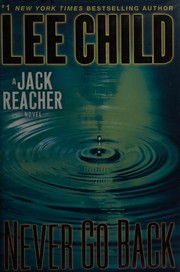
Never Go Back
2,245-word summary 10 min read 416 pages in the book
- First published
- 2013
- Publisher
- Delacorte Press
- Pages
- 416
- ISBN
- 9780385344340
- Series
- Jack Reacher (#18)
Reading options
What's inside (9 sections)
I picked up Never Go Back right after A Wanted Man, which ends with Reacher heading toward Virginia to meet a woman he has never met. This is the book where he finally arrives, and the arrival goes badly almost at once. Lee Child published it in 2013. The first US hardcover from Delacorte runs 416 pages, and it is Jack Reacher book eighteen. I read it in two sittings and came away with a clearer sense of how Child manages a complicated plot than I expected.
Back to the 110th
The book starts at a motel outside Washington, where two men confront Reacher and tell him he has brought his old unit into disrepute. They order him to leave town. Reacher refuses, subdues both of them in a fistfight, and then the book steps back to show how he got there. Earlier that day he had gone to the headquarters of the 110th MP Special Investigations Unit to meet its commander, Major Susan Turner. That was the whole point of his trip. She was expecting him. When he arrives, she has been relieved of command.
Her replacement is Colonel Morgan, who tells Reacher that he is under investigation in two cases. One is a suspected homicide from sixteen years earlier. The other is a lawsuit from a woman named Candice Dayton, who claims she and Reacher had an affair that produced a fourteen year old daughter named Samantha. Reacher points out that the military has no authority over a civilian. Morgan reinstates him and gives him a room at the motel, which is where the fight in the opening happens. Child clearly enjoys the joke of a man being handed official power and immediately using it to break two men's noses.
Reacher learns that Turner has been jailed on suspicion of taking a bribe. He goes to see her and is told she does not want to see him. That refusal is the first real clue that something is wrong beyond ordinary military politics. A woman who is about to be destroyed does not usually turn away the one person who might help.
Reacher has spent the last few books drifting toward this meeting without saying much about why. The 110th was his unit, the one place where his particular set of skills had a name and a purpose. Susan Turner is the person who now holds the job he once understood better than anyone. Walking into her headquarters should have been a homecoming. Instead Child gives us a man in a civilian coat being processed by soldiers who would have saluted him a few years earlier. The mismatch is what makes the scene sting. Reacher is treated as a problem to be managed, and his first response is to insist on being taken seriously.
Two cases and a room at the motel
The next morning Reacher meets his lawyers, Major Helen Sullivan and Captain Tracy Edmonds, and gets the details of both cases. He also asks Colonel Moorcroft, Turner's attorney, to get her released. When Reacher returns to headquarters, Morgan has vanished and two soldiers from the 110th serving in Afghanistan are missing. Reacher uses his reinstated authority to order a search. It is a small act, but it embarrasses Morgan in front of his own staff, and Reacher is told he is banned from the building and from issuing any more orders.
Then the 75th MP police arrive, led by Warrant Officer Pete Espin. They take Reacher into custody and drive him to the same prison where Turner is being held. Moorcroft has been badly beaten, and Reacher is treated as a suspect in that attack. This is the part of the book where the plot starts folding in on itself. Every institution Reacher turns to is either compromised or watching him. The people who should protect a military investigator are the people feeding him into a system designed to bury him.
I liked the prison sequence. Reacher arranges a meeting with Sullivan to buy time until Turner arrives, then stages an escape by stealing her identification and passing it to Turner. They leave in Turner's car and are intercepted by Metro police. They get away on foot and make it to Berryville, Virginia. It is a good chase because it depends on paperwork and timing rather than a high speed crash. Reacher's skills are still physical, but here he spends as much energy on who is allowed to go through a door as on who can win a fight.
The men who are not soldiers
On the road to Berryville, Reacher tells Turner what he has worked out. Her soldiers in Afghanistan were not missing. They were assassinated, and the charges against her were invented to cover something illegal. They are being tracked by men who do not behave like military police, and the pair hitch a ride into West Virginia. Child keeps the direction changes coming, and I found myself slowing down to keep the names straight.
The tail is one of the better details in the book. These followers do not tail a car in the cinematic way. They appear at a distance, they ask questions of clerks, and they seem to know where Reacher and Turner will be before either of them has decided. Child uses that unease instead of explosions. A few pages of quiet driving in West Virginia do more to make me believe the conspiracy than a bigger fight would have. Reacher is used to enemies who want to kill him. Enemies who want to watch him are harder for him to read, and watching him struggle is a nice change.
They steal money and a car from a dead meth dealer named Claughton. His relatives identify the car, track Reacher and Turner to a motel, and confront them. Reacher intimidates them into backing off and takes one of their trucks. It is a messy scene and deliberately unheroic. Reacher is not robbing a criminal for a noble reason. He is a man with no car and no money who needs both, and the people he bullies are frightened in an ordinary way. Child lets that ugliness sit there.
Turner explains the shape of the conspiracy as they drive. The Afghanistan mission was connected to a Pashtun elder named Emal Zadran. She believes Morgan, the men following them, and people higher in the chain of command are working together to protect Zadran. Two of those people are referred to by the code names Romeo and Juliet. She also insists that Reacher go to Los Angeles to confront Candice Dayton, because the paternity claim has to be dealt with rather than ignored. Turner is sharp company in this book. She is under arrest for most of the early chapters, and when she is free she does the thinking while Reacher does the breaking.
Romeo, Juliet, and the birth certificate
The Los Angeles section could have been a weak detour, and in some ways it is. Reacher and Turner track down Samantha, and Espin confirms that the paternity claim is false. Someone using the name Romeo arranged a falsified birth certificate through a corrupt lawyer and paid Candice a hundred dollars to sign it. Sullivan also finds that the homicide charge against Reacher was fabricated. Both cases were built to distract him. The money involved is almost insultingly small, which is the point. The whole legal apparatus was used to stop a man for the price of a bribe.
I found this hard to believe in the moment and accepted it once the larger operation became clear. A fake daughter and a fake murder charge are not the goal. They are noise, designed to put Reacher somewhere else while other things happen. Child is better at this kind of machinery than he is at the emotional side of it. Candice and Samantha are functional figures in a plot, and the book moves through them quickly. Reacher has no real reaction to the idea of a daughter he never knew, which fits his character and also makes the subplot feel hollow.
What works is the steadiness of the investigation. Edmonds, the young lawyer, keeps producing the small facts that let Reacher and Turner move. Sullivan takes risks with her career. Espin turns out to be more useful than his uniform suggests. Child gives each of them a job in the structure, and the book has a satisfying quality of pieces clicking into place. For a long stretch I was less interested in who would be punched than in which document would turn up next.
Fort Bragg and the last room
Through Edmonds, Reacher and Turner learn about an illicit operation run through Fort Bragg. It is controlled by Crew Scully and Gabriel Montague, both Deputy Chiefs of Staff, and it smuggles contraband in empty ordnance crates. That detail is what makes the conspiracy feel plausible. The paperwork of the Army, the crates that move without scrutiny, the people high enough to sign for things without reading them. Reacher arranges for Morgan and Staff Sergeant Ezra Shrago, one of the smugglers, to be arrested. Then he finds Scully and Montague in Georgetown, where both men choose to die rather than be taken.
The ending is unusually busy for a Reacher book. Morgan and Shrago reveal that Zadran had been supplying the bosses with opium. Turner's name is cleared and she returns to command of the 110th. Reacher drops his phone in a trash can and sits on a bench waiting for the next bus. I like that last image. After all the encrypted calls and tracked vehicles, he gets rid of the phone and goes back to the simplest form of travel available.
Child's 2016 film adaptation starring Tom Cruise changes plenty of this, especially the ending and the scale of the conspiracy. The book is more tangled and more interests me for that reason. It was also written in third person, which gives Child room to move between Turner, Morgan, and the lawyers. Reading it after the first person Reacher novels, I noticed how much the change in voice alters the feel. Reacher becomes a force inside a larger machine rather than the only mind we are allowed to know.
What held and what did not
The plot holds together better than it has any right to. There are two invented legal cases, a missing soldiers story, a Pashtun supplier, a pair of senior officers, a code name romance, and a smuggling route through Fort Bragg. Child keeps them attached to the same question: who needed Turner out of the way, and why. When the answer arrives, it accounts for nearly every strange thing that happened in the first hundred pages. That is real craft, even if the machinery is sometimes visible.
The action is good but not his best. The opening fistfight is sharp, the prison escape is clever, and the confrontation with Claughton's relatives has a nasty honesty to it. There is no single set piece here that matches the best moments in the earlier books. The fights tend to end quickly, which is realistic, and Child seems more interested in the flow of information than in displaying Reacher's skills. Readers who came for large-scale violence may find this one restrained.
The paternity storyline is the weakest thread. It asks us to accept that a senior conspiracy would use a hundred dollar birth certificate as a lever, and that Reacher would shrug off a possible daughter. The book never gives Candice or Samantha enough presence to make the threat personal. Turner is the more interesting relationship here, and I wished Child had spent those pages on her instead. She is competent, funny in a dry way, and clearly the equal of the men around her, yet much of her time is spent being rescued or locked up.
Who should read it
If you are reading the series in order, this one matters. It follows A Wanted Man directly and sets up Personal, and the bond between Reacher and Turner is referred to again later. If you are new to Reacher, start with Killing Floor instead. This book assumes you already know why the 110th and the Army matter to him, and it is more interested in consequences than in explaining the man.
The title earns its place. Never Go Back is a warning Reacher has ignored his whole life, and this is the book where going back costs him the most. He does get his old unit's commander cleared and he does walk away, but the version of the Army he returned to is gone. Child understands that a series hero cannot really retire, so he gives Reacher a bench and a bus instead of a home. That is a small ending for a book with generals in it, and it is the right size for this character.
I closed it with mixed feelings that lean positive. The conspiracy is intricate and mostly convincing, the dialogue is clean, and Turner is a welcome presence in a series that often leaves its women at the edge of the story. The daughter plot is thin and the ending tidies up too many threads at once. Still, Reacher sitting on a bench with no phone and no orders felt like the right note. After eighteen books, Child can still make a man waiting for a bus feel like an ending worth reading.
FAQ
When was Never Go Back published and where does it fit in the series?
Lee Child published it in 2013, with Bantam Press in the UK on August 29 and Delacorte Press in the US on September 3. It is Jack Reacher book eighteen, between A Wanted Man and Personal. The first US hardcover runs 416 pages.
Who is Major Susan Turner?
Turner commands the 110th MP Special Investigations Unit and is the person Reacher traveled to Virginia to meet. She is jailed on a fabricated bribery charge, cleared by the end, and returns to command.
What is the conspiracy in Never Go Back?
Senior officers used empty ordnance crates at Fort Bragg to smuggle contraband and took opium from Pashtun elder Emal Zadran. They framed Turner and invented two cases against Reacher to cover their tracks.
Similar books
More from Jack Reacher first, then related titles.

Killing Floor
Ex-military policeman Jack Reacher is arrested for murder in Margrave, Georgia, then learns the victim was his brother.
2,872-word summary · 13 min read
Tripwire
In Key West, Jack Reacher follows a murdered detective's trail to New York, an old mentor's files, and a loan shark stealing a dead soldier's name.
2,688-word summary · 12 min read
Running Blind
Jack Reacher must catch a killer who murders women with no forced entry and no trace.
2,008-word summary · 9 min read

Echo Burning
Reacher hitches a ride with a Texas woman who wants her abusive husband killed, then has to prove she did not murder him when he comes home.
2,209-word summary · 10 min read
Without Fail
Reacher is asked to test vice presidential security by planning to kill.
2,084-word summary · 9 min read
Persuader
Reacher goes undercover in a Maine crime family to find a missing DEA agent and the man he once failed to kill, and Lee Child keeps the whole thing tight,…
2,278-word summary · 10 min read

The Enemy
In January 1990, MP major Jack Reacher investigates a dead general, a stolen briefcase, and three murders tied to an Army power struggle.
2,123-word summary · 9 min read

One Shot
Six shots, five dead in Indiana, and James Barr asks for Jack Reacher. Reacher leaves Miami to test the proof in this 2005 Delacorte Press thriller, 376 pages,…
2,972-word summary · 13 min read
The Hard Way
A man Reacher sees drive a ransom-laden Mercedes pulls him into a retired colonel's hunt for his missing wife and stepdaughter.
2,637-word summary · 12 min read

Bad Luck and Trouble
A deposit of $1,030 summons Jack Reacher back to his old army unit, which is being picked off one name at a time.
2,366-word summary · 11 min read
Gone Tomorrow
Reacher stops a suicide bomber on the subway, then hunts her handlers.
2,308-word summary · 10 min read

61 Hours
A bus crash strands Jack Reacher in a snowbound South Dakota town where a drug gang, a corrupt police force, and a single witness are on a collision course.
2,227-word summary · 10 min read

Worth Dying For
Reacher stops for one night in rural Nebraska and finds a family that runs the county, a missing girl and a shipment worth killing for.
2,021-word summary · 9 min read

The Affair
In 1997, Reacher goes undercover in a Mississippi town where a murder near an army base collides with a senator's power. The case that ends his military career.
2,039-word summary · 9 min read
A Wanted Man
Hitchhiking home to Virginia, Jack Reacher accepts a ride from three strangers and finds himself inside a murder case that someone has decided to erase.
2,788-word summary · 12 min read
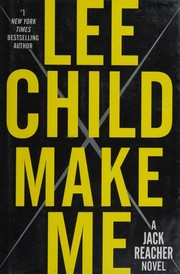
Make Me
Reacher drifts into a quiet Midwestern town and finds a missing investigator, a trail of killers, and a deep web secret.
2,352-word summary · 10 min read
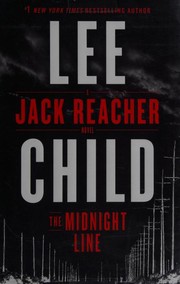
The Midnight Line
A West Point class ring in a Wisconsin pawnshop sends Jack Reacher across the Midwest, from a biker's lie to a wounded veteran hiding from the opioid trade.
2,590-word summary · 12 min read

The 5th Horseman
Two linked cases pull Lindsay Boxer and the Women's Murder Club into a hospital full of strange deaths and a luxury-car murder spree.
2,609-word summary · 12 min read
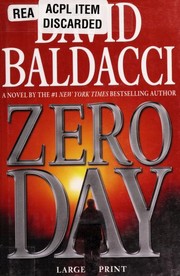
Zero Day
Army investigator John Puller is sent alone to a West Virginia coal town to solve a colonel's murder, and finds a much larger secret buried nearby.
3,434-word summary · 15 min read
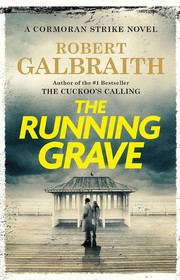
The Running Grave
In the seventh Cormoran Strike novel, Robin goes undercover inside a Norfolk cult while Strike digs into a child's death from decades earlier.
2,615-word summary · 12 min read
The Keeper of Lost Causes
Jussi Adler-Olsen introduces Carl Mørck and Department Q, a Copenhagen cold-case unit in a basement, and a missing politician whose file refuses to stay closed.
2,759-word summary · 12 min read
Jack & Jill
A senator is killed with a nursery-rhyme calling card as a child is murdered near Alex Cross's home. The third Alex Cross novel pulls him toward two cases, one…
2,646-word summary · 12 min read
Fractured
In Karin Slaughter's second Will Trent novel, a mother kills the wrong man in an Atlanta mansion, and a GBI agent with a hidden reading difficulty finds a…
2,219-word summary · 10 min read
Falling
A pilot is told his family will be killed unless he crashes his Los Angeles to New York flight. Newman's debut turns one clean premise into a relentless…
2,507-word summary · 11 min read

What She Knew
Rachel lets her eight-year-old son run ahead in a Bristol park, and the nine-day search turns her into a suspect in the public eye.
2,952-word summary · 13 min read

The Beach House
A young valet is beaten to death at a Hamptons party, and his law-student brother spends a year building a case against the family that covered it up.
2,049-word summary · 9 min read

Six Years
A professor who promised to forget the woman he loved sees her husband's obituary and discovers that the wedding, the marriage, and the woman herself may never…
2,076-word summary · 9 min read

Rules of Prey
Minneapolis detective Lucas Davenport hunts a killer who leaves a new rule at every scene and treats murder as a game of wits.
1,914-word summary · 9 min read

4th of July
Lindsay Boxer shoots two armed teenagers in self-defense, faces a wrongful-death trial, and spends her leave chasing a string of throat-slashing murders in…
2,192-word summary · 10 min read

Still Missing
A realtor is abducted at a Vancouver Island open house and held for more than a year. Told through therapy sessions, the novel follows her escape and the hunt…
2,466-word summary · 11 min read