
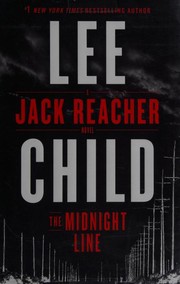
The Midnight Line
2,590-word summary 12 min read 368 pages in the book
- First published
- 2017
- Publisher
- Delacorte Press
- Pages
- 368
- ISBN
- 9780399593482
- Series
- Jack Reacher (#22)
Reading options
What's inside (8 sections)
I came to this one with a small complaint in mind. I had heard from Reacher readers that the later books had grown slower and more earnest, and I wondered whether the run of lean, mean novels was over. The Midnight Line came out in November 2017 from Delacorte Press, and it is the twenty-second Jack Reacher novel. It is about a ring more than anything else, and about what a person will do to get it back to the right owner. That sounds like a small engine for a novel, but Child knows how to make small things carry weight.
The book starts with Reacher leaving a woman named Michelle Chang. She has written him a note, the kind that says she enjoys his company but cannot live his way, always moving, never putting down roots. He takes the bus anyway, because his rule is to get on the first one out of town and see where it goes. I have always liked that about him. He is not running from anything so much as refusing to stand still. In Wisconsin he wanders into a pawnshop and sees a class ring in the window. It is from West Point, class of 2005. It is tiny, made for a woman, and inside are the initials S.R.S. He buys it for forty dollars and lets the bus pull away without him.
That is the whole hook, and it is a good one. A West Point ring is not a thing someone sells casually. Four years of hard work are locked into it. Reacher figures it was stolen, and once he figures that he cannot leave it there. The pawnbroker says a local biker named Jimmy Rat brought it in. Reacher finds Jimmy at a bar, and when Jimmy's friends try to jump him, Reacher handles six of them in a way that is quick and not especially gentle. Jimmy talks. The ring came from a man named Arthur Scorpio, who works out of a laundromat in Rapid City, South Dakota. Reacher heads there, knowing Jimmy has already phoned ahead to warn Scorpio.
Rapid City, and two other people on the same trail
What lifts this book above a simple revenge march is that Reacher is not the only person looking into Scorpio. In Rapid City he crosses paths with Gloria Nakamura, a police detective who has spent years trying to build a case against Scorpio and has never managed to make one stick. She knows he is dirty. She cannot prove it. Then there is Terrence Bramall, a private investigator hired by a woman named Tiffany Jane Mackenzie, who wants him to find her missing twin sister. Both of them are circling the same laundromat for different reasons, and Reacher's arrival stirs the pot.
I enjoyed the way Child lets these two become more than helpers. Nakamura has a patience and a frustration that feel real; she has been at this so long that she can almost smell the case but cannot grab it. Bramall is quieter, a retired federal agent doing missing-person work, and his dry competence makes a nice contrast with Reacher's blunt force. Child gives them each a private reason to care, so the investigation feels shared rather than like Reacher dragging two bystanders along.
Reacher calls a general at West Point from a pay phone and learns who the ring belonged to. The initials stand for Serena Rose Sanderson, class of 2005, a cadet who finished near the top of her class and went into the infantry. She served several tours in Iraq and Afghanistan, earned a Bronze Star and a Purple Heart, and then dropped off the map a few years ago. Her home state was Wyoming. The general, who is sympathetic, tells Reacher enough to confirm that the ring is real and that its owner is not someone who would sell it. That confirmation matters, because up to that point Reacher is working on instinct.
At the laundromat, Reacher lets Scorpio's men take him in, then deals with them fast. Scorpio is a fence who handles stolen goods and, it turns out, much worse. Under pressure he gives Reacher a name: Seymour Porterfield, called Sy, who traded the ring for laundry services six weeks earlier. But Scorpio is not done. Once Reacher leaves, he orders an associate named Billy in Wyoming to kill him. Nakamura's people pick that up on a wiretap, so from that moment the reader knows Reacher is walking into a trap he cannot see. That is one of Child's reliable tools, and he uses it well here.
Mule Crossing and the man who was supposed to be dead
Reacher goes to Mule Crossing, a small rural town in Wyoming, following Sy's last address. A shopkeeper tells him Sy has been dead for more than a year, killed by a bear, according to the story going around. That is the first solid sign that Scorpio lied about the timeline, and it tells Reacher the ring passed through more hands than he was told. Bramall shows up too, having followed phone records to the same place, and the two agree to work together for the time being.
They search Sy's house and find small signs that a woman had been living there. Women's boots, a pink comb, small athletic socks. A neighbor remembers seeing a slight woman in Sy's car, turning away, with something silvery about her. These clues are modest, and I liked that. Child is not tossing grand revelations at us. He is building a picture out of domestic leftovers, and the picture slowly points at Rose.
Mackenzie flies in from Chicago and turns out to be Rose's exact double: small, slender, wild red hair. Nobody in town recognizes her, which should be impossible if anyone has seen her twin. That is the clue that cracks the case open. Reacher, who noticed the Purple Heart, puts it together that Rose's wound was to her face, severe enough to change how she looks. DEA agent Kirk Noble arrives and fills in the wider picture. Pharmaceutical companies flooded the country with synthetic opioids, crackdowns pushed people toward cheaper heroin, and in parts of Wyoming and Montana the supply stayed strangely steady. Noble wants Reacher to report anything he finds about Rose or Billy.
The broader opioid material is where the book has some of its purpose. Child is not writing a policy brief, but he is clearly angry about the way painkillers moved through the country and the way people got cut off once they were dependent. He gives that anger a human face in Rose and in Sy, rather than turning it into a lecture. Sometimes he comes close to preaching, and I thought the passages about drug companies were the least lively part of the book. But the anger is earned by what happens to the characters, so I forgave it.
The cabin and the woman behind the ring
The group stakes out a dirt road and sees a dust-covered SUV with a small figure flinching at the window. Three locals ride up and tell them to leave, but they do not want a fight. Reacher asks them to make a video instead and take it to whoever sent them. They come back and lead the three of them deep into the hills to a cabin on a mountainside. Mackenzie goes in alone and comes out an hour later in tears. Rose wants to see Reacher next.
Inside, Rose wears a silver track top with the hood pulled tight. Below the neck she is her sister's double. Above it, the left side of her face is a web of scar tissue, pieced back together from fragments, and the right side is covered in aluminum foil smeared with antibiotic ointment. Five pieces of shrapnel from an improvised explosive device tore her face apart in Afghanistan. The device was hidden in a dead dog, and surgeons reattached what they could find in her helmet, but infection from the animal kept coming back. That is a hard scene, and Child writes it without looking away. He does not linger for shock value either. He gives us the facts, lets Rose say her piece, and moves on.
Rose confirms that she buys opioids and asks Reacher to hold the ring, because she is afraid she will trade it away again. That request is the emotional center of the book. The ring is not a clue anymore. It is the last solid thing she has that connects her to the person she used to be, and she knows she cannot be trusted with it while the drugs have her. Mackenzie wants to take her to Illinois, where she can be treated quietly. The problem is keeping her supplied during two weeks on the road, since someone in her condition cannot simply stop.
I want to say something about the tone here. Child has a habit of making Reacher a little too certain, a little too ready with a wisecrack, and this book has moments where that felt unneeded. A quieter hero might have suited a quieter story. But the bluntness works in the scenes of violence, and the scenes of violence are where the book comes alive. When Reacher realizes the locals have been paid to kill him, he moves first, and one of them dies by accident in the scuffle. It is not a clean or happy moment, and the book does not pretend it is.
The midnight delivery and the end of the line
A new dealer named Stackley takes over Billy's operation. Reacher forces the would-be killers to lure Stackley into a trap, and Rose, watching from the cabin with a rifle, shoots him. From there the group follows gas receipts to a highway maintenance depot near an Interstate 90 rest area, where dealers line up at midnight to pick up branded pharmaceutical boxes from a van. The title lands here. The midnight line is the queue of buyers, and it is also the end of the road for the supply chain Child has been tracing.
The raid is handled with a nice efficiency. Rose fires a warning shot to freeze everyone, Reacher covers them with a handgun, and Bramall and Mackenzie load boxes of oxycodone and fentanyl patches into their vehicle. They take a second car and get away to a motel. On the drive back toward Rapid City, Rose tells Reacher what happened to Sy. Wounded in Iraq and dependent on the opioids the military first prescribed and then stopped, Sy found out that a corrupt Marine colonel named Bateman was selling military pharmaceutical stock to Scorpio. Sy documented it and sent the evidence to the Defense Intelligence Agency. Instead of help he got a false arrest warrant meant to silence him. In the end he overdosed on purpose during a walk in the woods, with Rose beside him. She also explains that she was only at the site of the IED because she stood in for another officer, and that she does not feel betrayed so much as unlucky. That line stayed with me. It is a sad, honest thing to say, and it is said without any attempt to make it grand.
At the laundromat, Reacher confronts Scorpio, who confirms Bateman's name and admits that Sy had to go. Reacher puts him in a tumble dryer, which is a grim bit of justice and very much in the Reacher style. Nakamura, handcuffed in the back office by Scorpio, hears the confession and finally has the case she has wanted for years. She has worked out that Scorpio hacks pharmaceutical tracking systems to erase whole shipments from the records. DEA agent Noble gets enough to close the investigation, and Reacher makes a deal so Rose will not have to testify.
That night Rose asks for her ring back. Things have changed, she says; she will not trade it away again. She and Reacher spend the night together, which is a familiar note in the series and one Child handles lightly. In the morning Bramall calls Noble, and Reacher watches the car carry Rose, Mackenzie and Bramall toward Illinois. He hitches a ride with a carpenter heading to Kansas. The ending is deliberately low-key. Nobody gives a speech. The ring goes home, and Reacher moves on.
What works and what drags
I finished the book in two sittings and enjoyed most of it. The best part is the slow accumulation of small clues, the boots and the comb and the silvery color in a neighbor's memory. Child is very good at making a reader feel the click of a puzzle fitting together. The scenes with Rose are strong, and her account of the IED and of Sy's last walk gave the book a weight that a standard revenge thriller would not have. I also liked Nakamura. She has been waiting so long for a case that her frustration is its own kind of loneliness, and Child gives her a moment of triumph that feels deserved.
The complaints are real, though. This is one of the slower Reacher books, and the first third takes a while to get moving. If you came for the rapid-fire banter of the early novels, some of that is missing here, replaced by a more sober tone. Some of the plot turns lean on coincidence, and the number of people who just happen to converge on Mule Crossing stretched my belief a little. The book also keeps explaining the opioid crisis in ways that sometimes feel like an article dropped into the story. I did not mind it, but a reader looking for pure escapism might. And Reacher's habit of solving problems by hitting people is here in full, which will delight longtime fans and irritate anyone who wants a more careful hero.
There is also a question about how much the violence is meant to carry. Child writes the fights with the usual speed, but he does not seem to take much pleasure in them here. They feel like jobs Reacher has to do, not performances. That is a change from some of the earlier books, and I think it suits the material. A story about a wounded veteran hiding from a drug operation should not feel like a joke, and mostly it does not.
Who should read it
I would give this to a Reacher reader who wants the series at its most thoughtful. It is not the best place to start, because it assumes you already know and like Reacher's rhythms, and it opens with a woman from an earlier book whose story matters more if you know it. A newcomer can still follow everything, but some of the weight will be lost. If you want a fast, mean Reacher novel with a lot of smart-aleck dialogue, try one of the earlier ones first.
For what it is, though, The Midnight Line works. It takes a small object, a class ring too small for a man, and follows it through bikers, fences, detectives, drug dealers and one badly wounded woman, until it ends up back where it belongs. That is enough plot for a good novel, and Child trusts it. The book asks you to care about a ring and the person who cannot bear to lose it, and by the end I did. That is a modest achievement, and it is more satisfying than a lot of louder books manage.
FAQ
Is The Midnight Line part of a series?
Yes. It is the twenty-second Jack Reacher novel, published in November 2017. It follows Night School and was followed by Past Tense.
Do I need to have read the earlier Reacher books to understand it?
No. The mystery is self-contained, though it opens with Michelle Chang from an earlier book and assumes you know Reacher's habits. A newcomer can follow everything, but some of the weight is lost.
What does the title refer to?
It names the midnight queue of buyers who line up at a highway depot to collect pharmaceutical boxes from a van, and it also marks the end of the supply chain Reacher has been tracing.
Similar books
More from Jack Reacher first, then related titles.

Killing Floor
Ex-military policeman Jack Reacher is arrested for murder in Margrave, Georgia, then learns the victim was his brother.
2,872-word summary · 13 min read
Tripwire
In Key West, Jack Reacher follows a murdered detective's trail to New York, an old mentor's files, and a loan shark stealing a dead soldier's name.
2,688-word summary · 12 min read
Running Blind
Jack Reacher must catch a killer who murders women with no forced entry and no trace.
2,008-word summary · 9 min read

Echo Burning
Reacher hitches a ride with a Texas woman who wants her abusive husband killed, then has to prove she did not murder him when he comes home.
2,209-word summary · 10 min read
Without Fail
Reacher is asked to test vice presidential security by planning to kill.
2,084-word summary · 9 min read
Persuader
Reacher goes undercover in a Maine crime family to find a missing DEA agent and the man he once failed to kill, and Lee Child keeps the whole thing tight,…
2,278-word summary · 10 min read
The Enemy
In January 1990, MP major Jack Reacher investigates a dead general, a stolen briefcase, and three murders tied to an Army power struggle.
2,123-word summary · 9 min read

One Shot
Six shots, five dead in Indiana, and James Barr asks for Jack Reacher. Reacher leaves Miami to test the proof in this 2005 Delacorte Press thriller, 376 pages,…
2,972-word summary · 13 min read
The Hard Way
A man Reacher sees drive a ransom-laden Mercedes pulls him into a retired colonel's hunt for his missing wife and stepdaughter.
2,637-word summary · 12 min read

Bad Luck and Trouble
A deposit of $1,030 summons Jack Reacher back to his old army unit, which is being picked off one name at a time.
2,366-word summary · 11 min read
Gone Tomorrow
Reacher stops a suicide bomber on the subway, then hunts her handlers.
2,308-word summary · 10 min read

61 Hours
A bus crash strands Jack Reacher in a snowbound South Dakota town where a drug gang, a corrupt police force, and a single witness are on a collision course.
2,227-word summary · 10 min read

Worth Dying For
Reacher stops for one night in rural Nebraska and finds a family that runs the county, a missing girl and a shipment worth killing for.
2,021-word summary · 9 min read
The Affair
In 1997, Reacher goes undercover in a Mississippi town where a murder near an army base collides with a senator's power. The case that ends his military career.
2,039-word summary · 9 min read
A Wanted Man
Hitchhiking home to Virginia, Jack Reacher accepts a ride from three strangers and finds himself inside a murder case that someone has decided to erase.
2,788-word summary · 12 min read
Never Go Back
Reacher returns to his old military unit to find Major Susan Turner jailed and two invented cases hiding an opium smuggling ring.
2,245-word summary · 10 min read
Make Me
Reacher drifts into a quiet Midwestern town and finds a missing investigator, a trail of killers, and a deep web secret.
2,352-word summary · 10 min read
The 5th Horseman
Two linked cases pull Lindsay Boxer and the Women's Murder Club into a hospital full of strange deaths and a luxury-car murder spree.
2,609-word summary · 12 min read
Zero Day
Army investigator John Puller is sent alone to a West Virginia coal town to solve a colonel's murder, and finds a much larger secret buried nearby.
3,434-word summary · 15 min read
The Running Grave
In the seventh Cormoran Strike novel, Robin goes undercover inside a Norfolk cult while Strike digs into a child's death from decades earlier.
2,615-word summary · 12 min read
The Keeper of Lost Causes
Jussi Adler-Olsen introduces Carl Mørck and Department Q, a Copenhagen cold-case unit in a basement, and a missing politician whose file refuses to stay closed.
2,759-word summary · 12 min read
Jack & Jill
A senator is killed with a nursery-rhyme calling card as a child is murdered near Alex Cross's home. The third Alex Cross novel pulls him toward two cases, one…
2,646-word summary · 12 min read
Fractured
In Karin Slaughter's second Will Trent novel, a mother kills the wrong man in an Atlanta mansion, and a GBI agent with a hidden reading difficulty finds a…
2,219-word summary · 10 min read
Falling
A pilot is told his family will be killed unless he crashes his Los Angeles to New York flight. Newman's debut turns one clean premise into a relentless…
2,507-word summary · 11 min read

What She Knew
Rachel lets her eight-year-old son run ahead in a Bristol park, and the nine-day search turns her into a suspect in the public eye.
2,952-word summary · 13 min read

The Beach House
A young valet is beaten to death at a Hamptons party, and his law-student brother spends a year building a case against the family that covered it up.
2,049-word summary · 9 min read

Six Years
A professor who promised to forget the woman he loved sees her husband's obituary and discovers that the wedding, the marriage, and the woman herself may never…
2,076-word summary · 9 min read

Rules of Prey
Minneapolis detective Lucas Davenport hunts a killer who leaves a new rule at every scene and treats murder as a game of wits.
1,914-word summary · 9 min read

4th of July
Lindsay Boxer shoots two armed teenagers in self-defense, faces a wrongful-death trial, and spends her leave chasing a string of throat-slashing murders in…
2,192-word summary · 10 min read

Still Missing
A realtor is abducted at a Vancouver Island open house and held for more than a year. Told through therapy sessions, the novel follows her escape and the hunt…
2,466-word summary · 11 min read