
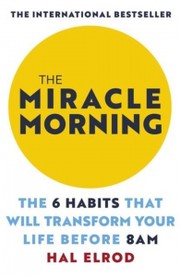
The Miracle Morning
2,240-word summary 10 min read 180 pages in the book
- First published
- 2012
- Publisher
- Hal Elrod International
- Pages
- 180
- ISBN
- 9780979019715
Reading options
What's inside (9 sections)
I bought this book expecting to dislike it. The full title promises a not-so-obvious secret guaranteed to transform your life before eight in the morning, and that kind of promise usually tells me to reach for my wallet with care. What I found was a short, self-published book from 2012, about 180 pages in the edition I read, that makes a much smaller claim than its subtitle. It says that the first hour of your day tends to set the tone for everything after it, and that most people give that hour away without deciding to. I still think the subtitle oversells the contents. I also finished the book and tried the routine for a few weeks, which is more than I can say for most self-help I get handed.
The author is Hal Elrod, and a lot of the book's authority comes from his own story. It is worth knowing that story before judging the advice, because the advice is essentially a list of things he used to put his life back together.
The man behind the method
In 1999, Elrod was twenty years old when his car was hit head on by a drunk driver travelling at about seventy miles an hour. By his own account, his heart stopped for roughly six minutes. He broke eleven bones, spent six days in a coma, and was told by doctors that he would probably never walk again. He not only walked, he ran a fifty-two-mile ultramarathon and built a career in sales and speaking before he turned thirty. In 2016 he was diagnosed with a rare and aggressive form of leukemia, with his kidneys, lungs and heart failing, and he later went into remission.
I want to be careful here. These are the facts Elrod and his publishers put forward, and they are told with the force of an origin story. You can believe every word of them and still notice that the argument of the book rests on one person's experience. That is the nature of the genre. The dramatic biography is doing persuasive work, and the method is presented as the thing that made the recovery possible.
One detail from his sales years is more useful than the near death experiences. Elrod talks about a five-minute rule he learned: when something goes wrong, you are allowed five minutes to feel sorry for yourself, and then you have to deal with reality as it is. It is a blunt idea, but it is practical. It is also the clearest statement of what the whole book is trying to do. He is interested in the gap between the life you wish you had and the morning you can actually control.
The claim, stripped down
The central argument is easy to state. There are two ways to wake up. You can endure the alarm, hit snooze until the last possible moment, and then spend the day reacting to other people's demands. Or you can get up a little earlier, set your mood and your priorities before the world starts making claims on you, and meet the day on purpose. Elrod spends real time on the snooze button. In his view, pressing it teaches your brain that your own life can wait, and repeating that small surrender every morning builds a posture of resistance before your feet have touched the floor.
His countermeasures are physical and unglamorous. Move the alarm across the room so you have to stand up to turn it off. Drink a large glass of water. Brush your teeth. Get dressed. The point is to get the body moving before the brain has time to start negotiating. I tried the alarm trick and it worked, mostly because being forced out of bed in the cold removes the choice. That is a small thing, but small things are what this book is about.
One reason the book is short is that it does not try to prove the routine works on a population. It argues by example. Elrod describes the shape of a morning, then hands you the pieces and expects you to test them. There is a chapter for each letter, practical notes on how long to spend, and a closing push toward committing to the practice for a sustained stretch rather than trying it once. The lack of apparatus is partly a limitation and partly a strength. You are never asked to accept a complicated theory. You are asked to get up, do six small things, and see what happens.
The part people most often misunderstand is the timing. The Miracle Morning does not require you to get up at five, and Elrod says so. It asks you to get up earlier than you strictly need to, whether that gives you sixty minutes, thirty or fifteen. He also offers an emergency six-minute version, one minute for each practice, for days when nothing else is possible. Night owls and shift workers can adapt it. The clock is not the point. Having a block of time that belongs to you before the demands start is the point.
Silence, the first letter
SAVERS is the acronym that holds the method together. The first S stands for silence, and Elrod puts it first on purpose. His version can be meditation, prayer, deep breathing or simple reflection, and the common thread is that you sit without screens and without noise for a few minutes. The goal is to calm the mind, release tension and get a sense of direction before you start filling the day with tasks.
I was skeptical of this chapter and then it was the part I kept doing. Sitting quietly for five minutes before looking at a phone is harder than it sounds, and the difficulty is the argument. Most of us reach for a screen the moment we wake, and we let the day's problems enter our heads before we have decided anything for ourselves. Silence creates a small gap in that reflex. Whether it reduces stress through some measurable mechanism or simply gives you a quiet minute, the practical effect is similar.
Affirmations and visualization
The A and the V are the parts of the method I find hardest to defend. Affirmations are short statements you read aloud, usually about your goals or the kind of person you want to be. Elrod's examples are simple phrases about letting go of negativity or being strong and resilient. The idea is that you keep your priorities in front of you and that repeated positive self-talk shifts what you notice and what you attempt. Visualization follows naturally. You close your eyes and rehearse the day going well, or picture a longer term goal already achieved. Some people use a vision board.
There is a real practice here and a large claim stacked on top of it. Athletes have used mental rehearsal for decades, and there is evidence that picturing a performance can help. The leap from that to a general claim about reprogramming your mind is weaker, and much of the book's support for affirmations comes from testimonials rather than studies. I said the phrases for a couple of weeks and felt mildly silly. What I noticed was not that my beliefs changed but that I was forced to state, out loud, what mattered that day. That is a useful effect, and it is smaller than the one advertised.
Elrod himself tells readers to keep affirmations brief and to update them as circumstances change. That advice is sensible and it keeps the practice from becoming a ritual you recite without thinking. He is at his best in these moments, when he treats the routine as a tool you adjust rather than a formula you obey.
Exercise, reading and scribing
The last three letters are the easiest to take seriously. Exercise in this routine does not mean an hour at the gym. It means a few minutes of movement to get the blood going: push ups, squats, jumping jacks, yoga, a short walk, anything that wakes the body. Elrod suggests even sixty seconds can make a difference to energy. This is not controversial advice, and it is the part of the SAVERS routine that needs the least defending.
Reading is the letter I grew to value most. The instruction is to read a few pages of something that teaches you about your work or your life, and to do it at the same time every day. Ten pages a day does not feel like much. Over a year it adds up to thousands of pages, roughly a dozen or fifteen books, and the effect is cumulative in a way that a single long weekend of reading is not. Elrod is not offering a new idea here. He is putting an old one in a slot where it will actually happen.
Scribing is the final S, and it means writing. The simplest version is a gratitude journal with three prompts: three things you are grateful for, three things that would make today a good day, and one affirmation. Another exercise Elrod recommends is to divide a page into two columns, one for lessons learned and one for new commitments, and write a line or two in each. Keeping the commitments small and limited to the day is part of the design. I found this the most honest part of the book, because it turns a vague intention into a sentence you can fail at, and failure is easier to notice that way.
The full routine takes about an hour if you give each practice ten minutes. The order is flexible, and some people move before they sit in silence. The point is the sequence as a habit stack. Chaining six small practices together takes less willpower than trying to start six separate habits, because after a few weeks the first action cues the next one automatically.
What grew around the book
The Miracle Morning spread well beyond the small self-published volume. Elrod's site reports more than two million copies sold, more than fifty thousand five-star ratings, translations into thirty-seven languages and readers in over a hundred countries. The six practices became a brand. There are tie-in books for entrepreneurs, parents, salespeople, college students and people in recovery, a companion planner, a documentary, and an app that offers guided practices and daily streak tracking. The 30-Day Life Transformation Challenge, with its checklists and tracking sheets, grew out of the same framework. An updated edition added chapters on the evening and on what Elrod calls the miracle life.
I mention all of this because it changes what kind of book you are holding. The 2012 original is a modest, personal manual. The later machinery is a business built around a simple and memorable acronym, and the enthusiasm in the prose makes more sense when you see how far it travelled. That is not an accusation. It is context, and it helps explain why the writing repeats itself. A book that becomes a movement gets quoted in very short pieces, and each piece gets louder.
What holds up, and what to doubt
The strongest thing about The Miracle Morning is also the simplest. It takes six practices that already existed, gives them one name, and makes them easy to remember and easy to scale up or down. That is a genuine contribution. If you do nothing else with the book, you can memorize SAVERS on the walk to the kitchen and start the next morning. Very little self-help is that portable.
The weaknesses are real. The title promises a guarantee that the evidence cannot support. Affirmations and visualization rest more on personal stories than on solid research, and a reader who expects a transformation will likely find a routine and some encouragement instead. The sleep question is the biggest practical problem. Getting up an hour earlier without going to bed an hour earlier does not create time, it creates a debt, with all the familiar costs to mood and focus. Elrod touches on this but does not treat it as firm a rule as he should. His tone can also wear you down. The book is emphatic and repetitive in a way that some readers will find motivating and others will find exhausting.
I would recommend it to someone who wants a structure for the first part of the day and does not need to be convinced that meditation and journaling are good ideas. I would tell that person to skip the grand promises and keep the six letters. I would tell a chronic night owl or a shift worker that the method is about a protected block of time, not about a number on a clock. And I would tell anyone who tries it to move their bedtime earlier along with their alarm. A morning bought with lost sleep is a bad trade, no matter how many times you repeat your affirmations.
What I took from it in the end was not the guarantee. It was the idea that the first hour can be claimed rather than surrendered, and that a routine small enough to remember is a routine you might actually keep. Elrod invented none of the six habits. He put them in a row and gave them a name, and for a lot of people that has been enough to start.
FAQ
Do I have to wake up at five in the morning?
No. Elrod says the method simply asks you to rise a little earlier than necessary, whether that gives you fifteen minutes or an hour. He also describes a six-minute version for difficult days.
What does SAVERS stand for?
Silence, Affirmations, Visualization, Exercise, Reading and Scribing. They are six older personal development practices that Elrod arranged into one routine, usually with about ten minutes for each.
Is The Miracle Morning based on science?
Only partly. The individual habits have support, but the book's large claims lean heavily on Elrod's own story and on reader testimonials. He published it himself in 2012, and it later sold over two million copies.
Similar books
Don't Sweat the Small Stuff ... and It's All Small Stuff: Simple Ways to Keep the Little Things from Taking Over Your Life
Richard Carlson’s 1997 bestseller offers one hundred short chapters on lowering the volume on daily irritations, and it is more pragmatic than its title…
2,502-word summary · 11 min read
The 5 AM Club
A struggling entrepreneur and artist are mentored by a billionaire who teaches them to reclaim the first hour of the day.
2,205-word summary · 10 min read
How to Stop Worrying and Start Living
Carnegie offers day-tight routines for worry built from interviews and worker stories.
2,505-word summary · 11 min read
The Defining Decade: Why Your Twenties Matter - and How to Make the Most of Them Now
A clinical psychologist argues that the twenties are not a holding pattern and urges readers to build skills, ties, and commitment now.
2,443-word summary · 11 min read
Rising Strong: The Reckoning. The Rumble. The Revolution.
Brené Brown's 2015 book asks what happens after we fall, and argues that examining the stories we invent about failure and heartbreak is the path to getting…
2,271-word summary · 10 min read

Ikigai: The Japanese Secret to a Long and Happy Life
Two Spanish writers explain the Japanese idea of a reason for being, drawing on Okinawan centenarians, flow, friendship and the acceptance of imperfection.
2,030-word summary · 9 min read

Girl, Stop Apologizing
Rachel Hollis urges women to stop talking themselves out of their dreams, with a three-part plan for dropping excuses, adopting new habits and building skills…
2,694-word summary · 12 min read
Flow: The Psychology of Optimal Experience
Csikszentmihalyi's 1990 study of optimal experience asks when people feel most alive and finds the answer in a balance of challenge and skill. Drawing on…
3,073-word summary · 14 min read
Emotional Intelligence 2.0
Bradberry and Greaves turn emotional intelligence into four learnable skills, a self-assessment and dozens of strategies, while their headline numbers rest on…
3,276-word summary · 15 min read
Digital Minimalism: Choosing a Focused Life in a Noisy World
Cal Newport argues that willpower cannot beat an attention economy designed against you, and offers a thirty day reset to rebuild your digital habits around…
2,701-word summary · 12 min read
Boundaries: When to Say Yes, How to Say No to Take Control of Your Life
A Christian self-help book that treats a boundary as a personal property line and applies the idea to family, friendship, marriage, work and the self.
2,047-word summary · 9 min read
Everything is F*cked: A Book About Hope
Manson argues that hope, built on control, values, and community, keeps despair at bay, then takes apart the stories and diversions we use to sustain it.
2,789-word summary · 12 min read

The Courage to Be Disliked: The Japanese Phenomenon That Shows You How to Change Your Life and Achieve Real Happiness
A philosopher and an angry young man argue over five nights about Adlerian psychology, trauma, approval, and the freedom to be disliked.
2,054-word summary · 9 min read

Four Thousand Weeks: Time Management for Mortals
Oliver Burkeman turns the whole productivity project on its head, arguing that a human lifespan of roughly four thousand weeks is not a problem to optimize…
2,447-word summary · 11 min read
Essentialism
McKeown argues for less but better: discern the vital few, refuse the trivial many, and use buffers, small wins, and steady routines so key work gets done well…
2,421-word summary · 11 min read
Braving the Wilderness: The quest for true belonging and the courage to stand alone
Belonging to yourself first lets you stand alone and still stay close to others.
2,004-word summary · 9 min read
The Happiness Project
Gretchen Rubin spends a year testing monthly resolutions on energy, marriage, work, parenting, and play, tracking small habits to build a happier ordinary…
3,516-word summary · 16 min read
The Gifts of Imperfection
Shame research turned into ten guideposts for dropping perfectionism and living with courage and connection.
2,799-word summary · 12 min read
12 Rules for Life
Twelve essays on responsibility from posture to truth to petting cats.
2,045-word summary · 9 min read
The Power of Habit
Why we do what we do: the cue routine reward loop, keystone habits, and how companies and movements use the same science, from toothpaste to the bus boycott.
2,207-word summary · 10 min read
The Subtle Art of Not Giving a F*ck
Blogger Mark Manson argues for fewer cares held better, through suffering, values, failure and saying no, with raw stories.
2,020-word summary · 9 min read
Atomic Habits
A practical walkthrough of Atomic Habits: why tiny changes compound, how identity shapes behavior, and the four laws Clear uses to build good habits and break…
2,170-word summary · 10 min read
You Can Heal Your Life
Louise Hay's 1984 bestseller argues that thoughts and beliefs shape the body, pairing a mirror-and-affirmation workbook with an A to Z list of ailments and…
3,672-word summary · 16 min read

Wild at Heart: Discovering the Secret of a Man's Soul
Why do men feel bored and tame? John Eldredge argues a man's heart is wild by design, and that recovering it means facing the wound and the question of whether…
2,289-word summary · 10 min read
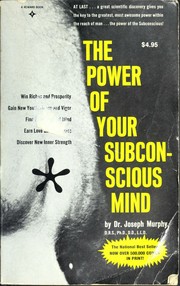
The Power of Your Subconscious Mind
Joseph Murphy argues that the subconscious accepts whatever the conscious mind repeats, so worry and confidence quietly grow into very different lives.
2,259-word summary · 10 min read
Getting to Yes: Negotiating Agreement Without Giving In
Fisher and Ury propose negotiating on interests rather than positions, using fair standards and a clear alternative if no deal is reached.
2,231-word summary · 10 min read

Atlas of the Heart: Mapping Meaningful Connection and the Language of Human Experience
Brené Brown maps 87 emotions and experiences into thirteen 'places we go,' arguing that precise language changes what we can ask for and how we connect.
2,491-word summary · 11 min read
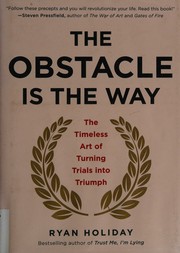
The Obstacle Is the Way: The Timeless Art of Turning Trials into Triumph
A 2014 Stoic self-help book arguing that perception, action and will can turn setbacks into fuel, told through historical anecdotes.
2,669-word summary · 12 min read
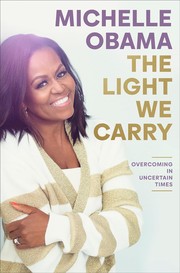
The Light We Carry: Overcoming in Uncertain Times
Michelle Obama's follow-up to Becoming offers ten practical habits for meeting fear, self-doubt and uncertainty, told through stories of her family,…
2,327-word summary · 10 min read
Extreme Ownership: How U.S. Navy SEALs Lead and Win
Two retired Navy SEALs turn their Ramadi combat experience into a blunt leadership creed: the leader owns everything, and the team follows when the why is…
2,368-word summary · 11 min read