
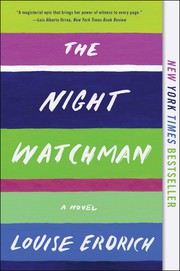
The Night Watchman
2,036-word summary 9 min read 464 pages in the book
- First published
- 2020
- Publisher
- Harper
- Pages
- 464
- ISBN
- 9780062671196
Reading options
What's inside (7 sections)
The bill
The novel is set in 1953 on the Turtle Mountain Reservation in rural North Dakota, and it was inspired by Erdrich's grandfather Patrick Gourneau, a night watchman who resisted Native dispossession and corresponded with Congress. It is her first novel set on Turtle Mountain, and it is the book that won the 2021 Pulitzer Prize for Fiction.
Thomas Wazhashk works the night shift at the jewel-bearing plant, a real factory where mostly women were employed, and serves on the Chippewa council. His name means muskrat in Ojibwe. He reads a new "emancipation" bill advancing in Congress and recognizes it for what it is: a termination bill aimed at ending federal recognition and seizing tribal land. He begins organizing resistance.
The language of the bill is the book's first act of violence. It promises freedom while taking away the treaties that guaranteed rights "for as long as the grasses shall grow, and the rivers run." Thomas cannot get past that contradiction. He is a practical man, not an orator, and his resistance begins with reading carefully and refusing to accept the official description of what is happening.
Locked outside the plant during a snowstorm, Thomas has a vision of Jesus Christ and others. An owl shares his night vigil and comes to symbolize his solitude. The muskrat of the creation stories mirrors his role: a small, humble animal whose work is essential. Erdrich keeps the magic deliberately ambiguous. Thomas's vision may be a religious experience or a man freezing to death, and the book refuses to decide.
The plant itself is a marvel of specific detail. Making jewel bearings is delicate, poorly paid work, and the women who do it have developed a culture around the machines and the shifts. Erdrich writes about the temperature of the building, the food people bring, the jokes they make and the small hierarchies of the floor. That attention is what keeps the political material from feeling like a lecture. The bill will matter because of what it would do to these women and their families, and the book makes you know them first.
Thomas's night shift gives him a position nobody envies. He walks the building when everyone else is home, and the solitude has made him attentive. He notices the bill the way he notices a loose door or an unfamiliar sound. That is his particular gift, and Erdrich treats it as a form of leadership. He does not stand at the front of a crowd. He reads carefully and tells the right people what he has read.
I picked this up because the subject matter is so specific and so under-told. Termination policy was a real attempt to dissolve tribal nations, and Erdrich writes about it through a night watchman reading a bill in a factory. That is a much better way into a political novel than a congressional hearing.
Patrice
Patrice Paranteau was called Pixie as a child but now insists on Patrice. She is the valedictorian, works at the plant making jewel bearings, and earns barely enough to support her mother Zhanaat and her younger brother Pokey. Their alcoholic father returns sporadically to terrorize the family and bully Patrice for money. Zhanaat has taught Patrice traditional ways of living, and the two women hold the household together.
Patrice's older sister Vera moved to Minneapolis, stopped corresponding, is rumored to have had a baby and may have disappeared. Patrice saves every penny to follow her. That storyline is the book's most affecting. A young woman who has been told to be practical and stay put decides to spend her savings on a possibility.
Patrice's savings are the book's most painful object. Every dollar is a choice between the family's immediate needs and the possibility of finding her sister. She is the kind of person who keeps accounts in her head, and the book lets the reader feel the arithmetic. When she finally buys the bus ticket, it is both an act of hope and a kind of betrayal of the people she left behind.
The Minneapolis sections are darker than the reservation chapters. Patrice is a young Indigenous woman in a city where men assume they can use her, and the book is clear about the threat without making it a lesson. She takes a job performing in a bar because it pays, and the work puts her on display in ways she has to manage. Erdrich does not give her a easy escape or a guardian angel. She is mostly on her own, and that is the truth of her situation.
She makes the trip to Minneapolis and takes a job performing in a bar while pursuing leads. What she finds there is exploitation, violence and danger. At one point she perceives a dog speaking to her about Vera's fate. Erdrich does not explain the dog, and this is part of the book's larger refusal to explain anything supernatural. A person in grief and fear might hear an animal speak. Whether the animal actually did is less important than what Patrice needs to hear.
Back on the reservation, a young Chippewa boxer named Wood Mountain trains under the white high school math teacher and boxing coach Lloyd Barnes, called Stack. Stack is hopelessly in love with Patrice. Wood Mountain has a crush on her too, but he helps her search for Vera rather than pressing his suit. He fights Joe Wobleszynski in a Battle Royale to raise money for the council's trip to Washington, D.C.
That boxing thread could have been a subplot in a lesser novel. Here it is part of the same structure as the congressional testimony. Money has to be raised so people can go to the capital and speak. A young man gets hit in a ring so a delegation can fly. Erdrich keeps these things in the same frame, which is what makes the book feel like a community rather than a collection of stories.
The hearings
Millie Cloud is an economics student at the University of Minnesota who switches to anthropology. Thomas enlists her and her father, Louis Pipestone, to present research on the reservation's resources in court testimony against House Concurrent Resolution 108. The novel's fictional congressional dialogue closely follows real transcripts, and the effect is chilling. The politicians speak in the language of benevolence while describing the end of a people.
In a chapter called "Falcon Eyes," Patrice attends a session of the U.S. House of Representatives and sees a beautiful woman fire a gun into the air. The scene is strange and funny and completely unexplained. Senator Arthur V. Watkins, a Republican Mormon from Utah, is fictionalized from the historical figure. Mormon missionaries Vernon and Elnath believe the Chippewa are Lamanites.
Millie's switch from economics to anthropology is one of the book's quiet jokes and one of its smartest decisions. She starts with numbers and ends with the people behind them, which is exactly the movement the novel asks the reader to make. Her research on resources is used because someone has to be able to say what the reservation actually has and what termination would take away. The hearing is not won by an argument about justice. It is won, if it is won at all, by evidence gathered by a young woman who changed her major.
Erdrich's handling of these figures is sly rather than angry. She lets the absurdity of the beliefs speak for itself. The missionaries, the senator and the congresspeople all believe they are helping, and that is the most disturbing thing about them. Nobody in the book's political world thinks of themselves as a villain.
One chapter is told entirely from the perspective of two escaped horses. That decision tells you what kind of novel this is. Erdrich moves among human and animal narrators in third person, and the effect is a world in which a horse's account is as serious as a politician's. The book is polyphonic in the fullest sense. The Pulitzer citation called it "a majestic, polyphonic novel," and the word is exact.
The life of the community
The political plot never crowds out daily life. There are family tragedies, boxing matches, romances, meals and winter landscapes. One of the book's quiet arguments is that a community fighting for its existence still has to eat and fall in love and argue about its children. The historical backdrop includes a failed 1955 unionization attempt at the plant, after which workers won higher pay and better conditions.
That detail matters because the plant is not simply a place of exploitation. It is dangerous and poorly paid, and it is also where women built a life together. Erdrich refuses to make it a symbol of one thing. The same is true of Thomas's job. He works the night shift because nobody else wants it, and the solitude gives him the time to read the bill that everyone else missed.
The book's magic is concentrated in moments that Erdrich refuses to explain. A classmate who tried to sexually assault Patrice suffers partial facial paralysis, and the narrator notes that so many things happen to us that we immediately explain away. That line is a challenge to the reader. If you want a rational account of everything in this book, you will have to ignore what the narrator says.
The novel is also very funny, which surprises people who expect a historical novel about dispossession to be solemn. There are fights over food, awkward romances, a dog with opinions and a great deal of dry observation about the white people who arrive to help. The humor never makes light of the political stakes. It does the opposite. It keeps the community alive on the page, which is what the politicians are trying to make it stop being.
What I finished with
I finished the book with a great deal of admiration for its scale. Erdrich is writing about a political betrayal, a family in crisis, a young woman's search for her sister, a boxer's first fight and a night watchman's owl, and she keeps all of them in motion without making any of them feel like background. The novel won the Pulitzer in 2021 and the William Dean Howells Medal in 2025, which tells you how highly it was regarded.
The ending is not a victory in any simple sense. The resistance is organized, but the bill and the forces behind it do not disappear. Patrice's search changes her, and some questions about Vera remain. Erdrich is not writing a novel in which a community is saved by one hearing. She is writing about the quiet, determined persistence of people who keep showing up when the outcome is uncertain.
The owl that keeps Thomas company is the book's quietest image. It says nothing and stays when others leave, which is what a watchman does. Erdrich never explains the bird, and the refusal is part of the novel's design. Some things are simply present.
The title is perfect. A night watchman protects a place while everyone else sleeps. Thomas's work is real but largely invisible, and it is carried out by a man nobody would choose as a hero. Erdrich's point is that the survival of a community often depends on exactly that kind of person: someone willing to stay awake and read the bill.
The first US edition was published by Harper in March 2020. Page counts vary between the hardcover and the paperback, and the ISBN used here belongs to the widely cited edition. The book is a work of historical fiction, but its view of a community is drawn from living memory.
The book's ending refuses the consolation of a clean victory, and that is its strength. The delegation goes to Washington, the testimonies are given, and the work continues. Thomas keeps walking his shift. Patrice keeps saving her money and asking questions. Erdrich knows that most historical change looks like this at the time: a great deal of effort with no visible result, followed years later by a result that nobody alive can clearly attribute to any one action. The novel is patient enough to accept that kind of storytelling.
FAQ
Is The Night Watchman based on a real person?
It was inspired by Erdrich's grandfather Patrick Gourneau, a night watchman who resisted Native dispossession and corresponded with Congress. It is her first novel set on Turtle Mountain.
What awards did the book win?
It won the 2021 Pulitzer Prize for Fiction and the 2025 William Dean Howells Medal.
What was the termination policy?
It was a real federal effort in the 1950s to end recognition of certain tribes and dissolve reservations. The novel's fictional congressional dialogue follows real transcripts.
Similar books
I Must Betray You
In 1989 Romania, a seventeen-year-old is forced to inform on an American diplomat's family and records the truth in a hidden notebook.
2,258-word summary · 10 min read
American Pastoral
Roth's Pulitzer winner follows a Newark glove maker's son whose perfect family life is broken by his daughter's antiwar bombing, retold by a narrator who…
2,660-word summary · 12 min read

The Round House
At thirteen, Joe Coutts hunts for his mother's attacker when the law stalls, in Louise Erdrich's National Book Award novel of family, jurisdiction, and revenge…
2,391-word summary · 11 min read

Yellow Crocus
In 1837 Virginia, an enslaved wet nurse is separated from her own son to raise a planter's daughter, and the two women build a love the law says cannot exist.
2,094-word summary · 9 min read
Theft
Gurnah traces three linked lives in Tanzania, where a servant's accusation of theft opens a family history of love, duty and quiet betrayal.
2,454-word summary · 11 min read

The Kitchen God's Wife
Amy Tan's second novel pairs a San Jose speech therapist with her Chinese mother, whose account of war, an abusive husband, and a narrow escape comes out in a…
2,896-word summary · 13 min read
The Buffalo Hunter Hunter
A 1912 diary found in a Montana parsonage recounts a Blackfeet man's unraveling after a dying creature's blood turns him undead, in a novel of history and…
2,731-word summary · 12 min read
Land
O'Farrell's tenth novel follows a Famine-survivor mapmaker who abandons the British Ordnance Survey to chart Ireland in Irish, as his family begins to scatter.
2,438-word summary · 11 min read

Good Dirt
A stoneware jar made by an enslaved potter links a prominent Black New England family across a hundred and fifty years of prosperity, grief and buried history.
2,069-word summary · 9 min read

Flashlight
Susan Choi's Booker-shortlisted novel opens with a father and daughter on a breakwater in 1978, then follows the loss outward through four generations and…
2,849-word summary · 13 min read
Carnegie's Maid
An Irish immigrant answers to a dead woman's name and lands a job as lady's maid in Andrew Carnegie's Pittsburgh household, where her mind for business draws…
2,271-word summary · 10 min read
By the Shores of Silver Lake
Twelve-year-old Laura leaves Plum Creek for Dakota Territory, rides a pony, mourns old Jack, and learns to be eyes for her blind sister Mary.
2,540-word summary · 11 min read
The Killer Angels
A Pulitzer-winning novel of Gettysburg, told through Lee, Longstreet, Chamberlain, and Buford. Shaara turns a familiar battle into a chain of choices made by…
2,242-word summary · 10 min read
The Bronze Horseman
On the day Germany invades the Soviet Union, Tatiana Metanova meets a mysterious Red Army officer, and their love is tested by the Siege of Leningrad.
2,461-word summary · 11 min read

The Boston Girl
Eighty-five-year-old Addie Baum tells her granddaughter how she grew up in Boston's North End, chased education and love, and became the woman she is.
2,439-word summary · 11 min read
Sarah, Plain and Tall
A widowed prairie farmer advertises for a wife, and a woman from Maine answers for a one-month trial. This Newbery winner, told by his daughter, is about a…
2,331-word summary · 10 min read

Manhattan Beach
A Brooklyn girl works the Navy Yard and dives for warships while chasing the gangster who may know why her father vanished.
2,251-word summary · 10 min read

Great Big Beautiful Life
Two rival journalists chase the biography of a reclusive media heiress on a Georgia island, only to find her family history holds a secret bigger than either…
2,394-word summary · 11 min read

Violeta
A woman born in 1920 writes her life story to her grandson, from one pandemic to another, through wealth, ruin, passion, and dictatorship in South America.
2,555-word summary · 11 min read

The Long Winter
Dakota Territory, 1880: seven months of blizzards cut a town off from the railroad, and a family survives on twisted hay, ground wheat, and a dangerous wheat…
2,210-word summary · 10 min read

The Japanese Lover
A Polish refugee and the son of a Japanese gardener fall in love in San Francisco in 1939, then keep the affair secret for nearly seventy years.
2,286-word summary · 10 min read

The Shadow Sister
Star D'Apliese steps out of her sister's shadow and follows a bookshop clue into the Edwardian life of Flora MacNichol, a woman who gave up love for duty.
2,260-word summary · 10 min read

Little Town on the Prairie
In the spring after the Long Winter, fifteen-year-old Laura sews shirts, studies for a teaching certificate, and helps send her blind sister Mary to college.
2,071-word summary · 9 min read

Too Much and Never Enough: How My Family Created the World's Most Dangerous Man
Mary L. Trump's 2020 memoir traces how a cold, zero-sum Queens household shaped her uncle, and uses family tax documents to challenge his self-made story.
2,059-word summary · 9 min read

Mrs. Everything
Two Jewish sisters in Detroit grow up, apart and together, across seven decades of American life, from the 1950s to the 2016 election.
2,362-word summary · 10 min read
The Boleyn Inheritance
Three women narrate Henry VIII's fourth and fifth marriages: a foreign bride who survives, a teenage queen who does not, and the widow who opens the door.
2,391-word summary · 11 min read

Fathers and Sons
Arkady brings the nihilist Bazarov home to his father's estate, and a generational argument turns into love, a duel, and an early death.
2,192-word summary · 10 min read
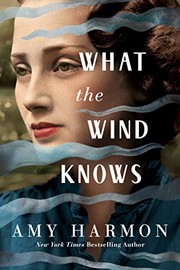
What the Wind Knows
Annie scatters her grandfather's ashes on Lough Gill and is pulled into 1921 Ireland, where she becomes the missing Anne Gallagher and falls for Dr. Thomas…
2,056-word summary · 9 min read

The Queen's Fool
A young Jewish refugee with second sight becomes a court fool to Edward VI, Mary I, and Elizabeth, and learns what it costs to tell the truth.
2,412-word summary · 11 min read
The Last of the Mohicans
During the French and Indian War, Hawkeye and two Mohican warriors try to save two British sisters from a Huron chief whose revenge will end the Mohican line.
2,017-word summary · 9 min read