
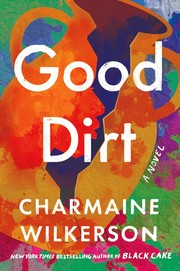
Good Dirt
2,069-word summary 9 min read 368 pages in the book
- First published
- 2025
- Publisher
- Ballantine Books
- Pages
- 368
- ISBN
- 9780593358368
Reading options
What's inside (7 sections)
The jar called Old Mo
At the center of this novel is a stoneware jar. It was made by an enslaved potter, and it has been kept for a hundred and fifty years by the Freeman family, one of the few Black families in a wealthy coastal New England enclave. The family calls it Old Mo. It is a beautiful object, and it is also a record of everything the family has chosen to remember and forget.
Charmaine Wilkerson published Good Dirt in January 2025, and it runs to 368 pages. It is a multigenerational novel that moves between the present day and the nineteenth century, and its structure is built around the jar's history. The present-day story opens with a trauma. At ten years old, Ebony Freeman, called Ebby, watched her fifteen-year-old brother Baz shot dead in her father's study. Old Mo was shattered beside him. The crime was never solved, and the case drew a voyeuristic public attention that followed the family long after the police stopped looking.
The details of that night accumulate slowly. Ebby is ten. Baz is fifteen. Their father's study is a place she is not supposed to enter, and the game of hide-and-seek takes them there anyway. The intruders are never identified. The police treat it as a burglary gone wrong, or a personal matter the family will not discuss, and the town treats it as a fascinating story. Only the Freemans treat it as a death. That gap between public interest and private grief is where Ebby has lived ever since.
The jar's condition matters. It was shattered beside Baz, which means the object that held the family's history was broken at the same moment the family was broken. Nobody repairs it in the years that follow. It stays in pieces, which is a more honest emblem of the situation than any whole object would be. Wilkerson does not have to explain this. She simply keeps returning the broken jar to scenes where the family is pretending to be fine.
That scene establishes the book's subject. A white community can admire a Black family's history while treating its grief as a spectacle. Ebby grows up knowing that strangers know the story of her brother's death, and that the story they know is not hers. The jar sits inside that contradiction, beautiful and valuable and made by a person whose name was not recorded.
The wedding that does not happen
Nineteen years later Ebby is twenty-nine and about to be married. Her fiancé, Henry Pepper, is white and the son of a banker. He leaves her at the altar. The renewed media attention that follows is more than she can bear, so she flees to a friend's rental house in rural France. Then Henry and his new girlfriend Avery arrive as the first guests.
It is an absurd setup, and the book makes the most of its awkwardness. Ebby has fled to get away from a story about herself, and the story has followed her in the form of the man who abandoned her. Henry goes missing, and she forms an uneasy alliance with Avery, who is also trying to work out what her boyfriend is. The two women find shared ground in being used by the same man, and their conversations are among the liveliest parts of the book.
Henry reappears and admits that he could not cope with the way Ebby's trauma kept manifesting. It is a frank confession and a cruel one. He is not a villain in the book's terms, just a man who discovered that he could not live inside someone else's unresolved grief. Ebby also grows close to a new man named Robert. The possibility of a different kind of relationship is there, though the book treats it with appropriate caution. She has learned that a story can change without her consent.
Her guilt is the part that stays with you. On the night Baz was killed, Ebby persuaded him to play one more game of hide-and-seek. She has carried that small fact for nineteen years, convinced that if she had not asked, he would not have been in the study when the shooter arrived. This is the kind of guilt children invent to make a random event bearable, and the novel understands that it is both irrational and completely real.
The France sections are funny in a way the rest of the book is not. Henry arrives with Avery as though he has every right to be there, and Avery quickly proves to be more perceptive than he is. She wants to know what happened, and she is not interested in the polite version. Ebby's alliance with her is one of the book's better relationships because it is built on a shared inconvenience rather than affection. Neither woman particularly likes the situation. They simply recognize that they are both being handled by the same man.
When Henry goes missing, the alliance becomes an investigation. It is deliberately low-stakes compared with the murder that haunts Ebby's childhood, and that contrast is part of the design. A missing fiancé in rural France is a problem with a shape and possibly a solution. A brother shot in a study by someone never identified is a problem with neither. Ebby throws herself into the first because the second is unmanageable.
Henry's explanation when he reappears is honest and inadequate. He could not cope with the way Ebby's trauma kept manifesting, and he left rather than keep failing at it. Wilkerson does not make him a villain. He is a man who wanted a normal life and discovered that marrying into someone else's history meant marrying the history too. That is a more interesting conclusion than a simple betrayal, and it lets the book treat Avery with some dignity as well.
Moses and Kandia
The chapters set in the nineteenth century are the book's most assured writing. Kandia is kidnapped from her African village and enslaved in Barbados, where her son Moses is born. He is put to work making pottery on a South Carolina plantation. The jar that will become Old Mo is his work, and he inscribes a phrase into the clay that the family will carry forward without fully understanding it.
The jar is carried north by Flora's brother Willis, who takes the name Edward Freeman and builds the family's prosperity. That act of naming is the novel's central transaction. A man takes an object made by an enslaved craftsman and uses it to found a lineage, and the lineage becomes one of the few Black families in a wealthy New England town. The jar is both evidence of origin and a way of concealing it.
Wilkerson alternates these chapters with Ebby's story, and the parallels accumulate. Kandia loses a child to the middle passage and the plantation. Ebby loses a brother to a bullet in a study. Both women are left to make a life out of a violence that the world around them treats as background. The novel's argument is that trauma is not an event but an inheritance, something passed down through objects, names and silences as reliably as property.
Kandia's story is the book's strongest invention. She is taken from her village and carried to Barbados, where Moses is born into bondage. We never get the life she might have had before, which is the point. The novel gives her a history made almost entirely of losses, and it refuses to compensate with a sentimental account of inner freedom. What she leaves her son is not a story but a name and a capacity to endure.
Moses's pottery is handled with similar restraint. He works in the plantation's pottery because that is where his owner puts him, and he makes a jar that will outlast everyone who owns it. The phrase he inscribes is the family's legitimate inheritance, though the family will spend generations treating the jar as a decorative object. That idea, that the meaning of an object can be preserved while the knowledge of it is lost, is one of the most elegant things in the book.
I found these sections more convincing than the contemporary ones. Wilkerson writes the nineteenth-century material with a precision that never feels like research displayed for its own sake. The pottery, the inscription, the journey north, the change of name: each detail carries both a practical and a symbolic weight, and the book never has to explain which is which.
Repair
The ending brings the jar and the present together. Ed repairs Old Mo, and the Freemans donate it to a museum gallery. It is a generous resolution. The family stops treating the jar as a private talisman and lets the public see it, but on terms the family controls. The donation is not a surrender of the story. It is a decision about who gets to tell it.
The epilogue reveals that Moses survived the war and was freed. That news arrives long after the reader has assumed he died, and it changes the meaning of everything the family believed about its origin. The jar was not made by a man whose life ended in bondage. He lived, and the family he unknowingly founded lived too. It is a healing revelation, and Wilkerson earns it by withholding it for so long.
The reaction to the book was divided. The New York Times called it an engrossing epic about intergenerational trauma, which describes its ambition fairly. Publishers Weekly judged the strands incohesive and said the pieces do not quite come together. That criticism identifies the book's main weakness. The contemporary plot with Henry and Avery does not always feel connected to the historical material, and there are long stretches where the two stories seem to be separate novels taking turns.
The title itself is doing quiet work. Good dirt is soil, of course, but it is also a phrase about people. The Freemans are "good" in the way a community describes a family that has made something of itself, and the book keeps asking what that goodness cost and who supplied it. The dirt in the title is the ground on which the family's prosperity was built and the material from which Old Mo was made. It is a double meaning that the novel never spells out, which is why it lands.
I also want to note how the book handles the wealth of the New England enclave. The Freemans are prominent there, but their prominence is always conditional. They are one of the few Black families in the town, and the book shows them negotiating that status in small ways: which stories to tell, which silences to keep, when to explain themselves and when to refuse. Wilkerson is not writing a novel about a single act of racism. She is writing about the daily management of being visible.
What held it together
The two plots do eventually meet, and the meeting is about the jar rather than the wedding. That is the correct emphasis. The romance and the mystery of Henry's disappearance give the book a contemporary pulse, but the reason to keep reading is the question of what the jar is and what it cost. When Ed repairs it, the repair is both literal and symbolic. A family that has been living with a broken object finally does something about the break.
Wilkerson is especially good on what it means to be a Black family in a white enclave. The Freemans are prominent and prosperous, and they are also watched. Ebby's brother's murder becomes public property in a way that a white family's tragedy would not. The book never reduces this to a single lesson. It shows the family negotiating visibility every day, deciding what to explain and what to keep.
I finished the book clearer about the jar than about Ebby, and I think that is a fair description of its achievement and its limit. Old Mo is a wonderful device: an object that holds a history, a crime and a family's idea of itself. The contemporary story around it is lively and occasionally thin. But the central idea, that a family's most treasured object can be the record of what it has most carefully forgotten, is a strong one, and the book does right by it.
FAQ
What is Old Mo in Good Dirt?
It is a stoneware jar made by an enslaved potter and kept by the Freeman family for a hundred and fifty years. It holds the family's history and the record of what they chose to forget.
What does the title mean?
Good dirt refers both to soil and to the phrase used for a respectable family. The novel asks what that respectability cost and who supplied the labor behind it.
How was the book received?
The New York Times called it an engrossing epic about intergenerational trauma, while Publishers Weekly found the strands incohesive and said the pieces do not quite come together.
Similar books
Love Forms
A Trinidadian mother sent away at sixteen returns to the loss of her daughter forty years later, in Claire Adam's quiet, longlisted novel.
2,153-word summary · 10 min read

The Kitchen God's Wife
Amy Tan's second novel pairs a San Jose speech therapist with her Chinese mother, whose account of war, an abusive husband, and a narrow escape comes out in a…
2,896-word summary · 13 min read
The Antidote
In a Dust Bowl town where a woman stores her neighbors' unwanted memories inside her own body, a storm blows the bank away and leaves a tangle of debts and…
2,707-word summary · 12 min read
Flashlight
Susan Choi's Booker-shortlisted novel opens with a father and daughter on a breakwater in 1978, then follows the loss outward through four generations and…
2,849-word summary · 13 min read

Manhattan Beach
A Brooklyn girl works the Navy Yard and dives for warships while chasing the gangster who may know why her father vanished.
2,251-word summary · 10 min read
Song of Solomon
Milkman Dead leaves Michigan to hunt for family gold and finds instead the old song of his ancestor Solomon.
2,465-word summary · 11 min read
The Mothers
Nadia hides abortion from church Mothers while Luke and Aubrey circle for years.
2,078-word summary · 9 min read
Sing, Unburied, Sing
A Mississippi family drives to Parchman prison while ghosts press close, and a dying grandmother holds the house together.
2,871-word summary · 13 min read
Hamnet
Agnes Hathaway holds her Stratford family together while her husband works in London, until plague takes eleven-year-old Hamnet in 1596.
3,164-word summary · 14 min read

The Wilderness
Four Black women move through twenty years of friendship in Angela Flournoy's discontinuous, widely praised second novel.
2,141-word summary · 10 min read
The South
A seventeen-year-old moves to his family's failing fruit orchard in 1990s Malaysia, where a summer love affair unfolds as the household and the land around him…
2,903-word summary · 13 min read
Only Son
A brief, funny, melancholy debut about a boy whose father dies in 1982 Florida, and the man he becomes, still trying to read the mystery of that loss.
2,170-word summary · 10 min read
Whistler
Ann Patchett's eleventh novel follows a New York teacher who reconnects with a former stepfather at the Met and hears the strange story of a chestnut mare.
2,697-word summary · 12 min read
Theft
Gurnah traces three linked lives in Tanzania, where a servant's accusation of theft opens a family history of love, duty and quiet betrayal.
2,454-word summary · 11 min read
The Pull of the Stars
Over three days in a Dublin maternity ward in 1918, a nurse, a suffragette doctor on the run and a young volunteer face the flu, childbirth and unexpected love.
2,578-word summary · 11 min read
The Emperor of Gladness
Ocean Vuong's second novel follows a young addict pulled back from a bridge in a dying Connecticut mill town and into the home of an elderly immigrant woman…
2,693-word summary · 12 min read

The Art of Hearing Heartbeats
When a New York lawyer vanishes, his daughter follows an old love letter to Burma, where a stranger narrates the story of the father she never knew.
2,950-word summary · 13 min read
Red at the Bone
A girl's coming-of-age ceremony in a Brooklyn brownstone opens a family story shaped by Tulsa, teenage pregnancy, class and a second tragedy on September 11.
2,108-word summary · 9 min read
King of Ashes
A Virginia crematorium, a debt owed to the Black Baron Boys and a family secret pull Roman Carruthers back into a war where everything burns.
2,229-word summary · 10 min read
Hollow Bones
On 11 September 2001, two-month-old Molly Fitzgerald loses her mother at the World Trade Center. She grows up planning for disasters, until a crisis in her new…
2,703-word summary · 12 min read

Good Girl
A nineteen-year-old artist in Berlin, grieving her mother, falls into an unequal romance with an American author who offers escape from the ideal of the good…
2,579-word summary · 11 min read
Drowning Ruth
In 1919 a Wisconsin mother drowns beneath the ice, and her sister insists the little girl who remembers it only dreamed the event. Schwarz unfolds the truth in…
2,386-word summary · 11 min read
Dream Count
Four women narrate the 2020 lockdown in their own voices: a travel writer, a friend in early labor, a banker cousin and a housekeeper assaulted in a hotel room.
2,286-word summary · 10 min read
Behold the Dreamers
A Cameroonian chauffeur and his wife chase the American dream while driving a Lehman Brothers executive through the 2008 crash in Mbue's debut novel.
2,578-word summary · 11 min read

All Adults Here
A widow in upstate New York reconsiders the parent she was after a neighbor's death, then gathers her three grown children for a season of uneasy truths.
2,171-word summary · 10 min read
A Reliable Wife
In a cold Wisconsin town a lonely rich man sends for a mail-order bride, and the woman who arrives has come with poison and a plan.
2,300-word summary · 10 min read
The Mermaid Chair
Jessie Sullivan returns to her childhood home on Egret Island to care for her agoraphobic mother, then finds her marriage, her faith, and a monk's vow thrown…
2,237-word summary · 10 min read
The Book of Negroes
Aminata Diallo is kidnapped from West Africa at eleven and spends a life crossing the Atlantic, surviving slavery, and fighting to be recorded as free.
2,442-word summary · 11 min read

We Are Okay
Marin fled San Francisco after her grandfather vanished and stopped answering anyone. When Mabel visits her college dorm, she has to say what happened.
2,253-word summary · 10 min read
The Storyteller's Secret
A New York journalist goes to India to learn why her grandmother loved a British officer, and why a family servant kept the truth for forty years.
2,270-word summary · 10 min read