
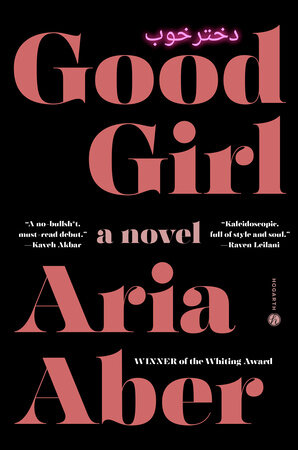
Good Girl
2,579-word summary 11 min read 368 pages in the book
- First published
- 2025
- Publisher
- Hogarth Press
- Pages
- 368
- ISBN
- 9780593731116
Reading options
What's inside (10 sections)
I want to start with the title, because it does a lot of work before the book begins. A good girl is a phrase that sounds like a compliment and lands like a set of instructions. Aria Aber's debut novel takes that phrase and follows the girl who cannot quite fit inside it. Nila is nineteen, an artist, and the daughter of Afghan doctors who fled their homeland before she was born. The family settled in a brutalist social housing block in Berlin. That is the whole setup, and it is enough to explain most of the pressure in the book. She is growing up in one culture at home and another one outside the door, and the word in the title is the rule she is expected to obey in both places.
The book was published in 2025 by Hogarth Press and runs to 368 pages. It follows a single year in Nila's life, and Aber, who was a poet before she wrote this, builds it as a Künstlerroman, which is a fancy way of saying a novel about an artist becoming an artist. I brought that term with me when I started reading, and I am glad I did, because it explains the shape of the thing. This is a book about a young woman making herself through art, and it is also a book about everything that gets in the way.
A year in a brutalist block
Nila's parents are doctors. They left Afghanistan before she was born, and they raised her in a housing project in Berlin that the book describes in terms of concrete and distance. I kept picturing the block as a character in its own right, a place that holds a family together and presses on them at the same time. Aber does not need many sentences to establish it. You understand quickly that this is a place people end up, not a place people choose, and that Nila's art is partly a way of looking out from it.
The year the book follows begins after her mother has died. That loss sits under everything. Nila is a grieving teenager who needs a way out, and the way out she finds is the city's underground art and music scene. Berlin matters here. It is a city with an enormous appetite for reinvention, and it is also a city where the past is never entirely buried. Aber keeps both of those things in play. The clubs are places where a young woman can disappear into music and light, and they are also places where the history she is trying to outrun is still walking around.
The book does not give you a tidy account of Nila's grief. There is no scene where she works through her feelings about her mother and resolves anything. The grief shows up as hunger instead. She wants to be elsewhere, doing something that feels like it belongs to her. The experience is closer to following a restless person around a city than to watching a problem get solved.
Learning to lie
The most striking background in the book comes from what happened after 9/11. The family learned to lie. They learned to hide the parts of themselves that seemed too much like those people, in a city where Nazis were still alive and well. Aber states this almost flatly, and the flatness is what makes it land. There is no melodrama in the telling. A family simply decides that certain things must not be said in certain rooms, and a child grows up understanding that her name and her face and her food are things to be managed.
This is where the novel becomes more than a coming of age story. Nila's problem is not only that she is nineteen and unhappy. It is that she has been taught that the people she comes from are a liability. The phrase about those people is one she has absorbed from the world around her, and it turns inward. She can see the shape of the lie her parents tell to survive, and she can also feel the damage it does to her. That double vision is the book's real subject, and it shows up in small moments rather than big declarations.
The family's silences are part of this. Aber writes about parents who love violently but cannot say the words. They care about Nila in ways that are fierce and physical and frightened, and they cannot put that care into plain language. If you have grown up in a household like that, the book will feel almost uncomfortably familiar. The love is real. The saying of it is not. Nila ends up hungry for a kind of plainness that her family cannot give her, and that hunger makes her vulnerable to the first person who offers her a different story about herself.
The Bunker
The club is called The Bunker, and the name is too on the nose to be an accident. It is a place underground, a place to hide, and a place where things happen that the family would not approve of. Nila goes there, takes ecstasy, and starts to feel that a life outside the rules might be possible. Aber writes the club scenes with the energy of someone who has spent time around music and young people who are trying to become someone else for a few hours. You can feel the noise and the curiosity and the sense that anything is permitted here.
It is at The Bunker that she meets Marlowe Woods. He is an American author, charismatic, and considerably older than she is. He desires her, and he dominates her, and the book is clear that the two things are the same thing to Nila. She wants to be wanted in exactly this way. The damaged creature inside her, as Aber puts it, craves the kind of attention Marlowe gives her. That is a hard sentence to read without wincing, and I think the wincing is intended. This is not a romance that asks you to cheer. It is a portrait of what it feels like to be chosen by someone who sees you as a project.
Marlowe offers her an escape from the Afghan ideal of the good girl. He tells her, in effect, that she does not have to be that person. On paper that sounds like liberation. The novel is sharp enough to notice that a man who offers you a new identity is also claiming the right to define you. His interest in Nila is tangled up with his interest in himself, and the escape he offers is an escape into his orbit rather than out of it. I kept thinking about how easily that trick works on someone who has never been allowed to want anything openly.
Marlowe and the art talk
If you have read reviews of this book, you may have seen the complaint about Marlowe's conversations about art. He pontificates. He holds forth. Dina Nayeri in The Guardian found the book dark and breathtaking and still wished for less of his art talk, and I understand the complaint completely. There are stretches where Marlowe becomes a mouthpiece for opinions about aesthetics, and the length of those stretches tests the reader's patience.
I want to argue for them a little, though. Marlowe's art talk is not filler. It is the mechanism of his power. He has the language, he has the confidence, and he has the habit of explaining things to Nila that she already half knows. When he takes credit for her photographic awakening, that is the same habit taken to its logical end. He sees her beginning to look at the world through a lens, and he folds that discovery into his own story about himself. The awakening belongs to her. He takes it anyway. Aber is writing about a particular kind of theft, and it is a quieter and more painful theft than the obvious one.
The detail that made me stop and put the book down for a moment is the neo-Nazis. Marlowe invites them into his house, obliviously, without seeming to understand what he has done. It is the sort of scene that reads as almost casual in the moment, and it gathers weight afterward. Here is a man who offers to free a young Afghan woman from the constraints of her family, and he cannot recognize the people in his own house who would see her as less than human. Aber does not need to underline the irony. The scene underlines itself.
Photography and a secret inner life
The part of the book I cared about most is the photography. Nila wants to depict her parents. She wants to make them beautiful to Europeans, which is a phrase that carries a whole history of who gets to be seen and on what terms. Her longing to photograph them is a longing to give them a kind of life they never had in Berlin, where they were reduced to the parts that seemed too much like those people. The camera lets her look at them with an attention that the rest of the city refuses to give.
Aber writes that literature and art make Nila, in her own words, a person incomprehensible to her parents. That line is the key to the whole book. Her parents love her, and they cannot understand the person she is becoming through books and images and clubs. Meanwhile photography offers her access to her mother's secret inner life. This is the thread that connects her art to her grief. The mother is gone, but there is a part of her that Nila can still approach through the act of looking. Photography becomes a way of continuing a conversation that death interrupted.
This is what makes the novel a Künstlerroman rather than a story about a bad relationship. Marlowe matters because of what he takes, and the taking hurts, but the work Nila makes matters more. Aber is tracking a fierce and unruly becoming, and she lets it run through clubs and sex and grief and shame without trying to make it respectable. The mess is the point. A tidier novel would have Nila leave Marlowe and find her art in a clean act of rejection. This one lets the art grow in the middle of the mess, which is closer to how such things actually happen.
Still Afghan girls
There is a queer scene with Nila's first love, Setareh, that I have thought about more than any other part of the book. The two girls are together, undressed, and the formality clings to them anyway. Aber gives it a single line: And still we were Afghan girls. That sentence does an enormous amount of work. It says that the body can be naked while the habits of a lifetime stay fully dressed. It says that the rules they learned at home did not stop at the bedroom door. And it says something about the particular intimacy of two people who share the same set of instructions.
I read that scene twice. What struck me was how little Aber needs to say. A writer less sure of herself would have explained the feeling, traced it back to childhood, and made sure we understood it. Aber trusts the line and moves on. It is the kind of confidence that comes from having been a poet. She knows when a sentence has enough weight to carry the whole idea, and she does not dilute it with explanation.
The scene also complicates the way the book talks about escape. Nila wants out of the good girl role, and sex with a woman might look like the most obvious form of that escape. The line refuses to let it be simple. The role is not something she can take off like a piece of clothing. It is in the way she holds herself, the way she expects to be seen, the way she expects to be left. That is a much harder thing to write about than a straightforward rebellion, and it is the reason this novel stays with me.
The shame of body and country
The deepest subject here is the intertwined shame of body and country, carried by daughters who grow up between two cultures. Aber shows it through relatives who seem too Persian and get snubbed for it, through parents whose love arrives as something violent rather than something spoken, and through the humiliating sense that even being chosen over a white woman somehow debases you. That last point is the one I found hardest to read. Marlowe's interest in Nila is not a clean victory over the women who look like the people around him. It carries its own insult, because she can never be sure whether she was wanted for herself or as a kind of proof of his own openness.
This is why the book matters beyond the specifics of Nila's life. The question of what a daughter owes to a family that survived something she did not, and how she builds a self out of that debt, is a large question. Aber does not pretend to answer it. She gives you a year in the life of one young woman and lets the question sit inside it. Readers looking for a resolution will not find one, and I think that is the right decision. A neat ending would have betrayed the mess the book has spent 368 pages describing.
A poet's first novel and its reception
Aber came to fiction from poetry, and you can feel it in the sentences. The prose is dense with images and short declarations, and it trusts the reader to keep up. That is a strength and occasionally a strain. There are pages where the writing is so assured that you want to slow down, and there are pages where the density feels like a wall. The reviewers noticed the same split. Publishers Weekly gave the book a starred review and called it a stunning coming of age story set amid Berlin's underground art and music scene. R. O. Kwon in The New York Times hailed an exhilarating debut and compared Aber's space-making writing to that of James Baldwin.
Kirkus felt that the storytelling often undercuts its own tensions and called it a debut still in the process of finding itself. Jasmine Vojdani in Vulture praised the portrait of Muslim girlhood and German xenophobia but wanted the internalized racism deepened. Dina Nayeri in The Guardian found it dark and breathtaking. The book was shortlisted for the 2025 Women's Prize for Fiction. The divided response seems honest to me. The novel has a clear idea of what it wants to say and an uncertain sense of how to say it. Both can be true at once.
What I would tell a friend is this. Go in for the language and for Nila, not for a plot that ties everything up. The scenes with her parents and with Setareh are the ones I would underline. The Marlowe chapters try my patience, though I see what they are for. Aber is writing about a young woman learning that being seen is not the same as being known. I closed it feeling I had spent a year with someone fierce and unfinished, and that the unfinished part was the most honest thing about her.
FAQ
Is Good Girl Aria Aber's first novel?
Yes. It is her debut novel, published by Hogarth Press in 2025. Aber had previously worked as a poet.
What does the title Good Girl refer to?
It names the Afghan ideal of the good girl that Nila is expected to follow and that Marlowe seems to offer her a way to escape.
Did Good Girl receive any prize recognition?
It was shortlisted for the 2025 Women's Prize for Fiction and received a starred review from Publishers Weekly.
Similar books
The South
A seventeen-year-old moves to his family's failing fruit orchard in 1990s Malaysia, where a summer love affair unfolds as the household and the land around him…
2,903-word summary · 13 min read
Only Son
A brief, funny, melancholy debut about a boy whose father dies in 1982 Florida, and the man he becomes, still trying to read the mystery of that loss.
2,170-word summary · 10 min read
Theft
Gurnah traces three linked lives in Tanzania, where a servant's accusation of theft opens a family history of love, duty and quiet betrayal.
2,454-word summary · 11 min read
Red at the Bone
A girl's coming-of-age ceremony in a Brooklyn brownstone opens a family story shaped by Tulsa, teenage pregnancy, class and a second tragedy on September 11.
2,108-word summary · 9 min read
Oranges Are Not the Only Fruit
An adopted girl in a strict Pentecostal household learns to read the Bible, preach sermons and love women, then faces her church and mother for it.
2,384-word summary · 11 min read

Detransition, Baby
Torrey Peters's debut follows three Brooklyn adults as an unexpected pregnancy pushes them to imagine an unconventional family. Funny, sharp, and unwilling to…
2,925-word summary · 13 min read

We Are Okay
Marin fled San Francisco after her grandfather vanished and stopped answering anyone. When Mabel visits her college dorm, she has to say what happened.
2,253-word summary · 10 min read
Tell the Wolves I'm Home
A grieving fourteen year old secretly befriends her late uncle's boyfriend in 1980s New York, testing family loyalty and love.
3,014-word summary · 13 min read
Dear Edward
Twelve-year-old Edward Adler survives a plane crash that kills his family, then learns how to live with grief, letters, and love.
2,903-word summary · 13 min read
The Namesake
Jhumpa Lahiri follows Gogol Ganguli from a hated namesake to adult loss, marriage, and family reckoning between Calcutta and Boston.
2,878-word summary · 13 min read
On Earth We're Briefly Gorgeous
A son writes to the mother who cannot read him: war, migration, first love, and loss in one Vietnamese American family in Hartford.
3,113-word summary · 14 min read

Extremely Loud and Incredibly Close
Nine year old Oskar searches New York for a lock matching his father's key after 9/11.
2,999-word summary · 13 min read
The True True Story of Raja the Gullible (and His Mother)
A gay philosophy teacher in Beirut revisits six decades of Lebanese history, family trauma, and his thorny bond with his mother.
2,274-word summary · 10 min read
The Sisters
Three sisters watch one another take the lives they imagined, across thirty years in Stockholm and Tunisia, in a novel that bends time like an accordion.
2,199-word summary · 10 min read
Palaver
A mother shows up uninvited at her estranged son's Tokyo apartment, and the two spend the weeks before Christmas talking their way toward something like…
2,465-word summary · 11 min read

One Boat
A woman returns to a Greek coastal town after her father's death, and the holiday she took nine years earlier after her mother's death keeps breaking through.
2,143-word summary · 10 min read
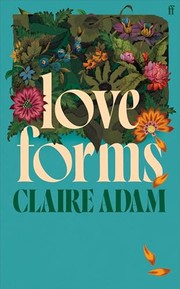
Love Forms
A Trinidadian mother sent away at sixteen returns to the loss of her daughter forty years later, in Claire Adam's quiet, longlisted novel.
2,153-word summary · 10 min read
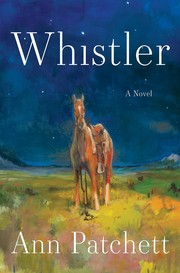
Whistler
Ann Patchett's eleventh novel follows a New York teacher who reconnects with a former stepfather at the Met and hears the strange story of a chestnut mare.
2,697-word summary · 12 min read
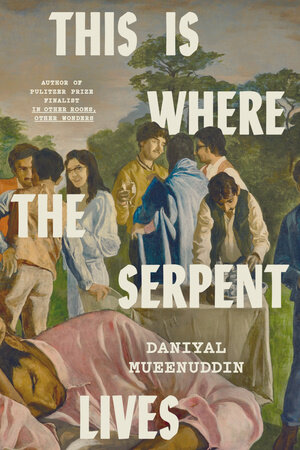
This Is Where the Serpent Lives
Daniyal Mueenuddin's second novel follows an orphan who rises through Lahore and a gardener's son who becomes an outlaw, across a Pakistan of caste and capital.
2,257-word summary · 10 min read
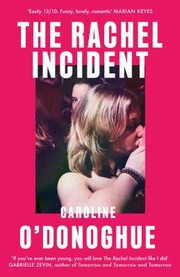
The Rachel Incident
A funny, sharp novel about two twenty-somethings in recession-era Cork whose bookshop friendship, tangled romance and a married professor's lie leave a secret…
2,346-word summary · 10 min read
The Emperor of Gladness
Ocean Vuong's second novel follows a young addict pulled back from a bridge in a dying Connecticut mill town and into the home of an elderly immigrant woman…
2,693-word summary · 12 min read
Saving CeeCee Honeycutt
A twelve-year-old girl loses her mother and is packed off to Savannah, where a great-aunt, a housekeeper and a street of eccentric women teach her how to…
2,627-word summary · 12 min read

Our Wives Under the Sea
A marine researcher returns from a deep-sea dive changed, and her wife must decide whether to hold on or let go.
2,286-word summary · 10 min read
King of Ashes
A Virginia crematorium, a debt owed to the Black Baron Boys and a family secret pull Roman Carruthers back into a war where everything burns.
2,229-word summary · 10 min read
Hollow Bones
On 11 September 2001, two-month-old Molly Fitzgerald loses her mother at the World Trade Center. She grows up planning for disasters, until a crisis in her new…
2,703-word summary · 12 min read
Good Dirt
A stoneware jar made by an enslaved potter links a prominent Black New England family across a hundred and fifty years of prosperity, grief and buried history.
2,069-word summary · 9 min read
Flashlight
Susan Choi's Booker-shortlisted novel opens with a father and daughter on a breakwater in 1978, then follows the loss outward through four generations and…
2,849-word summary · 13 min read
Counting by 7s
A gifted twelve-year-old who counts by sevens loses her parents in a car crash and gradually builds a new family with help from a counselor, a taxi driver, and…
2,306-word summary · 10 min read
Black and Blue
A nurse leaves her abusive police-officer husband and vanishes into small-town Florida with her son, where a new name buys years of peace and a fear that never…
2,456-word summary · 11 min read

All Adults Here
A widow in upstate New York reconsiders the parent she was after a neighbor's death, then gathers her three grown children for a season of uneasy truths.
2,171-word summary · 10 min read