
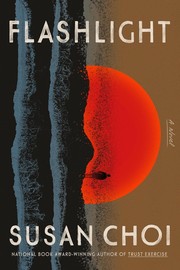
Flashlight
2,849-word summary 13 min read 464 pages in the book
- First published
- 2025
- Publisher
- Farrar, Straus and Giroux
- Pages
- 464
- ISBN
- 9780374616373
Reading options
What's inside (10 sections)
I picked this up because it kept coming up in the talk around the 2025 Booker shortlist, and because the title sounded so plain that I assumed it was a small, quiet book. It is neither small nor quiet in the way I expected. It runs to 464 pages, published by Farrar, Straus and Giroux on 3 June 2025, and it opens with one of the most specific and unsettling scenes I have read in a while. By the end I felt that Choi had taken a single evening and pulled on a thread that runs through four generations and across three countries. Some of that pulling is dazzling. Some of it, I think, draws the book away from the people who made me care in the first place.
The night on the breakwater
The novel opens on a summer evening in a coastal Japanese town in 1978. Ten-year-old Louisa is walking along a breakwater with her father, Serk. He is carrying a flashlight. He cannot swim. Those two details sit at the centre of the scene and they keep paying off for the rest of the book, because the flashlight is what makes the dark navigable and the inability to swim is what makes the dark dangerous.
Hours later, Louisa is found on the beach, soaked and barely conscious. Her father is missing. He is presumed drowned, swept out to sea. Louisa remembers almost nothing about what happened between the walk and the discovery. That gap is the engine of the entire novel. Choi does not hand you a puzzle to solve in the detective sense. She gives you a child who has lost an evening and a father, and then she lets that absence spread outward through a family and through decades of history.
I want to be careful here, because the book withholds far more than it gives and I do not want to pretend I know exactly what happened on that breakwater. What I can say is that the scene is built out of small physical things. A little girl on a wall of rock. A beam of light moving over water. A man who is uneasy in the sea beside a daughter who is not. The flashlight of the title is not a symbol the book pauses to explain. It is simply there, in his hand, and it gathers weight because of where they are standing and what comes after.
It is a strong opening because it is both intimate and unresolved. You are close to Louisa, inside her confusion, and at the same time you are already being pushed toward a larger story whose edges you cannot see. That combination of the very near and the very far is the book's signature move, and it is the thing I admired most and the thing that eventually wore me down.
A mother and daughter left behind
The disappearance breaks apart the small family. Louisa's mother is American, named Anne, and she was already isolated and ailing before her husband went missing. She returns with Louisa to the United States, and there she struggles as a disabled widow with very little money. Choi does not soften this. The move is not a fresh start. It is a narrowing of options, a move into a life where grief and poor health and thin finances press in from every side.
What interested me is how the book treats the aftermath as a domestic story before it treats it as anything else. A mother who is sick and short of money has to manage the ordinary business of raising a child while carrying a loss that has no proper ending. There is no body, no clear account, no funeral that would let the story close. Anne and Louisa are left to live beside an absence. I found these sections the most human parts of the novel, and the ones where Choi's restraint works best. She stays with the daily texture of a household getting by, and she trusts that the reader will feel the size of what is missing without being told.
Louisa's silence is central to this part of the book. She remembers almost nothing of the night, and that blank shapes what her mother can and cannot know. Anne has to parent a child who was there and yet cannot say what happened. That is a particular kind of loneliness, and Choi lets it sit in the rooms with them. There is a patience to these pages that I respected. The book could have rushed to explain the disappearance, but it holds back and stays with the two people who have to live with it.
Then the structure begins to widen. The novel reaches backward and forward through four generations, and Louisa and Anne become one strand in a much longer family history. This is where the book starts to be about more than one night and one loss, and where it starts to ask what a person inherits from a history they never chose.
Three names for one man
The most striking example of that inheritance is Serk himself. He was born Seok in Korea. In wartime Japan he became Hiroshi. After emigrating to America he took the name Serk. Each name marks a violent shift in the world around him, and Choi uses the changes to show a life being remade by forces larger than any individual choice.
This is not a subplot I can summarize neatly, because the book treats it as a layered history rather than a straight line. A child born in one country, given a new name in another, and renamed again after arriving in a third, carries the evidence of every displacement in the spelling of his own identity. The novel is interested in the gap between the name a person is given and the person underneath it. Serk, Seok, and Hiroshi are not costumes. They are records of what was happening to him and to the people around him at each moment.
He met Anne at university in America and married her, which places the American part of the story in the context of an immigrant life built after those earlier upheavals. The man who cannot swim on a breakwater in 1978 is a man who has already crossed several kinds of water, and the book keeps that history in view even while it is telling a story about a missing father. I thought this was the most ambitious thing Choi does. She makes a single name into a way of talking about war, migration, and belonging without turning the character into a lecture.
There is a risk in a device like this, and the book does not always avoid it. When a character carries that much historical meaning, he can start to feel like a figure in an argument rather than a husband and father. I felt that pull more than once. Still, the idea of a man with three names, each one forced by circumstance, is a memorable way to build a novel about identity across generations, and it gives the title's quiet beam of light a much larger field to fall on.
The child Anne gave up
Before she met Serk, Anne had a child as a teenager whom she was forced to give up. That child is Tobias, and he reappears in the book first as a thirteen-year-old and later as a rootless, Japan-obsessed young man who is drawn increasingly into Anne and Louisa's lives. His arrival is one of the ways the novel folds its earlier and later timelines together.
Tobias interested me because he connects the personal and the structural strands of the story. He is a child Anne lost, which makes him part of her private history of regret. He is also drawn toward Japan, the country where Louisa was lost and where Serk's earlier life unfolded, which makes him a kind of return to the source of the family's wounds. Choi uses him to bring the past back into the present in a way that feels less like a device than it might in another writer's hands, because he is family. His presence forces questions about what was given up, what was kept, and what a person can claim of a life they were not part of.
The two stages of his appearance matter. As a thirteen-year-old he arrives close to the time when the family is still reeling, and his youth makes him another person needing care. As a young man he is rootless and fixated on Japan, and that fixation pulls him toward the same subjects the novel is circling. I liked that Choi lets him change rather than keeping him as a fixed symbol. He grows into the story instead of standing outside it.
This strand also shows how the book handles secrets within a family. Anne's earlier child is not a minor detail. It changes how you read her isolation and her ailing health, and it adds a second loss to the first one on the breakwater. By the time Tobias is grown, the novel has quietly assembled a whole pattern of children separated from parents and parents separated from children, which is the deeper subject underneath the mystery.
From postwar Japan to North Korea
The narrative moves from the post-war Korean community in Japan to suburban America and then to North Korea, where re-education camps and the machinery of the regime enter the story. That is a long way to travel from a breakwater, and it is the part of the book that surprised me most. I had settled in for a family mystery and found myself inside a much wider account of how states and histories press on ordinary lives.
Choi handles the shift by following people rather than issuing a history lesson. The post-war Korean community in Japan is where Serk's earlier names and allegiances take shape. Suburban America is where Anne and Louisa try to rebuild and where Tobias drifts in and out. North Korea is where the machinery of the regime becomes literal, with re-education camps appearing in the later reaches of the book. Each location carries a different version of the same problem, which is a person trying to live a life while large forces decide the terms of it.
I found the North Korean material the hardest section to stay with, and not only because it is grim. It asks the reader to hold a great deal of historical information at once, and the closer the book gets to that material, the more the narrative seems to bend under its weight. The families and the mystery are still in view, but the machinery starts to crowd them. I will say more about that in a moment, because it is the central criticism of the book and I think it is fair.
What is not fair, to my mind, is to say the material does not belong. It belongs. Serk's names and Anne's losses and Louisa's blank memory all point toward a history that is larger than one household. The book's ambition is to show that a single disappearance on a beach in 1978 has roots in events that began decades earlier and far away. That ambition is real and it is mostly handled with care, even when the result feels crowded.
The shifts and layers the Booker judges liked
The Booker judges praised the novel for its shifts and layers, and the book was shortlisted in 2025. Having finished it, I can see exactly what they meant. This is a novel that moves backward and forward in time, that changes which generation it is following, and that keeps returning to the same night from different distances. The structure asks you to assemble the story yourself rather than receiving it in order.
That approach has a real payoff. The opening scene keeps changing meaning as you learn more about Serk, about Anne, and about the histories they carry. A walk on a breakwater is one thing when you think it is a simple family outing and another thing when you know the names a man has lived under and the countries he has been forced through. The layers are not decorative. Each one changes how the central loss reads.
I also appreciated that Choi trusts the reader to keep up. She does not stop after every time shift to orient you, and she does not explain the historical background in the way a lesser novel might. That confidence is part of what makes the book feel like literature rather than a summary of its own themes. At the same time, it is a demanding way to write, and there are passages where I had to slow down and work out whose story I was in.
For a reader who enjoys a novel that reveals itself in pieces, this structure is a pleasure. For a reader who wants a clear line from event to consequence, it can be frustrating. I sit somewhere in the middle, closer to pleasure than frustration, because the pieces fit together too well to feel random. The book knows where it is going even when it refuses to take the direct route.
Where the historical detail takes over
The fairest criticism of Flashlight is about balance, and it came from Dwight Garner in The New York Times. He wrote that the extensive historical detail eventually takes over, so that the book begins to feel less like a narrative than a historical report or a lesson. I understood the complaint while I was reading the later sections, and I understand it better now that I have thought about the book as a whole.
The problem is not that Choi writes about history. It is that the history arrives with so much weight and detail that the people briefly step behind it. Louisa's blank memory and Anne's quiet struggle are the things that pulled me in, and at points in the middle and later chapters those threads get thin while the account of regimes and camps and earlier lives grows dense. The book is at its best when the history is carrying a character, and weaker when the character seems to be carrying the history.
Beejay Silcox made a related point in The Guardian, finding the mid-book twist jolting and the characters more than vessels for politics. I felt the jolt too. Without giving away more than I should, the reveal that rearranges the middle of the book lands hard, and part of that hardness comes from the sense that the story has been steering toward a political point rather than a human one. That is a matter of emphasis, and reasonable readers will feel it differently. For me it was a moment where the craft was impressive and the feeling was thinner than it had been earlier.
This is also a book that will not be for everyone. If you want a tidy answer to what happened on the breakwater, you will not get one. If you want a novel where every chapter advances a plot, the long stretches of background will try your patience. The book asks you to accept that some questions stay open and that a family can be explained by history without being resolved by it. That is a legitimate artistic choice, but it is worth knowing before you commit to 464 pages.
What I took away from it
I finished Flashlight with mixed feelings that lean toward admiration. The opening scene is excellent, the idea of a man with three names is strong, and the way the book lets one night echo across four generations is genuinely moving when it stays close to the people involved. Anne and Louisa are the heart of it for me, and I wish the book had trusted that heart a little more.
What I keep returning to is the flashlight itself. It does not reveal everything. It lights only the next few steps, which is enough to keep walking and not enough to explain where the path goes. That seems to be Choi's point about memory and family history. We get a narrow beam, we make our way with it, and we build a story out of what it touches. The book is smarter than most about the limits of what a person can know about their own past.
I would hand this to a reader who likes historical fiction that is willing to be difficult and who enjoys a novel revealed in layers. I would be cautious with a reader who wants a brisk plot or a clean answer to a mystery. The writing is patient and careful, the historical reach is real, and the family story at the centre is worth the trip. It is a book that asks a lot and gives a lot, and it is at its best when it remembers that the people on the breakwater matter more than the forces that brought them there.
FAQ
What is the central mystery of Flashlight?
It opens with ten-year-old Louisa walking on a Japanese breakwater with her father Serk in 1978. He disappears and is presumed drowned, and she remembers almost nothing about the night. The novel is more interested in how that loss spreads through a family than in solving a puzzle.
Why does the story move between so many countries and generations?
Choi follows Serk's names from Korea to wartime Japan to America, and later reaches North Korea and its re-education camps. The widening scope shows how one disappearance is shaped by histories far larger than a single household.
What is the main criticism of Flashlight?
Dwight Garner wrote in The New York Times that the extensive historical detail takes over, so the book feels less like a narrative than a historical report or lesson. Beejay Silcox in The Guardian found the mid-book twist jolting and the characters more than vessels for politics.
Similar books
The Sisters
Three sisters watch one another take the lives they imagined, across thirty years in Stockholm and Tunisia, in a novel that bends time like an accordion.
2,199-word summary · 10 min read
Theft
Gurnah traces three linked lives in Tanzania, where a servant's accusation of theft opens a family history of love, duty and quiet betrayal.
2,454-word summary · 11 min read

Good Dirt
A stoneware jar made by an enslaved potter links a prominent Black New England family across a hundred and fifty years of prosperity, grief and buried history.
2,069-word summary · 9 min read

Song of Solomon
Milkman Dead leaves Michigan to hunt for family gold and finds instead the old song of his ancestor Solomon.
2,465-word summary · 11 min read

The Wilderness
Four Black women move through twenty years of friendship in Angela Flournoy's discontinuous, widely praised second novel.
2,141-word summary · 10 min read
The True True Story of Raja the Gullible (and His Mother)
A gay philosophy teacher in Beirut revisits six decades of Lebanese history, family trauma, and his thorny bond with his mother.
2,274-word summary · 10 min read
The South
A seventeen-year-old moves to his family's failing fruit orchard in 1990s Malaysia, where a summer love affair unfolds as the household and the land around him…
2,903-word summary · 13 min read

One Boat
A woman returns to a Greek coastal town after her father's death, and the holiday she took nine years earlier after her mother's death keeps breaking through.
2,143-word summary · 10 min read

Whistler
Ann Patchett's eleventh novel follows a New York teacher who reconnects with a former stepfather at the Met and hears the strange story of a chestnut mare.
2,697-word summary · 12 min read
The Reluctant Fundamentalist
In a Lahore cafe, Changez tells a nervous American how Princeton and a New York career gave way to anger after September 11.
2,340-word summary · 10 min read

The Kitchen God's Wife
Amy Tan's second novel pairs a San Jose speech therapist with her Chinese mother, whose account of war, an abusive husband, and a narrow escape comes out in a…
2,896-word summary · 13 min read
The Antidote
In a Dust Bowl town where a woman stores her neighbors' unwanted memories inside her own body, a storm blows the bank away and leaves a tangle of debts and…
2,707-word summary · 12 min read

Red at the Bone
A girl's coming-of-age ceremony in a Brooklyn brownstone opens a family story shaped by Tulsa, teenage pregnancy, class and a second tragedy on September 11.
2,108-word summary · 9 min read

Good Girl
A nineteen-year-old artist in Berlin, grieving her mother, falls into an unequal romance with an American author who offers escape from the ideal of the good…
2,579-word summary · 11 min read
Dream Count
Four women narrate the 2020 lockdown in their own voices: a travel writer, a friend in early labor, a banker cousin and a housekeeper assaulted in a hotel room.
2,286-word summary · 10 min read

Detransition, Baby
Torrey Peters's debut follows three Brooklyn adults as an unexpected pregnancy pushes them to imagine an unconventional family. Funny, sharp, and unwilling to…
2,925-word summary · 13 min read
Black and Blue
A nurse leaves her abusive police-officer husband and vanishes into small-town Florida with her son, where a new name buys years of peace and a fear that never…
2,456-word summary · 11 min read
Behold the Dreamers
A Cameroonian chauffeur and his wife chase the American dream while driving a Lehman Brothers executive through the 2008 crash in Mbue's debut novel.
2,578-word summary · 11 min read
The Book of Negroes
Aminata Diallo is kidnapped from West Africa at eleven and spends a life crossing the Atlantic, surviving slavery, and fighting to be recorded as free.
2,442-word summary · 11 min read
Manhattan Beach
A Brooklyn girl works the Navy Yard and dives for warships while chasing the gangster who may know why her father vanished.
2,251-word summary · 10 min read

Unaccustomed Earth
Lahiri’s second story collection follows Bengali families in America and abroad, tracing the quiet distances between parents and children, spouses, and the…
2,333-word summary · 10 min read

Wide Sargasso Sea
Jean Rhys gives the first Mrs. Rochester a Caribbean childhood, a marriage built on money and suspicion, and a voice that Charlotte Bronte left in the attic.
2,021-word summary · 9 min read

This Is How You Lose Her
Yunior cycles through love affairs and betrayals in nine linked stories, tracing the damage he does and the family history behind it.
2,195-word summary · 10 min read

And Every Morning the Way Home Gets Longer and Longer
An elderly grandfather, his son, and his grandson share memories and fears as the old man's mind begins to fade, in a short novel about grief and love.
2,078-word summary · 9 min read
The Book of Lost Friends
Three women trace Lost Friends ads from 1875 to find stolen sons.
2,368-word summary · 11 min read
The Signature of All Things
Botanist Alma Whittaker grows up in Philadelphia trade wealth, studies mosses, marries distant Ambrose Pike, and sails to Tahiti seeking how species change.
2,535-word summary · 11 min read
The Island of Missing Trees
A talking fig links 1970s Cyprus lovers Kostas and Defne with their grieving London daughter Ada years later.
3,172-word summary · 14 min read
The Mothers
Nadia hides abortion from church Mothers while Luke and Aubrey circle for years.
2,078-word summary · 9 min read
The Color of Water
A Black journalist presses his white mother about her hidden past, from a Virginia store to twelve college degrees.
2,457-word summary · 11 min read

The Bonesetter's Daughter
A ghostwriter translates her mother's hidden Chinese memoir and learns the truth about Immortal Heart, Precious Auntie, and a family curse.
2,720-word summary · 12 min read