
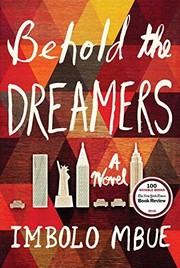
Behold the Dreamers
2,578-word summary 11 min read 382 pages in the book
- First published
- 2016
- Publisher
- Random House
- Pages
- 382
- ISBN
- 9780812998481
Reading options
What's inside (8 sections)
I came to this book expecting a story about a man who wants something badly enough to work for it, and I got that story, but I also got one of the more uncomfortable books I have read about what happens when the thing you want was never really on offer. Behold the Dreamers is Imbolo Mbue's debut novel. It came out in 2016 from Random House, runs 382 pages in the first hardcover edition, and went on to win the 2017 PEN/Faulkner Award and land in Oprah Winfrey's book club. Mbue wrote it over five years without telling friends or family, and she has said the seed was a walk past the Time Warner Center at Columbus Circle, where she noticed Black chauffeurs waiting for white executives and started wondering what passed between them. That image sits at the centre of the book, and it is the reason the story feels less like a fable than a piece of reportage about two people who share a city and almost nothing else.
A driver, an executive, and a room with glass in it
The novel opens in the fall of 2007. Jende Jonga walks into the office of Clark Edwards at Lehman Brothers to interview for a job as the executive's chauffeur. Jende is an immigrant from Cameroon who arrived in New York in 2004 on a three-month visitor's visa and simply stayed. For two years he washed dishes and drove a livery cab in the Bronx, living in the country without papers, until he had saved enough to bring his wife, Neni, and their young son, Liomi, over in 2006. Neni came on a student visa, and they married that year. They live in a cramped apartment in Harlem, and every dollar they have is spoken for before it arrives: rent, tuition, school costs, and remittances to relatives back home who are counting on them.
The job pays thirty-five thousand dollars a year, which to the Jongas is a small fortune. Before Jende can start, Clark makes him sign a confidentiality agreement. He is not to repeat a word of what he hears while driving the Edwards family around. That single piece of paper sets the terms of everything that follows. Jende will be close enough to the family to know their secrets and too far away to say anything about them, and the reader is left to watch what that kind of proximity does to a man who is desperate to belong.
Clark asks Jende to drive him to work, to ferry his younger son, Mighty, to school and piano lessons and tennis with the nanny, Stacy, and to take his wife, Cindy, to beauty appointments and lunches. Jende learns the household's rhythms before he understands its problems. Clark is a man under visible strain, shouting into his phone at all hours and sleeping three or four hours a night, sometimes in his own office. He has begun making hour-long stops at the Chelsea Hotel on certain evenings. Cindy, a nutritionist, fills her days with the maintenance of a life she is afraid of losing. The elder son, Vince, is at Columbia Law School and is quietly planning to walk away from it all.
What struck me is how carefully Mbue keeps both families in view. Jende is not a visitor in this world so much as a permanent witness to it. He sits in the front seat while the Edwardses unravel in the back. He is paid to be invisible, and the irony is that his invisibility is also the source of his power later in the book. He knows things about Clark that Clark would rather no one knew, and knowing them changes what Jende believes he is owed.
Neni, who wants a pharmacy and finds a household in pieces
Neni is the more restless of the two Jongas, and in some ways the more clear-sighted. She works as a home health aide for elderly clients while studying chemistry at a community college, with a plan to become a pharmacist. She is the one who keeps the family's accounts and the one who thinks hardest about what America is supposed to offer. Jende is content to believe that a good job with a good employer will eventually lead to a house in the suburbs. Neni wants a credential, a profession, a life that cannot be taken away by one phone call from a man in a suit.
Her route into the Edwards household comes through domestic work. When the family's regular maid, Anna, is unavailable, Neni fills in during their summer stay in Southampton. On her first day there she finds Cindy passed out in a guest bedroom, drunk and drugged. That discovery leads to others. Cindy tells Neni over breakfast that she came from a poor family and has spent her life fighting to keep what she has. Later, after a fight with Clark, a drunken Cindy tells Neni that she was conceived through rape and was resented by her mother growing up. Neni begins to understand that the composure she has been admiring is a performance maintained at high cost. The Edwardses have money and status, but they are not happy people, and the unhappiness is not a small thing they can laugh off.
Neni takes a photograph of Cindy passed out in that guest bedroom. It is a small, almost careless act, and it becomes the most useful object she owns. She does not use it right away. For a while she simply carries it, the way some people carry a document they hope they will never have to show. Anna, the maid, confides that she is worried Cindy's addiction will cost her the job, and Neni confirms what she has seen. They talk about confronting Clark, but Neni pulls back when the moment comes. She is afraid of meddling in the affairs of the people who pay her husband's salary. That fear is the book's quiet engine: the Jongas need the Edwardses too much to act freely, even when they can see exactly what is wrong.
The Hamptons section is where the novel's structure becomes clear. Mbue is not writing a story in which the poor family is noble and the rich family is corrupt. She gives Cindy a history that explains, without excusing, her self-destruction. She gives Clark a job that is genuinely terrifying, not because he is evil but because he can see the ground giving way. And she gives Neni a ambition that is real enough to be frustrated. The two households mirror each other more than either would admit.
The bank falls and the front seat gets colder
In September 2008, Lehman Brothers collapses. Jende's first fear is simple: will he still have a job? Cindy calls to tell him the family will still need him, and he keeps driving. In the five weeks after the failure, he drives Clark to the Chelsea Hotel at least a dozen times. The machinery of the crash is reported in the background, and the novel is smart enough to keep it in the background, where it belongs for these characters. What matters is not the math of subprime mortgages but the way a man who has spent his life around money starts to behave when the money disappears.
A few days after Barack Obama's election, Cindy asks Jende to start keeping a journal of Clark's movements and to bring it back to her. Jende is torn, because the confidentiality agreement he signed is the source of his standing with Clark. He tells Clark what his wife has asked. Clark's answer is practical and revealing: do what Cindy wants, just leave out the Chelsea Hotel. Jende agrees because it lets him please both employers at once. His loyalty, which he has thought of as a virtue, turns out to be a kind of bookkeeping.
The arrangement comes apart when a woman who runs an escort service publishes an account of her clients, and Clark is named. Cindy's suspicions harden into certainty. Mighty, the child Jende has come to love, tells him he overheard Cindy demanding that Clark get rid of the driver. Soon after, Clark fires him. Jende goes back to washing dishes, working twice as hard for a fraction of the pay. The scene is painful not because it is surprising but because Jende has done everything the job asked of him. He kept the secrets. He stayed loyal. He was still disposable.
Mbue handles the firing without melodrama. There is no speech, no grand confrontation. A man is told he is no longer needed, and the news travels through a chain of people who all have their own reasons to look away. That is closer to how things usually happen, and it is why the moment lands.
Neni writes a check Jende cannot cash
Jende accepts the loss more quickly than Neni does. She goes to Cindy's apartment and begs for his job back, and when that fails she produces the photograph of Cindy passed out in the Hamptons. She threatens to take it to a tabloid reporter unless Cindy pays her ten thousand dollars. Cindy is furious but gives her the money in a paper bag, and Neni walks out with it. She feels capable for the first time in months. She has found a way to make a powerful person answer for treating her family as throwaways.
Jende's reaction is the opposite of what she expects. He is angry and ashamed, because he believes the Edwardses treated them generously and Neni has repaid that with blackmail. Neni does not accept his framing. She points out that people like the Edwardses think people like the Jongas can be dismissed without consequence, and she refuses to feel guilty. Their argument exposes the difference between them. Jende's whole plan rests on being the sort of employee and immigrant who deserves reward. Neni's plan rests on taking what she can get, because waiting for fairness has never worked.
The money cannot save them. Jende's asylum claim, built on a story that Bubakar, his attorney, invented about Neni's father trying to kill him, is rejected. He cannot afford to appeal, and he chooses what the immigration system calls voluntary departure: buying his own ticket home and telling a judge he will leave. Neni, who still wants the life she came for, considers a friend's suggestion that she divorce Jende and marry a cousin who is an American citizen. She also learns that membership in the Phi Theta Kappa honor society will not win her a pharmacy scholarship, because the dean of students refuses to nominate her. One door after another closes, and each one seems to close because someone with authority has decided it should.
Then Jende slaps Neni during a fight. It is a hard moment to read, and Mbue does not soften it or explain it away. A man who has been treated as powerless all book finds a way to feel powerful at home, and the novel lets that ugliness stand. In the same stretch of the story, Neni gives birth to a daughter, Timba. The baby arrives into a family that has run out of options, and the joy of it is mixed with dread about what the parents can offer her.
An ending that refuses to comfort anyone
Cindy dies after another binge, choking on her own vomit. Jende meets Clark one last time. Clark gives him two thousand dollars and explains that he and Mighty are moving to Cindy's hometown in Virginia to be near family, that his parents will move from California to help, and that he has left investment banking to work as a lobbyist for credit unions. Vince has returned for the funeral but is content in India, where he hopes to open a retreat center for executives. Jende asks about Leah, Clark's longtime secretary, and feels sorry for her because she cannot find work at sixty. Clark says she will be fine. The exchange is brief and devastating, because both men know it is probably not true.
Near the end of August, almost five years after Jende first arrived in New York, the Jongas leave. Neni packs up the apartment and gives away her cooking supplies and textbooks, marking the end of her education in America. At Douala airport, Jende's brother Moto picks them up and drives them toward Limbe, where a red and white sign over the highway welcomes them home. The last pages belong to that drive and to the question of what the family will make of the money they carry. Jende plans to start a business and live comfortably in Limbe, where ten thousand dollars goes a long way. Neni stands beside him, mourning the opportunities she believes her children will miss. The book ends without pretending that the decision has settled anything.
What the title is actually pointing at
The title comes from a line in Langston Hughes's poem "Let America Be America Again," and Mbue has said it was the phrase that pushed her to change the pre-publication title, which was The Longings of Jende Jonga. That matters, because Hughes's line is not a celebration. It is a question about who gets to claim the country's promises. Behold the Dreamers is full of people who believe in those promises in different ways: Jende, who thinks steady work will earn him a place; Neni, who thinks a degree will do it; Clark, who thinks the firm he works for is solid; Cindy, who thinks her possessions will keep her safe; Vince, who thinks he can opt out of a values he despises. The dream is the thing that keeps each of them moving, and the book is patient enough to show how different those dreams are.
Critics were generous. Cristina Henríquez in The New York Times called it a capacious, big-hearted novel written with confidence and warmth, and Ron Charles in The Washington Post praised Mbue for avoiding the familiar clichés of the immigrant story. Not everyone was convinced. Some readers found the ending abrupt, and others thought that Jende's decision to return, and the slap he gives Neni, ask the reader to accept too much too quickly. I felt some of that. The book's fairness to the Edwards family sometimes makes their cruelty easier to excuse than I wanted it to be, and Neni's blackmail is treated with a terseness that skips over the moral mess of it. Still, those complaints feel like arguments with a book that is doing something harder than handing out verdicts.
What I took away is an image, and it is the one Mbue started with. A man in a dark suit gets out of a car, and a man who drove him sits waiting in the front seat. Both of them are caught in a system neither fully controls, and the smaller the distance between them, the more clearly each can see the other's trouble. Behold the Dreamers is a novel about the crash of 2008, but it is also about the ordinary cruelty of needing someone more than they need you. It is not a gentle book, and it does not offer a lesson about what to do with that knowledge. It simply makes you sit in the car with both of them for long enough that you stop thinking of either as a type.
FAQ
Is Behold the Dreamers based on real events?
It is a work of fiction, but Mbue drew on her own experience of losing her job during the 2008 crisis and on seeing Black chauffeurs waiting outside the Time Warner Center in Columbus Circle.
What awards and honors did Behold the Dreamers receive?
It won the 2017 PEN/Faulkner Award for Fiction and was chosen by Oprah Winfrey for her book club in June 2017. It was also included on the 2022 Big Jubilee Read list.
Does Behold the Dreamers have a happy ending?
No. Jende loses his job and his asylum case, Cindy dies, and the Jongas return to Cameroon, though they leave with money Neni secured from Cindy.
Similar books
Dream Count
Four women narrate the 2020 lockdown in their own voices: a travel writer, a friend in early labor, a banker cousin and a housekeeper assaulted in a hotel room.
2,286-word summary · 10 min read
This Is How You Lose Her
Yunior cycles through love affairs and betrayals in nine linked stories, tracing the damage he does and the family history behind it.
2,195-word summary · 10 min read

The Wilderness
Four Black women move through twenty years of friendship in Angela Flournoy's discontinuous, widely praised second novel.
2,141-word summary · 10 min read
The Loneliness of Sonia and Sunny
Two Indian families, a failed arranged match, and years between Allahabad and New York shape a slow, sprawling romance.
2,092-word summary · 9 min read
The Reluctant Fundamentalist
In a Lahore cafe, Changez tells a nervous American how Princeton and a New York career gave way to anger after September 11.
2,340-word summary · 10 min read
The Emperor of Gladness
Ocean Vuong's second novel follows a young addict pulled back from a bridge in a dying Connecticut mill town and into the home of an elderly immigrant woman…
2,693-word summary · 12 min read
The Bonfire of the Vanities
Tom Wolfe's first novel follows a Wall Street bond trader whose life unravels after a hit-and-run in the Bronx, in a satire of 1980s New York money, race and…
2,268-word summary · 10 min read
Red at the Bone
A girl's coming-of-age ceremony in a Brooklyn brownstone opens a family story shaped by Tulsa, teenage pregnancy, class and a second tragedy on September 11.
2,108-word summary · 9 min read
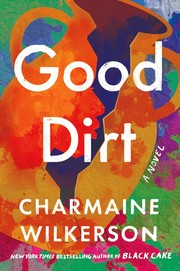
Good Dirt
A stoneware jar made by an enslaved potter links a prominent Black New England family across a hundred and fifty years of prosperity, grief and buried history.
2,069-word summary · 9 min read
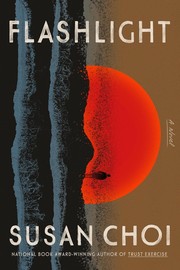
Flashlight
Susan Choi's Booker-shortlisted novel opens with a father and daughter on a breakwater in 1978, then follows the loss outward through four generations and…
2,849-word summary · 13 min read
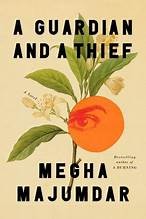
A Guardian and a Thief
Over one week in near-future Kolkata, a mother's flight plan and a homeless young man's hunger collide over a set of stolen travel documents.
2,306-word summary · 10 min read
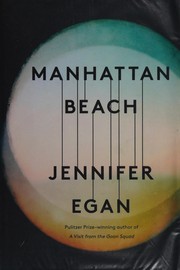
Manhattan Beach
A Brooklyn girl works the Navy Yard and dives for warships while chasing the gangster who may know why her father vanished.
2,251-word summary · 10 min read
Last Night in Brooklyn
A copywriter in 2005 Fort Greene trades a scripted engagement for a bar crowd, a rising designer, and a neighborhood being remade around her.
2,540-word summary · 11 min read
Unaccustomed Earth
Lahiri’s second story collection follows Bengali families in America and abroad, tracing the quiet distances between parents and children, spouses, and the…
2,333-word summary · 10 min read

The Chosen
A shattered pair of glasses in a 1944 Brooklyn softball game starts a friendship between a Hasidic boy and his Orthodox neighbor, and their fathers pull them…
2,443-word summary · 11 min read
Song of Solomon
Milkman Dead leaves Michigan to hunt for family gold and finds instead the old song of his ancestor Solomon.
2,465-word summary · 11 min read
The Mothers
Nadia hides abortion from church Mothers while Luke and Aubrey circle for years.
2,078-word summary · 9 min read
All We Ever Wanted
A Nashville photo of a drunk boy over a passed out girl splits three families along money and race lines.
2,278-word summary · 10 min read
Sing, Unburied, Sing
A Mississippi family drives to Parchman prison while ghosts press close, and a dying grandmother holds the house together.
2,871-word summary · 13 min read
The Nest
Four adult Plumb siblings wait on a shared trust in New York until brother Leo drains it after a drunk driving crash, forcing each to face debt, school bills,…
2,854-word summary · 13 min read
Our Missing Hearts
In a fearful future America, twelve-year-old Bird crosses the country to find the poet mother who left him.
2,434-word summary · 11 min read

Interpreter of Maladies
Nine stories follow Bengali families split between Calcutta and New England, through marriage, grief, and arrival.
2,412-word summary · 11 min read
The Namesake
Jhumpa Lahiri follows Gogol Ganguli from a hated namesake to adult loss, marriage, and family reckoning between Calcutta and Boston.
2,878-word summary · 13 min read
On Earth We're Briefly Gorgeous
A son writes to the mother who cannot read him: war, migration, first love, and loss in one Vietnamese American family in Hartford.
3,113-word summary · 14 min read
Americanah
Ifemelu leaves Nigeria for America on a scholarship, blogs about race and hair, while Obinze endures undocumented London until they reunite years later in…
2,527-word summary · 11 min read
Extremely Loud and Incredibly Close
Nine year old Oskar searches New York for a lock matching his father's key after 9/11.
2,999-word summary · 13 min read
Everything I Never Told You
In 1977 Ohio, sixteen-year-old Lydia Lee is found dead in a lake, forcing her interracial family to face the secret pressures around race, school and duty that…
2,711-word summary · 12 min read
Little Fires Everywhere
In planned Shaker Heights, Elena Richardson rents to drifting artist Mia Warren, and a custody fight over baby May Ling splits friends and teens.
1,911-word summary · 8 min read
Zeitoun
A Syrian-American contractor rides out Hurricane Katrina by canoe, rescuing neighbors and stray dogs, until a routine arrest turns into twenty-three days…
2,097-word summary · 9 min read
Universality
Natasha Brown's short second novel turns a lockdown fracas over a gold bar into a sharp satire of money, identity and public argument.
2,302-word summary · 10 min read