
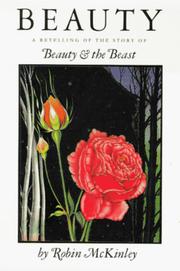
Beauty: A Retelling of the Story of Beauty and the Beast
2,100-word summary 9 min read 247 pages in the book
- First published
- 1978
- Publisher
- Harper & Row
- Pages
- 247
- ISBN
- 9780060241490
Reading options
What's inside (9 sections)
The girl who named herself
The first line is a small trap. "I was the youngest of three daughters," says the narrator, and then explains that when she was small she announced that she would rather be called Beauty. Her father, Roderick Huston, a wealthy widower and merchant, indulged her. Her sisters Grace and Hope went along with it. The trouble is that as the girls grow up, Beauty stays plain while her sisters become lovelier and more socially graceful, so the nickname hardens into an irony everyone can see except, at first, the person who chose it.
That gap between the name and the girl is the whole book in miniature. McKinley published this as her debut novel in 1978, when she was twenty-three, and she is already writing with the confidence of someone who knows exactly what a fairy tale is for. The story is the one everybody knows. A father takes a rose from a Beast's garden, the Beast spares his life on condition that one of his daughters come to the castle, and the daughter who goes learns to love him. McKinley keeps that skeleton and builds a real person around it.
I picked this up because the retelling has become such a familiar genre that it is easy to forget how good the early ones were. This one won a Phoenix Award honor and a place on the Best of the Best Books for Young Adults list, and it is still in print nearly fifty years later. The reason is not novelty. It is Honour Huston, who is funny, stubborn, frightened and much smarter than the story she is living in.
The rose and the bargain
The family's fortunes collapse and they leave their comfortable life for the small town of Blue Hill. A year later they learn that one of Huston's ships has finally come in. Before he leaves to see about it, he asks each daughter what she wants. Grace and Hope jokingly ask for jewelry and dresses. Beauty asks for a rose cutting or some seeds, because nothing grows in the countryside.
Huston returns with a beautiful rose and saddlebags full of treasure. He tells a strange story. Lost in a storm in the forest, he found a castle where invisible servants sheltered him and waited on him, feeding him and putting him to bed. The next morning, in the castle garden, he plucked a single rose for Beauty, and the Beast appeared, furious that a guest would steal from him after showing him hospitality. The Beast agreed to let him go only on condition that one of his daughters return to live in the castle.
The family is horrified. Huston is ashamed and frightened. Grace and Hope weep and say sensible things about how impossible it is. Beauty volunteers. She insists that she is the one who will go, and the book does not give us a speech about sacrifice or duty. She simply says she will, and the argument ends. It is one of the most effective moments in the novel because it arrives without ceremony. The story she has been told about herself, the girl who wanted only a rose, turns out to be the story that makes her the one who can go.
Learning the castle
The first weeks at the castle are not miserable. Beauty takes long walks, talks with the Beast and spends hours in his enormous library. The library is McKinley's great addition to the tale. In the older versions it is enough that the Beast is rich and the girl is lonely. Here the castle has books, and Beauty is the kind of person who can lose an entire day in them. It gives the story a quiet, domestic texture that the familiar plot does not prepare you for.
The Beast proposes marriage every night. Every night Beauty refuses. This could have become a gag, but McKinley plays it as a slowly changing ritual. Beauty genuinely cares for him. She enjoys his company, she is curious about him, and she is not stupid enough to confuse kindness with love. The Beast, for his part, is articulate and often gentle, which is another important departure. He talks. He explains himself in fragments. He is not a silent animal waiting to be made whole by a woman's kiss.
Beauty begins to hear the voices of the two invisible maids who wait on her, gathering clues about the Beast's past from what they say when they think she is asleep. She dreams vividly of her family every night. The dreams are so real that they blur the line between the castle and home, and eventually she asks the Beast for a mirror. He shows her a magic mirror in which she can see her family, and the sight of them undoes her. She begs to visit, promising to return in a week and then stay with him forever.
The Beast lets her go, reluctantly. At home her family is overjoyed, then increasingly disheartened as it becomes clear that she intends to leave again. She gets the visit she asked for and discovers that being home is not the same as belonging there. Her sisters have their own lives. Her father is relieved and guilty. The house she dreamed about every night in the castle does not quite hold her now.
The dream that changes everything
The emotional turn comes through a dream. Beauty sees the Beast dying, and the image is so clear that she knows it is not an ordinary nightmare. She rushes back to the castle and finds him nearly dead. It is only then, in the moment when she might be too late, that she understands what she feels. She confesses her love and tells him she will marry him.
The transformation is immediate. The Beast returns to human form and explains that a curse on his family's lineage could only be broken by someone who loved him despite his appearance. He shows Beauty her reflection, and she sees that she has blossomed into a true beauty, inwardly and outwardly. It is the moment the fairy tale promises, and McKinley earns it by spending two hundred pages letting us watch the relationship form slowly, through conversation and boredom and the reading of a great many books.
What is satisfying about the ending is that Beauty does not become a different person. She is still the girl who asked for a rose because nothing grew in the countryside. The change is in how other people see her and, more importantly, in how she sees herself. The curse was always about appearance, and the book's quiet argument is that the appearance that mattered was the one Beauty carried in her own head.
What McKinley adds to the tale
The distinguishing features are easy to list and harder to underestimate. There is the psychological realism of Beauty's fear. She is not brave in the usual sense. She is often terrified, and she goes anyway. There is the library, which makes the castle a place a reader would want to live. There is the Beast's articulate conversation, which turns the bargain into a relationship rather than a sentence. And there are the unseen servants, whose voices slowly become audible, giving the house a history and the girl a set of witnesses.
Jo Walton, reviewing this and its companion novel Rose Daughter for Tor.com, called Beauty deeply enjoyable and a warm, open book where everyone is sympathetic. She preferred its warmth to the later book's technical proficiency, and that seems right to me. Grace and Hope are not wicked sisters here. They are ordinary young women who happen to be prettier and more confident, and who genuinely love Beauty. Huston is not a weak fool. He is a man who made a terrible bargain out of love for his daughter and has to live with it. Even the Beast's anger at the stolen rose is understandable on his own terms. Nobody in the book is a villain, which is an unusual and generous choice for a fairy tale retelling.
The prose is plain and confident, with a dry humor that keeps the sentiment in check. McKinley can describe a room or a walk or a meal in a sentence that makes you feel you have been there. She is less interested in the mechanics of the curse than in the daily experience of living under it. That is where the book's originality lies.
One small thread I kept noticing is the name itself. At the start, Beauty is a joke her father and sisters play along with, a label she claimed before she knew what it meant. By the end, when the Beast shows her the mirror, the word has been emptied out and refilled twice: first as an irony about her plain face, then as something she can finally inhabit without embarrassment. McKinley never points at this directly. She lets the girl say the word about herself in the first sentence and lets the last page do the correcting. It is a neat piece of construction and it is easy to miss on a first read.
What does not quite work
The middle does drag in places. Once the pattern of proposal and refusal is established, a few too many nights pass in much the same way, and the library, which is wonderful at first, starts to feel like a device for keeping the characters in a room together. The magic mirror solves the problem of Beauty's homesickness rather too easily, and the visit home has a slightly forced quality, as though the book knows it needs to separate the pair before the ending can work.
The transformation also asks the reader to accept a great deal very quickly. The curse is explained in a few sentences after being withheld for the whole novel. For a book that is so attentive to the slow business of knowing another person, the sudden explanation feels abrupt. I do not think it spoils the ending, because the ending is not really about the mechanism. It is about Beauty saying the thing she has been unable to say. But it is a reminder that this is a first novel, and that McKinley was still learning which parts of a story need time.
There is also a version issue worth knowing about. The 1978 first edition used an ampersand in the subtitle, and most catalogs and modern editions use "and." The cover usually reads simply Beauty. If you see the book under a slightly different title, it is almost certainly the same novel. McKinley returned to the tale in 1997 with Rose Daughter, which is a companion rather than a sequel, and readers tend to divide between the two.
Why it lasted
I think the book endures because it takes the question inside the fairy tale seriously. Why would someone love a Beast? The easy answer in the old stories is that she does, because that is how the story goes. McKinley's answer is that love is built out of conversations, shared days, curiosity, fear and the slow discovery that a person's ugliness is not always where you expect it. She makes the Beast worth knowing before she makes him handsome, and she makes Beauty worth knowing before she makes her beautiful.
The book also understands something about the fairy tale that a lot of retellings miss. The Beast's anger at the stolen rose is not a tantrum. He extended hospitality to a stranger, and the stranger repaid it by taking the one thing he had asked to be left alone. Beauty's father did a wrong thing, and the bargain is the consequence of it. Because the book takes that seriously, the relationship that follows has a foundation in restitution rather than in simple pity. She goes to the castle to pay a debt, and stays because she comes to want what she finds there. That is a more interesting story than the usual version, in which the girl is merely brave and good.
That is a modest achievement on paper. In practice it is very hard to do, and very rare. Fifty years on, this is still the version I would hand to someone who says they do not care for fairy tales. It is warm without being soft, and it trusts its reader to understand that the smallest request, a rose cutting because nothing grows in the countryside, can be the beginning of everything.
FAQ
Is Beauty by Robin McKinley part of a series?
No. It is a standalone retelling. McKinley returned to the same fairy tale in 1997 with Rose Daughter, which is a companion novel rather than a sequel.
What makes this version of Beauty and the Beast different?
McKinley gives Beauty a psychological interior, a huge library and a Beast who actually talks. The unseen servants gradually become audible, and the whole story is told in Beauty's dry, first-person voice.
Why is the book sometimes listed with a different subtitle?
The 1978 first edition used an ampersand in the subtitle, while most modern editions and catalogs use 'and.' The cover usually reads simply Beauty, so both refer to the same novel.
Similar books
Six Crimson Cranes
A princess who loses her voice when a curse turns her six brothers into cranes must work in secret, trust a dragon, and speak a name she does not know.
2,214-word summary · 10 min read
Wild Magic
A thirteen-year-old orphan in the kingdom of Tortall learns to live with the gift of speaking to animals, and discovers that the creatures she loves are not…
2,056-word summary · 9 min read

The River Has Roots
A fairy-tale novella in which a village on the edge of Faerie, a river that turns a girl into a swan and a harp that sings an accusation retell The Bonny Swans.
2,025-word summary · 9 min read
Oathbound
Bree Matthews has exiled herself from the Legendborn Order to protect the people she loves, but an unbreakable bargain with a shapeshifting demon has bound her…
2,751-word summary · 12 min read
Cinderella Is Dead
Two centuries after Cinderella, a Black teenager in love with another girl flees her kingdom's forced marriage ball.
2,250-word summary · 10 min read

Cruel Beauty
A girl raised to kill the demon prince who rules her cursed land instead falls in love with him, in a retelling that mixes Beauty and the Beast with Bluebeard…
2,669-word summary · 12 min read

The Rose & the Dagger
Shahrzad is pulled from her Caliph husband and left in a desert camp of rebels, needing to break his curse and end a war before it ends her.
2,520-word summary · 11 min read
Heartless
Cath Pinkerton wants a bakery with Mary Ann, not a crown, until secret love for Jest and Jabberwock attacks pull her toward becoming the Queen of Hearts.
2,968-word summary · 13 min read
Harry Potter and the Order of the Phoenix
Harry Potter and the Order of the Phoenix explained: the D.A., Umbridge's regime, the Department of Mysteries, and the loss that changes the series.
2,249-word summary · 10 min read
Harry Potter and the Half-Blood Prince
Harry Potter and the Half-Blood Prince explained: the Pensieve, Tom Riddle's past, Slughorn's memory, and the ending that sets up the last book.
2,018-word summary · 9 min read
Harry Potter and the Goblet of Fire
Harry Potter and the Goblet of Fire explained: the Triwizard Tournament, the graveyard, Bertha Jorkins, and the point where the series stops being a school…
2,199-word summary · 10 min read
Harry Potter and the Deathly Hallows
Harry Potter and the Deathly Hallows explained: the hunt for Horcruxes, the Resurrection Stone, Snape's memories, and how the series ends in the forest.
2,218-word summary · 10 min read
Harry Potter and the Philosopher's Stone
How Harry Potter and the Philosopher's Stone introduces Hogwarts, the Dursleys, Quidditch, and Voldemort: the first book's plot, its quiet setup, and why the…
2,165-word summary · 10 min read
Harry Potter and the Chamber of Secrets
Chamber of Secrets: Dobby's warning, the flying car, polyjuice potions, and the diary of Tom Riddle. What the second Harry Potter book does differently and how…
2,172-word summary · 10 min read
Harry Potter and the Prisoner of Azkaban
Prisoner of Azkaban, the mature third book: Sirius Black on the run, dementors at the gates, Remus Lupin's secrets, and the time-turner finale that rewrites…
2,053-word summary · 9 min read
The Demon King
A thief steals an amulet once owned by a legendary sorcerer, while a princess flees a forced marriage in the first volume of Cinda Williams Chima's high…
2,371-word summary · 11 min read
Wings
A homeschooled fifteen-year-old grows a blue flower from her back and learns she is a faerie sent to guard a hidden gate. Pike's debut makes plant lore feel…
2,506-word summary · 11 min read
The Woman Who Rides Like a Man
Newly knighted, Alanna heads south into Tortall's desert, where a broken sword and a dead shaman leave her responsible for a rebel tribe and three Gifted…
2,894-word summary · 13 min read
The Sorceress
Flamel takes the twins to London to find Gilgamesh, while Perenelle fights for her life on Alcatraz and an older threat wakes.
2,684-word summary · 12 min read
The Salt King
Sent back to the salt-mining town he fled, a Jesuit priest investigates miracles that turn pilgrims into pillars of salt. Pulley adds a slow-burning queer…
2,214-word summary · 10 min read
The Golden Enclaves
The Scholomance trilogy closes as El Higgins hunts the monsters beneath every enclave, tries to reach the boy trapped inside one, and learns what her world's…
2,564-word summary · 11 min read
The Girl of Fire and Thorns
Rae Carson's debut follows Elisa, an insecure princess born with a godstone in her navel, who is married to a foreign king and must grow into the leader a…
2,331-word summary · 10 min read
The Darkest Part of the Forest
In a town built around a sleeping horned boy in a glass coffin, a girl discovers she has been spending her nights as a faerie king's knight and remembers none…
2,012-word summary · 9 min read
Shadowland
Ever Bloom cannot touch Damen without risking his life. As she hunts for a cure, a mysterious surfer named Jude arrives and her loyalty to Damen is tested.
2,301-word summary · 10 min read
Nightshade
Calla Tor is raised to lead a wolf pack and marry its chosen alpha, until saving a human boy makes her question the Keepers who command her kind.
2,619-word summary · 12 min read
Nightbane
Isla Crown has thirty days to defend Lightlark after Grim threatens to destroy it, while memories of the year she spent with him return.
2,353-word summary · 10 min read
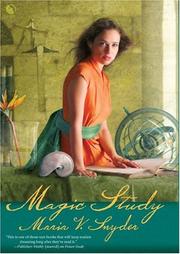
Magic Study
Sentenced to die in Ixia, Yelena returns to the land she was stolen from to learn the magic that made her an outlaw.
2,542-word summary · 11 min read
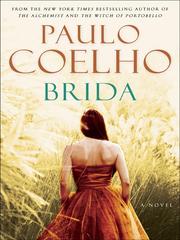
Brida
A young Irishwoman convinced she has a spiritual Gift seeks out a forest Magus and a Dublin witch, and learns that her gift is to bridge the visible and…
2,012-word summary · 9 min read
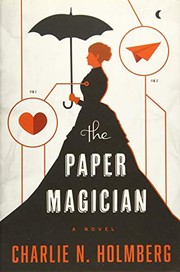
The Paper Magician
A graduate magician is assigned to paper magic instead of metal, then must face a woman who tears out her mentor's heart.
2,454-word summary · 11 min read
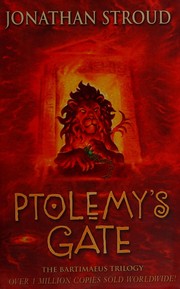
Ptolemy's Gate
Nathaniel and a weakened Bartimaeus face a possession plot in Stroud's dark final Bartimaeus novel.
2,328-word summary · 10 min read