
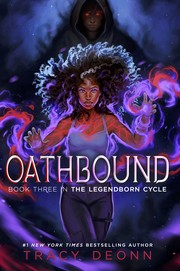
Oathbound
2,751-word summary 12 min read 656 pages in the book
- First published
- 2025
- Publisher
- Simon & Schuster Books for Young Readers
- Pages
- 656
- ISBN
- 9781665951906
- Series
- The Legendborn Cycle (#3)
Reading options
What's inside (9 sections)
I came to Oathbound because I had already followed Bree Matthews through the first two Legendborn books, and I wanted to see what Tracy Deonn would do with a heroine who spends most of this third book outside the very world the series was built around. It is a strange, brave choice for a middle volume. Published by Simon & Schuster Books for Young Readers on 4 March 2025, at 656 pages, it is also a big one. The scale suits the story, though I would not claim that every one of those pages earns its place. What I found was a book that takes its heroine apart and puts her back together in front of readers who have to be patient with it.
The book picks up after Bloodmarked, and it wastes no time letting Bree walk away from everything that book gave her. She has exiled herself from the Legendborn Order. She has cut her ancestral connections, the ties that give Legendborn their power and their sense of who they are. She has turned away from friends who cannot understand what her abilities cost her. The reason she offers is protection: keeping the people she loves safe means keeping herself away from them. Whether that is courage or a more tangled kind of fear is one of the questions the book keeps circling, and Deonn never hands over an easy answer.
A heroine who walks away from her own story
There is something uncomfortable about reading a series heroine who spends so much of the book willfully alone. Bree is not kidnapped or trapped or lost through no fault of her own. She makes a decision to leave, and she keeps making it. That gave the opening a real tug for me, because I have known people who pull away from the people who love them and insist it is for everyone's good. You want to argue with them. You also suspect they are partly right, which is the worst part.
Deonn is interested in what ancestry means when you deliberately sever it. Legendborn power is inherited, bound up with the ghosts and lineage that the Order treats as a source of status. Bree cutting her ancestral connections is therefore not a small logistical step. It is a rejection of an entire system of belonging. The book keeps asking whether you can survive outside the structure that named you, and whether the protection she claims to be buying is worth the self she is giving up to buy it.
That question sits under the more obvious action. When Bree pushes her friends away, the people who care about her are left standing on the other side of a door she has closed. Their confusion is treated fairly here. They are not simply obstacles to her mission or a audience for her suffering. Deonn gives the people around Bree their own anger and hurt, which made the isolation feel costly rather than decorative. The price of her choice is measured in the people she has to leave behind, and the book keeps that ledger visible.
I should say that this structure asks something of a reader who came for the ensemble. A lot of the pleasure of the earlier books was the found family, the circle of Scions who bickered and protected one another. Oathbound takes that circle apart and makes you feel the absence. For me that was the point. For a reader who mostly wanted the group back together immediately, the long separation may feel like a tease.
The bargain that gives the book its title
The title is not decoration. Bree's exile is made possible by an unbreakable bargain with the Shadow King, a shapeshifting demon who moves between the human world, the demon underworld, and the Legendborn secret society. He is not a figure who stays politely in one category. He crosses between the places the series has kept separate, and that mobility is what makes him useful and dangerous at once.
The terms are stark. In exchange for training her abilities, Bree binds herself to his bidding as his protégé. She gets the instruction she needs to handle powers that are otherwise hurting the people around her. He gets a claim on her that she cannot shrug off when it becomes inconvenient. Deonn builds the whole volume around the fact that a promise of help and a chain are hard to tell apart once they are locked in place.
What I liked is that the book does not pretend the arrangement is clean. Bree is not a novice who signs a contract without understanding it, and the Shadow King is not a mentor who turns out to be secretly kind. The bargain works precisely because both parties know what they are getting. That clarity makes Bree's situation more interesting than a simple betrayal plot. She made a choice with her eyes open, and now she has to live inside it.
The word "oathbound" fits her on more than one level. She is bound by the oath she swore to the Shadow King, but she is also bound by the oaths she broke with her friends and her Order. The book keeps these two kinds of obligation braided together. Every time the Shadow King calls in his claim, the reader is reminded that Bree's protection of her loved ones required her to abandon them. That tension carried the middle of the book for me, more than any single fight.
A Round Table with no king at its head
While Bree is isolated, the story does not stand still. The other Scions are facing a war with their Round Table fractured, leaderless, and missing its Kingsmage. The Kingsmage is Selwyn Kane, and his disappearance is the hole at the centre of the Order's problems. Deonn lets the political consequences pile up, and the picture is grim: an institution built on ritual and hierarchy suddenly unable to fill its own seats.
Nick tries to fix things through the rules. He invokes an ancient law requiring the High Council of Regents to grant him an audience, a move that should force the Order to hear a Scion's case. Instead, the Order's Merlins imprison him. That sequence sets the tone for much of the political material here. The rules exist, but the people in charge decide when they apply, and a young man who tries to use the system is swallowed by it. It is hard to read that as anything other than a pointed comment on who gets to be heard.
The situation worsens. Kidnappings escalate, and Merlins are found dead. Deonn piles crisis on crisis, and the effect is deliberately claustrophobic. There is no stable authority anyone can appeal to. The Round Table that once gave the Scions a shape and a purpose is a broken thing, and the war they are fighting is as much about who gets to lead as it is about the demons outside the gates.
Sel's portion of the story runs along a different track. He is struggling with demonia, and he is cared for by his long-lost mother, Natasia, a disgraced Merlin who hopes to curb his darkness. The arrival of a mother who was absent for so long is loaded, and Deonn does not soften it into a clean reunion. Natasia wants to help her son, and she also has her own history and her own shame as a Merlin who fell out of favour. Her care is real and it is also self-interested, and that ambiguity is more honest than a simple saintly parent would have been.
I found this thread one of the stronger ones in the book. Sel's darkness is not treated as a puzzle to be solved by a single spell. It is a condition that has to be managed inside a relationship, by a mother who knows exactly what she is trying to hold back. The book gives his pain the same weight as Bree's, which matters because the two of them are often defined by how they scream past each other. Here they are both in trouble, and neither is available to save the other.
Zoe and Elijah, the Shadow King's wards
Deonn introduces the Shadow King's twin demon wards, Zoe and Elijah, and this is where the book finds some of its fresh energy. Zoe in particular becomes important to Bree. Their friendship begins tensely and deepens over the course of the novel, and the slow thaw between them is one of the most satisfying pieces of character work here.
The tension has a simple root. Zoe is tied to the Shadow King, the same figure Bree has bound herself to, and neither of them can fully separate what they feel for each other from what their places in his household demand. A demon ward and a human protégé do not meet as equals on the first page. There is distrust on both sides, and there is the sense that either one could be used against the other. Watching that wariness loosen is slow going, and it is also the clearest evidence that Deonn is writing people rather than factions.
Elijah is drawn into the same web as Zoe's twin, and the pair together give the Shadow King's side of the story a domestic texture it would otherwise lack. These are not anonymous demons in a hierarchy chart. They are wards with a shared history and a shared loyalty, and that loyalty complicates any easy reading of them as tools of their guardian.
Sandie Angulo Chen, writing for Common Sense Media, called the book "a sweeping, character-building middle installment" and singled out the lore and the Zoe relationship for praise. I agree with that emphasis. The Zoe thread is the part of the book that feels most alive on the page, because it grows through small shifts rather than through declared feeling. Bree does not wake up trusting Zoe. She gets there in stages, and the book lets each stage take its time.
What Bree loses when she loses her memory
The hardest thread to read is the one about Bree's memories. A major part of the book has her losing significant memories, left with shame, guilt, and regret attached to figures she no longer recognises. That is a cruel construction. The feelings stay while the reasons leave, so she is haunted by emotions she cannot place and by people whose importance she cannot reconstruct.
Deonn uses this to make the cost of Bree's choices concrete. The bargain with the Shadow King did not simply remove things from her mind. It left behind the emotional residue, the shame and guilt and regret, without the facts that would explain them. Bree is forced to live with the shape of a loss while the content of it is gone. As someone who tends to trust memory as a record of who I am, I found this genuinely unsettling. The book is arguing that you can lose the story and keep the penalty.
The people she no longer recognises carry the pain of it too. To be looked at by someone who should know you and see nothing is its own kind of injury, and Deonn lets that land on both sides. Bree's friends are grieving more than the danger she is in. They are grieving the fact that she may not remember who they are to her. That is a quieter loss than a battle, and the book is smart enough to treat it as serious.
This thread also connects back to the ancestry theme. Bree has deliberately cut her ancestral connections, and now she is losing personal memories as well. One kind of severing was chosen; the other is a consequence she did not choose. Putting them side by side asks what is left of a person when both the inherited past and the lived past are being thinned out. The book does not answer that neatly, and I think the refusal is right.
The lore underneath the fight
Oathbound revisits the hierarchy of demons, the range of abilities, and the meaning of aether colours. For readers of the first two books this is familiar ground, and Deonn returns to it deliberately rather than treating it as settled background. The rules of this world are not a fixed diagram. They are a set of arguments about power, about who gets to hold it and who gets labelled as dangerous for having it.
Running through that material are the book's social concerns: institutional racism, generational trauma, white supremacy, and Black Girl Magic. Deonn blends Arthurian legend with African American folklore, and the mix is the point rather than a decorative flourish. The Round Table and the Merlins carry the weight of a tradition that has always centred some people and pushed others to the edges. Bree's presence inside that structure, and her decision to leave it, put those questions into the plot instead of leaving them as theme notes.
I thought the book was at its best when the lore and the social argument were doing the same work. When a rule about aether or a rank among demons turns out to be a rule about who is trusted, the fantasy and the politics sharpen each other. There are passages where the aether colours and demon hierarchy feel like they are being laid out for their own sake, and those passages are slower. But the underlying design is coherent. Deonn is not stacking magic rules on top of a story about race. The magic rules are one way the story about race is told.
That ambition is why the book can feel dense. A reader who wants a clean adventure with a simple chain of cause and effect will find a lot of material here about how institutions remember, how trauma is handed down, and how a heroine can be both powerful and cornered. The publisher describes the series as a number-one New York Times bestseller, and it is easy to see why this kind of layered storytelling has found a large audience. It is also easy to see why it asks more of a reader than a standard genre sequel.
Where the book drags, and where it lands
I want to be fair about the parts that slowed me down. This is a long book at 656 pages, and it is a middle installment, so a fair amount of space goes to restating and re-examining material from earlier in the cycle. Angulo Chen's note about "some exposition-heavy passages" matches my experience. When the book stops to revisit the hierarchy of demons or the rules around aether, the forward motion stalls, and you can feel the author making sure a reader who has been away from the series catches up.
The four-month span is another mixed choice. Spreading the story over several months lets the political collapse and Bree's memory loss accumulate at a believable pace. It also means that some chapters sit in the same emotional register for a while, with the Round Table still broken and Bree still isolated. The tension is real, but the dam takes a long time to break, and I found myself wanting the payoff to arrive a little sooner.
For all that, I finished the book feeling that Deonn had earned her structure. The separation, the bargain, the memory loss, and the fractured Order are not separate subplots that happen to share a cover. They are different ways of asking what it costs to hold power while refusing the community that gives it meaning. Bree's exile damages the people who love her, the Shadow King's training costs her pieces of herself, and the Order's rigid rules leave its own Scions imprisoned.
I would hand this to a reader who has already spent time with Bree and Sel and Nick and who is willing to sit with a heroine at her lowest. I would be cautious with someone picking up the series for the first time at book three, because the book assumes you know why these relationships matter. For the rest of us, Oathbound is a demanding, sometimes overstuffed, often moving volume that keeps faith with the mess it puts its characters through. It is less a story about winning a war than about what a person owes the people she has pushed away, and it stays with you because it refuses to let that debt be tidy.
FAQ
Is Oathbound a standalone novel?
No. It is the third book in Tracy Deonn's Legendborn Cycle, picking up after Bloodmarked, and it assumes readers already know the characters and their history.
Why does Bree leave the Legendborn Order?
She exiles herself to keep the people she loves safe, cutting her ancestral connections and turning away friends who cannot accept what her powers cost her.
Who is the Shadow King?
He is a shapeshifting demon who moves between the human world, the demon underworld, and the Legendborn secret society. He trains Bree as his protégé in exchange for binding her to his bidding.
Similar books
More from The Legendborn Cycle first, then related titles.
Legendborn
Grieving Bree infiltrates a racist Order to probe her mother's death.
2,447-word summary · 11 min read

Beauty: A Retelling of the Story of Beauty and the Beast
Robin McKinley's debut retells Beauty and the Beast through a plain, book-loving girl whose nightly refusals of the Beast's proposals slowly become something…
2,100-word summary · 9 min read

Six Crimson Cranes
A princess who loses her voice when a curse turns her six brothers into cranes must work in secret, trust a dragon, and speak a name she does not know.
2,214-word summary · 10 min read
Keeper of the Lost Cities
A twelve-year-old telepath leaves her human family for a hidden world of elves, where her powers and manufactured origins make her the target of a dangerous…
2,443-word summary · 11 min read

The Rose & the Dagger
Shahrzad is pulled from her Caliph husband and left in a desert camp of rebels, needing to break his curse and end a war before it ends her.
2,520-word summary · 11 min read

Blue Lily, Lily Blue
Blue searches for her missing mother while the Raven Boys wake a sleeper in the caves who is not the king they sought.
2,983-word summary · 13 min read
A Deadly Education
El can level mountains with a word, but surviving magic school takes allies, control, and a hard choice about power.
2,959-word summary · 13 min read
The Dream Thieves
Ronan pulls things from dreams while Gansey hunts a dead king and Blue tries to stay alive by staying apart.
1,922-word summary · 9 min read
The Sorcerer in the North
A young Ranger posted to a quiet fief goes undercover as a jongleur to investigate a supposed sorcerer haunting a wood and a poisoned castle.
2,246-word summary · 10 min read
The Iron Trial
Call Hunt tries to fail the entrance tests for the Magisterium, only to be chosen and drawn into a secret about the war that killed his mother.
2,248-word summary · 10 min read
The Demon King
A thief steals an amulet once owned by a legendary sorcerer, while a princess flees a forced marriage in the first volume of Cinda Williams Chima's high…
2,371-word summary · 11 min read
Wings
A homeschooled fifteen-year-old grows a blue flower from her back and learns she is a faerie sent to guard a hidden gate. Pike's debut makes plant lore feel…
2,506-word summary · 11 min read
Wild Magic
A thirteen-year-old orphan in the kingdom of Tortall learns to live with the gift of speaking to animals, and discovers that the creatures she loves are not…
2,056-word summary · 9 min read
The Woman Who Rides Like a Man
Newly knighted, Alanna heads south into Tortall's desert, where a broken sword and a dead shaman leave her responsible for a rebel tribe and three Gifted…
2,894-word summary · 13 min read
The Sorceress
Flamel takes the twins to London to find Gilgamesh, while Perenelle fights for her life on Alcatraz and an older threat wakes.
2,684-word summary · 12 min read
The Golden Enclaves
The Scholomance trilogy closes as El Higgins hunts the monsters beneath every enclave, tries to reach the boy trapped inside one, and learns what her world's…
2,564-word summary · 11 min read
The Girl of Fire and Thorns
Rae Carson's debut follows Elisa, an insecure princess born with a godstone in her navel, who is married to a foreign king and must grow into the leader a…
2,331-word summary · 10 min read

The Darkest Part of the Forest
In a town built around a sleeping horned boy in a glass coffin, a girl discovers she has been spending her nights as a faerie king's knight and remembers none…
2,012-word summary · 9 min read
The Book of Three
A restless assistant pig-keeper in mythical Wales chases his escaped oracle pig and finds himself beside Prince Gwydion in a war against the Lord of Annuvin.
2,019-word summary · 9 min read
Shadowland
Ever Bloom cannot touch Damen without risking his life. As she hunts for a cure, a mysterious surfer named Jude arrives and her loyalty to Damen is tested.
2,301-word summary · 10 min read

Nightshade
Calla Tor is raised to lead a wolf pack and marry its chosen alpha, until saving a human boy makes her question the Keepers who command her kind.
2,619-word summary · 12 min read
Nightbane
Isla Crown has thirty days to defend Lightlark after Grim threatens to destroy it, while memories of the year she spent with him return.
2,353-word summary · 10 min read

Magic Study
Sentenced to die in Ixia, Yelena returns to the land she was stolen from to learn the magic that made her an outlaw.
2,542-word summary · 11 min read
Keys to the Demon Prison
The fifth and final Fablehaven book sends Kendra and Seth Sorenson across secret preserves to keep the last keys to the demon prison out of rival hands.
2,251-word summary · 10 min read
Katabasis
Kuang sends a Cambridge doctoral magician into the underworld to fetch the supervisor she killed, all for a letter of recommendation. Academic satire turns…
2,374-word summary · 11 min read
Dragon Rider
A silver dragon, a sharp-tongued brownie and a lonely orphan boy cross deserts and seas to find the dragons' lost homeland, pursued by a golden killer made by…
3,188-word summary · 14 min read
Dear Martin
Nic Stone's debut follows Justyce McAllister, a scholarship student at a mostly white Atlanta prep school, who starts writing letters to Dr. King after a…
2,596-word summary · 12 min read
Cinderella Is Dead
Two centuries after Cinderella, a Black teenager in love with another girl flees her kingdom's forced marriage ball.
2,250-word summary · 10 min read

The Paper Magician
A graduate magician is assigned to paper magic instead of metal, then must face a woman who tears out her mentor's heart.
2,454-word summary · 11 min read
Ptolemy's Gate
Nathaniel and a weakened Bartimaeus face a possession plot in Stroud's dark final Bartimaeus novel.
2,328-word summary · 10 min read