
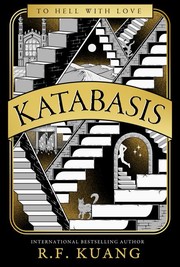
Katabasis
2,374-word summary 11 min read 560 pages in the book
- First published
- 2025
- Publisher
- Harper Voyager
- Pages
- 560
- ISBN
- 9780063021471
Reading options
What's inside (10 sections)
- A supervisor, a botched spell, and a letter of recommendation
- Skeletons and the Dialetheia
- The Weaver Girl and the two apples
- Elspeth Bayes and the boat
- What Alice and Peter each confess
- The impossible prison and the Hangman's Paradox
- Dis, the Lethe, and the bargain before Lord Yama
- What works, and what I would cut
- Key takeaways
- FAQ
I picked this up because Kuang had already proved in her earlier books that she can make academic argument feel like a contact sport. The premise sounded almost like a joke: a doctoral magician at Cambridge botches a spell, kills her supervisor, and learns that his soul has gone to Hell. Because she blames herself and because she needs his letter of recommendation to keep her place, she pays half her remaining lifespan to open a gate to the underworld and go get him. Katabasis came out in 2025 from Harper Voyager, running 560 pages, and it spends its first stretch on the sort of campus politics that Kuang clearly enjoys taking apart. Then it turns into something stranger and more painful, and then it keeps going well past the point where I thought it had said what it needed to say.
A supervisor, a botched spell, and a letter of recommendation
Alice Law is a doctoral magician at Cambridge, working under Professor Jacob Grimes, a man whose influence in her field is enormous. The spell she mismanages kills him outright and sends his soul downward. Her response is not to report the accident or to walk away from the discipline. She blames herself, and she needs Grimes's letter of recommendation, so she makes a bargain that costs her half of whatever life she has left and opens a gate into the underworld.
That is a ridiculous engine for a plot, and the book knows it. Kuang writes the early chapters with a dry, precise anger about how universities actually work. The letter of recommendation matters more than the dead man. Alice's future depends on a document only Grimes can write, which means the person she destroyed is also the person she now has to retrieve and persuade. The satire lands because the logic is recognisable. Anybody who has watched a junior scholar dance around a powerful supervisor will understand why Alice does not simply confess and start again.
She is not alone for long. Peter Murdoch, a rival with his own reasons for wanting that gate open, forces his way into the descent. He is not a helper in the usual sense. He is competition, a mirror, and a complication Alice did not ask for. Their arguments carry the book's early momentum, and Kuang gives them a shared history that makes every exchange feel loaded. I liked the pairing right away, mostly because neither of them is particularly likable and neither of them is entirely wrong.
There is a running joke about how much paperwork and theory surround even the most violent piece of magic here. To descend, Alice has to treat the underworld as a problem to be solved with the same tools she uses in a seminar. The book's wit comes from the collision between the grandeur of the myth and the smallness of the academic instinct that meets it. Alice does not become a heroine so much as a very tired graduate student who happens to be walking through Hell.
Skeletons and the Dialetheia
Down below, Alice and Peter run into skeletons commanded by Nick and Magnolia Kripke. The Kripkes are amoral magicians, and what they want is the Dialetheia, an object that can create a true contradiction. That idea is the book's central toy. A true contradiction is a proposition that is both true and false at the same time, and in a system built on logic such a thing is a weapon. Kuang builds a whole underworld cosmology around the possibility that a contradiction can be made to exist, and the Kripkes hunt it without any concern for who gets hurt along the way.
The result is a set of puzzles embedded in the story. Alice and Peter have to think their way through problems that are part logic exercise and part spellcraft. Some of this is genuinely clever, and I found myself slowing down to follow the rules. Some of it felt like the book showing off. The distinction matters, because the plot stops while the characters work through a tricky bit of reasoning, and a reader who came for the descent can easily feel parked while it happens.
One detail from this stretch stayed with me. Grimes had drawn a pentagram on Alice during their working relationship, and that mark resists the memory-wiping waters of the Lethe. It is a small, physical fact with a large emotional charge. The supervisor she is trying to rescue left a mark on her that survives even the river that erases everything else. Kuang uses it well, and it keeps returning as a reminder that Alice's obligation to Grimes is written on her rather than merely felt.
The skeletons themselves are unsettling in a way that suits the book's mood. They are not mindless monsters. They are commanded, which means somebody is doing the commanding, and their presence turns the underworld into a place where the hierarchy of the department has simply continued after death. I kept waiting for the satire to vanish once Alice crossed the gate. It never really does.
The Weaver Girl and the two apples
The Weaver Girl tests them with two apples. It is one of the cleaner episodes in the book, partly because it is simple to grasp and partly because the test never announces what it is measuring. Alice makes a choice unconsciously, Peter makes his, and the difference between them has consequences neither fully understands at the time. Peter ends up ensnared by the deity.
This is where the book starts to shift from campus satire into something closer to myth. The Weaver Girl is not explained away. Her test works on the level of story logic rather than legalistic argument, and the apples matter because of what the characters do without thinking. I thought this was among the strongest material in the novel. It trusts the reader to understand that a choice can reveal something more honestly than a speech can.
It also marks the point where Peter stops being simply a rival. Once he is caught, the dynamic between him and Alice changes, and the book becomes more invested in what they mean to each other than in what they are arguing about. Whether that payoff earns itself is something I will come back to near the end. For the moment it is enough to say that the test lands because Kuang withholds the explanation and lets the consequence speak.
Elspeth Bayes and the boat
Elspeth Bayes is a former advisee of Grimes who took her own life. She appears as a kind of ferry figure, and she saves Alice and Peter from the Kripkes' minions. For a while she is the most promising presence in the underworld: somebody who understands Grimes, who has been through the same system, and who might be able to tell Alice what her supervisor really was.
Then Elspeth learns that Alice and Peter intend to rescue Grimes, and she throws them off her boat. That turn is brutal and, on reflection, fair. Elspeth's death is bound up with the man they are trying to save, and her refusal to help them finish the job is one of the book's sharpest moral judgements. Kuang does not pause to explain it. You either see why Elspeth cannot carry them any further or you don't.
I found the whole episode more convincing than much of the logic material. Elspeth has a clear stake, a clear grievance, and a clear limit. Her boat is not a shortcut. It is a test of whether Alice has understood anything about the man she is chasing. The scene also does something the rest of the book only talks about: it puts a life on the line as a consequence of Grimes's behaviour, rather than as an abstraction to be argued over.
What Alice and Peter each confess
As they travel, the book lets both of them say the thing they have been avoiding. Alice admits that Grimes assaulted her, and she admits that what she wants is not merely to bring him back but to bind his spirit to her will. That second admission is the uglier one, and it is what makes Alice a difficult protagonist in the best sense. Her trauma is real, and so is her desire for control. The book refuses to make those two facts tidy.
Peter confesses that he deliberately let her spell fail, after Grimes stole his research. This recontextualises the opening accident. The death was not one person's clumsiness alone. It was a chain of injuries, each of which made the next one more likely, and both of these students have been damaged by the same supervisor. Their honesty arrives late, and it does not solve anything between them, but it changes the shape of what they are doing.
The confessions are the emotional centre of Katabasis, and they are handled with more care than the surrounding puzzle boxes. Kuang is good on the specific humiliation of being used by a celebrated adviser. She is less good, at least for my taste, at letting a scene breathe once the feeling has been named. Right after a moment like this, the book has a habit of pivoting back to a rule or a mechanism, and the temperature drops noticeably.
There is also a question the novel raises without fully answering. Alice wants to bind Grimes, Peter wanted him to fail, and Elspeth wanted nothing to do with him. Three people, three claims on the same man, and no version of justice that satisfies all of them. The book is stronger when it sits with that disagreement than when it tries to resolve it through a piece of magical engineering.
The impossible prison and the Hangman's Paradox
The Kripkes eventually trap Alice and Peter in an impossible geometric prison. This is the book at its most technical. The prison works because its geometry cannot be resolved, and escape requires a contradiction rather than a key. Peter uses the Hangman's Paradox to free Alice, and it costs him his life.
I want to give Kuang credit here. A paradox as a mode of escape is a neat idea, and the Hangman's Paradox is a real logical puzzle, so the solution grows out of the book's own rules instead of being dropped in from outside. The cost is real too. Peter's death is not a fake-out, and Alice has to continue alone because of a choice he made. That is a proper sacrifice, and it earns the shift in tone that follows.
It is also the moment when the book's length starts to chafe. Getting to that prison requires a lot of travel and a lot of talk, and the payoff is relatively brief. I found myself admiring the construction while also wanting the story to move faster. Kuang clearly loves the mechanics of her underworld, and that love is both the source of the book's originality and the reason the middle section drags.
Dis, the Lethe, and the bargain before Lord Yama
Alone in the Land of Dis, Alice lures the Kripkes and their child into the Lethe. The river does what it does: it erases. That is how she deals with enemies who cannot be beaten in an argument. It is a brutal solution, and it fits a book that keeps insisting that memory is something that can be taken away from you.
Elspeth gives Alice the Dialetheia, the object the Kripkes were hunting. Before Lord Yama, Alice refuses Grimes's offer to keep her beside him forever. She trades his soul for Peter's return and bargains back half of the years they sacrificed to reach him. The ending gives Alice something close to what she said she wanted, in a form she can finally accept, and it undoes the price she paid at the start.
I have mixed feelings about this. On one hand, it closes the loop neatly and it lets Alice reject the man who shaped and used her. On the other hand, the rescue-and-return structure feels conventional next to the strange material around it, and several critics made exactly this complaint. After all the contradictions and paradoxes, the book resolves into a bargain and a reunion. That may be satisfying, but it is less daring than the premise promised.
What works, and what I would cut
Kuang's academic satire is the best thing in Katabasis. The pressure Alice is under, the way Grimes's reputation protects him, and the willingness of institutions to excuse a brilliant man are all drawn with real bite. The Guardian framed its review as a descent into the hellscape of academia, and that is a fair description of the first half. The underworld is, in a quite literal sense, an extension of the department.
The trouble is size. At 560 pages, the book has room for every puzzle and every doubt, and it uses the room. Reviewers praised the sharpness of the satire while finding the long narrative bloated and tedious, and I agree with both halves of that judgement. The logical puzzles and the introspection stall the story at intervals, and the middle in particular has the feeling of a book explaining its own rules back to itself. Kirkus and Publishers Weekly both took note of the book's ambition, and ambition is exactly the problem. There is too much of it.
So who is this for? I would hand it to a reader who enjoys a novel that argues with itself, who likes their fantasy studded with actual logic, and who finds campus politics funny rather than exhausting. I would be cautious with somebody who wants a tight quest and a fast descent. The best version of Katabasis is the one where a damaged student walks into Hell because a letter of recommendation is the only door left open, and Kuang has plenty of ideas about why that is both absurd and completely believable. The longer version, the one that is actually published, asks you to sit through a great deal of cleverness before it gets there. I still finished it, and I am glad I did, but I would not hand all 560 pages to just anybody.
FAQ
Is Katabasis part of a series?
No. It is a standalone novel published in 2025 by Harper Voyager, and the post lists no series for it.
Why does Alice go down into the underworld?
A spell she mismanages kills Professor Jacob Grimes and sends his soul to Hell. Because she needs his letter of recommendation, she pays half her remaining lifespan to open a gate and fetch him.
What is the main criticism of the book?
Reviewers praised the sharp academic satire but found the long narrative bloated and tedious, with logical puzzles and introspection that stall the story.
Similar books
Keys to the Demon Prison
The fifth and final Fablehaven book sends Kendra and Seth Sorenson across secret preserves to keep the last keys to the demon prison out of rival hands.
2,251-word summary · 10 min read
Babel
A Chinese orphan trained in translation magic at Oxford must choose between empire and resistance as Britain drives toward war with China.
3,696-word summary · 16 min read
The Magician's Land
Exiled from Fillory, Quentin takes a teaching job at Brakebills, joins a crew of magical thieves, and must help rebuild a dying world to finish the trilogy.
2,204-word summary · 10 min read
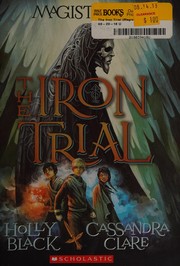
The Iron Trial
Call Hunt tries to fail the entrance tests for the Magisterium, only to be chosen and drawn into a secret about the war that killed his mother.
2,248-word summary · 10 min read

Water Moon
A woman inherits a Tokyo pawnshop that trades in regrets, finds her father gone and one glowing bird freed, and crosses into another world to learn what her…
2,087-word summary · 9 min read
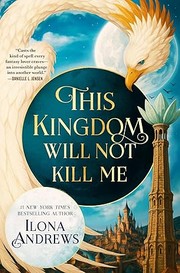
This Kingdom Will Not Kill Me
A grocery delivery driver wakes in a fantasy capital she knows from an unfinished trilogy, only to discover she cannot die.
2,339-word summary · 10 min read
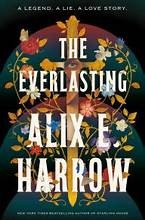
The Everlasting
A broken scholar is sent into the past to live the legend of Sir Una Everlasting, only to find that the story demands her death and that he is writing the lie.
2,464-word summary · 11 min read
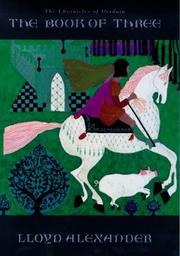
The Book of Three
A restless assistant pig-keeper in mythical Wales chases his escaped oracle pig and finds himself beside Prince Gwydion in a war against the Lord of Annuvin.
2,019-word summary · 9 min read
Oathbound
Bree Matthews has exiled herself from the Legendborn Order to protect the people she loves, but an unbreakable bargain with a shapeshifting demon has bound her…
2,751-word summary · 12 min read
Golden Fool
FitzChivalry Farseer returns to Buckkeep as a servant and a grieving Skillmaster, teaching Prince Dutiful while court intrigue, the Piebalds and a…
2,583-word summary · 11 min read
Fool's Fate
Prince Dutiful must kill a dragon to secure his betrothal, and FitzChivalry Farseer is caught between the Fool and Chade over Icefyre's fate.
2,247-word summary · 10 min read
Dragon Rider
A silver dragon, a sharp-tongued brownie and a lonely orphan boy cross deserts and seas to find the dragons' lost homeland, pursued by a golden killer made by…
3,188-word summary · 14 min read

Brida
A young Irishwoman convinced she has a spiritual Gift seeks out a forest Magus and a Dublin witch, and learns that her gift is to bridge the visible and…
2,012-word summary · 9 min read
The Wind Through the Keyhole
Sheltering from a killing storm, Roland tells his ka-tet a tale of his youth, then a boy's fairy tale that mirrors his own loss.
2,504-word summary · 11 min read
Pyramids
A prince raised by assassins comes home to a desert kingdom where the high priest rules and a spitefully huge pyramid starts bending time.
2,441-word summary · 11 min read
Keeper of the Lost Cities
A twelve-year-old telepath leaves her human family for a hidden world of elves, where her powers and manufactured origins make her the target of a dangerous…
2,443-word summary · 11 min read
Secrets of the Dragon Sanctuary
Kendra is replaced by a plant copy and held by the Society, while Seth steals a unicorn horn so the family can enter a dragon sanctuary.
2,590-word summary · 12 min read

Lioness Rampant
Alanna searches for the Dominion Jewel with the Shang Dragon, then returns to Tortall to face Duke Roger at Jonathan's coronation.
2,478-word summary · 11 min read
Magician's Gambit
Garion and his companions cross haunted Maragor and the caves beneath Rak Cthol to recover the Orb of Aldur.
2,391-word summary · 11 min read
Enchanters' End Game
Garion marches toward Torak while Ce'Nedra leads the West's army in the final Belgariad volume, where prophecy and war meet.
2,557-word summary · 11 min read
Grip of the Shadow Plague
A plague turns Fablehaven's creatures of light into shadows while Kendra hunts an artifact in Arizona and Seth races to find the cause.
2,131-word summary · 9 min read
Fool's Errand
FitzChivalry Farseer has lived in exile for fifteen years. When Prince Dutiful vanishes before his betrothal, Fitz returns to Buckkeep to find him, with a wolf…
2,606-word summary · 12 min read
The Sword of Shannara
A young half-Elf and a company of companions set out to recover a magic sword before the Warlock Lord destroys the Four Lands.
2,474-word summary · 11 min read
The Last Graduate
El must survive graduation when the school feeds seniors to monsters.
2,232-word summary · 10 min read
Pawn of Prophecy
Farm boy Garion learns sorcerers watch him as an old Orb wakes.
2,331-word summary · 10 min read
The School for Good and Evil
Best friends Sophie and Agatha are taken to fairy tale school and sorted to wrong sides.
2,042-word summary · 9 min read
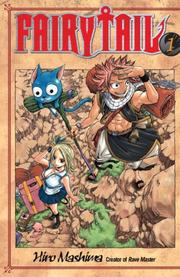
Fairy Tail, Vol. 1
Lucy joins rowdy Fairy Tail guild with fire boy Natsu and cat Happy.
2,049-word summary · 9 min read
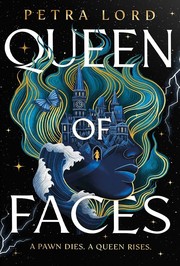
Queen of Faces
Anabelle Gage is dying in a body that is not hers. To live, she must steal a new face and kill for the school that caught her.
2,103-word summary · 9 min read
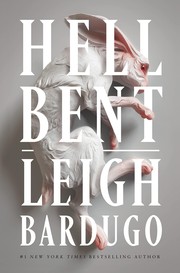
Hell Bent
Alex Stern risks Yale and Lethe to pull Darlington from Hell through a hidden gate.
2,994-word summary · 13 min read

Blue Lily, Lily Blue
Blue searches for her missing mother while the Raven Boys wake a sleeper in the caves who is not the king they sought.
2,983-word summary · 13 min read