
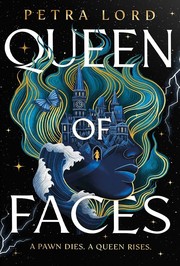
Queen of Faces
2,103-word summary 9 min read 480 pages in the book
- First published
- 2026
- Publisher
- Henry Holt and Company (BYR)
- Pages
- 480
- ISBN
- 9781250362988
- Series
- Queen of Faces (#1)
Reading options
What's inside (8 sections)
I picked this one up because the premise stopped me cold. A girl trapped in a body that is literally rotting around her, in a city where rich people swap bodies the way the rest of us swap coats. Henry Holt published it on February 3, 2026, and the standard hardcover runs 480 pages. It is the first book in a series called Queen of Faces, and it reads like the start of something big, the kind of debut that arrives with foil on the case and a map on the endpapers. I read it in four sittings, and the middle of the book kept me up later than I planned.
The heroine is Anabelle Gage, who goes by Ana. She was born a girl and lives in a male body, and that body is failing. The book is specific about what this means in daily life. Pain wakes her. Movement costs her. Every plan she makes has a clock running under it, because the flesh she wears is breaking down from the inside and she has no money to replace it. I thought this was a strong choice for an opening. A lot of fantasies give the heroine a wound that only matters when the plot needs it. Ana's body matters on every page.
Caimor, where bodies are fashion
The city is Caimor, and it runs on smog and money. Lord builds it as a place with a sharp split. At the top are the wealthy families of the magical elite, people who buy what the book calls designer bodies and throw them away when something newer or prettier comes along. Below them is everyone else, breathing bad air and patching themselves together. Ana lives at the bottom of that split. She cannot afford a new chassis, which is the word the book uses for a body you move into, and the lack of one is killing her.
What I found interesting is how the book treats bodies as both practical and personal. A chassis is a medical fact and also a question of who you are. Ana knows exactly who she is. The body she wears does not match, and it is dying besides. The rich treat this whole arrangement as shopping. Ana experiences it as a locked door. That contrast drives the politics of the whole novel without anyone having to give a speech about it. You see a rich kid complain about a chassis the way someone might complain about last season's shoes, and then you cut to Ana counting coins and feeling her joints ache, and the point lands on its own.
The magic system sits on top of this economy. Ana has illusion magic, the ability to bend what people see. It is useful and limited. She can fool eyes, not fists. She can pass for a moment, not forever. I liked that her power matches her problem. She is someone who needs to be seen differently and cannot pay for it, so she cheats perception instead. But illusions do not fix rot. That gap between what she can fake and what she needs is where the tension lives.
There is also a sharp portrait of the students inside Paragon. They are not cartoons of privilege, which would have been easy. Some are kind and clueless, aware that their new faces were bought but incurious about who paid. A few are cruel in the casual way of people who have never been told no. One or two suspect the school runs on something dirty and look away on purpose. Ana watches all of this from her strange half inside position, and her observations are some of the funniest and bitterest passages in the book. She can imitate these kids well enough to walk among them, and every imitation reminds her of what was taken from her.
Paragon Academy and the door that closes
Paragon Academy is the prestigious school at the center of the rich world. Among other things, it provides its students with healthy new forms, which makes admission a medical event as much as an academic one. For Ana, getting in would mean life. A real body. A future.
She fails to gain admittance. The book spends real time on this failure, and I was glad it did. A weaker story would rush past the rejection to get to the action. Lord lets it sit. Ana had put everything on this one chance, and when it falls through, her last hope goes with it. There is a stretch here where she does the math on her remaining time and finds nothing left. It is bleak without being self pitying, because Ana responds the way she always does. She looks for another way in.
That way is theft. If the school will not give her a chassis, she will steal one. Using her illusion magic, she plans to take a healthy body that belongs to someone with more money than sense. The plan is desperate and precise at the same time, which tells you a lot about Ana. She is not reckless by nature. She is careful. But careful has stopped working, so she bets everything on one illegal move.
Caught by the headmaster
The theft goes wrong in the most dangerous way possible. Ana is caught, and not by a guard or a teacher. She is caught by the headmaster of Paragon Academy himself. This is the hinge of the whole book, and Lord plays it as a cold transaction rather than a shouting match. The headmaster does not turn her in. He makes her an offer with two branches.
Branch one is execution. She committed a serious crime and the punishment is death. Branch two is service. She becomes his mercenary, his tool, doing the stealing and fighting and killing he cannot do in the open. In exchange, she lives, and living means a path to a body that works.
Ana takes the deal because there is no other deal. From here the book becomes a missions story layered over a school story. She is inside the orbit of Paragon without being a real student of it. She does the headmaster's dirty work while watching the privileged kids live the life she was refused. That position, close enough to see everything and excluded from all of it, gives Ana a sharp view of the elite. She learns their names and their weaknesses. She also learns that the school's polished surface covers something uglier.
I should say the headmaster is well drawn as a certain kind of villain. He never raises his voice. He prices everything. Ana's life has a number. Her missions have numbers. Even her body has a number, the cost of keeping it running between jobs. He is frightening because he is calm, and because he clearly believes this arrangement is fair.
An assassin, a bombmaker, an exile
Ana does not survive this arrangement alone. The publisher description promises her survival will depend on a rough crew, and the book delivers: an impulsive assassin, a brooding bombmaker, and an alluring exile who may or may not be trustworthy. Found family groups like this can feel assembled from a kit. Here it mostly works, because each of them wants something different from Ana and from the city.
The assassin is the spark. Quick to act, quick to laugh, first through the door. In a crew full of people who calculate, this one moves, and that movement keeps several missions from stalling. The friendship between this character and Ana has real warmth. They trade jokes when things are bad, which is often, and the humor never feels pasted on. It feels like how scared young people actually talk.
The bombmaker is the opposite weight. Quiet, careful, angry in a slow burning way. Bombs in this book are not just action props. They are the weapon of people who cannot afford armies, and the bombmaker knows it. There are good scenes of preparation, measuring and mixing and waiting, that slow the pace in a useful way before everything blows open.
The exile is the most slippery of the three. Charming, well mannered, clearly hiding plenty. Ana is drawn to this person and knows she should not be. The book lets that contradiction breathe instead of resolving it fast. Every conversation with the exile has two layers, the pleasant one and the one where both of them are counting exits. I will not spoil where that thread lands, except to say the reveal changed how I read the earlier chapters, and I mean that as praise.
Together the four of them steal, fight, and run through Caimor's lower quarters and the edges of the elite world. The missions escalate. Early jobs are about survival and proving worth. Later ones pull Ana into secrets about the school, the headmaster, and the city that make her question whose side she is on.
The Black Wraith and the coming revolt
Under all of this, revolt is building in Caimor's underworld. The poor are done being patient. The rich are done pretending. And at the head of the rebels stands a figure called the Black Wraith, described as an infamous dark witch. The wealthy and powerful want the rebels crushed and the Wraith destroyed.
Lord handles this the smart way. The rebellion is background at first, rumors and graffiti and a bombing somewhere across town, and it moves closer as Ana's missions take her deeper into the city's machinery. Ana starts out with no politics beyond staying alive. Staying alive keeps putting her in rooms where political things happen. By the late chapters she has seen enough from both sides to understand that neither one is clean, and that her own role as the headmaster's weapon puts her on the wrong side of people she respects.
The line between villain and hero collapses for Ana in a way the book earns. She kills for a man she hates to buy a life she needs. The rebels do terrible things for reasons she understands. The elite do terrible things for reasons they barely bother to explain. Ana has to decide what her survival is worth and who it is allowed to cost. I found these chapters the strongest in the novel. The action is fast, but the choices are what kept me turning pages.
Without giving away the ending, the book closes its immediate plot while leaving the larger war open. Ana's situation changes in ways that matter. Some relationships break. One revelation about the Wraith and the headmaster's operation reframes the whole deal Ana thought she understood. And the final pages include a look ahead at the sequel, King of Masks, which suggests the next book will push further into the rebellion itself.
What I thought, honestly
The strengths are real. The body swap economy is fresh and the book thinks it through. Ana is a memorable heroine, stubborn and funny and tired in a way that feels true to someone living with constant pain. The crew dynamics carry the middle. The late game twists are genuinely surprising, and at least one of them made me flip back to check earlier scenes.
There are drags. The middle missions blur together at one point, with a stretch where every job follows the same shape: briefing, banter, entry, complication, escape. Readers who love tactical detail will enjoy this more than I did. I also wanted more of Caimor itself. The smog choked streets and markets are vivid in flashes, but some chapters live entirely in rooms, and I kept wishing the camera would pull back. One romance thread moves faster than the trust between the characters supports, though the book seems aware of this and complicates it later.
Who should read it? Fans of dark academia with actual teeth, readers who liked the scheming schools of Leigh Bardugo or the political bite of R. F. Kuang, and anyone who wants a fantasy that treats identity as plot rather than decoration. It is a young adult novel with adult crossover appeal, violent in places but never cruel for its own sake. At 480 pages it is a commitment, and the pacing sags once around the two thirds mark, but the last hundred pages pay off the slow parts. One more note for collectors: the deluxe printing with etched edges and a printed endpaper map is genuinely handsome, though the standard hardcover I cite here carries the same text. I finished it wanting the sequel, which is the simplest test a first book in a series can pass.
FAQ
When was Queen of Faces published and how long is it?
Henry Holt and Company (BYR) published it on February 3, 2026. The standard hardcover runs 480 pages and the ISBN is 9781250362988.
Is Queen of Faces the first book in a series?
Yes. It opens the Queen of Faces series as book one, and the edition includes a preview of the sequel, King of Masks.
Who is the Black Wraith?
The Black Wraith is the infamous dark witch who leads the rebels in Caimor's underworld, and the elite want the uprising crushed.
Similar books
More from Queen of Faces first, then related titles.
The Last Graduate
El must survive graduation when the school feeds seniors to monsters.
2,232-word summary · 10 min read

Inkdeath
The final Inkworld novel sends Mo into the land of the dead, leaves Meggie choosing between two boys, and ends the Adderhead's immortality with three written…
2,062-word summary · 9 min read

Lioness Rampant
Alanna searches for the Dominion Jewel with the Shang Dragon, then returns to Tortall to face Duke Roger at Jonathan's coronation.
2,478-word summary · 11 min read

The Siren
Saved from a shipwreck in 1930, Kahlen becomes a siren who sings men to their deaths for the Ocean, until a boy in a college library makes her want a life she…
2,369-word summary · 11 min read

The Golem's Eye
Two years after The Amulet of Samarkand, Nathaniel is a rising bureaucrat, Bartimaeus is his unwilling servant again, and something made of clay is tearing…
2,299-word summary · 10 min read

The Rose & the Dagger
Shahrzad is pulled from her Caliph husband and left in a desert camp of rebels, needing to break his curse and end a war before it ends her.
2,520-word summary · 11 min read

The Queen of the Tearling
Nineteen-year-old Kelsea leaves the woods to take her throne, ends a shipment of human captives, and draws the Red Queen's revenge.
2,357-word summary · 10 min read

We Hunt the Flame
In a fractured Arabia-inspired world, a disguised huntress and a prince-assassin race to find a magic-restoring book and confront an ancient evil.
2,195-word summary · 10 min read
The Magician
Sophie and Josh flee to Paris with Nicholas Flamel, where John Dee, Machiavelli, and an awakened god close in on the missing pages of the Codex.
2,162-word summary · 10 min read

The Hazel Wood
Alice Proserpine has spent her life running from bad luck. When her mother vanishes, she follows a trail of fairy-tale clues to her grandmother's estate and…
2,064-word summary · 9 min read
In the Hand of the Goddess
Alanna, still disguised as a boy, survives war, court plots, and a death duel as the Goddess's chosen warrior in the second Song of the Lioness book.
2,018-word summary · 9 min read

Blue Moon
Ever Bloom tries to save her immortal boyfriend, Damen, from a mysterious illness while a new student named Roman quietly takes control of her school and her…
1,998-word summary · 9 min read
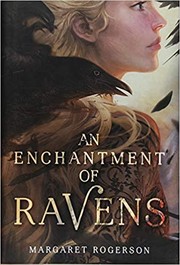
An Enchantment of Ravens
Isobel, a mortal artist in the fairy town of Whimsy, paints a portrait of the autumn prince and falls in love with him, breaking the laws of her craft.
2,087-word summary · 9 min read
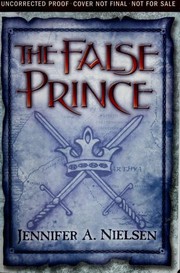
The False Prince
A nobleman buys four orphans and tells them only one will survive to impersonate the missing prince. The narrator, a defiant thief named Sage, has other plans.
2,044-word summary · 9 min read
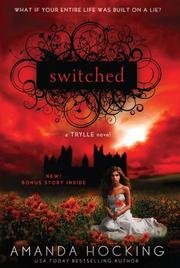
Switched
A Minnesota teenager who can make people obey her discovers she is a changeling troll princess, and the hidden kingdom she came from wants her back.
2,131-word summary · 9 min read

The Bane Chronicles
Eleven stories across five centuries follow Magnus Bane from a ban in Peru to his first date with Alec in this illustrated Shadowhunter companion.
2,470-word summary · 11 min read

The Indigo Spell
Sydney Sage hunts an aging witch, learns forbidden magic, and finally admits she loves Adrian, while the Alchemist tattoo on her cheek may be controlling her.
2,604-word summary · 12 min read

Rebel Angels
Gemma returns to the realms to bind magic while facing Circe and London season.
2,708-word summary · 12 min read
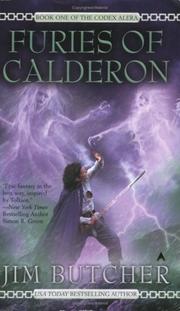
Furies of Calderon
Furyless Tavi defends Calderon Valley when the Marat return and lords scheme.
2,587-word summary · 11 min read

A Winter's Promise
Ophelia reads objects and is sent to marry Thorn on a cold ark.
2,502-word summary · 11 min read
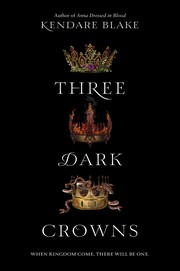
Three Dark Crowns
Three triplet queens must kill each other for the crown, but love and gifts get in the way.
2,134-word summary · 9 min read

Every Heart a Doorway
Nancy returns from the Halls of the Dead to a school for travelers, where a murder forces portal children to face grief, belonging and the price of going home.
2,400-word summary · 11 min read

The Golden Lily
Sydney Sage guards Jill at Amberwood Prep in Palm Springs, studies forbidden magic, favors Adrian over Brayden, and faces Alchemist custody in this second…
2,988-word summary · 13 min read
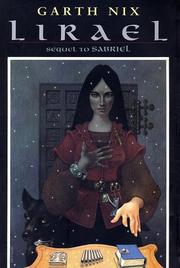
Lirael
A Sightless Clayr girl and a prince afraid of Death join the Dog and Mogget to stop necromancers from waking the Destroyer Orannis at the Red Lake while old…
2,692-word summary · 12 min read
Edgedancer
Hungry street thief Lift and her vine-like friend Wyndle cross the Herald Nale in Tashikk when a child emperor shows Radiant signs and she refuses to step…
2,328-word summary · 10 min read
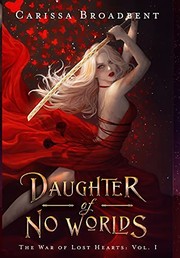
Daughter of No Worlds
A former slave with rare magic hires exiled warrior Max to train her for a daring rescue, sparking slow burn love and wider war in this big 520-page fantasy…
2,529-word summary · 11 min read
Bitterblue
Eighteen-year-old Queen Bitterblue sneaks out to learn why Monsea still suffers after Leck, facing court lies, ciphers, and trials in Cashore's rich third…
2,686-word summary · 12 min read
The Tombs of Atuan
Priestess Arha guards dark Tombs until wizard Ged comes to steal back ring.
2,043-word summary · 9 min read

The Amulet of Samarkand
Boy magician Nathaniel summons djinn Bartimaeus to steal the Amulet and stop Lovelace's coup in London.
2,350-word summary · 10 min read
Strange the Dreamer
Orphan librarian Lazlo Strange joins a quest to the lost city of Weep, where blue-skinned godspawn haunt dreams.
2,221-word summary · 10 min read