
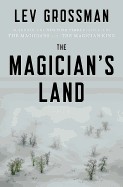
The Magician's Land
2,204-word summary 10 min read 416 pages in the book
- First published
- 2014
- Publisher
- Viking
- Pages
- 416
- ISBN
- 9780670015672
- Series
- The Magicians (#3)
Reading options
What's inside (8 sections)
Finishing a trilogy is a particular kind of problem, and Lev Grossman solved it in a way I did not expect. The Magician King had ended with Quentin Coldwater giving up the throne of Fillory and being shut out of the door back to it, which felt less like a victory than a sentence. I started the third book assuming it would be about getting that door open again. It is, in the end, but the route there goes sideways through talking birds, stolen suitcases, dead gods, and a job teaching magic at the school that once threw Quentin out. The Magician's Land came out in 2014 from Viking, runs to 416 pages in its first edition, and closes the series that began with The Magicians in 2009. It is also, by a fair margin, the strangest of the three.
The Professor Who Can Mend Teacups
The book opens with Quentin back at Brakebills, his old college, now employed as a professor. This is a delicious bit of placement. He spent the first novel wanting to be let in and the second one wanting to leave the kingdom he had won, and now he is on the other side of the lectern, assigned the least glamorous discipline in the building. His specialty is minor mendings, the repair of small broken objects. It is a skill that suits a man who has spent two books trying to put himself back together and failing.
He is also quietly obsessed with an ancient spell he picked up during his travels through the Neitherlands, the city of doors between worlds. Brakebills has given him a narrow brief and a great deal of free time, so he studies it on the side. The spell has to do with making a new world, which tells you where the book is heading long before the plot gets there.
Then a student named Plum gets into trouble. A magical prank goes wrong, and Quentin breaks protocol to pull her out of it. In the process he learns that Alice, who became a niffin, a spirit of pure magic, at the end of the first book, is still alive. Plum is expelled for the prank and Quentin is fired for the rescue, and just like that he is out of Brakebills and short of money. Grossman disposes of a whole stable situation in a few pages, which is his way throughout this book. Nothing stays put.
Plum is the best new character he gives us here. She is bright, reckless, and unfazed by Quentin's reputation, and she becomes the partner he never quite had in the earlier books. Their scenes together have a looseness and a snap that the Quentin and Alice material never quite achieved, and they carry a large share of the novel's momentum.
The Suitcase and the Bird
Needing money, Quentin and Plum drift into a crew of magician thieves led by a talking bird. Yes, a talking bird. The heist they are planning involves a mysterious suitcase, and the group has the haphazard quality of people who are good at magic and bad at everything resembling a plan. Grossman writes these chapters with a light, almost buccaneering touch, and for a while the book feels like a caper.
The job goes wrong in the expected way and in a few unexpected ones. A rival crew shows up with translucent golden hands that can reach through ordinary matter, and a fight and chase scatter everybody. The suitcase turns out to hold two things: an old book and a blade that can kill a god. One of the thieves reveals herself as Asmodeus and takes the blade, with the intention of hunting down Reynard the Fox, the trickster who ruined Julia in the second book. Quentin and Plum make off with the book.
That book is the hinge the rest of the story turns on. It is a memoir by Rupert Chatwin, a member of the family who discovered and settled Fillory, written near the end of his life during the Second World War. Rupert wanted his side of the story on record before he died. His account explains how the Chatwins found their way into this other world and lived there, and how his brother Martin traded away his humanity to the god Umber in order to stay. Grossman uses the memoir to give the whole series a history it had only hinted at, and the effect is to make Fillory feel older and sadder than it did when it was just Quentin's childhood fantasy.
The Rams and the Dying Land
While Quentin is reading Rupert's memoir in New York, the situation in Fillory is coming apart. Eliot and Janet, who have been ruling there, learn from Ember, the ram god, that the place is dying. This is the same problem the second book raised in a different form: magic is a loophole in the universe, and the old gods have come back to close it. Fillory is tied to that loophole, so when the magic goes, the land goes with it.
Eliot leaves for Earth. Janet, Josh, and Poppy follow a clue from Rupert's book into a hidden castle, where they find Umber and confront him just as the end begins. Grossman cuts between these threads quickly, and keeping track of who is where takes some attention. The book is looser and more sprawling than its predecessors, moving from Brakebills to a heist to a memoir to an apocalypse, and some readers will find that cheerful messiness a strength while others will want a tighter line. I am mostly in the first group, though there are stretches where the machinery shows.
The gods in this book are not grand. Ember appears as a ram, and Umber is tied to a specific place and a specific bargain, and neither of them makes much of a showing. Grossman has always treated the divine as a kind of large and indifferent machinery rather than a source of moral instruction, and that perspective pays off here. When the world starts to fail, it fails because the machinery is stopping, not because anyone is being punished. That is a bleak idea, but it is also freeing for the characters. There is no judgment waiting for them, only a problem to solve, which is why Quentin's eventual solution takes the form it does.
One of the pleasures of this final volume is the way characters from the earlier books drift back in with new lives. Penny, Quentin's old classmate, has become a powerful librarian in the Neitherlands, and he has golden hands like the thieves who attacked the heist, hands that some of his subordinates have copied. The detail is never fully explained, and that is part of the book's texture. The world has kept moving while Quentin was busy being expelled from it.
A House That Looks Like Itself
Back in New York, Quentin and Plum try the spell tucked into Rupert's book. They want to make a new magical land, a place of their own. They are missing an ingredient, so the spell goes wrong and produces a strange copy of their own house, a mirror version in which Alice is trapped. It is one of the eeriest images in the series: the familiar rooms turned slightly false, with the person Quentin has been trying to get back on the other side of them.
Eliot arrives from Fillory with the news that the land is finished. Quentin uses the spell he learned in the Neitherlands to restore Alice to human form. She comes back furious, and rightly so, given what being a niffin meant. Then she tells the others what she saw while she was out of herself, including a trip back to the earliest days of Fillory, when a tigress goddess sacrificed herself to give life to Ember and Umber and, through them, to the land itself. That story matters because Quentin is about to repeat it.
The talking bird turns up too, desperate, explaining that Ember sent him. Quentin throws the bird out. It is a small, characterful moment that says more about where Quentin is than a page of explanation would. He is not ready to be a savior, and he is still annoyed at being asked. Alice, meanwhile, has to learn how to be a person again after a long time as something else. Grossman lets that reconciliation happen slowly, over several chapters, which is one of the better decisions in the book.
What Quentin Does at the End
Quentin, Plum, Eliot, and Alice go to the Neitherlands and meet Penny and the others. Janet, Josh, and Poppy are escaping the collapse of Fillory, and the group has to decide whether to run or go back. Quentin and Alice refuse to give up on the place, and they travel into the dying land even as everyone else is leaving.
What Quentin does there is the boldest move in the trilogy. Drawing on the story of the tigress goddess and the founding of Fillory, he sacrifices Ember and Umber and takes their power into himself. He becomes, briefly, the thing that holds the world together, and he rebuilds it. Then he gives the power up. That refusal is the point of his whole arc. For three books he wanted magic to fix him, wanted a world that would make him someone else, and when he finally has the chance to be a god he hands it back and walks away.
Julia, who has become a demigod and queen of the dryads, rewards him with a short tour of the Far Side of Fillory. She gives him a seed pod from the Drowned Garden and tells him that Asmodeus succeeded in killing Reynard the Fox. It is a neat ending for a thread that began with a violation in the second book, and it is the one part of the resolution that felt a little too tidy to me. Some debts in a story should stay difficult.
Eliot, Janet, Josh, and Poppy return as the rulers of Fillory, and Plum goes with them to find her own adventures. Quentin takes Alice back to New York and tries the world-making spell again, this time with the seed pod. It works. They step into the new land together and meet a cozy horse, a large cloth horse out of the Fillory and Further books Quentin loved as a child. The discovery that his new world connects to Fillory closes the loop with a piece of pure childhood nostalgia, which is exactly the right note for this series to end on.
What Works and What Doesn't
The reviews were strong. The A.V. Club gave it an A minus and called it a satisfying finale that added depth to the world of the earlier books. The New York Times praised it as richly imagined and continually surprising, with Edan Lepucki calling it the strongest book in the series and noting that it asks real questions about identity and selfhood. Strange Horizons admired what one reviewer called a Dickensian mastery of plot threads and suggested it might be the best of the three. I would not argue with any of that, though I would add a caveat.
The book is busy, and its pleasures are not evenly distributed. The heist section is a delight, and the Alice material has a weight the caper scenes do not. The apocalypse in Fillory sometimes feels rushed, as though Grossman had more machinery to move than room to move it in. Readers who came for the tight, self-contained shape of the first novel may find this one sprawling, and the prose occasionally has to stop and explain the rules of a world that has accumulated a lot of rules. That is the cost of writing a conclusion to a story that grew larger than its author expected.
A fair criticism is that Julia, who carried the second book so powerfully, has relatively little to do here beyond handing out the seed pod and a few hard truths. She is a demigod and a queen by this point, which puts her at a distance from the action, and the book never quite finds a way to give her a full arc of her own. Readers who came to the trilogy hoping for more of the woman who climbed out of the hedge-witch underground may find her treatment thin. It is the one place where the conclusion feels like it is managing a loose end rather than honoring a story.
Still, the ending earns what it asks for. Quentin began as a boy who thought a fantasy series held the secret to a better life, and he ends as a man who builds a world of his own and then chooses to share it rather than rule it. The cozy horse waiting in that new land is a better final image than any throne could have been. The Magician's Land is not the cleanest book in the trilogy, but it is the one that understands what the trilogy was about, and it closes the door without pretending that everything behind it was simple.
FAQ
Do I need to read The Magicians and The Magician King first?
Yes. This is the third and final book of The Magicians trilogy, and it starts after Quentin has been expelled from Fillory and sent back to Earth. It assumes you already know Alice, Julia, and the history of Fillory.
Who are Ember and Umber?
They are the two old gods tied to Fillory, with Ember appearing as a ram. Their failing power is why the land is dying, and Quentin ultimately sacrifices them to rebuild it.
How does The Magician's Land end?
Quentin gives up divine power, and Eliot, Janet, Josh, and Poppy return to rule Fillory. He and Alice make a new magical land in New York that turns out to connect to Fillory, with a cloth horse from the Fillory and Further books waiting inside.
Similar books
More from The Magicians first, then related titles.
The Magicians
Quentin learns real magic at Brakebills, wastes talent in New York, then finds Fillory rotting.
1,995-word summary · 9 min read
The Magician King
Quentin rules a peaceful Fillory until a golden key strands him on Earth, while Julia's brutal road from hedge witch to demigod rewrites the whole story.
2,431-word summary · 11 min read
The Demon King
A thief steals an amulet once owned by a legendary sorcerer, while a princess flees a forced marriage in the first volume of Cinda Williams Chima's high…
2,371-word summary · 11 min read
This Kingdom Will Not Kill Me
A grocery delivery driver wakes in a fantasy capital she knows from an unfinished trilogy, only to discover she cannot die.
2,339-word summary · 10 min read
Keys to the Demon Prison
The fifth and final Fablehaven book sends Kendra and Seth Sorenson across secret preserves to keep the last keys to the demon prison out of rival hands.
2,251-word summary · 10 min read
Golden Fool
FitzChivalry Farseer returns to Buckkeep as a servant and a grieving Skillmaster, teaching Prince Dutiful while court intrigue, the Piebalds and a…
2,583-word summary · 11 min read
Fool's Fate
Prince Dutiful must kill a dragon to secure his betrothal, and FitzChivalry Farseer is caught between the Fool and Chade over Icefyre's fate.
2,247-word summary · 10 min read
Secrets of the Dragon Sanctuary
Kendra is replaced by a plant copy and held by the Society, while Seth steals a unicorn horn so the family can enter a dragon sanctuary.
2,590-word summary · 12 min read

Lioness Rampant
Alanna searches for the Dominion Jewel with the Shang Dragon, then returns to Tortall to face Duke Roger at Jonathan's coronation.
2,478-word summary · 11 min read
Magician's Gambit
Garion and his companions cross haunted Maragor and the caves beneath Rak Cthol to recover the Orb of Aldur.
2,391-word summary · 11 min read
Enchanters' End Game
Garion marches toward Torak while Ce'Nedra leads the West's army in the final Belgariad volume, where prophecy and war meet.
2,557-word summary · 11 min read
The Chalice of the Gods
Percy needs three recommendation letters from three gods to apply to college, so his first quest is recovering a stolen chalice from the god of old age.
2,106-word summary · 9 min read
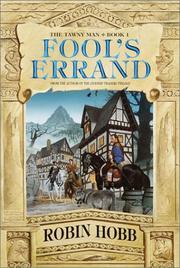
Fool's Errand
FitzChivalry Farseer has lived in exile for fifteen years. When Prince Dutiful vanishes before his betrothal, Fitz returns to Buckkeep to find him, with a wolf…
2,606-word summary · 12 min read
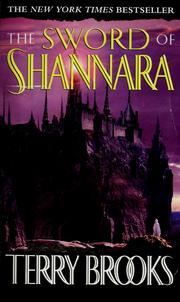
The Sword of Shannara
A young half-Elf and a company of companions set out to recover a magic sword before the Warlock Lord destroys the Four Lands.
2,474-word summary · 11 min read
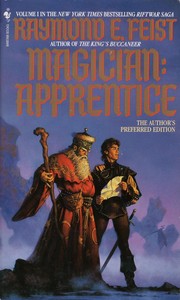
Magician: Apprentice
An orphan kitchen boy and a smith's son grow up in a frontier castle just as invaders from another world open a rift and begin a war that will change both of…
2,114-word summary · 9 min read
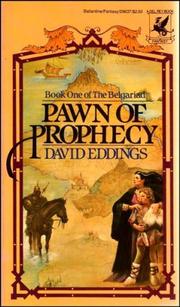
Pawn of Prophecy
Farm boy Garion learns sorcerers watch him as an old Orb wakes.
2,331-word summary · 10 min read
Wizard's First Rule
Woods guide Richard joins Kahlan and wizard Zedd to find the Boxes of Orden before Darken Rahl, learning why people believe lies.
2,220-word summary · 10 min read

Jade City
On an island where jade grants power, two clans fight over the mineral, the family name, and the right to decide what loyalty costs.
2,403-word summary · 11 min read
Water Moon
A woman inherits a Tokyo pawnshop that trades in regrets, finds her father gone and one glowing bird freed, and crosses into another world to learn what her…
2,087-word summary · 9 min read
The Woman Who Rides Like a Man
Newly knighted, Alanna heads south into Tortall's desert, where a broken sword and a dead shaman leave her responsible for a rebel tribe and three Gifted…
2,894-word summary · 13 min read
The Tyrant's Tomb
Apollo, still trapped in a mortal teenager's body, carries Jason Grace's coffin to Camp Jupiter and must learn what a hero is before the emperors destroy it.
2,292-word summary · 10 min read
The Sorceress
Flamel takes the twins to London to find Gilgamesh, while Perenelle fights for her life on Alcatraz and an older threat wakes.
2,684-word summary · 12 min read
The Lost Metal
Wax Ladrian returns to stop his sister's plot to smuggle a magical bomb into Elendel, in the conclusion of Mistborn's second era.
2,038-word summary · 9 min read
The Gunslinger Born
A Marvel graphic novel adapting the flashback of Wizard and Glass: a fourteen-year-old Roland earns his guns, loves Susan Delgado and first sees the Dark Tower.
2,010-word summary · 9 min read
The Golden Enclaves
The Scholomance trilogy closes as El Higgins hunts the monsters beneath every enclave, tries to reach the boy trapped inside one, and learns what her world's…
2,564-word summary · 11 min read
The Girl of Fire and Thorns
Rae Carson's debut follows Elisa, an insecure princess born with a godstone in her navel, who is married to a foreign king and must grow into the leader a…
2,331-word summary · 10 min read
The Everlasting
A broken scholar is sent into the past to live the legend of Sir Una Everlasting, only to find that the story demands her death and that he is writing the lie.
2,464-word summary · 11 min read
The Devils
A monk inherits a church agency full of dangerous prisoners while a street thief is claimed as Troy's heir. Abercrombie's grimdark fantasy begins with monsters…
2,314-word summary · 10 min read
The Book of Three
A restless assistant pig-keeper in mythical Wales chases his escaped oracle pig and finds himself beside Prince Gwydion in a war against the Lord of Annuvin.
2,019-word summary · 9 min read
The Book of Lost Things
A twelve-year-old boy grieving his mother's death slips through a crack in the garden wall into Elsewhere, where fairy tales and a fading king guard the secret…
2,441-word summary · 11 min read