
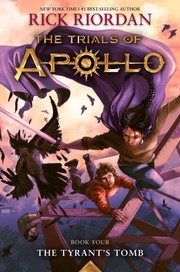
The Tyrant's Tomb
2,292-word summary 10 min read 448 pages in the book
- First published
- 2019
- Publisher
- Disney-Hyperion
- Pages
- 448
- ISBN
- 9781484746448
- Series
- The Trials of Apollo (#4)
Reading options
What's inside (9 sections)
I picked this one up straight after The Burning Maze, which ends with Jason Grace dead and Apollo close to ruined by it. That is a hard act to follow. I wanted to see how Rick Riordan would write a book that has to carry the weight of a major character's death and still push the Apollo story forward. The Tyrant's Tomb is the fourth of The Trials of Apollo, published by Disney-Hyperion on 24 September 2019, and it runs 448 pages in the hardcover I read. It starts almost immediately after the previous book and it does not give the grief much time to settle. Instead it drops Apollo into a new fight at Camp Jupiter, the Roman demigod camp, and asks him to do something he has spent three books avoiding: act like a hero for other people instead of for himself.
A coffin on the road to Camp Jupiter
The opening image is a strange and grim one. Apollo, still stuck in the body of a mortal teenager called Lester Papadopoulos, is helping carry Jason Grace's coffin toward Camp Jupiter in the San Francisco Bay Area. Meg McCaffrey is with him. On the way they are attacked by a eurynomos, one of the flesh-eating spirits that serve the harsher gods of this series, and they would be in real trouble if a girl with pink hair had not turned up with a band of dryads and a faun. The girl is Lavinia Asimov. She kills the eurynomos and offers to lead them to the camp by a shortcut she knows through a tunnel. As the other dryads and fauns drift away, Lavinia stops one of them, a faun called Don, and reminds him that he owes her for helping him. That small exchange is easy to miss on a first read, and it matters later.
Hazel Levesque appears as they reach the tunnel, and two more eurynomos come after her. They go in together. Hazel tries to kill the creatures while Apollo attempts to sing a song to help her. One of them scratches him in the stomach, and the scratch starts to turn him into a corpse. This is one of the bodily horrors Riordan puts Apollo through: the god is in a mortal body now, and that body can be cut, infected, and made to rot. Hazel sees Jason's coffin and is frightened, because she has had a dream in which Caligula kills Jason. The five of them make it to Camp Jupiter, where the praetors Frank Zhang and Reyna Ramirez-Arellano greet them. The camp decides to carry on with Jason's plan to build temples honouring the gods.
It is worth noticing how quickly the book establishes who is in charge here. Apollo arrives with a dead hero and a story to tell, but Camp Jupiter has its own structure, its own praetors, its own senate. He is not the centre of this world, which is a useful change after three books in which he mostly is. The motor of the plot is not his quest but a camp trying to hold itself together under threat.
A funeral, a dream, and a prophecy about Tarquin
Apollo faints soon after he arrives and dreams about Caligula and Commodus. The two emperors, who stand behind the Triumvirate that has been driving the series, discuss how to take Camp Jupiter. They can come to terms with it, or they can destroy it with Greek fire fired from Caligula's yachts. When Apollo wakes, Meg tells him he has been asleep for a day and a half. That night there is a funeral for Jason. It is a quiet scene in a book that is otherwise noisy, and it finally gives the death from the previous book the room it was denied before. Lupa, the wolf who trains Roman demigods, turns up and tells Apollo that he needs to get help from the gods if they are to beat their enemies.
Apollo and Frank go to Ella, a harpy, and Tyson, a Cyclops, who are working together to recreate the Sibylline Books, the collected prophecies the Romans rely on. Out of that work comes a prophecy about the tomb of Tarquin, the last king of Rome, who has returned. Apollo takes it to the camp senate, and a mission is chosen: him, Meg, Lavinia, and Hazel. They learn that Tarquin is keeping something called a soundless god at Sutro Tower. Once they report back, the conclusion is plain enough. To restore communication and call for divine help, the soundless god has to be destroyed. A quest is issued for Apollo, Meg, and Hazel to go to Sutro Tower.
The funeral and the senate scene sit side by side, and that pairing tells you a lot about the book's shape. One chapter is about mourning a friend, the next about choosing a team for a mission. Riordan moves between them without much ceremony. I think that works for this audience, because the grief is real but the story never stops moving. A reader who wanted a longer, slower passage with Jason might feel shortchanged, and that is a fair complaint.
The soundless god at Sutro Tower
At the tower they work out that the god is Harpocrates, the Greek and Roman god of silence, who has a history of trouble with Apollo. He is holding a jar that contains the voice of the Sibyl of Cumae, one of the most important oracle figures in Riordan's world. Getting the last breath of Harpocrates and the Sibyl's jar takes some doing, but they manage it. This sequence is one of the cleaner set pieces in the book because the problem is concrete. Communications are jammed, and the fix is to break a silence god's hold on a prophet's voice.
On the way back they are ambushed by a eurynomos again. They kill it, and then Lavinia and her friends arrive to help. They had slipped away from the camp earlier, so their return is not a surprise rescue so much as a payoff to a choice Lavinia made. Lavinia and Reyna put a plan into motion, which the book calls Plan L, to deal with the yachts Apollo saw in his dream. When Apollo and Meg get back, they find Camp Jupiter in the middle of a war.
I liked this part more than I expected to. Riordan is good at turning a piece of infrastructure into a problem: a tower, a jar, a voice that cannot be heard. The stakes are not abstract. If the silence holds, no one can call for help, and the camp fights blind. That is an easy thing to understand, and it gives the quest a shape a younger reader can follow without a chart of the whole series.
The battle for Camp Jupiter
The fight is the biggest set piece of the book, and Riordan gives it a great deal of space. Apollo calls for divine help on Temple Hill and decides to call Diana, the Roman version of Artemis. Frank sacrifices himself by burning the firewood that is his life, killing Caligula in the process and saving the other legionnaires. Commodus gives the order to fire, but Plan L stops it and the yachts are destroyed. Apollo, overcome by the loss of Frank, kills Commodus.
Meanwhile Tarquin has made it to the bookshop where the Sibylline Books are being rewritten, only to find that Ella and Tyson are not there. Meg and Hazel fight Tarquin, and Diana finally arrives and kills him and heals Apollo. Reyna and Lavinia return, along with Peaches, a karpos. Arion, Hazel's horse, drags Frank out, and it turns out he has somehow survived. Reyna pledges herself to Diana and joins the Hunters.
The cost of the victory is real. Dakota, a son of Bacchus and the long-serving centurion of the Fifth Cohort, dies of his wounds overnight. Don the faun dies and is reincarnated as a laurel tree, which happens to be Apollo's tree of victory. Hazel is voted the new praetor and Lavinia is made a centurion of the Fifth Cohort. That is a lot of movement in a handful of chapters: a praetor's death and return, a centurion's funeral, a shape change, two promotions, and a Roman officer leaving the legion for the Hunters. The book is willing to rearrange the camp's power structure in one chapter, and the amount of change is both exciting and a little breathless.
The arrival of Diana is worth a word of criticism. The battle is set up as a problem the demigods must solve, and a good deal of it is solved by characters apart from Apollo. Frank's sacrifice is his own, Plan L belongs to Reyna and Lavinia, and Tarquin is finished by Diana after Meg and Hazel soften him up. Apollo's part is to call for help and then to kill Commodus in a burst of grief. For a book with Apollo's name on the front, that is a curious distribution of the work. It also fits the arc, since Apollo is meant to learn that he cannot do this alone. Whether you read that as a deliberate lesson or as a convenience depends on how generous you feel.
What Apollo carries out of the camp
Camp Jupiter gives Apollo his old godly bow as a gift, and Meg gets seeds, and the two set off for New York. Ella and Tyson deliver a final prophecy, and Apollo and Meg work out that it is written in terza rima, the verse form Dante used, which means there are more stanzas to find in the east. They go hoping to be reunited with their friends from Camp Half-Blood. The ending is a hinge. The Roman part of the story closes, and the book points east toward the last volume of the series.
The bow is a nice piece of bookkeeping, because it gives Apollo back something he had lost and gives the next book a reason to exist. The seeds for Meg are quieter and, to my mind, more interesting. She has been given a future instead of a weapon. At this stage in the series that kind of gift says more about how far both characters have come than any fight does.
The terza rima reveal is a clever hook, though it also shows how much this book leans on what comes after it. The prophecy is not explained so much as handed forward. If you are reading the series in order, that feels like an invitation. If you are reading this book on its own, it feels like the story stopping mid sentence.
Where the book strains
The biggest weakness is the one I have already touched on: the resolution depends on people other than Apollo. Riordan seems to know this, because he piles loss after loss onto Apollo in the battle and lets his grief do the work of a decision. It is affecting, but it also looks like a way of keeping the hero central while handing the actual victories to everyone else.
The eurynomos attacks also start to feel repeated. There is one on the road, two in the tunnel, one on the way back from the tower, and the pattern of a sudden attack followed by a narrow escape gets familiar. The soundless god idea is strong, but the visit to Sutro Tower goes by quickly, and I wanted more time with Harpocrates and the Sibyl's jar. The jar, in particular, is a strange and memorable object, and it is in and out of the story before I had settled with it.
There is also the question of who this book is for. Like the rest of the series, it assumes you know Camp Half-Blood, the Triumvirate, Meg's history with Nero, and what happened to Jason in The Burning Maze. A new reader can follow the action, because the quest is simple and the fight is big, but the weight of the funeral and the satisfaction of Frank's survival both depend on knowing the earlier books. I would not hand this to someone as a first Riordan novel.
I found the terza rima ending a little irritating too, not because the device is wrong but because the book has spent 448 pages on a Roman camp and then spends its last page telling you the real story is somewhere else. That is series writing, and it is what was promised. It still left me wanting a fuller close to the Camp Jupiter thread than a bow and a prophecy.
Who should read it
I would recommend The Tyrant's Tomb to anyone who has come this far with Apollo and wants to see the Roman characters get their turn. Hazel, Frank, Reyna, and Lavinia all get real work to do, and the camp itself becomes a character in a way it never did in the earlier books. The funeral for Jason is handled with restraint, and Frank's apparent death hits harder than I expected, even knowing how these books play with death.
I would be careful with a reader looking for a self contained fantasy adventure. This is book four of five, it ends by pointing at book five, and much of its emotional weight comes from earlier volumes. Within those limits it does what it sets out to do. It gives Apollo a camp to save, a friend to mourn, and a lesson he has been resisting since he landed in Lester Papadopoulos's body: that being a hero means letting other people help. That is a simple idea, and the book earns it through the fight on Temple Hill rather than through a speech.
FAQ
Do I need to have read the earlier Trials of Apollo books first?
Yes. This is book four and it follows directly from The Burning Maze, including the death of Jason Grace and the wider fight against the Triumvirate.
Who is the villain in The Tyrant's Tomb?
The main threats are the emperors Caligula and Commodus, who attack Camp Jupiter with Greek fire from yachts, and the returned king Tarquin.
Does this book end the Apollo series?
No. It closes the Camp Jupiter part of the story and sends Apollo and Meg east, leading into the fifth and final book, The Tower of Nero.
Similar books
More from The Trials of Apollo first, then related titles.
The Hidden Oracle
Apollo lands as a teen in New York with no powers and must earn his way back with Meg and demigods.
1,933-word summary · 9 min read
The Dark Prophecy
Mortal Apollo and Leo cross America to free the Oracle as Commodus hunts them.
2,368-word summary · 11 min read
The Burning Maze
Apollo, still trapped in a mortal teenager's body, follows a dangerous prophecy through the Labyrinth with Meg and Grover as the Triumvirate's grip tightens.
2,248-word summary · 10 min read
The Chalice of the Gods
Percy needs three recommendation letters from three gods to apply to college, so his first quest is recovering a stolen chalice from the god of old age.
2,106-word summary · 9 min read
Percy Jackson's Greek Gods
Rick Riordan's illustrated 2014 companion: Percy Jackson retells the Greek myths, from Chaos and the Titans to the Twelve Olympians, with sarcastic asides and…
2,709-word summary · 12 min read
The Ship of the Dead
Magnus and his crew sail to the edges of the Norse worlds to stop Loki from launching Naglfar, the ship of the dead.
2,426-word summary · 11 min read
The Hammer of Thor
Magnus and Sam chase Thor's stolen hammer to a giant wedding heist, with Alex Fierro joining Floor Nineteen as Loki bargains and Ragnarok stirs.
3,068-word summary · 14 min read
The Serpent's Shadow
Carter and Sadie Kane have three days to bind Apophis by his shadow before the serpent rises and unmakes the world.
2,941-word summary · 13 min read

The Throne of Fire
Carter and Sadie Kane have five days to wake the sun god Ra before the serpent Apophis breaks free and eats the world.
2,867-word summary · 13 min read
The Sword of Summer
A homeless Boston teen learns he is a Norse god son and dies on day one stopping a fire giant.
2,116-word summary · 9 min read

The Blood of Olympus
Seven demigods stop Gaia waking while Reyna brings Athena statue.
2,196-word summary · 10 min read
The Red Pyramid
Siblings Carter and Sadie Kane wake the Egyptian gods and must stop Set from destroying the world.
2,682-word summary · 12 min read
The House of Hades
Percy and Annabeth cross Tartarus while the five close the Doors of Death before Gaea wakes.
2,910-word summary · 13 min read
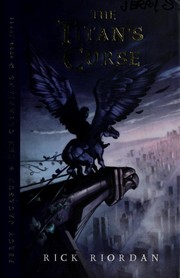
The Titan's Curse
Percy joins a winter quest to save Annabeth and Artemis with Thalia, Grover, Bianca and Zoe, facing Atlas and Luke under a hard Oracle prophecy on Mount…
2,229-word summary · 10 min read
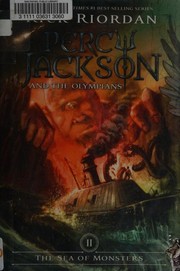
The Sea of Monsters
Percy returns for a second summer as Camp Half-Blood loses its borders, Tyson is claimed as his brother, and the Golden Fleece waits past the Sea of Monsters.
2,056-word summary · 9 min read
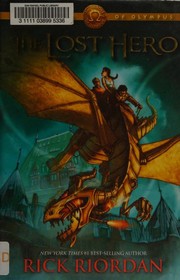
The Lost Hero
Jason wakes with no memory while Piper and Leo learn they are demigods sent to free Hera.
2,734-word summary · 12 min read
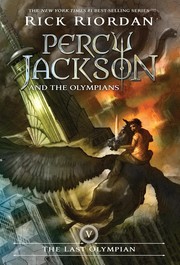
The Last Olympian
Percy Jackson turns sixteen as Kronos marches on Manhattan, forcing Camp Half-Blood into a final stand for Olympus beside Annabeth as the old prophecy demands…
2,564-word summary · 11 min read
The Battle of the Labyrinth
Percy and Annabeth enter the shifting Labyrinth with Rachel Dare to stop Luke and Kronos from invading Camp Half-Blood.
2,924-word summary · 13 min read

The Lightning Thief
Rick Riordan's The Lightning Thief retold: Percy Jackson, Camp Half-Blood, the stolen bolt, and the road trip to the Underworld.
2,581-word summary · 11 min read
The Sorceress
Flamel takes the twins to London to find Gilgamesh, while Perenelle fights for her life on Alcatraz and an older threat wakes.
2,684-word summary · 12 min read
The Thief
A boastful young thief is pulled from a prison to steal a legendary stone for the king's magus, and the story he tells about himself is not the whole story.
2,514-word summary · 11 min read
The Magician
Sophie and Josh flee to Paris with Nicholas Flamel, where John Dee, Machiavelli, and an awakened god close in on the missing pages of the Codex.
2,162-word summary · 10 min read

Lore
Lore Perseous, the last of a hunted bloodline, is pulled back into the Agon when a wounded Athena offers her revenge against the god who killed her family.
2,188-word summary · 10 min read
The Magician King
Quentin rules a peaceful Fillory until a golden key strands him on Earth, while Julia's brutal road from hedge witch to demigod rewrites the whole story.
2,431-word summary · 11 min read
The Alchemyst
Twins Sophie and Josh learn their boss is Flamel as Dee steals the Codex minus two pages.
2,085-word summary · 9 min read
Children of Blood and Bone
White haired Zelie chases magic return with princess Amari hunted by Inan.
2,027-word summary · 9 min read
The Demigod Files
Three Percy Jackson side quests plus camp maps, cabin guides, interviews, and god profiles set before the final battle.
2,498-word summary · 11 min read
The Son of Neptune
Amnesiac Percy wakes at Camp Jupiter and quests to Alaska with Hazel and Frank to free Thanatos.
2,107-word summary · 9 min read
The Mark of Athena
Seven demigods sail for Rome where Annabeth must follow the Mark to the Athena Parthenos alone.
2,031-word summary · 9 min read
The Sorcerer in the North
A young Ranger posted to a quiet fief goes undercover as a jongleur to investigate a supposed sorcerer haunting a wood and a poisoned castle.
2,246-word summary · 10 min read