
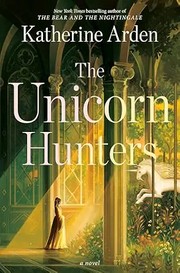
The Unicorn Hunters
2,559-word summary 11 min read 368 pages in the book
- First published
- 2026
- Publisher
- Del Rey
- Pages
- 368
- ISBN
- 9780593128282
Reading options
What's inside (10 sections)
I came to this book as someone who loved the Winternight trilogy and half expected the same cold Russian magic, the same snow and domovoi and sharp winter light. What I got instead was Brittany in the fifteenth century, a duchy under occupation, and a heroine who fights with marriage contracts and spies and a planned unicorn hunt. The Unicorn Hunters is a standalone novel, published by Del Rey in 2026 and running 368 pages, and it is very clear from early on that Katherine Arden is doing something different here. Once I stopped waiting for the familiar folklore to show up, I found a book that is quietly clever about how power is held and how it is taken back.
A child at the edge of a siege
The story reaches back to Anne's childhood, and it starts with an invasion. France comes into her land, besieges the castle where she is growing up, and drives her royal father to his death. This is not background decoration that the book hurries past. Arden opens with the sense of a young girl watching the world she belongs to close in around her, and the memory of that siege sits behind every choice Anne makes later. When you understand what she saw as a child, her adult stubbornness reads less like pride and more like a promise she has no intention of breaking.
Her father dies with a charge attached to him. Anne has sworn that Brittany will never be conquered, not while she has breath to resist. That promise is the hinge of the whole book. It would be easy to write a heroine who simply refuses to give in, but Arden gives Anne something harder to carry: the knowledge that she is the last person standing between her father's word and a French victory. The weight of that inheritance shapes her even in the quieter scenes. She is not a young woman flirting with rebellion. She is a sovereign who has already lost once and is determined not to lose again.
I liked that the book treats the occupation as an ordinary, grinding fact rather than a single dramatic blow. Armies have come and gone. The castle has been besieged. The treasury is empty. This is the world Anne wakes up in, and her task is to work with what is left. There is a plainness to the setup that I found refreshing. No prophecy arrives to save her, no chosen-child language, just a duchess with an empty coffer and a very large neighbor breathing down her neck.
The marriage she is told to accept
By the time Anne is a young woman, she is the sovereign duchess of an occupied land, and the French crown has a simple demand. She is to marry the King of France, on pain of the sword. The terms are not subtle. Such a union would place her title, her territory, and her body permanently in the hands of the enemies who already hold her duchy. Everyone around her understands what this means, even if they dress it up as a diplomatic necessity or a glorious alliance. Arden is good on the way powerful people use polite words to describe a takeover.
Anne refuses to be the last duchess of Brittany. This is the line I kept returning to, because it contains both her fear and her resolve in a few words. To accept the marriage would be to sign away the thing her father died defending. She has promised him that the duchy would never be conquered, and a quiet surrender in a wedding chapel would be conquest just as surely as a siege. The book does not let her off the hook easily. She is alone in this, surrounded by courtiers who have their own interests and a treasury that cannot buy an army.
What makes this section work is that Arden treats a marriage negotiation like a military campaign. Every conversation is a maneuver. Every concession is measured against what it costs. Anne has almost nothing to bargain with except herself, and the horror of the situation is that her own body is the last asset she has. I found that a bleak and effective way to frame a young woman's choices. The court calls it an honor to be asked. The book lets us see it for what it is.
A secret betrothal and a world of spies
Anne's only real hope is another alliance, sealed the same way alliances are sealed in this world: with marriage. She arranges a daring last gamble, a secret betrothal to the man who is Charles of France's greatest rival. On paper it is a neat solution. She appears to comply with France while binding herself to the one person able to challenge French power. In practice it is a catastrophe waiting to happen, because secrets of this kind do not stay secret for long.
The reason is that rival courts in this book spy on one another with diviners. Magic may be fading, but the arts of seeing are still very much in use at court, and every court has someone who can peer into hidden places. A whispered vow, an exchanged ring, a letter carried by a trusted servant, any of these can be pulled into the open by a trained seer. Anne's whole plan depends on something the world is built to expose. Arden uses this to keep the tension tight. The danger is not only that Anne might be caught, but that she can never know which room is watched and which wall has ears. I found this one of the most enjoyable parts of the book. The intrigue has real texture because the tools of detection are part of the setting rather than a convenient device.
Anne's betrothed is deliberately kept at a certain distance in the telling, which suits the mood of a match made in shadow. He is defined by his rivalry with Charles and by what he offers Anne, and the relationship develops slowly as the political plot unwinds. This is not a book that rushes into a romance to warm the reader up. The feeling has to earn its place among the treaties and the spies.
Broceliande, where the old magic went quiet
The setting for Anne's gamble is the forest of Broceliande, and Arden clearly enjoys writing it. This is the forest that was once the haunt of Merlin the Enchanter and a long-lost faerie queen, a place loaded with the residue of old legend. In the story's present, though, most of that magic has drained away. There are occasional sightings of unicorns, but the great enchantments are gone, and the forest is a quieter, more diminished place than the one the stories describe. I liked that choice. A world where magic has mostly left is more interesting to me than one where it is everywhere, because the leftover traces carry more weight.
The one crucial quirk about Broceliande is that it is completely hostile to divination. This is the loophole Anne needs. Where the courts of France and her rival are full of seers who can pry into secrets, the forest refuses to be seen into. It is a natural blind spot, a patch of darkness in a world where every other corner is lit by watching eyes. Anne's plan depends on this single property of the place, and Arden does a good job of making it feel like a genuine discovery rather than a convenient excuse. The forest is hostile to divination in the same way a locked room is hostile to visitors. It simply will not cooperate.
This is where the faerie material earns its keep. The long-lost queen and the memory of Merlin are not window dressing. They explain why diviners cannot work their craft here, and they give the forest a history that the characters are aware of even if they cannot fully access it. The unicorns, too, sit at the edge of the believable. They are rare enough that a hunt for them can be presented as pageantry, but real enough that the plan has teeth.
The hunt as a cover story
Anne's scheme is elegant in its simplicity. While she pretends to go along with French demands, she announces a unicorn hunt in Broceliande. To outside eyes it is pointless pageantry, a noble pastime, a diversion to keep everyone busy while the real business of the duchy grinds on. Behind that harmless front she intends to wed in secret, using the forest's blindness to divination to shield the ceremony from the spies who would otherwise expose her. Or so she thinks. That last turn of phrase is doing a lot of work in the book, because Arden has no interest in letting the plan run smoothly.
The hunt gives the novel its best set piece. A royal party moves into a forest where the old magic is mostly gone, looking for creatures that may or may not still be there, while a different and far more consequential event is meant to happen in the shadows of the same trees. Everyone is watching the wrong thing. The French expect a hunt. Anne's household knows there is more to it but not necessarily all of it. The rival court is trying to see through the smoke. Arden keeps all these layers in play at once, and the result is a sequence that moves with genuine tension. I found myself wondering how long the cover could possibly hold, because every element of it relies on people behaving exactly as expected.
What I enjoyed most here is that the fantasy and the politics are doing the same job. The unicorn hunt is not a magical quest bolted onto a court drama. It is a political tool that happens to involve magical creatures. The secret wedding is not a romantic beat that interrupts the statecraft. It is the statecraft, carried out in the one place where it cannot be watched. Arden understands that in a world with diviners, a private moment is a political act.
Missing cities, enchantment, and the price of power
Once the hunt is under way, the novel opens into mystery and enchantment. Arden mixes in court intrigue, the lure of legendary missing cities, and a romance that grows slowly alongside the danger. The book is described as a tale about the price of power, and that theme surfaces in the choices Anne is forced to make. Every alliance demands something. Every secret has to be guarded by another secret. The longer she plays the game, the more she has to risk, and the more it costs her to keep faith with the promise she made to her father.
The missing cities give the story a sense that Brittany holds more than the maps admit. They belong to the same layer of legend as Broceliande and its unicorns, hints that the old stories might still be true in places the courts have stopped looking. This strand gives the book some of its sense of wonder, and it stops the political material from becoming too dry. I could feel Arden pulling two threads together: a duchess fighting for her duchy with very human tools, and a countryside where the old legends have not entirely given up. That balance is the book's strongest achievement.
The reviews reflect that praise. The book drew starred reviews from Booklist, Kirkus, and Library Journal, and critics have singled out the lush historical detail and the clever reimagining of a time and place that most readers know very little about. I can see why. Anne of Brittany is a real figure, a fifteenth-century duchess who became a twice-crowned queen of France, and Arden clearly knows the appeal of the story without turning it into a lecture. The history sits under the fiction, informing choices and obstacles rather than stopping the narrative to show off research. That is the right approach for a novel, and it is why the book reads as an adventure rather than an account.
Where the book gets heavy
I should be honest about the parts that slowed me down. The political maneuvering is dense, and Arden does not always make it easy to track who is bargaining with whom. There are stretches where a conversation carries so much tactical weight that the rhythm of the story flattens out, and I found myself rereading a paragraph to work out exactly what had been conceded. Readers who like their fantasy clean and their motives simple may find this tiring. The book assumes you are willing to follow a negotiation the way you might follow a battle, with every movement counted.
The romance is another slow burn. It is tied closely to the political plot, which I respect, but that means it rarely gets space to breathe on its own. If you came for a sweeping love story with long looks across crowded halls, this is not that book. The affection has to survive within the plot, and it does, but it is the politics that lead and the feeling that follows. For me that was the right order. For a reader hoping the relationship would be the main event, it might feel like a disappointment.
There is also the question of what this book is not. Readers expecting the Russian folklore of the Winternight books will find a different, more history-heavy mode here. The magic is thinner on the ground, the monsters are fewer, and the atmosphere is built from courts and forests and contracts rather than from the cold supernatural dread that made those earlier books so distinctive. I went in expecting one thing and adjusted, but I can see how the shift would frustrate someone who wanted more of the same. At 368 pages the book is a self-contained story rather than a series opener, so there is no promise that the next installment will bring back the older flavors. What you see is what you get.
What stayed with me
By the end I had settled into the book's particular rhythm. It is a historical fantasy that trusts history to carry the stakes and uses just enough magic to make the impossible possible. Anne's fight to avoid becoming the last duchess of Brittany gives the story a clear emotional line, and the unicorn hunt is a genuinely clever way to bring the magical and the political into the same scene. The forest of Broceliande, with its fading enchantments and its refusal to be spied upon, is the kind of setting I remember long after I finish a book.
The fair criticisms stick, though. The density of the intrigue and the slow pace of the romance will not be for everyone, and this is a novel that asks for patience with its political detail. But for a reader willing to go with it, the payoff is a story that treats a duchess's promise as seriously as any prophecy, and that finds its suspense in a wedding hidden in a forest where no diviner can look. I finished it glad that I had set aside my Winternight expectations and let Arden take me somewhere colder and more human. It is a standalone worth reading on its own terms.
FAQ
Is The Unicorn Hunters part of a series?
No. It is a standalone historical fantasy published by Del Rey in 2026, running 368 pages, and it does not set up a sequel.
Does this book have the same kind of magic as the Winternight trilogy?
No. It uses a different, more history-heavy mode set in fifteenth-century Brittany, with only traces of old magic such as occasional unicorn sightings in Broceliande.
Who is the real person behind the story?
The novel reimagines Anne of Brittany, a fifteenth-century duchess who became a twice-crowned queen of France. It drew starred reviews from Booklist, Kirkus, and Library Journal.
Similar books
The Knight and the Moth
Six of seven Diviners vanish, and the last one flees a cathedral with a mocking knight and a gargoyle who calls everyone Bartholomew. Gillig's gothic fantasy…
2,936-word summary · 13 min read
The Girl of Fire and Thorns
Rae Carson's debut follows Elisa, an insecure princess born with a godstone in her navel, who is married to a foreign king and must grow into the leader a…
2,331-word summary · 10 min read
The Everlasting
A broken scholar is sent into the past to live the legend of Sir Una Everlasting, only to find that the story demands her death and that he is writing the lie.
2,464-word summary · 11 min read

The Darkest Part of the Forest
In a town built around a sleeping horned boy in a glass coffin, a girl discovers she has been spending her nights as a faerie king's knight and remembers none…
2,012-word summary · 9 min read
The Binding
In an alternate Victorian England, binders remove unbearable memories into books, and a young apprentice discovers his own past was erased from him.
2,036-word summary · 9 min read

Spark of the Everflame
A village healer stops taking the powder that keeps her strange powers quiet. After a dying king names her his heir, Diem Bellator faces a choice between a…
2,293-word summary · 10 min read
Lords and Ladies
The elves are coming and Lancre is not ready. Pratchett's 1992 novel sends Granny, Nanny and Magrat into a cruel, glittering invasion that spoofs A Midsummer…
2,476-word summary · 11 min read
Golden Fool
FitzChivalry Farseer returns to Buckkeep as a servant and a grieving Skillmaster, teaching Prince Dutiful while court intrigue, the Piebalds and a…
2,583-word summary · 11 min read
Fool's Fate
Prince Dutiful must kill a dragon to secure his betrothal, and FitzChivalry Farseer is caught between the Fool and Chade over Icefyre's fate.
2,247-word summary · 10 min read
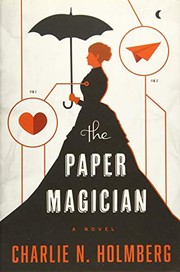
The Paper Magician
A graduate magician is assigned to paper magic instead of metal, then must face a woman who tears out her mentor's heart.
2,454-word summary · 11 min read
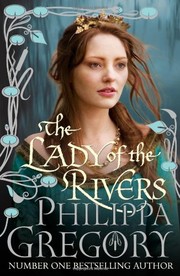
The Lady of the Rivers
Jacquetta of Luxembourg, mother of Elizabeth Woodville, narrates the years of Henry VI's reign, from Joan of Arc to the Wars of the Roses, in this prequel to…
2,296-word summary · 10 min read
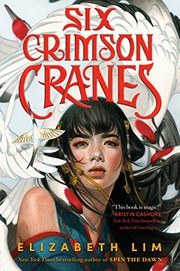
Six Crimson Cranes
A princess who loses her voice when a curse turns her six brothers into cranes must work in secret, trust a dragon, and speak a name she does not know.
2,214-word summary · 10 min read

Quicksilver
Saeris Fane steals from the desert queen's reservoirs until a gateway flings her into the frozen fae world, where Kingfisher needs her alchemist magic.
2,311-word summary · 10 min read
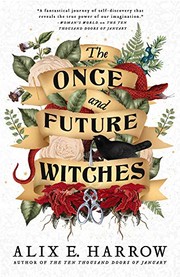
The Once and Future Witches
Three estranged sisters bring witchcraft back to an 1893 city where magic hides in nursery rhymes and the fight for the vote is also a fight for power.
2,132-word summary · 9 min read

Lioness Rampant
Alanna searches for the Dominion Jewel with the Shang Dragon, then returns to Tortall to face Duke Roger at Jonathan's coronation.
2,478-word summary · 11 min read

The Rose & the Dagger
Shahrzad is pulled from her Caliph husband and left in a desert camp of rebels, needing to break his curse and end a war before it ends her.
2,520-word summary · 11 min read

The Queen of the Tearling
Nineteen-year-old Kelsea leaves the woods to take her throne, ends a shipment of human captives, and draws the Red Queen's revenge.
2,357-word summary · 10 min read
Fool's Errand
FitzChivalry Farseer has lived in exile for fifteen years. When Prince Dutiful vanishes before his betrothal, Fitz returns to Buckkeep to find him, with a wolf…
2,606-word summary · 12 min read
An Enchantment of Ravens
Isobel, a mortal artist in the fairy town of Whimsy, paints a portrait of the autumn prince and falls in love with him, breaking the laws of her craft.
2,087-word summary · 9 min read
Cold Days
Back from the dead as the Winter Knight, Harry Dresden must follow Mab's order to kill an immortal and defend Demonreach on Halloween night.
2,361-word summary · 10 min read
A Deal with the Elf King
A village herbalist is exposed as the hidden Human Queen, married to a cold elf king, and given three months to save his dying kingdom or be bound to it…
2,094-word summary · 9 min read

Rebel Angels
Gemma returns to the realms to bind magic while facing Circe and London season.
2,708-word summary · 12 min read
Three Dark Crowns
Three triplet queens must kill each other for the crown, but love and gifts get in the way.
2,134-word summary · 9 min read
The Rules of Magic
Franny, Jet, and Vincent Owens test strict family rules and a love curse in 1960s Manhattan and Massachusetts in Alice Hoffman's warm prequel about love, loss,…
2,686-word summary · 12 min read
Bitterblue
Eighteen-year-old Queen Bitterblue sneaks out to learn why Monsea still suffers after Leck, facing court lies, ciphers, and trials in Cashore's rich third…
2,686-word summary · 12 min read
The Golem and the Jinni
A clay woman and a fire spirit hide in 1899 New York, passing as immigrants while their makers' pasts close in.
2,726-word summary · 12 min read
The Reckoning
Twin heirs survive trials and hazing at Zodiac Academy while the heirs start to split.
1,984-word summary · 9 min read
The Shadows Between Us
Alessandra plans to woo the Shadow King, marry him, and kill him for his throne, then finds someone else wants him dead first.
2,571-word summary · 11 min read
A Great and Terrible Beauty
Sent to a Victorian boarding school after her mother death, Gemma finds a magic realm tied to it.
2,016-word summary · 9 min read
Jonathan Strange and Mr Norrell
Two magicians bring magic back to Napoleonic England, one by books and one by daring.
2,067-word summary · 9 min read