
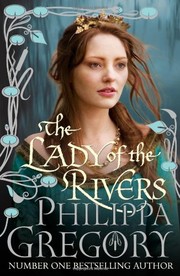
The Lady of the Rivers
2,296-word summary 10 min read 512 pages in the book
- First published
- 2011
- Publisher
- Simon & Schuster
- Pages
- 512
- ISBN
- 9781847374592
- Series
- The Plantagenet and Tudor Novels (#1)
Reading options
What's inside (10 sections)
- Jacquetta and the women who teach her
- Joan of Arc and a child's first lesson in power
- The Duke of Bedford and the alchemist's bargain
- Richard Woodville and the secret wedding
- Henry VI, Margaret of Anjou, and a kingdom sliding
- The war comes and the women are left
- What Gregory gets right and where she stretches
- Who this book is for
- Key takeaways
- FAQ
I picked up The Lady of the Rivers because I wanted to know where Elizabeth Woodville came from. Philippa Gregory had already told Elizabeth's story in The White Queen, and this 2011 novel is the prequel that explains the woman behind that famous face. It was published by Simon & Schuster in the United Kingdom and is part of the run of books the publisher groups as The Plantagenet and Tudor Novels. It also sits in the sequence often called The Cousins' War, and it is the first book in that run chronologically. The narrator is Jacquetta of Luxembourg, Elizabeth's mother, and the story covers the reign of Henry VI.
What I did not expect was how much of the book is about power as something women practice in private. Gregory is interested in the tools available to a woman who cannot inherit a throne: marriage, bloodline, rumor, friendship, and a reputation for strange knowledge. Jacquetta has all of those in quantities that make her dangerous to the men around her.
Jacquetta and the women who teach her
The novel opens with Jacquetta as a fourteen year old girl, and the first thing we learn is that her family claims descent from Melusine, a water goddess. This matters more than it sounds. In Gregory's telling, the women of Jacquetta's line carry a kind of second sight, an ability to sense what is coming that others mistake for magic or witchcraft. It is a gift, but it is also a burden, because people who can see are rarely trusted.
Her great aunt Jehanne, the Demoiselle of Luxembourg, is the one who teaches her to use it. Their conversations are the book's quiet opening movement, and they set the terms for everything that follows. Jehanne tells the girl that the sight is a responsibility rather than a party trick. She also warns her what happens when ordinary people decide that a woman with unusual knowledge must be dangerous. Gregory is clearly fascinated by this dynamic, and she returns to it again and again.
The family's noble status is fragile. They have a name and a legend, but they need money and marriages to survive. Jacquetta is being raised for a transaction, as girls like her always were. The tension between her inner life and her public use is the engine of the early chapters. She is a person with visions and fears, and she is also a piece on a board that other people are moving.
Joan of Arc and a child's first lesson in power
Jacquetta's friendship with Joan of Arc is one of the most striking episodes in the book. Joan is being held prisoner at her uncle's castle, a young woman who claims to hear voices and who has already changed the course of a war. Jacquetta goes to see her, and the two recognize something in each other. Joan is a girl who has made her strange knowledge into a kind of authority, and Jacquetta is a girl who has been told to hide hers.
The meeting is short, but it leaves a mark. Gregory uses Joan to show Jacquetta two things at once: that a woman can be listened to, and that the price of being listened to can be enormous. When Jacquetta later watches Joan burned at the stake by the English backed church, the lesson is driven home in the most brutal way the novel offers. The crowds, the fire, and the sense that a story has been decided for a person before she could speak for herself all stay with her.
I found this section strong because it gives the book its moral center early. The rest of the novel is full of people who want to control what a woman's strange gifts mean. Joan's fate tells Jacquetta, and the reader, exactly what is at stake when that control belongs to someone else. It also sets up Gregory's habit of taking the rumors and legends about these women seriously rather than explaining them away.
The Duke of Bedford and the alchemist's bargain
At seventeen, Jacquetta is married to John, Duke of Bedford. He is the uncle of the boy King Henry VI and the English regent in France, a man with real power and a cold, practical mind. The match is a political arrangement, and Jacquetta understands that. What she does not expect is the terms of their marriage bed.
On their wedding night, the Duke explains that he intends to keep her a virgin. He has learned of her family's reputation, and he wants to use her purity in his alchemical experiments, in the hope of turning iron into gold. It is a strange and revealing scene. A man who thinks of himself as rational and scientific wants to put a girl's legend to work for his own gain, and he sees no cruelty in it because he considers it a use, not an abuse. The detail matters because it sets the pattern for the whole marriage. He does not hate her. He simply has no room in his mind for the idea that she might have a purpose of her own.
This is the book at its most odd and most interesting. The alchemy plot could have been played as fantasy, but Gregory treats it as a symptom of a kind of hunger: the desire to turn something ordinary into something valuable, to make the world give up its secrets. Jacquetta is not a person to him, she is an ingredient. When the Duke dies a few years later, she is a wealthy widow at twenty, and the people around her immediately begin planning her next marriage.
Richard Woodville and the secret wedding
The Duke's handsome squire, Richard Woodville, is the man Jacquetta actually loves. The feeling is mutual, and the two of them act on it in the shadow of the late Duke's household. Gregory gives this the warmth the alchemy scenes lack. Here is a relationship in which Jacquetta is seen as a person rather than a resource, and the contrast is deliberate.
They return to England and marry in secret, before the king can dispose of her again in a match of his own choosing. The secrecy is not romance for its own sake. It is a defense. A wealthy widow without a husband of her own choosing is a prize that powerful men will fight over, and Jacquetta has already learned what happens when other people decide her fate. When the marriage is discovered, the pair are exiled from court in disgrace, and their first child, Elizabeth, is born during this period of disfavor.
The exile is important to the shape of the novel. It puts Jacquetta and Richard on the outside looking in, and it makes their later return feel earned rather than given. It also means that Elizabeth grows up in a household that knows what it is like to be underestimated. Gregory is at her best in these domestic passages, where the grand questions of crown and country shrink to the question of how a family keeps itself together.
Henry VI, Margaret of Anjou, and a kingdom sliding
Once Jacquetta and Richard are forgiven, they become close companions of the young King Henry VI and his new queen, Margaret of Anjou. Margaret is a kinswoman of Jacquetta's, and the two women form a bond that carries much of the later book. Henry is gentle, pious, and increasingly unable to govern. Margaret is the opposite: sharp, proud, and determined to protect her son's inheritance.
The court is already rotting. Henry relies on favorites, and the royal couple lavish wealth and titles on them, including on Richard and Jacquetta. That favor makes enemies, and the novel is good on the way a gift from a weak king becomes a liability for everyone who accepts it. The uprisings begin, and the atmosphere of a country coming apart gets thicker with every chapter.
The favorites are a clever piece of writing because they show how quickly a king's goodwill turns toxic. When Henry grants lands and titles to the people he likes, he is doing more than rewarding friends. He is creating a class of men who owe him everything and the rest of the court nothing, and the resentment builds until it becomes a cause that ambitious men can rally around. Jacquetta and Richard benefit from this system while it lasts, which means they are also exposed when it collapses. Their rise and their danger are the same thing.
Then Margaret becomes pregnant, and Gregory introduces one of the most talked about claims in the book. It is strongly implied that the child, Edward of Westminster, was fathered not by Henry but by Edmund Beaufort, the Duke of Somerset. This is exactly the kind of material Gregory works with: a rumor that historians have argued over, turned into a lived reality for the characters. When Henry slips into a coma, Jacquetta stays with the pregnant queen as a constant companion, and the two women wait out the crisis together.
I should flag here that the book takes a position on the paternity that is not settled history. Gregory gives credence to the rumor and builds character consequences on it. If you want your historical fiction to stay inside the evidence, this is where you will feel the ground shift.
The war comes and the women are left
When Henry wakes, the country is plunged into civil war between Lancaster and York, with Richard of York leading the opposing claim. Margaret becomes what the novel calls a Queen Militant, raising armies in her husband's name. She even brings in Scots troops, a decision that makes her more unpopular with the English people she is trying to rule. Jacquetta watches all of this from close range, caught between loyalty to her friend and the instinct to keep her own family safe.
The middle of the book is dense with campaigns, betrayals, and shifting allegiances. This is where some readers will struggle. Gregory assumes you can keep track of the rival houses and the many men named Richard and Edward, and the pace slows under the weight of it. The domestic scenes that opened the novel give way to a longer, more crowded chronicle.
A defeated Margaret eventually flees to France, and Jacquetta returns to Grafton manor. Her daughter Elizabeth also comes home, now widowed and with children of her own, and petitions the new King Edward IV for the return of her lands. The novel closes with Jacquetta looking out of a window and seeing Elizabeth walking up with Edward. That image is the handoff. It ends exactly where The White Queen begins, and it is a satisfying piece of construction if you know the later book.
What Gregory gets right and where she stretches
The great strength of The Lady of the Rivers is its picture of women operating within a system built to exclude them. Jacquetta cannot rule, fight in a battle, or inherit a crown, but she can read a room, place a daughter, keep a secret, and decide what a rumor is worth. Gregory makes those into real forms of power. The friendships between women, first with Jehanne and Joan and later with Margaret, carry more emotional weight than any of the battles.
The weaknesses are the ones that come with Gregory's method. The supernatural element is strong, and if you want your Wars of the Roses without second sight and river goddesses, this book will feel more like legend than history. The paternity of Edward of Westminster is presented as near certain when it remains a matter of debate. Some of the men, especially the Yorkists, are drawn with a broadness that flattens them into obstacles. And the book is clearly written as a prequel, so the last chapter is more of a doorway than an ending.
None of that makes it a bad read. It makes it a particular kind of read. Gregory is not trying to write a documentary. She is taking the stories that cling to these people and asking what might have felt like to live inside them. The Publishers Weekly review made a similar point, noting that she gives credence to rumors that academic historians have brushed aside. That is both the appeal and the limitation.
Who this book is for
I would start here if you plan to read the whole Cousins' War sequence, because it lays the groundwork for the women who come later. It also works perfectly well on its own. You do not need to have read The White Queen, though knowing Elizabeth's later story adds a layer to the final scene. Readers who enjoy historical fiction with a strong female lead and a willingness to take legend seriously will find plenty to like.
If you prefer your history clean and your novels skeptical of omens, you may find Jacquetta's second sight hard to accept. And if you are new to the period, keep a family tree handy, because the book will not stop to explain which Henry or which Richard is which. For everyone else, this is a solid, often absorbing account of a woman who understood that the smallest private choices can decide the fate of a kingdom.
One small note on how the book is filed. In the publisher's grouping it sits with The Plantagenet and Tudor Novels, while in the Cousins' War sequence it is the first book chronologically. You will see it described both ways, and both are correct. For a new reader the only thing that matters is that it was designed to be read before The White Queen. Start here and the later book lands considerably harder.
FAQ
Do I need to read The White Queen first?
No. The Lady of the Rivers was published in 2011 as a prequel to The White Queen (2009), and it ends where that book begins, with Elizabeth Woodville meeting Edward IV. Reading it first actually works well.
Is Jacquetta of Luxembourg a real person?
Yes. She was the mother of Elizabeth Woodville and a real figure in the Wars of the Roses. The descent from Melusine and her second sight are legendary and supernatural elements that Gregory adds.
How historically accurate is it?
Gregory draws on real events and gives credence to rumors that historians have often dismissed, such as who fathered Margaret of Anjou's son. Read it as historical fiction rather than straight history.
Similar books
More from The Plantagenet and Tudor Novels first, then related titles.
The White Queen
Elizabeth Woodville secretly marries Edward IV and fights to keep her children safe as earls turn and kings fall. Told in her voice, it mixes court politics…
2,926-word summary · 13 min read
The Constant Princess
Catalina of Spain becomes Katherine, outlasts poverty and spies, and wins Flodden as Henry's queen.
2,065-word summary · 9 min read
The Boleyn Inheritance
Three women narrate Henry VIII's fourth and fifth marriages: a foreign bride who survives, a teenage queen who does not, and the widow who opens the door.
2,391-word summary · 11 min read
The Queen's Fool
A young Jewish refugee with second sight becomes a court fool to Edward VI, Mary I, and Elizabeth, and learns what it costs to tell the truth.
2,412-word summary · 11 min read
The Unicorn Hunters
Arden trades Russian folklore for fifteenth-century Brittany in a standalone about a duchess, a forced marriage, and a unicorn hunt that hides a secret wedding.
2,559-word summary · 11 min read
Bring Up the Bodies
Thomas Cromwell sets out to destroy Anne Boleyn, building a case from rumor and revenge while Henry VIII waits to marry Jane Seymour.
2,066-word summary · 9 min read
The Last Kingdom
Kidnapped by Danish raiders as a boy and raised in their halls, Uhtred of Bebbanburg must choose what he is when the fight for England begins.
1,997-word summary · 9 min read
World Without End
Four children witness a killing, then plague, war, and church shape builder, healer, peasant, lord.
1,999-word summary · 9 min read

The Land in Winter
In the West Country during the Big Freeze of 1962, two young couples are shut in together, and the cold draws out every buried want.
2,265-word summary · 10 min read
The Girl of Fire and Thorns
Rae Carson's debut follows Elisa, an insecure princess born with a godstone in her navel, who is married to a foreign king and must grow into the leader a…
2,331-word summary · 10 min read
The Everlasting
A broken scholar is sent into the past to live the legend of Sir Una Everlasting, only to find that the story demands her death and that he is writing the lie.
2,464-word summary · 11 min read
The Distant Hours
A letter posted in 1941 reaches Edith Burchill in 1992 and draws her to Milderhurst Castle, where three elderly sisters still guard the secret of a stormy…
2,261-word summary · 10 min read
The Binding
In an alternate Victorian England, binders remove unbearable memories into books, and a young apprentice discovers his own past was erased from him.
2,036-word summary · 9 min read
Spark of the Everflame
A village healer stops taking the powder that keeps her strange powers quiet. After a dying king names her his heir, Diem Bellator faces a choice between a…
2,293-word summary · 10 min read
Golden Fool
FitzChivalry Farseer returns to Buckkeep as a servant and a grieving Skillmaster, teaching Prince Dutiful while court intrigue, the Piebalds and a…
2,583-word summary · 11 min read
Fool's Fate
Prince Dutiful must kill a dragon to secure his betrothal, and FitzChivalry Farseer is caught between the Fool and Chade over Icefyre's fate.
2,247-word summary · 10 min read
Circling the Sun
A fearless young woman raised in colonial Kenya becomes a racehorse trainer, then a bush pilot, and finally flies solo across the Atlantic.
2,237-word summary · 10 min read
Carnegie's Maid
An Irish immigrant answers to a dead woman's name and lands a job as lady's maid in Andrew Carnegie's Pittsburgh household, where her mind for business draws…
2,271-word summary · 10 min read
Bringing Down the Duke
In 1879 Oxford, a scholarship student and suffragist is tasked with winning over a powerful duke, only to be undone by the man she must persuade.
2,456-word summary · 11 min read
The Paper Magician
A graduate magician is assigned to paper magic instead of metal, then must face a woman who tears out her mentor's heart.
2,454-word summary · 11 min read
The Dressmaker's Gift
In occupied Paris, three seamstresses hide dangerous secrets, and decades later one granddaughter returns to the same building to learn what really happened.
2,277-word summary · 10 min read
Six Crimson Cranes
A princess who loses her voice when a curse turns her six brothers into cranes must work in secret, trust a dragon, and speak a name she does not know.
2,214-word summary · 10 min read
Violeta
A woman born in 1920 writes her life story to her grandson, from one pandemic to another, through wealth, ruin, passion, and dictatorship in South America.
2,555-word summary · 11 min read

The Shadow Sister
Star D'Apliese steps out of her sister's shadow and follows a bookshop clue into the Edwardian life of Flora MacNichol, a woman who gave up love for duty.
2,260-word summary · 10 min read
The Only Woman in the Room
A novel about Hedy Lamarr's escape from an arms-dealer husband, her Hollywood career, and the frequency-hopping patent the Navy ignored.
2,067-word summary · 9 min read
The Once and Future Witches
Three estranged sisters bring witchcraft back to an 1893 city where magic hides in nursery rhymes and the fight for the vote is also a fight for power.
2,132-word summary · 9 min read
Mrs. Everything
Two Jewish sisters in Detroit grow up, apart and together, across seven decades of American life, from the 1950s to the 2016 election.
2,362-word summary · 10 min read

Lioness Rampant
Alanna searches for the Dominion Jewel with the Shang Dragon, then returns to Tortall to face Duke Roger at Jonathan's coronation.
2,478-word summary · 11 min read
Only Time Will Tell
A Bristol dockworker's son wins a scholarship, falls in love with the daughter of the family that owns the shipyard, and learns that his father's death was not…
2,082-word summary · 9 min read

The Rose & the Dagger
Shahrzad is pulled from her Caliph husband and left in a desert camp of rebels, needing to break his curse and end a war before it ends her.
2,520-word summary · 11 min read