
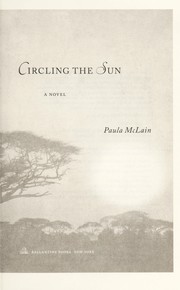
Circling the Sun
2,237-word summary 10 min read 366 pages in the book
- First published
- 2015
- Publisher
- Ballantine Books
- Pages
- 366
- ISBN
- 9780345534187
Reading options
What's inside (9 sections)
When I picture Beryl Clutterbuck, I see a four year old girl stepping off a ship in British East Africa with her father Charles, a horse trainer, while her mother Clara is already drifting out of the picture. That image stayed with me long after I closed Paula McLain's 2015 novel, because nearly everything Beryl becomes later, the fearless trainer, the bush pilot, the woman who flew an ocean alone, grows from a child dropped into a place she did not choose and told to make the best of it. McLain, who had already retold the first Hemingway marriage in The Paris Wife, clearly likes women who refuse the roles handed to them. Beryl Markham is the most stubborn of the lot, and this book is her story from the dusty Njoro farm to a cold morning above the Atlantic.
A childhood the Kipsigis shared
Beryl arrived in Kenya in 1906, the year her father built a horse racing farm at Njoro, near the Great Rift Valley. Clara left soon after, and Charles was often absent or impossible to rely on, so the people who raised Beryl in any meaningful sense were the Kipsigis children who lived and worked around the estate. She rode with them, hunted with them, learned the land by walking it, and picked up the language the way other children pick up a song. McLain makes this the foundation of everything. Beryl does not become brave because someone gives her a speech about courage. She becomes brave because softness gets you nowhere in a place where a leopard might be waiting at the edge of the shamba and no one is coming to save you.
The novel puts this plainly early on, when Beryl reflects that softness and helplessness got you nothing in this place. I found that line bracing rather than sentimental. It explains her later habit of walking away from people before they can leave her, her refusal to ask for help, and the way she treats a horse's fear as something to be understood rather than indulged. It also explains what is missing in her. She can read an animal's mood at a glance and still misread almost every person who loves her. Her brother Dickie is mostly a shadow here, and her mother's departure lands as a wound Beryl spends decades dressing with motion.
McLain gives us the texture of that upbringing in small, sure strokes. Beryl learns to sit a horse before she learns to sit still at a table. She follows the older children into the bush, learns which tracks matter and which ones are only wind and shadow, and discovers early that being small and female counts for very little out there. The Kipsigis children do not indulge her, which is the greatest gift they give her. When she falls, she gets up because everyone else does. I kept thinking about how different this is from the childhood Clara might have imagined for her daughter back in England, with its governesses and proper shoes and carefully measured afternoons.
There is a lovely, quiet passage in which Beryl says the farm at Njoro was the one place in the world she had been made for. That line is the key to the whole book. Kenya is not a backdrop she passes through on her way to fame. It is the only place where her peculiar skills make sense, where being a girl who rides hard and shoots straight is an advantage rather than a scandal. Every time she leaves it, she becomes smaller in other people's eyes, and every time she comes back, she remembers who she is.
Jock, the farm, and a hard exit
Beryl's first marriage is one of the strangest episodes in the book, and also one of the shortest. She marries Jock Purves young, barely out of her teens, and it goes badly almost immediately. The breaking point comes when Jock, drunk, attacks her. Her father's response is to fire her and send her away, which tells you a great deal about the code this family lived by. The men could be reckless, unfaithful, and cruel, but a woman who brought shame to the household was the one who paid.
I wanted to shake Charles during this section. McLain clearly wants us to see that he loves his daughter in his own clumsy way, and the discussion questions she published with the novel even ask whether we sympathize with him. I did, briefly, and then I remembered who was sent packing. That tension is one of the book's strengths. Nobody here is a villain in a single scene, and nobody is innocent across the whole story.
Out on her own, Beryl becomes a trainer while still in her teens, working with horses in a way that draws attention because she is a woman doing a man's job and doing it better. She eventually becomes the first woman to hold a racehorse training license in Kenya, a detail that sounds tidy in a summary but reads as a long, grinding fight on the page. The owners who hire her do so with a mixture of curiosity and embarrassment, as if hiring a woman to prepare a thoroughbred for a race says something about them. She takes their money and ignores their opinions. Her style is unconventional and effective. She watches, she waits, and she trusts her hands more than her theories. The Happy Valley set, that loose circle of wealthy European expatriates who lived fast and loved faster, starts to notice her. So does Denys Finch Hatton.
Karen, Denys, and the question of loyalty
Denys Finch Hatton is the great romantic knot of the novel. He is a hunter and pilot, charming, restless, and already involved with Karen Blixen, the Danish writer who later published Out of Africa as Isak Dinesen. Karen and Beryl become friends, of a sort, and then rivals, of a sort, and the book never quite decides which word belongs where. Their first real encounter happens outside under the stars at Beryl's coming out party, a scene that captures the whole tangle in one image. These are two extraordinary women circling one unobtainable man in a country that treats them both as curiosities.
McLain handles the friendship with care. She does not make Karen a jealous villain or Beryl a homewrecker. Karen has built a life at Ngong and has a claim on Denys that is real. Beryl has a hunger that is just as real and far less respectable. When Beryl pursues him anyway, the choice costs her something with Karen, and the cost hangs around long after the affair itself fades. There is a moment after a lion named Paddy attacks Beryl when Bishon Singh says that perhaps she was never meant for him. I read that as the novel quietly telling Beryl that the men and the animals she keeps trying to conquer are not the point. She is being prepared for something else.
This is also where the book's colonial assumptions show most plainly. The Kipsigis people who shaped Beryl's childhood remain largely unnamed and unheard, present as texture and wisdom rather than as full lives. The Happy Valley crowd is observed with a mixture of fascination and disapproval that never quite settles. I enjoyed the world McLain built, but I noticed that some of the people in it were allowed to be more fully human than others.
A prince, a husband, and a son
When Beryl marries the wealthy Mansfield Markham and moves to England, the novel changes temperature. The African sections move like a horse at a gallop. The English sections move like a dinner party that will not end. Beryl has a son, Gervase, and then, while pregnant or newly a mother, begins an affair with Prince Henry, the Duke of Gloucester, known to everyone as Harry. Harry is captivated, installs her near Buckingham Palace, and George V tries to break it up by sending his son on a royal tour of Japan. It does not work. The affair resumes, and the palace eventually pays out to keep it quiet, with a trust fund and an annuity that must have felt like both a prize and a bribe.
Mansfield threatens divorce and names Hubert Broad, another pilot and another lover, as corespondent. The divorce finally comes through in 1937. Through all of it, Beryl keeps behaving as if rules are suggestions meant for other people, and I admired that even when I found her exhausting. She is not a heroine designed to be liked. She lies, she leaves, she takes what she wants, and then she pays in the quiet hours when Gervase is asleep and the house in England feels enormous.
Motherhood is what nudges her toward flying. McLain draws a clear line between Beryl's determination not to be the mother Clara was and her decision to trade the stables for a cockpit. It is a strange causal chain, and the novel makes it feel inevitable rather than convenient. If you cannot give your child a settled home, you can at least show her that a woman is allowed to go where she wants.
Learning to fly
Tom Campbell Black is the person who teaches Beryl to fly, and he understands what she is made of before she does. He had been a friend of Denys, and he becomes her instructor, her promoter, and the man who sees a commercial pilot in her when most people see a woman playing with machinery. She earns her pilot's license and starts working as a bush pilot, spotting game from the air and radioing positions to safaris on the ground. It is dangerous, repetitive work, and she loves it. She flies low over country that would take a week to cross on foot, scans for dust and movement, then climbs back into the thin high altitude air with her passengers' money in her pocket. Up there, the same instincts that made her a good trainer make her a good pilot. She reads weather and terrain the way she used to read a horse's shoulders. McLain lets us feel the appeal of it, the clean noise of the engine and the way a person can be completely alone without feeling lonely for once.
By the mid 1930s, the people who once called her a reckless girl are calling her a pioneer. The shift is gradual and a little uneasy. Beryl does not suddenly become respectable. She simply becomes too useful and too famous for anyone to keep dismissing. McLain is good on that kind of change, the slow way the world adjusts its language around a woman who stops asking permission.
The flight that made the name
In September 1936, Beryl takes off from Abingdon in England in a Percival Vega Gull called The Messenger, intending to reach Floyd Bennett Field in Brooklyn. About twenty hours in, ice forms in the fuel tank vents, the engine starves, and she puts the plane down at Baleine Cove on Cape Breton Island in Nova Scotia. She does not reach New York, but she becomes the first woman to fly solo from England to North America, and the first person to make that east to west crossing alone.
I expected a triumphant final chapter, and instead McLain gives us something quieter and better. Beryl's great achievement arrives with a sputtering engine and a muddy landing in a place she did not plan to visit. She survives because she has spent her whole life improvising. The book closes with a woman who finally understands what the lion, the horses, the marriages, and the long nights in the air had been preparing her for. The title comes from that sense of orbit, of a life circling something bright and never quite reaching it, and the flight is the moment she stops chasing the light and starts making her own course.
I also liked the book's quiet nod to what comes next. Beryl would eventually write West with the Night, the memoir that made her a literary name decades later and drew a famous letter from Ernest Hemingway, who told a correspondent that she could write rings around most of them. McLain does not linger on that vindication. She leaves us with the younger woman in the cockpit, still skint, still recklessly sure of herself, with every mistake still ahead of her. That choice felt generous. A lesser novel would have ended on the applause.
What I took from it
I finished this book wanting to argue with it, which is usually a good sign. McLain's prose is lush without becoming purple, and her ear for the rhythms of Kenya is remarkable. She gives Beryl a voice that is wry, impatient, and frequently wrong, and she never smooths those edges away to make a cleaner story.
The middle stretch in England sags, and the prince affair sometimes reads like a separate novel someone tucked inside this one. I also wanted more from the women around Beryl, particularly Karen, whose own story seems to stop the moment it stops serving Beryl's. Still, the portrait of a woman who keeps choosing motion over comfort held me from the first page. Beryl Markham was difficult, vain, brave, and often unkind. McLain lets her be all of it, and that honesty is the reason this book is worth your evening.
FAQ
Is Circling the Sun based on a real person?
Yes. It fictionalizes the life of Beryl Markham, the English born Kenyan aviator and racehorse trainer who later wrote the memoir West with the Night.
Who was Beryl's relationship with Karen Blixen?
They were friends and rivals drawn to the same man, the hunter and pilot Denys Finch Hatton. Karen wrote Out of Africa under the name Isak Dinesen.
What happens at the end of the novel?
In September 1936 Beryl takes off from Abingdon in a Percival Vega Gull called The Messenger. Ice in the fuel vents forces her down at Baleine Cove in Nova Scotia after twenty hours, and she becomes the first woman to fly solo from England to North America.
Similar books
Carnegie's Maid
An Irish immigrant answers to a dead woman's name and lands a job as lady's maid in Andrew Carnegie's Pittsburgh household, where her mind for business draws…
2,271-word summary · 10 min read
The Only Woman in the Room
A novel about Hedy Lamarr's escape from an arms-dealer husband, her Hollywood career, and the frequency-hopping patent the Navy ignored.
2,067-word summary · 9 min read
North Sun, or, the Voyage of the Whaleship Esther
In 1878 New Bedford, a worn-out captain is sent north after a whaleship and the son-in-law of a powerful whaling family who chose to stay in Alaska.
2,314-word summary · 10 min read
The Beekeeper's Apprentice
In 1915 a bookish fifteen-year-old American girl stumbles across a retired Sherlock Holmes keeping bees on the Sussex Downs, and talks him into taking her on…
2,215-word summary · 10 min read
Hawaii
Michener tells the history of the Hawaiian islands in six sweeping sections, from volcanic origins to statehood, through the lives of those who arrived.
2,295-word summary · 10 min read

At the Water's Edge
A Philadelphia socialite follows her husband and his friend to wartime Scotland to hunt the Loch Ness monster, and finds herself instead: a novel of friendship…
2,906-word summary · 13 min read
The True Confessions of Charlotte Doyle
A sheltered thirteen-year-old sails from Liverpool in 1832 and finds herself the only woman aboard a ship with a charming, dangerous captain.
2,330-word summary · 10 min read
The Lady of the Rivers
Jacquetta of Luxembourg, mother of Elizabeth Woodville, narrates the years of Henry VI's reign, from Joan of Arc to the Wars of the Roses, in this prequel to…
2,296-word summary · 10 min read
The Dressmaker's Gift
In occupied Paris, three seamstresses hide dangerous secrets, and decades later one granddaughter returns to the same building to learn what really happened.
2,277-word summary · 10 min read
The Book of Negroes
Aminata Diallo is kidnapped from West Africa at eleven and spends a life crossing the Atlantic, surviving slavery, and fighting to be recorded as free.
2,442-word summary · 11 min read

Violeta
A woman born in 1920 writes her life story to her grandson, from one pandemic to another, through wealth, ruin, passion, and dictatorship in South America.
2,555-word summary · 11 min read

Mrs. Everything
Two Jewish sisters in Detroit grow up, apart and together, across seven decades of American life, from the 1950s to the 2016 election.
2,362-word summary · 10 min read
The Valley of Horses
Exiled from the Clan, Ayla survives alone in a hidden valley, tames a horse and a cave lion, and nurses a wounded stranger back to life.
2,311-word summary · 10 min read
The Agony and the Ecstasy
Irving Stone turns Michelangelo's seventy years of carving, painting, and arguing with popes into a novel about the cost of making something that outlives you.
2,260-word summary · 10 min read
A Long Walk to Water
Two eleven-year-olds in southern Sudan, twenty-three years apart: a Dinka boy fleeing war and a Nuer girl walking hours for water, until their stories meet at…
2,217-word summary · 10 min read

Ivanhoe
A disinherited Saxon knight, a great tournament, a besieged castle and a trial by combat. Scott's most famous novel, set in England in 1194.
2,834-word summary · 13 min read
Euphoria
Three anthropologists in 1930s New Guinea turn fieldwork into a love triangle, and a real history breathes behind them.
2,048-word summary · 9 min read
The Sisters Brothers
Two hired killers ride from Oregon to Gold Rush California to murder a prospector, and find their trade, their brotherhood, and the frontier myth coming apart.
2,095-word summary · 9 min read
The Last of the Mohicans
During the French and Indian War, Hawkeye and two Mohican warriors try to save two British sisters from a Huron chief whose revenge will end the Mohican line.
2,017-word summary · 9 min read
Loving Frank
Mamah Borthwick Cheney leaves her family for Frank Lloyd Wright, and their affair becomes a public scandal that ends in tragedy at Taliesin.
2,034-word summary · 9 min read
The House of Eve
Two Black women in 1950s Philadelphia and Washington, one a pregnant teenager and one a doctor's wife who cannot carry a child, are pulled together by a…
2,270-word summary · 10 min read
The Lost Girls of Paris
In 1946, a war widow finds an abandoned suitcase in Grand Central holding photographs of twelve women who vanished in the war, and follows their story back to…
2,668-word summary · 12 min read
The Last Kingdom
Kidnapped by Danish raiders as a boy and raised in their halls, Uhtred of Bebbanburg must choose what he is when the fight for England begins.
1,997-word summary · 9 min read
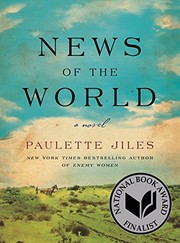
News of the World
Captain Kidd carries captive Johanna home across 1870 Texas.
2,571-word summary · 11 min read

Cryptonomicon
Codebreakers in World War II and hackers in the 1990s chase gold, ciphers, and a secret data haven.
2,280-word summary · 10 min read
The Signature of All Things
Botanist Alma Whittaker grows up in Philadelphia trade wealth, studies mosses, marries distant Ambrose Pike, and sails to Tahiti seeking how species change.
2,535-word summary · 11 min read
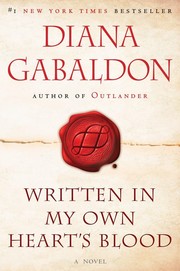
Written in My Own Heart's Blood
1778 war splits Jamies and Claires across rebellion and time as Brianna hunts a kidnapped son.
2,008-word summary · 9 min read
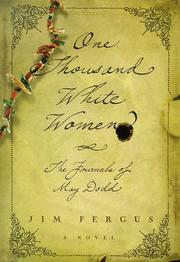
One Thousand White Women: The Journals of May Dodd
May Dodd journals joining Cheyenne as a bride in an 1875 government swap, learning prairie life and loss.
2,036-word summary · 9 min read
Daughter of Fortune
Eliza Sommers flees Chile for California gold rush San Francisco, disguised and searching for her lover, finding freedom with Tao Chi'en.
2,009-word summary · 9 min read
The Scarlet Pimpernel
A foppish baronet rescues aristocrats from the guillotine while his French wife hunts the hero she scorns.
2,980-word summary · 13 min read