
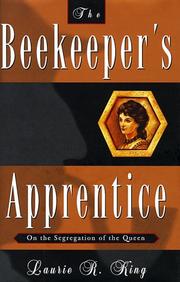
The Beekeeper's Apprentice
2,215-word summary 10 min read 368 pages in the book
- First published
- 1994
- Publisher
- St. Martin's Press
- Pages
- 368
- ISBN
- 9780312104238
- Series
- Mary Russell and Sherlock Holmes (#1)
Reading options
What's inside (8 sections)
I came to this book curious about how anyone could make a grown man's world of beekeeping and detective work feel fresh again. Sherlock Holmes is one of those figures who has been retold so often that a new version has to justify its own existence on the first page. Laurie R. King manages that in a single scene, and the rest of the book keeps the promise. Published in 1994 by St. Martin's Press as the first volume of what became the Mary Russell and Sherlock Holmes series, it is a book about a fifteen-year-old girl who good-naturedly takes the great detective apart and rebuilds him as a teacher. The first edition ran 368 pages. The full original title, The Beekeeper's Apprentice, Or On the Segregation of the Queen, hints at the book's quiet interest in who gets to sit where in a partnership of minds.
What surprised me most is how little of the story is about solving crimes in the usual sense. King spends her time on the slow work of an education. We watch a clever, lonely girl learn a method of thinking, and we watch a retired, suspicious man learn that he has something left to give. The mysteries are real and they matter, but the engine of the book is the relationship between the two people at its centre.
A girl on the Downs meets a man among the bees
The book opens in April 1915 on the Sussex Downs. Mary Russell is fifteen, an American girl who has lost her parents and siblings in a motor accident in California and has been sent to live with an aunt in England. She is bookish to the point of being impractical, carrying her reading with her as she walks, and she is nearly about to step on a man lying in the grass.
That man is Sherlock Holmes, fifty-four years old and retired from his London practice. He keeps bees in the South Downs, living the quiet life that Conan Doyle's stories always promised he wanted after Reichenbach. He is startled, then amused, then increasingly interested. The girl has interrupted his solitude, but she has also recognized something in him, and he in her.
Mary is not a worshipping fan. She has read the accounts of his cases, but she meets the man rather than the legend, and she is unimpressed by the legend's reputation for condescension. The exchange is prickly from the start. Holmes, who calls her Russell, discovers within a few conversations that she has a memory and a mind that match his own. The famous intellect has met its equal, and it does not entirely know what to do about it.
The beekeeping of the title is not decorative. Holmes's hives give the book its rhythms and its seasons, and they give King a way to write about patience, observation and the slow accumulation of small facts. Mary's arrival among the bees is the moment his retirement stops being retirement.
The making of an apprentice
Once Holmes decides to take Mary on, the novel becomes a record of training. He teaches her to notice what others overlook, to read a person's habits from the state of their clothes and boots, to track movement across ground, to build a disguise from posture and manner as much as from costume. She is an eager and occasionally insufferable student. She is also very good.
King is careful to show the work rather than simply announcing that Mary is gifted. There are exercises, corrections, failures and the particular pleasure of a pupil who finally gets an answer right. Holmes's methods, inherited from the stories, are given a practical second life here. Deduction stops being a party trick and becomes a discipline that a young person can actually learn, with all the dull repetition that discipline requires.
The early cases let the pair test this arrangement. One involves a string of mysterious illnesses that strike victims only in clear weather. Another has them catching a German spy hidden in a neighbour's household during the war. A third concerns a thief who has been robbing the local pub. These are short, self-contained puzzles, and they do the job of showing the apprenticeship in motion. They also let King enjoy the period detail: wartime Sussex, local gossip, the constraints on a girl travelling alone, and the steady friction between Mary's American directness and English habit.
I liked these chapters, though I can see why some readers find the first half of the book episodic. The cases accumulate before the larger story really begins, and a reader who arrived expecting a single driving investigation might feel the book marking time. I did not mind it, because the time is not wasted. Every case changes the balance between teacher and student a little.
Oxford, and a case that reaches further
By autumn 1917 Mary is at Oxford University, reading chemistry and theology. King gives her a full undergraduate life: the Bodleian Library, the dramatic society, elaborate pranks and the particular freedom of a girl with a formidable mind in a place that has not quite decided what to do with her. This is one of the book's great pleasures. Mary is not defined only by her relationship with Holmes. She has her own interests, her own friends, her own reasons for being somewhere.
Her apprenticeship continues between terms. Then, in August 1918, Holmes is consulted on the kidnapping of Jessica Simpson, the daughter of an American senator. He brings Mary along, which raises the stakes of her role from student to partner. The two travel in disguise as gypsies and follow the trail of the missing girl into Wales.
The rescue is Mary's. She takes the initiative, and Jessica, once recovered, forms a bond with her that lasts beyond the case. It is a good, clean piece of detective work and it gives the relationship its first real test under pressure. Holmes has taught her well enough that she can act without him. At the same time, the case ends unsatisfyingly. The kidnappers turn out to be hired hands, and the person who ordered the job remains out of reach. That loose end is the thread the rest of the book will pull on.
I found this section the most confident in the novel. King knows exactly why Mary is at Oxford and what the university gives her, and the Welsh chase has a momentum the earlier puzzles lack. It is also where the emotional bond between the two women, Mary and Jessica, begins to matter, which gives the book more than one kind of loyalty to lose.
Bombs, a slashed cab seat, and a long absence
In December Mary returns to her lodgings to find Holmes injured. A bomb has gone off near him. A second device has been left at her own door and he has defused it. A third fails in an attempt on Dr. Watson's life. The message is plain: someone knows who these people are, knows where they live, and wants them dead.
The attacker is not a faceless bomb thrower. Their mysterious opponent savages a cab the pair are using and leaves a series of slashes in the leather seat. Holmes reads the pattern and concludes that he is being stalked by a formidable woman who understands his methods thoroughly, right down to the safe houses he uses in London. This is a different order of enemy. She is not a criminal who can be outthought in a single sitting. She is someone who has studied him.
Holmes decides to frustrate her by leaving England. He and Mary travel to Palestine for six weeks on a mission connected to two of Mycroft's spies, an episode King later expanded into the novel O Jerusalem. The trip removes them from the immediate threat, but it also deepens the bond between them and lets the attacker's patience grow.
When they return, they stage a charade. They let it appear that they have quarrelled and separated, on the theory that Holmes's apparent vulnerability will draw the enemy into the open. The plan works in the sense that it creates an opening. It also takes a real toll. Both of them are forced to keep up a performance while under heavy surveillance, unable to speak frankly to each other even when the danger is closest. King writes this stretch with a good deal of attention to the emotional cost of pretending. The estrangement is a tactic, but it feels like a loss.
The name in the slashes
The resolution comes in May, and it is built from something Mary learned at Oxford. Looking again at the slashes in the cab seat, she realizes that the marks spell MORIARTY when read as Roman numerals in Base 8, a number system her missing mathematics tutor, Patricia Donleavy, had once made her practise. The code is the link she had been unable to make. Patricia Donleavy has disappeared, and the disappearance is no longer a separate worry.
Mary finds Holmes at her lodgings, and he tells her that their attacker is preparing to strike. They go to Sussex to set a trap. Donleavy is already waiting for them.
Her revelation ties the whole book together. She was the force behind the kidnapping of Jessica Simpson, using hired hands so that the trail would stop short of her. She is also the daughter of Professor Moriarty, the man Holmes hurled to his death at the Reichenbach Falls. The revenge has been decades in the making, and it has been directed at the one person who understood her father well enough to defeat him.
The confrontation is short and physical. Holmes provokes Donleavy into attacking him, Mary intervenes, and in the struggle Donleavy is killed. Mary is badly wounded by the same bullet. It is a violent end to an argument that has been conducted, until then, through codes and bomb scares and staged departures. Kirkus, reviewing the book in 1993, called the culprit "the most unexpected culprit since Jefferson Hope," and the judgment holds up. Even a reader who has guessed the identity of the mastermind will find the family connection lands hard.
Recovery, and what the book leaves behind
Mary's recovery is long, and it is not only physical. She sinks into a depression brought on by two betrayals at once: the strain of the fake estrangement from Holmes, and the discovery that a figure she trusted, her tutor, was the person trying to kill them. The emotional wound is treated as seriously as the bullet. King does not rush Mary back to full health for the sake of a tidy ending.
What brings her back is a letter from Jessica Simpson. That small, ordinary act of friendship is enough to restart the partnership, and the novel closes with Mary and Holmes more firmly joined than they were before the bombs. The word "apprentice" in the title has changed meaning by then. She began as a pupil. She ends as a colleague.
This is where the book's reputation rests, and it is deserved. King gives us a female protagonist who is allowed to be brilliant, awkward, stubborn and young all at once, and a Holmes who is neither a museum piece nor a parody. The writing is smart without showing off. The period is lived in rather than displayed. The novel was nominated for an Agatha Award for best novel and named a Notable Young Adult book by the American Library Association, and the Independent Mystery Booksellers Association later chose it as one of the 100 Favorite Mysteries of the 20th Century. In 2000 it was adapted as a four-part BBC radio drama starring Monica Dolan as Mary, James Fox as Holmes and Sian Thomas as Donleavy.
I do want to be fair about the limits. The first half really is looser than the second, and the puzzle that cracks the case depends on a code lesson that strikes me as a little too convenient. King asks us to accept that a single mathematics exercise from Mary's past will unlock a murder plot years later, and the coincidence is doing a lot of work. There is also the matter of the age gap between Mary and Holmes, which the later books in the series develop into a romance. In this first volume that element is barely visible, and a reader who knows where the series goes may find the seed of it uncomfortable. Anyone looking for a conventional action mystery may find the long stretches of training and Oxford life too quiet.
Those complaints are real, but they sit inside a book that knows what it is doing. The beekeeping, the tutorials, the pranks and the coded slashes all serve the same end: the building of a mind and a partnership. I finished it believing that Mary Russell had earned her place beside Sherlock Holmes, which is the only claim the book really needs to make. It is a good place to start if you want to see a beloved detective made strange again, and a fine reading companion if you have always thought the quiet years after Reichenbach deserved a story of their own.
FAQ
Is The Beekeeper's Apprentice a Sherlock Holmes novel or a Mary Russell novel?
It is the first book in Laurie R. King's Mary Russell and Sherlock Holmes series, published in 1994. Holmes is a major character, but the story is told from Mary Russell's point of view and follows her education.
Does the book contain a romance between Mary and Holmes?
In this first volume the relationship stays a partnership of teacher and student, and any romantic element is barely visible. The later books in the series develop that element, which some readers find uncomfortable given their age gap at the start.
What recognition did The Beekeeper's Apprentice receive?
It was nominated for an Agatha Award for best novel, named a Notable Young Adult book by the American Library Association, and chosen by the Independent Mystery Booksellers Association as one of the 100 Favorite Mysteries of the 20th Century.
Similar books
More from Mary Russell and Sherlock Holmes first, then related titles.

There Will Be Bodies
Digging out a villa buried by Vesuvius, Flavia Albia finds chained corpses and a death someone tried to hide for ten years.
2,152-word summary · 10 min read
The Secret of the Old Clock
The first Nancy Drew novel: a sixteen-year-old detective follows a clue hidden in a clock to overturn a will and restore a family's inheritance.
2,011-word summary · 9 min read

At the Water's Edge
A Philadelphia socialite follows her husband and his friend to wartime Scotland to hunt the Loch Ness monster, and finds herself instead: a novel of friendship…
2,906-word summary · 13 min read
Heist Society
A teenage art thief gets expelled from boarding school, then has two weeks to steal five paintings back from a London museum and clear her father.
2,781-word summary · 12 min read
The Redbreast
Harry Hole chases an ageing sniper through modern Oslo while two Norwegian volunteers on the Eastern Front carry a fifty-year-old betrayal toward a royal…
2,453-word summary · 11 min read
Maisie Dobbs
A maid turned war nurse opens a London inquiry agency in 1929 and traces a quiet case to a refuge for shattered soldiers.
2,382-word summary · 11 min read
The Sign of Four
Mary Morstan's pearls lead Holmes and Watson from foggy London to Agra treasure and a Thames chase.
2,114-word summary · 9 min read
The Mysterious Benedict Society
Four gifted children pass strange tests and go undercover at a school hiding a mind control machine.
2,130-word summary · 9 min read
The Huntress
A Soviet night pilot, a Boston photographer doubting her stepmother Annelise, and a Nazi hunter chase Die Jagerin from wartime Europe to 1950 Boston in a long…
2,666-word summary · 12 min read

This Tender Land
Four orphans flee a harsh Minnesota boarding school in 1932 and canoe toward St. Louis, meeting farmers, healers, and drifters along the way.
2,972-word summary · 13 min read
The Rose Code
Three Bletchley Park women reunite in 1947 to expose a wartime traitor in Quinn's codebreaking novel.
3,219-word summary · 14 min read
The Three Musketeers
Young dArtagnan joins Athos, Porthos and Aramis to recover the queens diamonds and face Milady.
2,569-word summary · 11 min read
A Study in Scarlet
Watson meets Holmes in Baker Street, a Brixton body bears the word Rache, and a Utah revenge tale explains it.
2,208-word summary · 10 min read

The Yiddish Policemen's Union
An alcoholic detective in an alternate Sitka investigates a murder that leads toward a messianic plot and his own family's past.
2,247-word summary · 10 min read
The Trumpet of the Swan
A mute trumpeter swan learns to read, write, and play a stolen trumpet to win a mate, in E.B. White's quiet 1970 tale of a boy who watches.
2,309-word summary · 10 min read
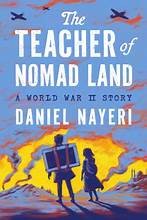
The Teacher of Nomad Land
In 1941 Iran, an orphaned boy straps a chalkboard to his back and sets off to teach nomads, hoping to keep his little sister with him.
2,534-word summary · 11 min read
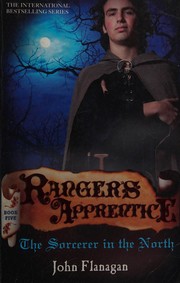
The Sorcerer in the North
A young Ranger posted to a quiet fief goes undercover as a jongleur to investigate a supposed sorcerer haunting a wood and a poisoned castle.
2,246-word summary · 10 min read
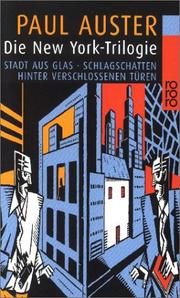
The New York Trilogy
Three linked novels turn a wrong-number call into a puzzle about names, authorship, and the stories people tell to stay sane.
2,259-word summary · 10 min read
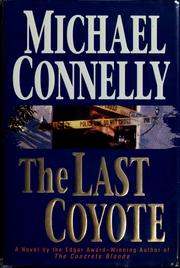
The Last Coyote
On stress leave, Harry Bosch reopens the unsolved murder of his mother, a prostitute strangled when he was twelve, and finds corruption reaching the DA's…
2,069-word summary · 9 min read
The Hangman's Daughter
In 1659 Bavaria, a hangman ordered to torture an innocent midwife instead investigates the deaths of children marked with a strange tattoo.
2,523-word summary · 11 min read
The Atlantis Gene
A geneticist and an intelligence operative chase two kidnapped boys through a global conspiracy about human evolution and a weapon built to cull humanity.
2,369-word summary · 11 min read
The 5th Horseman
Two linked cases pull Lindsay Boxer and the Women's Murder Club into a hospital full of strange deaths and a luxury-car murder spree.
2,609-word summary · 12 min read
North Sun, or, the Voyage of the Whaleship Esther
In 1878 New Bedford, a worn-out captain is sent north after a whaleship and the son-in-law of a powerful whaling family who chose to stay in Alaska.
2,314-word summary · 10 min read
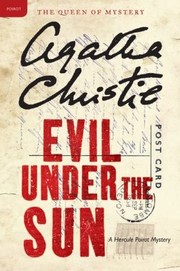
Evil Under the Sun
Poirot's Devon holiday turns deadly when a flirtatious actress is strangled at a secluded seaside hotel in this 1941 puzzle.
2,380-word summary · 11 min read
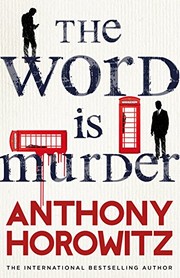
The Word Is Murder
A fictionalised Anthony Horowitz is talked into chronicling a prickly ex-detective's case: a woman murdered hours after planning her own funeral. A clever…
2,296-word summary · 10 min read
The Unquiet Grave
In Dervla McTiernan's fourth Cormac Reilly novel, a body found in a Galway bog turns out to be a missing school principal, and the case opens into something…
2,253-word summary · 10 min read
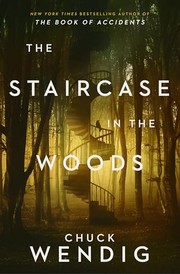
The Staircase in the Woods
Twenty-five years after a friend vanished at the top of a staircase in the woods, four estranged adults are summoned back to climb another one.
2,023-word summary · 9 min read
The Running Grave
In the seventh Cormoran Strike novel, Robin goes undercover inside a Norfolk cult while Strike digs into a child's death from decades earlier.
2,615-word summary · 12 min read
The Paying Guests
A widowed mother and her unmarried daughter take in lodgers in 1922 south London, and a secret affair between Frances and Lilian pulls them into a murder case.
2,661-word summary · 12 min read
The Paris Express
Emma Donoghue turns the real 1895 Montparnasse rail disaster into a crowded historical thriller, following a bomb-carrying anarchist and a carriage of…
2,785-word summary · 12 min read