
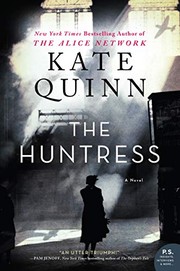
The Huntress
2,666-word summary 12 min read 560 pages in the book
- First published
- 2019
- Publisher
- William Morrow
- Pages
- 560
- ISBN
- 9780062884343
Reading options
What's inside (7 sections)
My copy of this book lived on my nightstand for two weeks and made my bedside lamp work overtime. It is the 2019 William Morrow edition, 560 pages, and it looks like a brick. A friend who loves war stories told me you need patience for the first hundred pages and then you will not sleep. She was right. I started it on a slow Sunday, got tangled in three different lives, and kept telling my husband one more chapter until one in the morning.
Quinn writes big historical fiction with women at the center. I had read The Alice Network before, so I knew her habit of braiding past and present. This one does it with three threads that start far apart. Nina, a Soviet bomber pilot. Jordan, a young photographer in Boston. Ian, a British war correspondent turned Nazi hunter. At first they feel like three separate novels. By the end they crash together in a way that is both fun and a little too tidy, which I will get to.
No spoilers warning is pointless here. These are summaries, so I will tell you the whole shape, including who the Huntress is. If you want to go in cold, stop and read the book first.
Nina: flying through night fire
Nina Markova starts in the snow and ends in the sky, which sounds odd until you hear her story.
She grows up rough and wild in the Soviet Union. Her mother dies. Her father is distant. She loves flying more than anything, and she learns to fly small planes before the war even starts. When Germany invades, she joins the women's night bomber regiment, the group the Germans called the Night Witches. They flew old wood and canvas biplanes, cut their engines over targets, and dropped bombs in the dark.
Quinn puts you right in the cockpit. Cold air through cracks. Maps on knees. The engine coughing. Nina flies with a navigator beside her, and they take turns being terrified and being brave. They fly night after night. Friends do not come back. New girls arrive. The living drink tea and try to laugh.
Nina is shot down behind enemy lines. I will not give every step of her survival, because Quinn stretches it out and the tension is the point, but she ends up captured and passed among German units. She sees cruelty up close. She also sees one woman who seems to enjoy it, a female killer attached to the eastern front who shoots civilians and prisoners with a kind of cold pride. The men call her Die Jagerin, the Huntress. Nina never forgets her face.
What I liked about Nina is that she is not polished. She swears. She drinks. She picks fights. She carries shame about things she did to stay alive. She is funny in a harsh way that made me laugh out loud twice. She also carries grief for her lost crew in a way that feels physical. When she talks about her navigator, her voice changes.
After the war Nina cannot settle. She drinks too much. She takes odd jobs. She tells her story to anyone who will listen and to many who will not. When Ian finds her, she is half legend and half mess. He wants her memory. She wants a reason to keep living. Their deal is uneasy from the start.
Nina was my favorite thread, and I would have read a whole book about her war alone.
One small gripe here. The flying scenes are great, but they come in bursts between long present day sections. Just when I was locked into the cockpit, Quinn would cut back to Boston or London. I get why. She is building suspense. Still, twice I had to flip back to remember a call sign.
Jordan: a camera and a new stepmother
Jordan McBride is nineteen and lives in Boston with her father Dan. Her mother is dead. Her father runs a camera shop and has finally started dating again after years alone. Jordan loves him and wants him happy, yet she feels the house shifting under her.
Jordan wants to be a professional photographer. Not weddings. Real work. She shoots streets and faces and developing trays. She has an eye and she knows it. Her father supports her, which I loved. He builds her a darkroom. He brags about her prints. Their bond felt true to me, warm without being sweet.
Then Dan brings home Annelise.
Annelise is a German war widow, elegant and calm, with perfect manners and a sad story. She cooks well. She keeps house well. She smiles at Jordan and says all the right things. Jordan wants to like her. At first she does.
But small things snag. Annelise has no photos from before the war. She dodges questions about her youth. She speaks German in her sleep. She knows too much about guns. And Jordan, who develops photos for a living, notices how Annelise freezes when a certain news story about Nazi hunters comes on the radio.
Jordan starts to wonder if her kind stepmother could be the Huntress, the woman who murdered on the eastern front and vanished after the war. It sounds crazy, even to Jordan. She feels guilty for thinking it. She keeps shooting photos of Annelise when Annelise is not looking, trying to catch something true in her face.
This is the most slow burn part of the book. Quinn lets suspicion grow through meals and errands. A missing spoon. A strange letter. A name that does not match. Jordan asks her father, and Dan gets angry in the way good men get angry when they think their child is being cruel to someone they love. That fight hurt to read. Dan is not a fool. He is a widower who finally found comfort. He does not want to hear that his new wife might be a monster.
Jordan finds an ally in Ian and Nina when their hunt brings them to Boston. She shows them photos. She tells them what she has seen. They listen in a way her father cannot. From there Jordan stops being a bystander and starts being a hunter herself, with a camera instead of a gun.
I liked Jordan a lot, though she frustrated me sometimes. She is brave with strangers and timid with her father. She will follow a suspect down an alley but will not say straight out what she fears at dinner. That felt age true, though. Nineteen is exactly that mix.
The Boston chapters made me want to learn film photography, chemicals and red light and all.
Ian: hunting ghosts across Europe
Ian Graham was a war correspondent. He saw camps opened at the end of the war. He saw what people did to each other. Afterward he could not go back to normal reporting, so he joined the hunt for Nazi fugitives who had slipped away.
He is not a soldier. He is thin and clever and tired, with a notebook habit he never lost. He works with a young American colleague who handles muscle and jokes while Ian handles talk and traps. They chase paper trails across ruined cities, interview scared witnesses, bribe clerks, and get doors slammed in their faces.
Their target is Die Jagerin. Unlike camp commandants whose names were on lists, she moved in shadows on the eastern front, killed with a small group, and vanished in the chaos of 1945. Some say she died. Some say she married an American. Ian believes she lived, because Nina saw her and because a few photos and testimonies line up.
Quinn does a good job showing how hard this hunt was in real life. No computers. No shared databases. Borders closed. Memories raw. Witnesses afraid or lying. Money short. Ian runs out of funds and favors more than once. He writes articles to pay for train tickets. He argues with officials who want to move on and forget. He drinks. He smokes. He keeps going because he promised himself he would.
Nina joins him as a witness who can identify the Huntress by sight. That is rare and precious. Most hunters had paper. Ian has a living eye. But Nina is unstable, and Ian knows it. She drinks. She disappears. She picks fights in bars. He needs her sober and steady, and she resents being needed that way. Their banter is sharp and sad. They need each other and annoy each other daily.
The middle of the book follows them from city to city. A convent. A records office. A displaced persons camp. A cafe where an old soldier talks too much. Quinn keeps the pace moving without making it feel like a travel list. Each stop gives one clear clue and one new doubt. Is the woman in the photo Annelise. Is the age right. Is the accent right. Could a killer really settle into a quiet life.
I will admit I got lost once among minor names. A clerk here. A priest there. A widow with two sons. I had to trust Quinn to carry the main line and let the rest blur. On second read those scenes might land better. First time through, I held onto Ian and Nina and let the rest wash past.
What kept me going was Ian's decency. He is no revenge machine. He wants trials and records, not back alley shootings. He tells Nina more than once that they are trying to prove guilt so the world will remember, to punish fairly and to leave a record. That idealism feels old fashioned and moving after everything he has seen.
The lake and the name Die Jagerin
About two thirds in, the three threads start to pull tight.
Ian and Nina follow a lead to a remote lake hideout used by fugitives after the war. It is the kind of place that looks peaceful in photos and feels wrong in person. Empty cabins. Too quiet. Old fire pits. Locals who do not meet your eyes. Quinn writes this section well. You can hear boots on pine needles.
I will keep the details light here, though this is a summary and some readers want the map. The point is that the Huntress used such places to move and hide, sheltered by sympathizers and by men who wanted to forget what they saw. Nina walks the ground and remembers. Ian takes notes and photos. Jordan, back in Boston, matches faces and dates with what they send her.
Die Jagerin is not a ghost with superpowers. She is a woman who learned to kill in war and liked the power it gave her. Quinn does not give her a sad childhood to excuse her. She gives her choices. On the eastern front she shot Jews and prisoners and downed airwomen when she had the chance. After the war she changed her name and her story and played the grieving widow. That plain telling made her scarier to me than any grand speech would have.
Back in Boston, Jordan stops doubting herself. She watches Annelise closely. The way Annelise holds a rifle when they go out to the country. The way her accent slips when she is angry. The way she talks about the east with too much knowledge and too little grief. Jordan brings her fears to Dan again, and this time she has prints and dates, more than feelings. Dan does not want to believe it. Who would. His wife. His home. His second chance.
There is a dinner scene that I thought was the best in the Boston thread. No guns. Just food and talk. Annelise tells a story about the war that does not add up. Jordan asks one careful question too many. Annelise smiles and answers smoothly, but her hands shake. Dan laughs too loud. Everyone keeps eating. Fear sits at the table like a fourth person.
Quinn handles the reveal without cheating. She plants small signs early that look innocent until you know. A song. A scar. A habit with a camera. When the truth comes out, you can flip back and see it. I did flip back, and felt both smart and dumb, the way good mysteries make you feel.
I should note that Quinn keeps the violence frank but not showy. She does not linger on gore. She shows enough that you understand the crime, then moves to what it costs the living. That restraint helped me keep reading late at night.
Coming home and what bugged me
The last 150 pages move fast. Too fast, in my view, after so much slow build.
The hunters converge. Nina has to face the woman she swore she would never see again. Jordan has to choose between family peace and truth. Ian has to prove his case with witnesses who keep dying or vanishing. There are chases and fights and a trial feel without a full courtroom. People get hurt. People tell the truth at last. One death hit me hard because Quinn made me care about a minor helper I had dismissed.
I liked the ending's heart. Without giving every beat, Nina finds a steadier life than I expected for her. Jordan grows into her work and her courage. Ian gets something like peace, though not clean or simple. The book closes on the idea that remembering is work, and that young people like Jordan must pick it up when the tired ones cannot. That landed for me. I called my dad after, which tells you something.
Now the fair criticism, because a 560 page book earns hard questions.
It is long. The middle sags in spots, especially when Ian and Nina hit one more office and Jordan develops one more roll of film. I love detail, but twice I thought we could have cut forty pages and lost nothing. Quinn loves research and sometimes shows it. A meal gets three paragraphs. A train gets four. If you like thick historical fiction, you will not mind. If you want lean, you will sigh.
The convergence relies on luck. Three lives meet in Boston because photos and letters happen to line up. A chance meeting opens a door. A lost print turns up at the right time. Each link is possible on its own, but stacked together they feel neat. I was willing to go along because the characters pulled me, yet I noticed the strings.
The romance threads come easy. I will not name every pairing, to leave something fresh, but two couples forgive fast after big lies. After hundreds of pages about trust broken by war, I wanted slower repairs. A look or a letter is not enough after betrayal. Quinn writes sweet scenes, and I smiled, but part of me thought real healing would take longer than the plot allows.
So who should read it. If you liked The Alice Network or The Rose Code, read this. If you like dual timelines and strong women and Nazi hunter stories with real legwork, read this. If you want a short bleak classic, read Tolstoy instead. This is long and warm and plotty, with humor and food and love mixed into grief.
Practical notes for my edition. Mine is William Morrow, 2019, 560 pages. That is the printing Quinn first published with, and the page count includes the story as she wrote it, not large print tricks. If your copy has a different count, do not worry. Editions shift. The story shape stays.
I finished it tired and glad. Nina stayed with me most, with her loud laugh and her night sky. Jordan stayed too, with her darkroom hands. Ian stayed as the tired man who kept files when others wanted to burn them. I still think Quinn could have trimmed and tangled less neatly. But on a cold night with tea, I turned pages fast and cared who lived. That counts for a lot in my house.
FAQ
When was The Huntress published?
It was published in 2019 by William Morrow in a 560 page edition, moving between wartime Europe and 1950 Boston.
Who are the three main viewpoint characters?
Nina is a Soviet Night Witch pilot, Jordan is a Boston photographer, and Ian is a British war correspondent turned Nazi hunter.
Is it part of a series?
No. It is a standalone novel that shares themes with The Alice Network and The Rose Code but has its own characters and ending.
Similar books
The Rose Code
Three Bletchley Park women reunite in 1947 to expose a wartime traitor in Quinn's codebreaking novel.
3,219-word summary · 14 min read
The Tuscan Child
After her father's death, Joanna follows a returned letter to Tuscany and uncovers his wartime love, a hidden painting and a village secret. A dual-timeline…
2,095-word summary · 9 min read

The Redbreast
Harry Hole chases an ageing sniper through modern Oslo while two Norwegian volunteers on the Eastern Front carry a fifty-year-old betrayal toward a royal…
2,453-word summary · 11 min read
The Lost Girls of Paris
In 1946, a war widow finds an abandoned suitcase in Grand Central holding photographs of twelve women who vanished in the war, and follows their story back to…
2,668-word summary · 12 min read
The Secret Keeper
A girl watches her mother kill a stranger in 1961; fifty years later she digs into her mother wartime London past.
2,262-word summary · 10 min read
This Tender Land
Four orphans flee a harsh Minnesota boarding school in 1932 and canoe toward St. Louis, meeting farmers, healers, and drifters along the way.
2,972-word summary · 13 min read

The Book of Lost Names
A young forger in occupied France helps Jewish children flee with new names while keeping a secret book of the truth.
2,097-word summary · 9 min read
The Alice Network
Two women, two wars: Eve spied for the Alice Network in 1915 France, Charlie searches for her cousin in 1947, and their road trip pulls both stories together.
2,090-word summary · 9 min read
The Orphan's Tale
A Dutch teenager rescues a Jewish baby from a death train and joins a German circus, where a Jewish aerialist teaches her to fly.
2,943-word summary · 13 min read

The Japanese Lover
A Polish refugee and the son of a Japanese gardener fall in love in San Francisco in 1939, then keep the affair secret for nearly seventy years.
2,286-word summary · 10 min read
The Art Forger
A disgraced Boston painter agrees to copy a Degas stolen from the Gardner Museum, then begins to suspect the original she is copying is itself a forgery.
2,117-word summary · 9 min read

Anatomy: A Love Story
In 1817 Edinburgh, a noblewoman who wants to be a surgeon disguises herself to study anatomy and falls for the grave robber who supplies her with bodies.
2,031-word summary · 9 min read
The Only Woman in the Room
A novel about Hedy Lamarr's escape from an arms-dealer husband, her Hollywood career, and the frequency-hopping patent the Navy ignored.
2,067-word summary · 9 min read
The Valley of Horses
Exiled from the Clan, Ayla survives alone in a hidden valley, tames a horse and a cave lion, and nurses a wounded stranger back to life.
2,311-word summary · 10 min read

The Black Dahlia
James Ellroy builds a fiction around the real Black Dahlia murder, following two Los Angeles cops whose partnership and obsessions destroy them.
2,533-word summary · 11 min read
Only Time Will Tell
A Bristol dockworker's son wins a scholarship, falls in love with the daughter of the family that owns the shipyard, and learns that his father's death was not…
2,082-word summary · 9 min read

Heist Society
A teenage art thief gets expelled from boarding school, then has two weeks to steal five paintings back from a London museum and clear her father.
2,781-word summary · 12 min read
Once Upon a River
A wounded man stumbles into a riverside inn carrying what appears to be a drowned child who is not quite dead, and the story braids the guesses of everyone who…
2,173-word summary · 10 min read

The Echo of Old Books
Barbara Davis's 2023 novel sends a rare-book dealer in 1984 New Hampshire hunting for the authors of two unpublished volumes that tell opposite sides of one…
2,491-word summary · 11 min read
Stones from the River
Trudi Montag is born a dwarf in a small German river town in 1915 and grows up to keep the town's library and its secrets, from the First World War to the…
2,818-word summary · 13 min read
Last Night at the Telegraph Club
The 2021 National Book Award winner follows Lily Hu, a Chinese American teenager in 1954 San Francisco, as she falls for Kath and learns what it costs to be…
2,336-word summary · 10 min read

Ivanhoe
A disinherited Saxon knight, a great tournament, a besieged castle and a trial by combat. Scott's most famous novel, set in England in 1194.
2,834-word summary · 13 min read
Big Lies in a Small Town
A 22-year-old woman leaves prison to restore a 1940 mural, and Edenton, North Carolina, starts talking.
2,187-word summary · 10 min read
The Sisters Brothers
Two hired killers ride from Oregon to Gold Rush California to murder a prospector, and find their trade, their brotherhood, and the frontier myth coming apart.
2,095-word summary · 9 min read
The Last of the Mohicans
During the French and Indian War, Hawkeye and two Mohican warriors try to save two British sisters from a Huron chief whose revenge will end the Mohican line.
2,017-word summary · 9 min read
The Diviners
In 1920s New York, Evie O'Neill's ability to read objects pulls her into an occult investigation that awakens something far older and more dangerous.
2,045-word summary · 9 min read
Mother Night
Howard W. Campbell Jr., a Nazi propagandist and American spy, tells the story of his double life from an Israeli prison cell while waiting to be tried for war…
1,988-word summary · 9 min read
The Clockmaker's Daughter
A London archivist finds a Victorian satchel holding a photograph, a sketchbook and a letter, then follows them to Birchwood Manor, where a young woman died in…
2,886-word summary · 13 min read
Those Who Save Us
A Minnesota professor hunts her mother's hidden wartime past in Weimar, where survival came wrapped in an SS officer's protection. A dual timeline about…
2,345-word summary · 10 min read
Death Comes to Pemberley
P.D. James drops a murder onto the Pemberley estate and sends Wickham to trial, reading Austen's most famous marriage through the machinery of Georgian justice.
2,318-word summary · 10 min read