
Reading options
What's inside (8 sections)
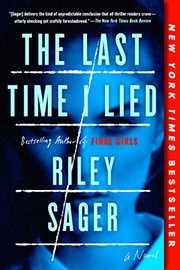
I picked up The Last Time I Lied because I wanted a summer camp thriller that felt cold even in July, and friends kept telling me the ending flipped everything. I had read one Riley Sager book before and liked how fast his chapters move, so when I saw this 2018 Dutton thriller listed at 400 pages, I saved it for a weekend when I could read late without paying for it the next day. The cover promised woods and water and missing girls. The actual book gave me that, plus a narrator I did not always trust and a camp that felt wrong in a way I could not name at first. Spoilers from here on, because this summary walks through the whole shape including the twists.
Emma Davis is the center of it. When the story opens in the past, she is thirteen and spending the summer at Camp Nightingale, a girls camp in the woods with cabins and a lake and painting classes and the usual pecking order. Emma is not the confident kid. She is observant, eager to belong, and a little raw from stuff at home. She lands in a cabin with three older girls who seem glamorous in the way thirteen year olds worship fifteen year olds. Their names are Vivian, Allison, and Natalie. Vivian leads. Allison follows close. Natalie trails with a softer edge. Emma wants in, and for a few weeks she gets it. Late night talk. Shared brushes and secrets. Canoes and dares. The feeling that this summer will change who she is.
Why I picked it up
I am a sucker for a closed setting. A camp, a snowed in hotel, a small island. Put a group of people somewhere they cannot easily leave and I will follow. Camp Nightingale sounded perfect because camps run on rules and rituals that can turn strange fast. Buddy systems, lights out, head counts, counselors who are barely older than the campers. I liked the idea of a painter as the narrator too. Emma sees in images and colors, and Sager uses that to make memory feel slippery. A shape across the lake. A face half seen through trees. A painting that shows more than she meant.
I also came in knowing Sager likes twists. His books stack them. I told myself I would not try to outguess this one and would just let Emma tell it. That helped for the first half and made the second half wilder, because I had settled into one version of events and had to drop it.
My early hope was for a moody missing persons story with a slow burn. What I got was faster and messier, with more lying, more doubling back, and more questions about Emma herself than I expected.
Camp Nightingale at thirteen
The first long section stays in the past and builds the summer piece by piece. Emma arrives unsure and watches the other girls the way new kids do, learning who sits where and who decides. Vivian spots her and pulls her into the cabin group, partly out of kindness and partly because an audience helps. Vivian is bold and pretty and used to being watched. She makes rules and breaks them. Allison is loyal to Vivian and quick to laugh, the kind of friend who backs a dare before thinking. Natalie is quieter, watchful, easier to overlook until she says something blunt that lands.
The four share a cabin set a little apart, which matters later. They stay up talking about boys and home and what they want to be. They sneak out. They paint. Emma looks up to Vivian so hard it hurts, and Vivian enjoys the worship while keeping Emma a half step below the other two. There are small cruelties mixed with real closeness. A joke that goes too far. A dare that scares Emma. A moment where Vivian is tender and Emma thinks she finally belongs. Sager captures that age well, where friendship can feel like love and rejection can feel like death.
The camp around them feels real in the details. Morning dips in cold water. Bug spray and wet towels. The dining hall noise. Art tables with jars of cloudy water. Counselors trying to keep order without killing fun. The lake is the heart of it, pretty by day and black and deep at night. The woods press close. There are paths the girls are not supposed to take and places they go anyway.
Then the three older girls vanish in the night. One morning the cabin is empty except for Emma. Beds made or unmade, I will keep it general. Bags there or not, same. The point is they are gone and no one saw them go. Searchers come. Dogs and police and parents and news vans at the edge of camp. Emma is questioned again and again. She says she slept through it. She says she heard nothing. She cries and repeats herself. The camp closes for the season and never really recovers its shine. Emma grows up as the girl who lived while her cabin mates disappeared, and that label sticks to her like smoke.
Fifteen years later
When we meet adult Emma, she is a young working artist in the city, known a little for paintings tied to that summer. She has built a thin adult life on top of a cracked foundation. She has trouble sleeping. She checks locks. She drinks more than she should some nights and works odd hours. She tells people edited versions of what happened and gets tired when strangers recognize her name. She has a boyfriend or ex or complicated dating history, I will keep that general, and a small circle that does not fully know how much she hides.
Guilt runs her days. Survivor guilt, plus a sharper kind. Did she miss a sound that night. Did she make Vivian angry before bed. Did she lie without meaning to and then get stuck in the lie. Emma replays small choices and makes them bigger in hindsight, the way people do after loss. Her paintings circle the same images. Trees, water, empty bunks, girls with faces turned away. A gallery owner or friend tells her the work sells because it feels haunted, and Emma hates hearing that even though she knows it is true.
Then an invitation arrives that restarts everything. The owner of Camp Nightingale wants to reopen the camp and wants Emma to return as an art instructor for the summer. I am keeping the owner general here rather than naming names I am unsure about. The pitch is that Emma coming back will show families the place is safe and will help Emma face the past. Emma says no at first. Then she says yes, because curiosity and guilt are stronger than fear. She tells herself she wants closure. The reader suspects she wants answers she cannot get in the city, and maybe a chance to rewrite who she was at thirteen.
The return chapters are strong on dread. The drive up. The gate. The same lake smelling the same. Cabins repainted but still small. New girls arriving with trunks and nerves, unaware or half aware of what happened there. Emma tries to act normal while her hands shake. She hangs her own work in the art cabin and watches campers react to it. At night she listens for sounds that are not there.
Back at camp as the art teacher
Emma settles into a routine that looks calm and feels wired. Mornings she teaches color mixing and sketching to girls who remind her of herself and of the missing three. Afternoons she walks the grounds and notices what changed and what did not. Evenings she sits with other staff around a fire and trades camp stories while holding back her own. Sager paces this well. Lessons and meals and swims fill the days, and small wrong things poke through. A door open that should be shut. A girl who looks like Vivian from behind. A rumor among campers that the woods are haunted.
Emma starts asking questions she told herself she would not ask. She talks to locals and staff who were around back then. She looks at old photos and maps. She revisits the cabin. She tries to remember the exact order of that last night. What they ate. Who brushed whose hair. Who was mad at whom. Memory resists. Each time she grabs a detail, another slips. That unreliability is the point. Emma lies to others in small ways to keep people comfortable, and she lies to herself in bigger ways to keep going.
Her relationships at camp complicate things. She bonds with a fellow instructor or counselor who seems steady and kind. She clashes with someone tied to the ownership or the reopening effort who wants the past left alone. She tries to protect her students while using them as cover to snoop, which made me uneasy in a good way. The campers are young and sharp. They sense Emma is both cool and fragile, and they test her the way kids test adults who want to be liked.
There is also pressure from outside. A true crime follower or reporter type circles. Parents ask pointed questions at visiting events. The owner pushes sunshine talk while watching Emma closely. Emma feels watched and starts watching back. She keeps a notebook or sketchbook where she logs what people say, and the sketches turn darker as the summer heats up. The lake keeps appearing in her work, flat and bright on top with something dark below.
I liked this middle stretch most. The scares are mostly quiet. Footsteps on a path. A light where no light should be. A painting left out in rain. Sager lets paranoia build without showing his hand, and Emma's art gives the fear a shape without explaining it.
Lies, suspicion, and the twists
About two thirds in, the book shifts from sad remembering to active investigation, and the twists start landing. I will describe the shape without giving away every beat in a way that ruins the fun, but this is still spoiler territory so look away if you want it clean.
Emma learns that what she remembers about that night does not line up with what others remember. Small gaps open. Who left the cabin first. Who suggested the late swim or walk. Whether there was a fight. People who seemed helpful misremember or deflect. Emma realizes some adults at the time had reasons to hurry the story closed, and some people now have reasons to keep it closed. She pushes anyway, because stopping feels like betrayal.
Suspicion swings. One chapter points at a staff member with a temper. Another points at a local with a record. Another points back at Vivian herself, who may have planned a runaway that went wrong. Emma chases each thread and finds just enough to keep going. She finds old belongings, hears a new account of a car on the road that night, learns about a falling out among the three girls she had smoothed over in memory. Each find forces her to revise the summer she thought she knew.
The lies theme tightens here. Emma admits she has lied about small things for years, to police, to friends, to herself, often to avoid shame rather than to hide crime. Other characters admit their own edits. A counselor who said she checked the cabin when she did not. A parent who said everything was fine at home when it was not. The point Sager keeps pressing is that most lies are not master plans. They are quick cover stories that harden into history because no one corrects them.
Then the big turns arrive in a run. Without quoting or locking in details I am unsure about, the shape is this. Emma discovers she knew more that night than she let herself keep, and her memory was protecting her. The fate of Vivian, Allison, and Natalie is sadder and stranger than the runaway story and sadder than the stranger story. Someone close to the camp played a larger role than it seemed, and someone Emma trusted in the present is tied to that past. The final chapters reframe earlier kindnesses as moves and earlier threats as misreads. Emma has to decide what to do with the truth once she has it, knowing that telling it will hurt living people and bury others afresh.
I will not spell out the last page turn by turn. The broad effect is that Emma stops being only the surviving witness and becomes an active chooser. She paints the truth as she now sees it, speaks it where it counts, and accepts that closure is not the same as peace.
What worked and what wobbled
What worked for me was pace and place. Sager knows how to end a chapter on a small hook without cheating. A knock. A name remembered wrong. A photo with one face scratched. I read the back half fast, lights on, past midnight. Camp Nightingale feels like a real camp turned wrong, with believable routines and believable gaps in supervision. The art teacher angle gives Emma a reason to watch and a reason to be watched, and her paintings let Sager show dread without long speeches. The early cabin scenes also ring true about girl friendship at thirteen, hungry and sharp and tender by turns.
The fair criticism starts with the twist pileup. There are a lot of turns in the last hundred pages, and they come fast. One reversal reframes a character, then another reframes the reversal. Readers who love that rush will grin. I liked the first two big reveals and felt the third and fourth stretch belief. Motives that seemed solid wobble when you look back. A plan that required luck and silence from many people holds a little too neatly. Sager writes these turns with confidence, but confidence is not the same as earned, and I closed the book admiring the skill while questioning the odds.
Emma herself will divide readers. She lies a lot, even when honesty would be easier, and she makes choices at camp that put others at risk while she chases answers. Sager means her to be flawed and stuck, and she is, but there were nights where I wanted to set the book down because I was tired of being inside her head. She withholds, spirals, drinks, apologizes, repeats. That cycle feels human and also wearing over 400 pages. If you need a steady narrator to enjoy a thriller, she may frustrate you. I came around by the end because her final choices cost her something, but the middle tested my patience.
Camp logic wobbles too if you poke it. A camp with this history reopening with this staff, parents sending daughters back so soon, an owner inviting the most famous survivor to teach art as a draw. It works as story engine and wobbles as real world planning. I chose to go with it because the mood carried me, but practical readers may raise an eyebrow early and keep it raised.
Still, as a 2018 Dutton thriller built for a fast read, it does its job. The lake scenes stuck with me. The cabin talk stuck with me. The idea that a lie told at thirteen can shape a life at twenty eight stuck with me most. If you like missing persons stories with a closed circle, a painter eye, and an ending that asks you to rethink the beginning, this one earns its weekend. Just expect to argue with Emma along the way, and expect the last stretch to ask for some trust.
FAQ
When was The Last Time I Lied published?
It was first published in 2018 by Dutton. The edition cited here has 400 pages with ISBN 9781524743093.
Is The Last Time I Lied part of a series?
No, it is a standalone thriller. Emma Davis and Camp Nightingale do not return in a series.
What happened at Camp Nightingale?
At age thirteen, her cabin mates Vivian, Allison, and Natalie vanished overnight. Fifteen years later Emma returns to the camp as an art instructor to face that past.
Similar books

The Woods
Twenty years after two teenagers were murdered and two vanished at summer camp, prosecutor Paul Copeland identifies a fresh corpse as one of the missing.
2,490-word summary · 11 min read

The Heiress
A missing heiress returns to claim a mansion full of letters and lies.
2,362-word summary · 10 min read
Fool Me Once
Widowed Maya sees murdered husband on nanny cam and digs into family lies.
2,104-word summary · 9 min read

My Husband's Wife
Artist Eden Fox returns from a run to find her key fails at Spyglass and her husband claims a stranger is his wife in Hope Falls.
2,437-word summary · 11 min read
You Shouldn't Have Come Here
Grace books a remote Wyoming ranch Airbnb to reset, but her attentive host Calvin blurs hospitality, attraction, and threat until twists reframe it.
2,515-word summary · 11 min read

His & Hers
Alice Feeney's His & Hers retold in full: newsreader Anna, detective Jack, a murdered woman, His and Hers chapters, and a twisty end that splits readers.
3,207-word summary · 14 min read
Survive the Night
Film student Charlie rides with possible Campus Killer Josh in 1991.
2,612-word summary · 12 min read
Final Girls
A survivor of a cabin massacre tries to live normally until another Final Girl dies and a second one shows up at her door.
2,176-word summary · 10 min read
Lock Every Door
Broke Jules apartment sits at the Bartholomew where another sitter vanished.
2,224-word summary · 10 min read
Home Before Dark
Maggie renovates haunted Baneberry Hall her father made famous.
2,017-word summary · 9 min read
The House Across the Lake
A widowed actress watching the couple across Lake Greene sees a disappearance that drags her own drowned husband back up.
3,217-word summary · 14 min read
The Only One Left
Caregiver Kit tends mute Lenora Hope accused of 1929 family murders.
2,592-word summary · 12 min read

What She Knew
Rachel lets her eight-year-old son run ahead in a Bristol park, and the nine-day search turns her into a suspect in the public eye.
2,952-word summary · 13 min read

The Beach House
A young valet is beaten to death at a Hamptons party, and his law-student brother spends a year building a case against the family that covered it up.
2,049-word summary · 9 min read

Six Years
A professor who promised to forget the woman he loved sees her husband's obituary and discovers that the wedding, the marriage, and the woman herself may never…
2,076-word summary · 9 min read

The Trespasser
A Dublin Murder Squad detective investigates a staged dinner-party killing and finds a cover-up that reaches into her own department.
2,051-word summary · 9 min read

Rules of Prey
Minneapolis detective Lucas Davenport hunts a killer who leaves a new rule at every scene and treats murder as a game of wits.
1,914-word summary · 9 min read

Ace of Spades
Two Black seniors at an elite academy are celebrated by day and hunted by an anonymous texter in this YA thriller about institutional racism.
2,066-word summary · 9 min read

The Late Show
Exiled to the LAPD night shift after accusing her supervisor, Renée Ballard keeps two cases that were meant to be handed off at dawn: a brutal assault and a…
2,563-word summary · 11 min read

Night Film
A disgraced journalist investigates the death of a reclusive horror director's daughter, following a red coat through hospitals, secret clubs, and a family…
2,690-word summary · 12 min read

4th of July
Lindsay Boxer shoots two armed teenagers in self-defense, faces a wrongful-death trial, and spends her leave chasing a string of throat-slashing murders in…
2,192-word summary · 10 min read

The Camel Club
Four Washington misfits witness a murder on Roosevelt Island and stumble into a conspiracy that reaches the Oval Office, with a hostage president and a nuclear…
2,354-word summary · 10 min read
Sleeping Giants
A girl falls into a field and lands in a giant metal hand. Years later a secret team assembles the rest of the machine, and it chooses its own pilots.
2,466-word summary · 11 min read

61 Hours
A bus crash strands Jack Reacher in a snowbound South Dakota town where a drug gang, a corrupt police force, and a single witness are on a collision course.
2,227-word summary · 10 min read
The Last Mile
Melvin Mars is hours from execution for his parents' murder when another man confesses, and FBI cold case detective Amos Decker goes looking for the trap.
2,746-word summary · 12 min read

Still Missing
A realtor is abducted at a Vancouver Island open house and held for more than a year. Told through therapy sessions, the novel follows her escape and the hunt…
2,466-word summary · 11 min read

Bad Luck and Trouble
A deposit of $1,030 summons Jack Reacher back to his old army unit, which is being picked off one name at a time.
2,366-word summary · 11 min read

3rd Degree
The third Women's Murder Club novel follows a San Francisco terror cell and a three-day killing schedule, and it costs the club a member.
2,685-word summary · 12 min read

Worth Dying For
Reacher stops for one night in rural Nebraska and finds a family that runs the county, a missing girl and a shipment worth killing for.
2,021-word summary · 9 min read

Tinker, Tailor, Soldier, Spy
Retired spymaster George Smiley is brought back to find a Soviet mole inside British intelligence, and the trail leads through old friends, old betrayals, and…
2,092-word summary · 9 min read