
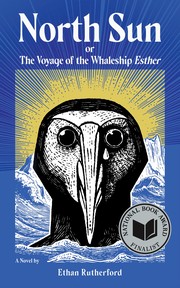
North Sun, or, the Voyage of the Whaleship Esther
2,314-word summary 10 min read 386 pages in the book
- First published
- 2025
- Publisher
- A Strange Object
- Pages
- 386
- ISBN
- 9781646053582
Reading options
What's inside (9 sections)
I have a soft spot for books that take a familiar genre and refuse to stay inside it. This one is billed as a sea novel about whaling, and for a while it looks like a straightforward period adventure. Then a seabird-man starts haunting the ship, the captain begins to sound less like a commander than a confused animal, and the whole voyage turns into something much stranger. Ethan Rutherford published North Sun in March 2025 through A Strange Object, an imprint of Deep Vellum, at 386 pages. It was his first novel, though he had already brought out two well-received story collections, and it landed on the National Book Award fiction shortlist and on Kirkus's list of the year's best books. Wikipedia files it under sea fiction and ecofiction. Publishers Weekly called it a harsh and stark ballad of a bygone time, which turned out to be an unusually accurate description of the tone.
New Bedford, 1878, and a letter from the ice
The book opens in New Bedford, Massachusetts, in 1878, at the moment when the whaling industry is running out of time. The Ashley family is the great whaling dynasty of the town, and Rutherford describes them as ruthless businesspeople with no equal at what they do. Into their house walks Captain Arnold Lovejoy, a worn-out seaman carrying a letter. The news in it is bad. One of the Ashley ships has been crushed by ice, and its captain has chosen not to come home.
That captain is Benjamin Leander, married into the Ashley family, who has gone native on the coast of Alaska. He has left behind his wife Sarah and their frail child. Lovejoy meets Sarah at the family house and falls in love with her on the spot, calling her the most beautiful woman he has ever seen. It is the sort of instant, total attachment that usually signals trouble, and here it does. Lovejoy has spent most of his life at sea and feels more at home there than on land. When the Ashleys ask him to take the whaleship Esther north and bring back the lost ship and its captain, he accepts, and the reasons he gives himself are not entirely the reasons he has.
The setup is compact and clean. A powerful family wants a missing man found. A captain with nothing left to lose takes the job. A woman he loves is waiting at the end of it, in a sense, though she is waiting for someone else. Rutherford does not linger over the mechanics of the commission. He gets the ship loaded and out of harbor, and then the real work begins.
The crew, the passengers, and the two orphans
What makes the voyage complicated is who comes along. Edmund Thule travels as the family's emissary, and he clearly has an agenda of his own. Rutherford keeps the power relations deliberately unclear. Is Lovejoy Thule's pawn, or is Thule a pawn of the Ashleys? The crew never quite knows, and neither does the reader. That uncertainty gives every conversation between the two men an edge, because you cannot tell who is giving the orders.
The crew itself is a rough collection. Two orphans, ten and twelve years old, are aboard, and as the voyage wears on their initiation becomes one of the book's main concerns. They are young enough to be changed by what they see and unlucky enough to be watched by a predatory crew member whose interest in them is not innocent. Rutherford handles this material carefully. Nothing is spelled out in a lecture, but the danger around those two boys keeps tightening, and their coming of age is the human thread that runs under the larger story of the hunt.
Lovejoy commands the Esther like a man who believes he answers to no one. He treats his crew as though he were their god, imperious and certain, and yet there are moments when he feels more like a whale himself than a man hunting them. That identification is the strangest and most compelling thing in the book. The captain of a whaling ship comes to see the world from the creature's point of view, and the book never fully explains whether that is madness, empathy, or something older than either. It is the kind of idea that could have been reduced to a symbol in a lesser novel. Rutherford lets it stay unsettled.
Old Sorrel and the heart of the darkness
About halfway through, a presence begins to haunt the ship. Most of the crew never see it. Old Sorrel is a seabird-man spirit, part bird and part something else, and his appearance marks a shift in the book. Up to that point the dangers have been human ones: ice, bad weather, greed, the casual cruelty of men who see other men as expendable. With Old Sorrel aboard, the voyage acquires a second layer, and the sea itself seems to be watching.
The Esther sails into the Chukchi Sea north of Alaska, where the crew hunts whales for oil and for sport. The hunt is described in detail, and it is not pleasant reading. There is a great deal of blood, a number of deaths that serve no purpose, and a collection of hidden perversions that fester below deck. Rutherford is interested in what extraction does to the people who practice it. Whaling here is not a noble trade or a romantic struggle against the elements. It is a way of taking what you want from something alive, and the men who do it turn on one another as naturally as they turn on the whales.
Kirkus gave the book a starred review and said that Rutherford, after a couple of well-received story collections, makes an audacious leap as a novelist, with cadences that recall Melville or Coleridge suffused with environmentalist urgency. I can see the comparison. There is a single-mindedness to the voyage, a sense that every mile north takes the ship further from the world of ordinary moral rules. Rutherford is not writing a book about saving whales. He is writing about what happens to a person who decides that the lives of other creatures, and eventually other people, are raw material. The environmental dimension is there, but it arrives through the actions of the characters rather than through a message.
What the book is actually about
The true nature of the mission unfolds only as the ship pushes deeper into what Kirkus called the heart of oceanic darkness. I will not lay out every turn, because the discovery is the point of the book and it is more effective if it arrives on its own. What I can say is that the question Lovejoy has been carrying since New Bedford, about who is using whom and to what end, finally gets an answer, and the answer is worse than the uncertainty. The orphans reach the end of their initiation, and what they have learned there is not comforting. Sarah is not the prize Lovejoy imagined, and Benjamin Leander is not the victim the letter made him out to be.
The themes are predation, environmental devastation, existential dread, and the lengths people will go to in order to extract what they desire from nature and from one another. That is a serious list, and the book earns most of it. Publishers Weekly praised the brisk, poetic prose and the way Rutherford plumbs the depths men will sink to in extracting what they desire, and concluded that the book would move readers. I think it does, though the movement is not comfortable. There is a grim inevitability to the later chapters that made me want to put the book down and then made me keep reading.
The title itself is worth a moment. North Sun suggests something that should not exist, a light in a place where the light has failed. The voyage is toward a place where the ordinary rules do not reach, and the book keeps asking whether a person can carry their decency into such a place or whether it falls away somewhere around the ice. Rutherford's answer is complicated, and the ambiguity is part of why the book has stayed with me.
The two boys and the danger below deck
The two orphans aboard the Esther are ten and twelve years old, and Rutherford keeps them near the center of the book even while the captain's obsessions pull the story in stranger directions. Their story is one of initiation. They are old enough to be put to work and young enough to believe, at least at first, that the adults around them know what they are doing. What they actually witness is a voyage defined by bad weather, bloodshed, and deaths that serve no clear purpose. Their rites of passage become a focus as the weeks pass, and the book asks what sort of people they will become from watching the men around them behave as they do.
The threat to them is not only the ice or the work. There is a predatory crew member whose attention to the boys is wrong in a way that the book never needs to explain twice. Rutherford is careful here. He does not turn the danger into a scene designed for shock, and he does not look away from it either. The boys' vulnerability is a fact of life on this ship, in the same way that the whales' vulnerability is a fact of the hunt. That parallel is doing quiet work throughout the novel. A world built on taking what you want will eventually turn its logic on the people inside it, and the youngest, weakest people aboard are the first to feel it.
I found these chapters the most affecting part of the book. The captain's private unraveling is strange and often grimly funny, but the orphans give the story a moral weight that keeps it from becoming only a study of one man's damage. They have not chosen this voyage. They cannot leave it. Whatever they learn at the end of it, they have learned by surviving the people who brought them here. Rutherford resists the temptation to make them symbols of innocence, which is just as well. They are children trying to get through a day's work on a dangerous ship, and that is enough.
Why the prose carries the book
A book like this lives or dies on its voice, and Rutherford's prose is the reason the stranger elements work at all. Publishers Weekly praised the brisk, poetic quality of the writing, and the description fits. The sentences move quickly, but they are attentive to sound and rhythm, and the book can turn from a plain account of work to something almost hallucinatory without changing gear. Kirkus gave the novel a starred review and called it an audacious leap for a writer who had previously published two well-received story collections, with cadences recalling Melville or Coleridge suffused with environmentalist urgency. That is a large claim, but the book has the confidence to support it.
What struck me was how little Rutherford explains. The seabird-man spirit appears and the book does not stop to justify him. Lovejoy's identification with the whales is stated and then left alone. The Ashley family's ruthlessness is shown in what they ask and how they ask it. This restraint is why the later revelations have force. When the true nature of the mission finally unfolds, it lands as the result of everything the reader has already seen rather than as a twist added for its own sake. A more talkative novel would have flattened it.
The environmentalist urgency does not arrive as argument. It arrives in the accumulation of small decisions: what the crew kills, what they waste, who they consider expendable, and how quickly a person can get used to all of it. Rutherford wrote this as a book about the sea as a place of work rather than a place of beauty, and the difference matters. The ocean here is not a backdrop for a hero's tests. It is the workplace of people who are extracting a living from it and, in the process, extracting something from themselves. That is a harder and more interesting subject than a simple story about the nobility of the sea.
The criticism, and who should read it
This is not a book for everyone, and I suspect it will divide readers more sharply than its award mentions suggest. The pace is uneven. Rutherford spends a long time on the early setup in New Bedford and then compresses some of the later revelations in a way that left me wanting more room around them. The supernatural thread involving Old Sorrel is introduced so quietly that some readers may find it either too slight or too abrupt when the book leans on it. If you want a whaling adventure with a clear villain and a clean resolution, you will not get one here. The perversions and needless deaths are not decoration, but they are also not softened, and the book can be a brutal read.
What it does offer is a distinctive voice and a willingness to take a genre apart. Rutherford writes the sea as a place of work, not scenery, and he understands that the men who work it are both victims and perpetrators. The two orphans give the story its heart, because they are the only people aboard who might still be able to leave with something intact. I finished the book admiring its nerve more than I enjoyed the experience of reading it, and I mean that as a compliment. It is a harsh and stark ballad, as Publishers Weekly said, and ballads are not always comfortable company.
FAQ
Is North Sun Ethan Rutherford's first novel?
Yes. It was published in March 2025 by A Strange Object, an imprint of Deep Vellum, after Rutherford had already released two well-received story collections.
Is it a straightforward historical novel about whaling?
It is set in 1878 and built around a whaling voyage, but Wikipedia classifies it as sea fiction and ecofiction, and a supernatural thread runs through the later chapters.
Did North Sun receive any awards or honors?
It was a finalist for the 2025 National Book Award for Fiction and was named one of Kirkus Reviews' best books of 2025.
Similar books

Migrations
A woman released on parole travels to Greenland to follow the last Arctic terns on a final migration toward Antarctica.
2,296-word summary · 10 min read

The True Confessions of Charlotte Doyle
A sheltered thirteen-year-old sails from Liverpool in 1832 and finds herself the only woman aboard a ship with a charming, dangerous captain.
2,330-word summary · 10 min read
Robinson Crusoe
Shipwrecked near South America, Crusoe spends 28 years farming, building, praying, and facing who he becomes alone.
2,520-word summary · 11 min read

The Hidden Life of Trees
A German forester argues that trees communicate through root networks and that forests thrive when left largely undisturbed.
2,078-word summary · 9 min read
The Beekeeper's Apprentice
In 1915 a bookish fifteen-year-old American girl stumbles across a retired Sherlock Holmes keeping bees on the Sussex Downs, and talks him into taking her on…
2,215-word summary · 10 min read
The Antidote
In a Dust Bowl town where a woman stores her neighbors' unwanted memories inside her own body, a storm blows the bank away and leaves a tangle of debts and…
2,707-word summary · 12 min read
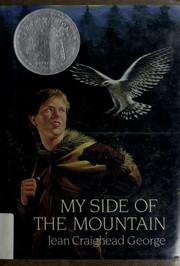
My Side of the Mountain
Sam Gribley leaves a crowded New York apartment for the Catskills, builds a home in a tree and trains a falcon to help him survive.
2,242-word summary · 10 min read

Hawaii
Michener tells the history of the Hawaiian islands in six sweeping sections, from volcanic origins to statehood, through the lives of those who arrived.
2,295-word summary · 10 min read

Circling the Sun
A fearless young woman raised in colonial Kenya becomes a racehorse trainer, then a bush pilot, and finally flies solo across the Atlantic.
2,237-word summary · 10 min read

At the Water's Edge
A Philadelphia socialite follows her husband and his friend to wartime Scotland to hunt the Loch Ness monster, and finds herself instead: a novel of friendship…
2,906-word summary · 13 min read
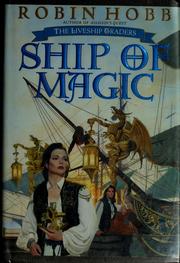
Ship of Magic
A sentient ship wakes when her captain dies, and the family that owns her starts to come apart over who gets to sail her.
2,026-word summary · 9 min read
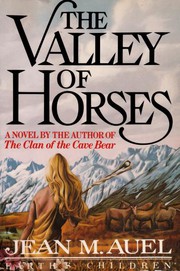
The Valley of Horses
Exiled from the Clan, Ayla survives alone in a hidden valley, tames a horse and a cave lion, and nurses a wounded stranger back to life.
2,311-word summary · 10 min read

Once There Were Wolves
A biologist reintroduces fourteen wolves to the Scottish Highlands while protecting her traumatized twin sister, then finds a body in the snow that could…
2,682-word summary · 12 min read

Ivanhoe
A disinherited Saxon knight, a great tournament, a besieged castle and a trial by combat. Scott's most famous novel, set in England in 1194.
2,834-word summary · 13 min read

The Sisters Brothers
Two hired killers ride from Oregon to Gold Rush California to murder a prospector, and find their trade, their brotherhood, and the frontier myth coming apart.
2,095-word summary · 9 min read

The Last of the Mohicans
During the French and Indian War, Hawkeye and two Mohican warriors try to save two British sisters from a Huron chief whose revenge will end the Mohican line.
2,017-word summary · 9 min read

Fable
Abandoned on a lawless island at fourteen, Fable spends four years diving for gems to buy passage off it, straight into the cutthroat trade of the Narrows.
2,320-word summary · 10 min read
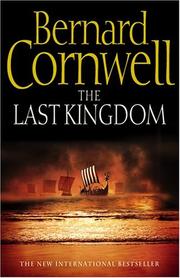
The Last Kingdom
Kidnapped by Danish raiders as a boy and raised in their halls, Uhtred of Bebbanburg must choose what he is when the fight for England begins.
1,997-word summary · 9 min read

News of the World
Captain Kidd carries captive Johanna home across 1870 Texas.
2,571-word summary · 11 min read
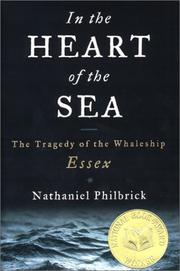
In the Heart of the Sea: The Tragedy of the Whaleship Essex
The whaleship Essex sunk by a whale leaves men in boats for ninety days.
2,750-word summary · 12 min read

Animal, Vegetable, Miracle: A Year of Food Life
A family eats only local for a year from their Virginia farm.
2,270-word summary · 10 min read
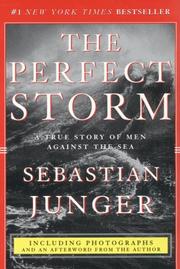
The Perfect Storm
Gloucester's Andrea Gail vanished in the October 1991 nor'easter; Junger joins the crew, storm science, and Tamaroa rescues into a plain and hardworking sea…
2,592-word summary · 12 min read

Cryptonomicon
Codebreakers in World War II and hackers in the 1990s chase gold, ciphers, and a secret data haven.
2,280-word summary · 10 min read

The Signature of All Things
Botanist Alma Whittaker grows up in Philadelphia trade wealth, studies mosses, marries distant Ambrose Pike, and sails to Tahiti seeking how species change.
2,535-word summary · 11 min read

Written in My Own Heart's Blood
1778 war splits Jamies and Claires across rebellion and time as Brianna hunts a kidnapped son.
2,008-word summary · 9 min read

One Thousand White Women: The Journals of May Dodd
May Dodd journals joining Cheyenne as a bride in an 1875 government swap, learning prairie life and loss.
2,036-word summary · 9 min read

Daughter of Fortune
Eliza Sommers flees Chile for California gold rush San Francisco, disguised and searching for her lover, finding freedom with Tao Chi'en.
2,009-word summary · 9 min read
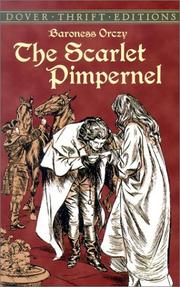
The Scarlet Pimpernel
A foppish baronet rescues aristocrats from the guillotine while his French wife hunts the hero she scorns.
2,980-word summary · 13 min read

The Gentleman's Guide to Vice and Virtue
Bisexual heir Monty flees across Europe with his crush Percy and sister Felicity after stealing a dangerous box.
2,724-word summary · 12 min read

The Overstory
Nine strangers shaped by trees collide in the Pacific Northwest timber wars in Powers's 2018 Pulitzer winner.
3,289-word summary · 15 min read