
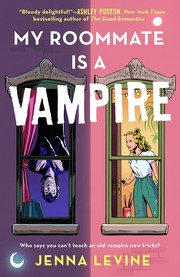
My Roommate Is a Vampire
2,502-word summary 11 min read 352 pages in the book
- First published
- 2023
- Publisher
- Berkley
- Pages
- 352
- ISBN
- 9780593548912
- Series
- My Vampires (#1)
Reading options
What's inside (8 sections)
I read My Roommate Is a Vampire on a week when I needed something light, and it delivered almost exactly what the cover promises. This 2023 Berkley paperback is Jenna Levine's debut, a paranormal romantic comedy about a struggling artist who takes a suspiciously cheap room and finds that her roommate is a two hundred year old vampire who needs help figuring out the twenty-first century. What I did not expect was how much of the book is about the small, practical business of being a person: ordering coffee, using the internet, buying jeans, and learning when to say what you mean.
A rental listing that made no sense
Cassie Greenberg is being evicted. She has an MFA in visual art, a stack of part-time jobs, and very little money, and the apartment she can afford is about to disappear. She works in the children's department at a library, which she loves because she gets to help kids with art projects, and at a hipster coffee shop called Gossamer's that mostly serves businesspeople. The library job is the one that keeps her going.
Then she finds an ad on Craigslist for a room in Lincoln Park at two hundred dollars a month, in a neighborhood where rooms cost well over a thousand. There are no photos. Her best friend Sam, a lawyer, offers to negotiate a month-to-month lease and points out that he could probably find space for her, but Cassie does not want to lean on him and his new husband Scott. She also turns down the idea of moving in with Sam's sister Amelia, whose judgment she would rather avoid. Sam searches for the name on the ad, Frederick J. Fitzwilliam, and finds no trace of him anywhere online. Both of them are nervous. Cassie goes to see the apartment anyway.
The apartment is gorgeous, furnished with expensive, dated pieces in velvet and dark wood. Frederick opens the door in a three-piece suit and looks like he walked out of a historical novel. He inadvertently insults her paint-splattered t-shirt, seems genuinely confused when she asks why the rent is so low, and mentions a friend named Reginald who helped him write the advertisement. He asks if she can live with two rules: she is never to enter his bedroom, and never to open the hallway closet. He says he has an embarrassing hobby. He also says that because of his work he sleeps during the day and only comes out at night. Cassie decides he is odd rather than dangerous, which is the first of many wrong guesses she will make about him.
The low price, it turns out, was a typo. Reginald Cleaves set the rent at two hundred instead of two thousand, and Frederick honors the mistake once he learns what it means. A friend of his, he explains. The two of them communicate in text messages that become one of the book's best running jokes.
Notes, kumquats, and a man who slept all day
When Cassie moves in, Frederick is nowhere to be found. Instead there are notes everywhere. One in the kitchen explains the appliances. Another in her bedroom welcomes her and comes with a gift of kumquats, which she finds strangely sweet. There are no pots or pans in the kitchen, and when Frederick appears and claims they are being repaired, she can tell he is lying. He admits he has never cooked for himself and promises to get her some.
What follows is a courtship conducted almost entirely on paper. Cassie writes back, asks if she can hang her own art, and starts leaving sketches in her notes. Frederick, who calls her Miss Greenberg until she asks him to stop, responds with a formality that slowly loosens. He asks whether she eats sauce and how many saucepans he should buy. A delivery arrives with an absurd amount of extremely expensive cookware. When she mentions wanting to enter an art competition, he writes that she will obviously win.
Her art matters here. Cassie makes seascapes out of trash she collects on the beach near Lake Michigan, taking things people have thrown away and turning them into something that means something. She takes down the hunting party painting in her room to hang her own work, and when Frederick wakes to the sound of her hammering, he comes in and asks why she would make art out of garbage. The conversation is clumsy and brief, but it is the first time either of them really sees the other.
The tension is physical almost immediately and handled with a lot of embarrassment on both sides. Cassie opens the bathroom door in a towel and runs into a shirtless Frederick, who avoids looking at her and apologizes as if he has committed a crime. His diary entries, which open several chapters, show a man genuinely horrified by his own desires and convinced that the twenty-first century will be the death of him. Levine gets a lot of comedy out of the gap between how composed Frederick looks in public and how thoroughly unprepared he is for ordinary life.
The bags of blood in the fridge
The secret breaks in the most domestic way possible. Cassie forgets her sketchpad, comes home early, and opens the refrigerator to find it full of bags of blood. The smell turns her stomach. Before she can process it, Frederick and Reginald come in, and Reginald drains a bag in front of her with his fangs showing.
Frederick confesses. He is a vampire, and he is more than two hundred years old. He has not fed from a human in over a century, relying instead on blood bags that he and Reginald take from blood banks. Cassie, understandably, flees to Sam's couch and tells Frederick he can throw her things out. What changes her mind is a letter. It is careful and earnest, and he offers to let her collect her belongings while he is away. She agrees to meet him at Gossamer's so he can explain properly.
Over coffee, which he has not ordered in a hundred years, he tells her the whole story. He was born in England and turned during an attack on his village in 1734. A botched attempt by Reginald to turn wine into blood left him in a coma for a century, and he woke weak, out of date, and utterly unable to navigate modern society. Sunlight is unpleasant for most vampires but genuinely draining for him, which is why he is nocturnal. The human roommate was an idea for learning how to blend in. He swears he will never hurt her.
Cassie moves back in on one condition: the blood stays in his room, and she never has to see him feed. He agrees. The arrangement is strange on paper, but the book makes it feel practical. Two lonely people have found a setup that works, and neither of them wants to lose it.
What I appreciated is that the reveal does not turn the book into a horror story. The blood is a plot detail, not a threat. Vampirism here is mostly an excuse for a centuries-old man to be polite to a shampoo bottle and confused by Instagram.
Learning to be modern, one note at a time
The middle of the novel is a series of lessons, and it is the strongest stretch. Frederick writes out a syllabus that includes coffee shops, conversation tips, public transit, the internet, something he calls Tick Tock, and a summary of the last hundred years of history. Cassie adds a wardrobe refresh. She shows him Instagram, and he cannot understand why anyone would photograph a meal. He posts a comment asking why Sam thinks anyone cares, and she deletes it before he can do more damage. He confesses that he thought TikTok was a kind of music.
His earnestness is both charming and a problem. He memorizes facts about Taylor Swift before a party because his research says she is popular with people Cassie's age. When Cassie shows him a bikini photo on her own account, he becomes furious at the idea of strangers seeing it, which she reads as judgment and which is actually jealousy he does not yet understand. There is a trip to Nordstrom where a saleswoman assumes Cassie is his girlfriend, where he tries on jeans in every size, and where Cassie spends far too long touching the soft shirt he offers to let her feel. He buys one in every color.
They watch Buffy the Vampire Slayer together. He asks whether she finds Angel or Spike handsome, and she says Giles, the librarian, which makes him jealous of a fictional librarian. He tells her his heart does not beat, that he does sometimes brood like Angel, and that he needs explicit permission to enter a house. That last detail becomes important later. He also tells her about his sister, an artist in his village, and about the life he barely remembers before 1734. One personal question a day becomes their rule, and the questions get less surface-level each time.
The romance builds through small acts. He cooks her chicken soup after noticing she does not eat well, and there is a memorable scene where she realizes he has been reading articles about how to kiss on her laptop. She proposes they kiss for scientific comparison. The first kiss is gentle; the second is not. It works because both of them are awkward about wanting the same thing.
The best single image in the book comes later, in an Uber. Frederick casts a visual glamor so the driver cannot see them kissing, projecting an image of two people quietly scrolling their phones. He explains that the glamor drops around people he trusts, and then he opens the closet Cassie was told never to touch. It is full of fruit. Whenever he is nervous, he conjures it, and the kumquats and the fruit he cut for her soup all came from this power. He thinks it is embarrassing and lame. Cassie points out that she is nobody special, and he tells her she is precious, which finally breaks through.
Art, interviews, and the arranged marriage
Cassie's own life keeps moving. Her seaside installation, called Manor House on a Lake, blends paint and synthetic materials and incorporates pieces of Frederick's childhood home. She submits it to a competition and applies for a job teaching art at Harmony Academy, a school in Evanston. She gets an interview, which is a real turning point for her, and she is excited to tell Frederick.
Then the rejection arrives, delivered by David, the head of the art contest, at Sam's party. He tells her quietly that the judges had picked their winners before she ever applied. She goes to the bathroom to cry, and Frederick finds her there. He wipes her mascara with his handkerchief, tells her the committee was foolish, and kisses her until someone knocks. It is a good scene, and it is also where the book's sweetest impulse becomes its main weakness. Whenever life hurts Cassie, Frederick appears with perfect words and perfect timing.
The complication arrives in letters and texts from other vampires. Frederick's mother Edwina writes to say she is coming from London. There is an arranged marriage she expects him to honor, to a vampire named Esmeralda Jameson, and Esmeralda has been sending him gifts that Frederick has been quietly redirecting. Edwina does not approve of a human roommate. Cassie learns about all of this only when Edwina turns up in the apartment and says, more or less, that she promises not to eat her.
The arranged marriage plot is the least convincing part of the novel. It shows up late, asks us to accept a whole set of vampire family customs the book has not bothered to build, and turns a gentle comedy into a rescue mission. Frederick is kidnapped by the Jamesons and held in a dungeon in Naperville until he agrees to marry Esmeralda. There are guards named Stuart and Sullivan who watch him watch sitcoms and write unsent letters to Cassie. Meanwhile Cassie finds a photo of Esmeralda with Frederick online, captioned with the word fiance, and assumes the worst.
A TikTok threat and a rescue in Naperville
Cassie's response is wonderfully modern and completely absurd. She asks Reginald how familiar vampires are with TikTok, then records a video in which she announces that vampires are real and responsible for the recent blood bank robberies. Reginald bursts into frame and drinks a bag of blood on camera. She emails it to Edwina, who replies through an assistant named Nanmo with an address and a time. The threat works because no vampire wants the existence of vampires exposed.
The rescue itself is a small masterpiece of awkwardness. Cassie takes an Uber to a suburban house with blacked-out windows while Reginald hovers above the basketball hoop in the yard, which is exactly as strange as it sounds. A neighbor asks if she is there to buy drugs, and she improvises a story about an unpaid internet bill. Edwina answers the door, makes Cassie promise to destroy the video, and finally lets Frederick come out. His wrists are bruised from being bound, though he insists the marks look worse than they are.
On the ride home he asks whether she got his letters. She did not. He begs her to stay with him even if her money situation improves, and she tells him she probably got the teaching job but wants to stay anyway. He asks if she is all right with aging while he does not change, and he says he does not care. It is the emotional center the kidnapping plot was trying to reach all along.
The epilogue jumps a year forward. Cassie is teaching at Harmony Academy. Frederick is waiting outside the fine arts building in the green henley she liked on him, the shirt from Nordstrom. He proposes with a ruby ring, but he asks her to think about it rather than answer, because he wants her to understand what being with a vampire means. She asks him to show her. She puts the ring on, and they head to the apartment they picked out together.
I closed the book smiling, and I think that is the point. My Roommate Is a Vampire is not interested in being scary or clever about its genre. It is a warm, funny book about a woman who makes art from other people's discarded things and a man who has been asleep for a hundred years and is trying very hard to be gentle with the world he woke up in. The late vampire politics are flimsy and the conflict resolves through an email, but the small stuff holds: the notes, the fruit, the memorized Taylor Swift facts, the way Frederick keeps asking permission.
FAQ
Is My Roommate Is a Vampire part of a series?
Yes, it is book 1 of the My Vampires series, followed by My Vampire Plus-One. Berkley published the paperback in 2023.
Is the book scary?
No. It is a paranormal romantic comedy, and the vampire elements are played for humor and warmth instead of horror.
Who is Jenna Levine?
She writes humorous paranormal romances and worked in affordable housing before writing. This was her debut novel.
Similar books
More from My Vampires first, then related titles.
Second First Impressions
A risk-averse retirement-villa manager and the developer's tattooed son are thrown together at work, where her fear of the outside world meets his relentless…
2,073-word summary · 9 min read
Night Pleasures
An accountant is kidnapped by a soul-stealing Daimon and handcuffed to a two-thousand-year-old Dark-Hunter, beginning a romance that forces him to want…
2,039-word summary · 9 min read
Lover Reborn
A grieving vampire warrior learns that the only way to free his dead mate from a cold afterlife is to love another, as a rival clan challenges the Blind King's…
2,768-word summary · 12 min read
Destined for an Early Grave
A Paris vacation turns into a fight over Cat's past when a vampire who claims to be her husband returns, and she must decide what she is allowed to know.
2,924-word summary · 13 min read
A Hunger Like No Other
Kresley Cole's 2006 paranormal romance pairs a Lycan freed after a thousand years of Fae captivity with a Valkyrie who has no wish to be claimed.
2,539-word summary · 11 min read
At Grave's End
Cat and Bones face Max, a zombie-raising ancient vampire, and a prophecy that ties their marriage to Patra's death in the third Night Huntress novel.
2,061-word summary · 9 min read
The Awakening / The Struggle
A popular high school girl falls for a vampire, then discovers that his dangerous brother wants her too, in the first two books of the Vampire Diaries series.
2,660-word summary · 12 min read
Lover Unleashed
Paralyzed vampire warrior Payne and surgeon Manny Manello collide in an adult paranormal romance, as Xcor's Band of Bastards arrives in Caldwell for revenge.
2,374-word summary · 11 min read
Angels' Blood
Nalini Singh's 2009 Guild Hunter opener sends vampire hunter Elena Deveraux after a murderous archangel in New York, while its most powerful ruler watches.
2,367-word summary · 11 min read
The Road Trip
Two exes squeeze into one small car for the drive to a Scottish wedding, with four years of history and one photograph between them.
2,418-word summary · 11 min read
Lover Enshrined
Phury's celibacy, addiction, and duty collide when Cormia enters his life, in J.R. Ward's sixth Black Dagger Brotherhood novel of war, ritual, and mating built…
2,630-word summary · 12 min read
The Roommate
Uptight Clara shares a flat with porn star Josh and teams up to build ethical adult films for women.
2,362-word summary · 10 min read
Lover Unbound
Scarred genius Vishous falls for human surgeon Jane after a Lesser attack pulls her into his hidden war.
2,786-word summary · 12 min read
Lover Revealed
Human cop Butch loves Marissa from afar until Lessers take him and the Brotherhood fights to bring him home.
2,592-word summary · 12 min read

Under One Roof
Mara inherits half a house and must share it with Liam, a grumpy lawyer co-owner. House rules, banter, and slow heat follow in this short STEM romance opener.
3,596-word summary · 16 min read
Lover Awakened
Scarred Brother Zsadist stands guard over Bella after Lessers take her in Caldwell. Book three of the Black Dagger Brotherhood pairs rescue with slow trust and…
2,468-word summary · 11 min read
Revelations
Schuyler is pulled into the Force household as Silver Bloods rise, and a Conclave gathering in Rio ends in bloodshed.
2,166-word summary · 10 min read
Wild Eyes
A country-pop star who does not own her own songs flees to a small Canadian mountain town and finds a horse trainer, his two children and a chance to make…
2,018-word summary · 9 min read

White Hot Kiss
Layla is half Warden, half demon, and one kiss from her steals a soul. A demon prince warns that Hell is hunting her, and she must choose between the clan that…
2,299-word summary · 10 min read
The Wrong Bride
In Catharina Maura's Windsors opener, model Raven Du Pont takes her absent sister's place at the altar beside billionaire Ares Windsor, the man she has…
2,397-word summary · 11 min read
The Lunatic Cafe
Anita Blake takes a missing-shapeshifter case into St. Louis werewolf politics while Jean-Claude and Richard both press their claim on her.
2,327-word summary · 10 min read
The Darkest Night
A woman who hears the voices of the past meets an immortal warrior who dies every night in Gena Showalter's first Lords of the Underworld novel, a dark…
3,483-word summary · 15 min read
Still Life with Woodpecker
An environmentalist princess and an outlaw bomber fall in love, then argue about freedom, sacrifice, and a pack of Camel cigarettes.
2,061-word summary · 9 min read
Smokin' Seventeen
Stephanie's bonds office is a motor home on a construction site where dead bodies keep turning up, and the killer seems to know her name.
2,342-word summary · 10 min read
Sizzling Sixteen
Stephanie Plum has five days to raise nearly $800,000 when her cousin Vinnie is kidnapped over a gambling debt, and the only plan involves an alligator and two…
2,533-word summary · 11 min read
Shadowland
Ever Bloom cannot touch Damen without risking his life. As she hunts for a cure, a mysterious surfer named Jude arrives and her loyalty to Damen is tested.
2,301-word summary · 10 min read
Roomies
A Broadway archivist with a crush on a subway busker marries him to solve his visa problem, and finds the roommates arrangement harder to keep practical than…
2,030-word summary · 9 min read

Nick and Norah's Infinite Playlist
Rachel Cohn and David Levithan trade chapters as two music-obsessed teenagers spend one long New York night together, from a five-minute fake date to something…
2,355-word summary · 10 min read
Game On
Tyler Neumann blackmails tattoo artist Stella McCormick into fake dating as a route to his father, and this trilogy closer turns revenge into something harder…
2,395-word summary · 11 min read