

The Darkest Night
3,483-word summary 15 min read 379 pages in the book
- First published
- 2008
- Publisher
- HQN
- Pages
- 379
- ISBN
- 9780373772469
- Series
- Lords of the Underworld (#1)
Reading options
What's inside (10 sections)
- A woman who cannot stop hearing the past
- The fortress in Budapest and the man who dies each night
- How the Lords came to be cursed
- Bait, trust, and a poisoned guest
- The gods change sides and the walls come down
- Ashlyn's choice and the end of the nightly death
- What works and what grates
- Why this first book still pulls people in
- Key takeaways
- FAQ
I came to this book curious about how a paranormal romance opens a door and keeps it open for fourteen more novels. The Darkest Night is the first entry in Gena Showalter's Lords of the Underworld series, published in 2008 by HQN, an imprint of Harlequin. It introduced me to a cast that the series would spend years living with, and it did so with a premise I found genuinely strange: a woman who hears the voices of the past and a man who is killed every single night. By the time I closed it, I could see both the appeal and the occasional clumsiness of a book that is clearly the start of something bigger than itself.
What stays with me is the odd symmetry at its center. Ashlyn Darrow is tormented by sound she cannot switch off. Maddox, the warrior she finds, is tormented by a violence he cannot switch off. Each becomes the other's relief. That is a tidy romantic idea, and Showalter leans on it hard, but she also gives both characters enough separate baggage that the pairing earns some of its heat. The rest of the book is a mix of mythology, danger, and the slow building of trust among a group of men who have very good reasons not to trust anyone.
A woman who cannot stop hearing the past
Ashlyn Darrow has a gift that feels like an illness. Wherever she stands, she hears every conversation that has ever happened in that exact spot. The voices of the past crowd in on her, layered over the present, and there is no volume knob. She has lived with this since childhood, and the years of it have left her exhausted and isolated. In the novel she works with a parapsychology institute, and it is on their behalf that she travels to Budapest. Rumors have reached them of a group of men with supernatural abilities living in a fortified place outside the city. If anyone can quiet the voices, she thinks, it might be them.
This is a strong opening device because it gives the heroine a private, immediate need before the romance even starts. Ashlyn is not wandering into danger for sport. She is a woman who has not known quiet, and she is chasing the possibility of it. Showalter writes the noise as something nearly physical, a pressure that builds until Ashlyn will do almost anything to escape it. I found those passages the most convincing part of her characterization. The gift reads less like a cool superpower and more like a sensory condition that has worn a person down.
Her arrival in Budapest puts her in the path of the men she is looking for, but not in a gentle way. She meets Maddox on a hillside after a run in with the Hunters, the human organization that hunts the Lords. He is suspicious of her from the first moment, and he has every reason to be. Strangers who wander up to a hidden fortress tend to be either spies or bait. What neither of them expects is the effect they have on each other. As soon as Maddox is near, the accumulated voices in Ashlyn's head go quiet. At the same time, the demon inside Maddox grows calmer in her presence. Both of them get, for the first time in a long while, a taste of relief.
That mutual calm is the engine of the book. It is easy to see why Ashlyn would want to stay near him. It is a little harder to see why Maddox, who calls her bait and keeps his distance, would let her into the fortress at all. The story asks us to accept that the pull between them overrides his better judgment, and for the most part I went along with it. The attraction is framed as something almost chemical, tied to the demons and the curses rather than to ordinary choice. That is a romance convention, and it works here because the whole world of the book runs on forces that the characters cannot fully control.
The fortress in Budapest and the man who dies each night
The fortress is both home and prison. The men who live there are the Lords of the Underworld, immortals bound to a hidden life, cut off from ordinary human contact because of what they carry. Showalter introduces them as a unit, each defined by the demon resident inside him. Maddox hosts Violence. Lucien hosts Death. Reyes hosts Pain. Aeron hosts Wrath. Torin hosts Disease. Paris hosts Promiscuity. Sabin, the keeper of Doubt, is part of the wider group. Anya, a goddess with an unpredictable streak, drifts through the story as well. The names are deliberately simple, and the demons function almost like a shorthand for each man's personality and private torment.
Maddox is the one the book is really about. His curse is the most brutal of the lot. Every night at midnight, his companions restrain and kill him. Reyes, the keeper of Pain, is the one who drives the blade home, six times, echoing the number of times Maddox once stabbed Pandora. Once his body is dead, Lucien, the keeper of Death, escorts his soul to the underworld, where it is tortured for several hours. Then morning comes, his body heals, and he wakes to do it all again. This nightly death dominates his life. It explains his recklessness, his short fuse, and his conviction that there is no future worth planning for.
The ritual is unpleasant to read, and it should be. Showalter does not shy away from the fact that Maddox's friends are the ones who kill him, night after night, as an act of loyalty and containment. There is a grim logic to it. The demon Violence wants release, and the only way the other Lords can keep Maddox from hurting people is to end his life before the night gets away from him. It is a punishment dressed as a safety measure, and it says a great deal about how this group cares for one another. Their tenderness has a knife in it.
Maddox's history with Pandora gives the curse its personal edge. He was the one who killed her while the demon had taken hold, and the punishment was layered on top of the general sentence given to all the Lords. This detail matters later, when the question of breaking the curse stops being abstract. I appreciated that Showalter tied the mythic backup story to a specific act by a specific character rather than leaving it as vague corporate guilt. The Lords are not a committee. They are individuals who did things and now pay for them, and Maddox paying the steepest price is what makes his storyline the natural first book of the series.
How the Lords came to be cursed
The backstory is pure inventiveness built on a familiar frame. Long ago, the Lords were guardians loyal to the Greek gods. They were charged with watching over a box, called the dimOuniak in the book, that held demons too dangerous to be let loose anywhere, even in Hell. Zeus named Pandora as its guardian. The Lords objected. They thought one of them should have the job, and they thought Pandora was not strong enough for it. To prove their point, they stole the box and opened it, and the demons poured out. When the box vanished, they had no way to put the demons back.
Zeus's punishment was to make each guardian a host for one of the demons he had released and to cast them out of Olympus. That is the origin of the Lords of the Underworld. They are immortal, they are dangerous, and they live with the daily effort of keeping the things inside them from taking over. Showalter spreads this history through the early chapters in pieces, letting Ashlyn learn it as she settles into the fortress. It is a useful way to deliver exposition because the heroine is as ignorant as the reader, and her questions give the others something to answer.
The mythology is not careful in any scholarly sense. The names are borrowed, the box is a nod to Pandora, and the mechanics of gods and Titans are arranged for the convenience of the plot. I did not mind that. This is a book that uses classical figures as raw material for a modern fantasy, and it is more interested in emotional stakes than in fidelity to ancient sources. What matters is that the curse gives every character a built in conflict: obey the demon and survive, or resist it and suffer. That single rule generates most of the tension in the fortress, and it gives the romance somewhere to go, because loving someone while carrying a demon is never simple.
The arrival of the Titans, who displace the older gods during the novel, raises the stakes again. Suddenly the Lords have new masters with new orders. Aeron is told to kill innocent women, and resisting the command threatens his sanity. This subplot widens the world beyond the fortress and reminds the reader that the Lords' trouble is not only internal. Their curse is part of a larger power struggle, and the series will keep returning to it. In this first book it mostly serves to keep the pressure on and to justify the growing sense that the walls will not hold for long.
Bait, trust, and a poisoned guest
Ashlyn's place in the story gets more complicated once the word bait is said out loud. She did not come to the fortress entirely of her own free will. The institute she works for has ties to the Hunters, and her journey to Budapest has been shaped by people who want to find the Lords. She insists she did not know the full purpose, and the story eventually supports her, but the suspicion is fair while it lasts. Maddox's wariness is not cruelty. He is protecting a group of men who are hunted, and a stranger with a trail of Hunter involvement is exactly the kind of threat he expects.
What develops between them is a slow turn from suspicion to reliance. It helps that they are useful to each other in practical ways before they are anything else. Her calm lets him keep the demon in check. His proximity lets her think without the voices. Showalter writes this stretch with a fair amount of physical closeness and a fair amount of arguing, which is the usual register of the subgenre. There are moments when Maddox pulls away because he is afraid of what the demon might do to Ashlyn, and moments when Ashlyn refuses to be handled. I liked her best in those refusals. She is written as someone who has spent her life being overwhelmed by forces outside her control, so her insistence on making choices is the most character consistent thing about her.
A turning point comes when Ashlyn is poisoned by wine laced with ambrosia. The poisoning is accidental, but it puts her life in danger and forces the Lords to bring in outside help. Danika Ford, a human woman connected to the wider conflict, is brought to the fortress to help treat her. Danika's arrival matters for two reasons. It pulls another woman into the closed world of the Lords, and it draws Reyes, the keeper of Pain, into a storyline of his own that the series will develop later. In this book she is mostly a plot instrument for Ashlyn's recovery and a hint of things to come, which is a reasonable function for a first installment.
The poisoning also exposes a weakness in the fortress setup. These men can survive nightly deaths and house ancient demons, but a glass of tainted wine nearly finishes one of their guests. Showalter uses the incident to justify letting the outside world back in, and it works because the Lords' isolation has always been a kind of bet with the reader. Sooner or later someone will get past the walls. The wine is simply the mechanism that makes it happen sooner.
The gods change sides and the walls come down
The last stretch of the book turns the slow burn into a siege. The Hunters attack the fortress, and the attack exposes exactly how much damage Ashlyn's connection to them has done. She has been used as a route in, whether she understood it or not, and the discovery forces her to face the fact that people she trusted helped put her new friends in danger. This is the emotional crux of her arc. She cannot undo the way she arrived, but she can decide where her loyalties lie now that the truth is out.
Maddox's response is shaped by the curse. His first instinct is to keep her at a distance, to treat her as a liability, and to absorb the danger himself. What makes the relationship work is that Ashlyn does not accept that arrangement. By this point she knows what the nightly death costs him, and she has seen enough to understand that the curse is the central fact of his life. The question the book asks is not whether she will save him in a fight. It is whether she will accept a future in which he keeps dying and coming back, never really living.
The battle itself is handled in the broad strokes typical of the genre. Swords, demons, stubborn loyalty, and a fortress under pressure. I found it serviceable rather than thrilling. Showalter is better at the quieter exchanges between the Lords, where their shared damage gives the dialogue some weight, than at large scale action. The stakes are real, but the choreography rarely surprised me. That is a fair criticism of a book that leans so heavily on the idea of violence as a character trait. You expect the fight scenes to crackle. Sometimes they just fill space.
Still, the siege does what it needs to do. It breaks the fortress open, it forces the Lords to act as a group, and it puts Ashlyn in a position where she has to choose something that costs her. That choice is what the entire book has been building toward, and Showalter lands it with more force than the action scenes around it.
Ashlyn's choice and the end of the nightly death
The climax hinges on sacrifice. Ashlyn decides to offer her life in Maddox's place, in an attempt to end the curse that kills him every night. It is the logical extreme of everything she has been moving toward. She came to Budapest looking for relief from her own endless torment, and she ends up willing to give up her life to end his. The symmetry is deliberate and, I think, mostly successful. It turns her from a woman who is hunted by her own gift into someone who acts with full knowledge of the cost.
Maddox, for his part, has to face the possibility of losing the one person who has given him a reason to want a future. That is the real test of his arc. He has spent so long treating his life as a repeating punishment that he does not know how to want anything. Ashlyn's willingness to die for him forces him to want her to live, and that want is what breaks the hold of the curse. Anya, the goddess who has been moving through the story with her own unclear agenda, intervenes at the crucial moment. She reverses time, restores Ashlyn, and ends the cycle of Maddox's nightly death. The price is that the two of them are bound together from that point on.
The ending gives them a future and leaves the larger war untouched. The Hunters are still out there. The Titans still hold power. The search for the box and the other demons is far from over, and the remaining Lords still have their own stories to live. That is exactly what a series opener should do. It closes one loop tightly, the loop of Maddox's curse and Ashlyn's isolation, while opening the door to everything that follows. I have mixed feelings about how tidy the reversal is. A goddess who rewinds time to fix the climax is a convenient tool, and the book never quite earns the mechanics of it. But the emotional result feels right even when the plot device feels handy.
What I remember is not the time trick but the shift in Maddox. He stops being a man who dies every night and starts being someone who can imagine tomorrow. That change is the point of the book, and it is delivered with enough feeling to survive the convenience of the mechanism.
What works and what grates
The strongest parts of The Darkest Night are the ideas that could only belong to this particular pairing. A woman who hears the past and a man who cannot escape his own repeating death make a strange but effective match. Showalter understands that the appeal of a paranormal romance often lies in the problem rather than the couple. The problem here is rich. It offers isolation, danger, a ticking clock built into every midnight, and two people whose powers are also their wounds.
The cast is another strength. The Lords are introduced quickly but distinctly, and even the minor ones have a defining burden that makes them legible. Lucien's role in the death ritual, Reyes's association with pain, Aeron's struggle with the Titans' command, and Anya's unpredictable interventions all give the book a sense of a world with more people in it than the page can hold. That is a good problem for a first novel. It means the reader has a reason to turn to the next one.
The weaknesses are real, though. The prose is functional rather than elegant, and it leans on repeated reactions and familiar romantic beats. Maddox calls Ashlyn bait more often than the word needs to appear. The larger mythology borrows heavily and bends its sources without much ceremony. Readers who want their Greek myth handled with care will be annoyed. The action scenes never match the intensity of the personal moments, which is a pity given the subject matter. And the resolution depends on a divine intervention that arrives when the plot needs it, which weakens the tension of the climax slightly in hindsight.
There is also the matter of consent and power, which sits uneasily in places. The romance is built on two people who are altered by forces inside them, and the language of possession and compulsion is never far away. That is part of the genre's appeal to its fans, and Showalter works within that tradition rather than questioning it. Readers who are wary of possessive heroes and fate driven attraction will find little here to change their minds. I would not call it a flaw in execution so much as a feature of the kind of book this is, but it is worth knowing before you start.
Why this first book still pulls people in
I finished The Darkest Night understanding why it became the doorway to a long running series. It has a clean hook, a hero with a spectacular problem, a heroine whose gift mirrors his curse, and a supporting cast with room to grow. It is not a subtle book, and it does not try to be. It gives you gods and demons, a nightly death, a fortress under siege, and a sacrifice that rewrites the terms of the central relationship. For a certain kind of reader, that is more than enough.
The book is at its best when it stays close to the two people at the center. Ashlyn's hunger for quiet and Maddox's exhaustion with dying are both concrete needs, and Showalter knows how to make them felt. When the story widens into battles and divine politics, it loses some of that intimacy, but it never loses track of the fact that this is a love story built on two very specific kinds of suffering. The ending works because it returns to that fact. Everything else is scenery.
I would hand this to a reader who enjoys paranormal romance and wants a series with a strong, strange premise and a large cast. I would be cautious with a reader who wants careful mythology, restrained prose, or a romance that keeps its feet firmly on the ground. This book flies by on the strength of its hook and its characters, and it has enough rough edges that not everyone will forgive them. For me, the image of a man who dies each night and the woman who silences the voices was enough to carry the whole thing. That image is what I will remember, long after the details of the siege have faded.
FAQ
Is The Darkest Night the first book in the Lords of the Underworld series?
Yes. Published in 2008 by HQN, it is book one of Gena Showalter's Lords of the Underworld and introduces Maddox, the keeper of Violence, and Ashlyn Darrow.
Why does Maddox die every night?
Maddox killed Pandora while possessed by the demon Violence. As punishment, his fellow Lords stab him six times at midnight and his soul is tormented in the underworld before he revives.
Does the book resolve the series' larger conflict?
No. It ends Maddox's nightly death and binds him to Ashlyn, but the Hunters, the Titans, and the search for the remaining demons carry on into later books.
Similar books
More from Lords of the Underworld first, then related titles.

White Hot Kiss
Layla is half Warden, half demon, and one kiss from her steals a soul. A demon prince warns that Hell is hunting her, and she must choose between the clan that…
2,299-word summary · 10 min read
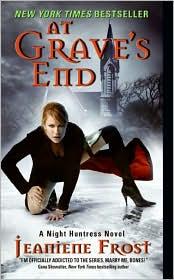
At Grave's End
Cat and Bones face Max, a zombie-raising ancient vampire, and a prophecy that ties their marriage to Patra's death in the third Night Huntress novel.
2,061-word summary · 9 min read
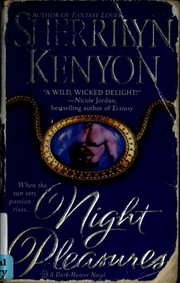
Night Pleasures
An accountant is kidnapped by a soul-stealing Daimon and handcuffed to a two-thousand-year-old Dark-Hunter, beginning a romance that forces him to want…
2,039-word summary · 9 min read

Destined for an Early Grave
A Paris vacation turns into a fight over Cat's past when a vampire who claims to be her husband returns, and she must decide what she is allowed to know.
2,924-word summary · 13 min read
Lover Unleashed
Paralyzed vampire warrior Payne and surgeon Manny Manello collide in an adult paranormal romance, as Xcor's Band of Bastards arrives in Caldwell for revenge.
2,374-word summary · 11 min read
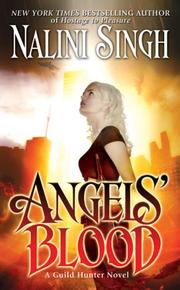
Angels' Blood
Nalini Singh's 2009 Guild Hunter opener sends vampire hunter Elena Deveraux after a murderous archangel in New York, while its most powerful ruler watches.
2,367-word summary · 11 min read
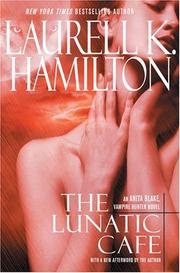
The Lunatic Cafe
Anita Blake takes a missing-shapeshifter case into St. Louis werewolf politics while Jean-Claude and Richard both press their claim on her.
2,327-word summary · 10 min read

The Darkest Part of the Forest
In a town built around a sleeping horned boy in a glass coffin, a girl discovers she has been spending her nights as a faerie king's knight and remembers none…
2,012-word summary · 9 min read
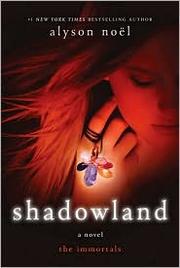
Shadowland
Ever Bloom cannot touch Damen without risking his life. As she hunts for a cure, a mysterious surfer named Jude arrives and her loyalty to Damen is tested.
2,301-word summary · 10 min read

Magic Bleeds
The fourth Kate Daniels novel finds Kate investigating a magical plague in Atlanta while her relationship with Curran fractures and an ancient enemy tied to…
2,236-word summary · 10 min read
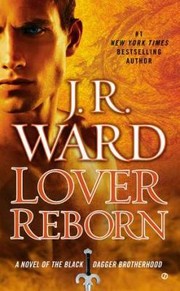
Lover Reborn
A grieving vampire warrior learns that the only way to free his dead mate from a cold afterlife is to love another, as a rival clan challenges the Blind King's…
2,768-word summary · 12 min read

Magic Strikes
Drafted into the Order of Merciful Aid, Kate Daniels investigates the beating of her friend Derek and finds a hidden tournament where rakshasas fight in human…
2,012-word summary · 9 min read

Dead Ever After
In the final Sookie Stackhouse novel, Sookie is framed for murder, Eric is bound to another vampire, and a choice about Sam may decide her future.
2,388-word summary · 11 min read
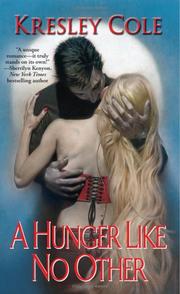
A Hunger Like No Other
Kresley Cole's 2006 paranormal romance pairs a Lycan freed after a thousand years of Fae captivity with a Valkyrie who has no wish to be claimed.
2,539-word summary · 11 min read

Magic Burns
A magic flare hits Atlanta, and mercenary Kate Daniels must recover stolen maps, find a missing witch, and keep a teenage girl alive while Celtic gods try to…
2,021-word summary · 9 min read

The Awakening / The Struggle
A popular high school girl falls for a vampire, then discovers that his dangerous brother wants her too, in the first two books of the Vampire Diaries series.
2,660-word summary · 12 min read

Demonglass
Sophie Mercer spends the summer at the Council's English estate, where two new demons, a suspicious host, and Archer's return complicate her plan to remove her…
2,771-word summary · 12 min read

Born at Midnight
Kylie Galen is sent to a camp for troubled teens and discovers it is a haven for vampires, werewolves, and witches, and that she may be something stranger…
2,310-word summary · 10 min read
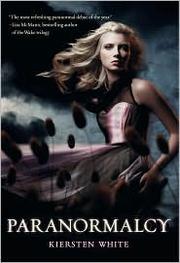
Paranormalcy
A teenage agent who can see through glamour falls for a shape-shifter and learns the agency she works for is hiding her true nature.
2,041-word summary · 9 min read

Lore
Lore Perseous, the last of a hunted bloodline, is pulled back into the Agon when a wounded Athena offers her revenge against the god who killed her family.
2,188-word summary · 10 min read
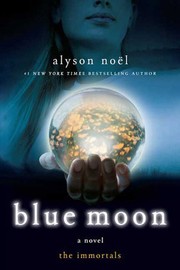
Blue Moon
Ever Bloom tries to save her immortal boyfriend, Damen, from a mysterious illness while a new student named Roman quietly takes control of her school and her…
1,998-word summary · 9 min read

Glass Houses
Claire Danvers moves off campus to escape a bully and lands in a house where the roommates know Morganville's real secret: the town belongs to vampires.
2,345-word summary · 10 min read
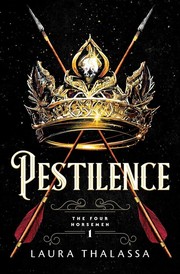
Pestilence
Firefighter Sara Burns shoots the Horseman Pestilence and discovers he cannot die. Taken captive, she rides with him as his plague sweeps the world.
2,508-word summary · 11 min read
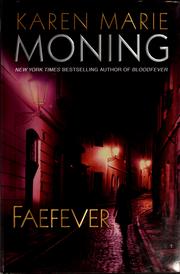
Dreamfever
With the walls between worlds down and Mac broken by the Fae, Dreamfever is the darkest volume of the Fever series, and the one that changes everything.
2,007-word summary · 9 min read
Deadlocked
A dead woman on Eric's lawn starts a murder investigation, a vampire queen wants Eric as her consort, and the fairies in Sookie's life close in.
2,885-word summary · 13 min read

Bitten
Elena Michaels is the world's only female werewolf, and keeping that world away from her human life in Toronto works fine until the Pack calls in a favor.
2,039-word summary · 9 min read
Beautiful Chaos
Ethan Wate is losing himself piece by piece as the broken Order of Things demands a sacrifice, and the answer may be the last person anyone expected.
2,068-word summary · 9 min read
Silver Borne
Mercy hides a Fae book while Samuel slips and the fae close in.
2,571-word summary · 11 min read
Shadowfever
Mac Lane hunts the Sinsar Dubh in Dublin as Fae walls fail and Barrons secrets surface.
3,016-word summary · 13 min read